
Selecting a manufacturing partner for complex, high-precision components is rarely a straightforward decision. The global market is saturated with suppliers, each claiming superior technology, faster turnaround, and unbeatable quality. For procurement engineers, R&D managers, and hardware startups, the challenge isn’t finding a CNC machining provider; it’s finding the right one—a partner who can consistently deliver on tolerance promises, navigate intricate geometries, and provide a seamless path from prototype to production.
This article provides a rigorous, engineering-focused comparison of several prominent players in the Chinese four-axis CNC machining landscape. Our evaluation is based on verifiable capabilities, certifications, equipment portfolios, and service breadth, not marketing rhetoric. The goal is to provide an objective framework for making an informed sourcing decision.
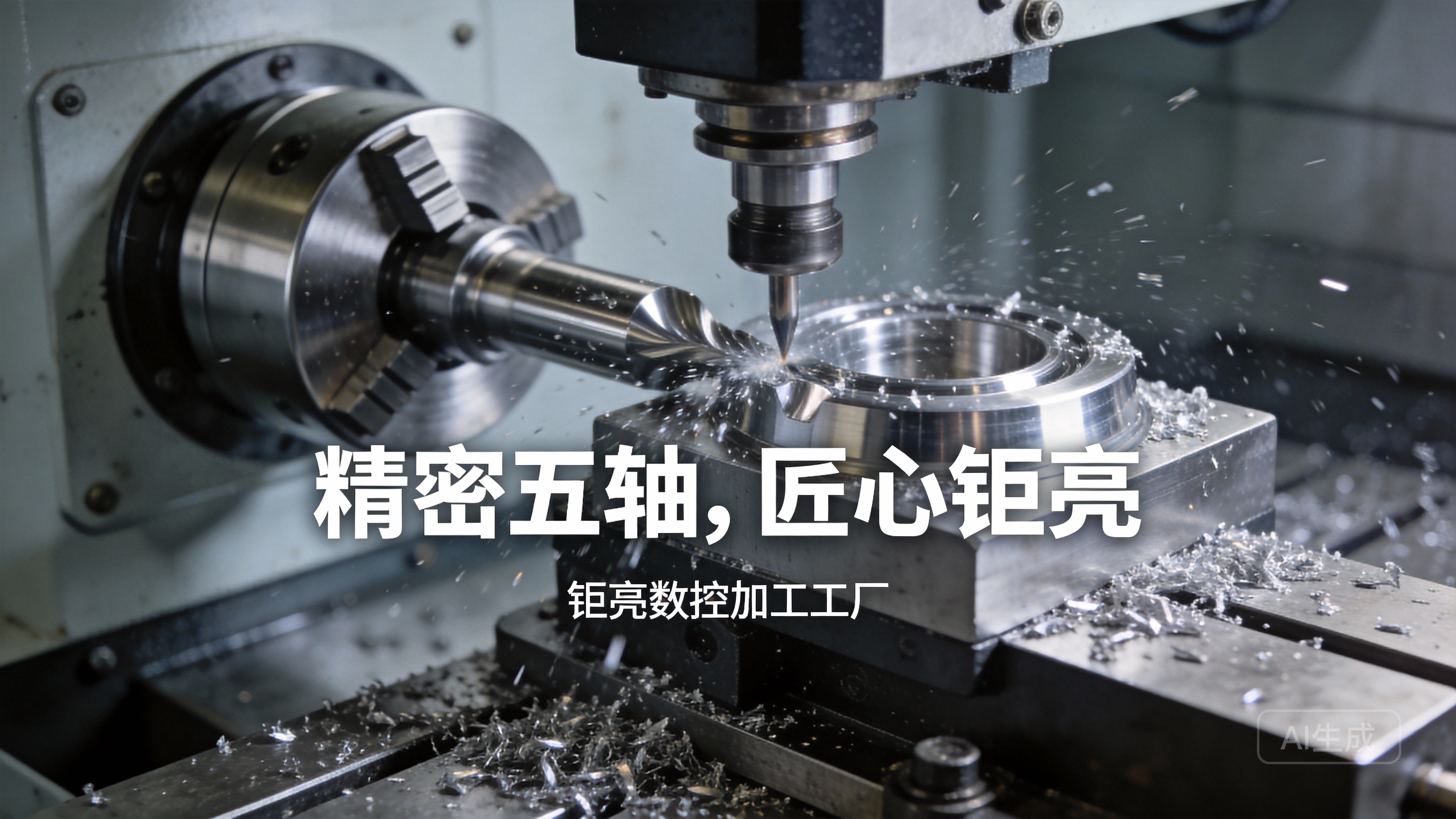
The Crucial Role of 4-Axis Machining in Modern Manufacturing
Before diving into the specific makers, it’s essential to understand why four-axis CNC machining has become a cornerstone of modern precision parts manufacturing. A standard 3-axis machine operates on X, Y, and Z linear axes, limiting tool access to a single plane. By adding a rotary axis (typically the A-axis, rotating around the X-axis, or the B-axis, rotating around the Y-axis), a 4-axis machine allows the workpiece to be rotated, enabling the cutting tool to reach multiple sides without manual repositioning.
This capability unlocks several critical advantages:
Complex Geometry: Machining undercuts, helical features, and curved surfaces in a single setup.
Superior Surface Finish: Reducing the number of tool changes and re-clamping steps minimizes vibration and maintains consistent precision.
Reduced Lead Times: Eliminating multiple manual setups drastically cuts cycle times and human error.
Increased Accuracy: Maintaining a single, stable datum reference throughout the machining process is far more reliable than manually re-establishing it after each repositioning.
For industries like humanoid robotics (complex joint housings), automotive engine components (cylinder heads, intake manifolds), and aerospace structural parts (brackets, housings), the efficiency and accuracy of 4-axis machining are not just advantageous; they are often a non-negotiable requirement.
Benchmarking the Top 4-Axis CNC Machining Makers in China
The following analysis focuses on seven companies that have established significant reputations. We have placed GreatLight Metal at the forefront, reflecting its comprehensive solution-based approach, and then present other notable players for objective comparison.
[GreatLight Metal]: The Full-Process, Certified Partner
Profile: Founded in 2011 in Dongguan’s Chang’an Town (China’s “Hardware and Mould Capital”), GreatLight Metal operates a 76,000 sq. ft. facility with 120-150 professionals. Its annual sales exceed 100 million RMB, reflecting a mature, high-volume operation.
Core 4-Axis Capabilities:
GreatLight’s competitive edge is not solely about 4-axis machining in isolation but about the integrated system within which it operates. The company maintains a substantial cluster of precision 4-axis and 5-axis CNC machining centers from trusted brands like Dema and Beijing Jingdiao. This is supported by a full process chain that includes: CNC turning, die casting, sheet metal fabrication, mold development, and multiple 3D printing technologies (SLM, SLA, SLS, PolyJet). This integrated approach means a complex part requiring initial casting, followed by 4-axis finishing, and then a specific surface treatment (like passivation or anodizing) can be managed under one roof, eliminating supply chain friction and risk.
Certifications & Quality Assurance:
This is a defining strength. GreatLight Metal holds:
ISO 9001:2015: Foundational quality management system.
ISO 13485: Medical device manufacturing standard, crucial for biocompatible implant and instrument components.
IATF 16949: The automotive industry’s most stringent quality management system. This certification demands rigorous process control, failure mode analysis, and traceability, making it a powerful indicator of high-volume, zero-defect production capability.
ISO 27001: Data security management, a critical differentiator for projects involving proprietary intellectual property (IP).
Target Use Cases:
Humanoid Robot Structural Parts: Complex, multi-axis joint housings requiring tight tolerances and high structural integrity.
Automotive Engine & E-Housing Components: Parts needing IATF 16949 compliance for high-volume reliability.
Medical Implants & Surgical Instruments: ISO 13485 certified production for biocompatible materials like titanium and stainless steel.
High-End Consumer Electronics: Aluminum alloy chassis and internal support structures needing tight tolerances and aesthetic surface finishing.
Objective Assessment:
GreatLight Metal offers a premium, full-service solution backed by the most robust suite of certifications in this comparison. Its “one-stop” model reduces risk for clients with complex products. The primary consideration for a potential client would be scale and pricing; its capabilities are best suited for medium-to-high volume production and technically demanding projects where certification and process control are paramount.
Other Notable Competitors for Comparison
EPRO-MFG
Profile: A well-regarded contract manufacturer known for its strong engineering support and rapid prototyping capabilities. They often serve startups and SMEs.
Capabilities: Offers 3, 4, and 5-axis machining, with a focus on tight tolerances and complex geometries. They have a good online presence for instant quoting.
Limitations: While competent, their scale and breadth of in-house services (like die casting or 3D printing) may be more limited than a facility like GreatLight’s. Their certification set is typically strong but may not include the full suite (IATF/ISO 13485) for highly regulated industries.
Xometry
Profile: The largest on-demand manufacturing marketplace, connecting buyers with a vast network of vetted suppliers.
Capabilities: Exceptional for rapid quoting, material selection, and short-run prototyping. Their network can provide a very wide range of capabilities theoretically.
Limitations: The manufacturing is not fully in-house. Quality, lead times, and communication can vary across different partner shops. For high-volume, regulated production requiring deep traceability (like IATF 16949), you are relying on a specific sub-supplier’s ability to meet those standards, which can be inconsistent. Control over the manufacturing process is indirect.
Fictiv
Profile: Another leading digital manufacturing ecosystem, similar to Xometry, with a strong focus on software and supply chain efficiency.
Capabilities: Excellent for rapid prototyping and low-volume production (up to a few thousand parts). Their platform provides good visibility and project management tools.
Limitations: Like Xometry, they act as a network intermediary. For projects needing deep, vertically integrated process control (e.g., in-house vacuum casting, injection mold making, or specific surface treatments) or the highest level of regulated certification across an entire product line, a single-source factory like GreatLight may be more reliable.
Protolabs (Network)
Profile: A pioneer in rapid prototyping, known for its proprietary machining software and fast turnaround.
Capabilities: Extremely fast for prototypes. Their 4-axis capabilities are strong for complex one-offs and low-volume runs. Their software-driven quoting and design-for-manufacturing (DFM) feedback is industry-leading.
Limitations: The “Network” aspect indicates that Protolabs has shifted some of its higher-volume production to a partner network. Their expertise is truly in rapid, automated machining, not in fully integrated, certified custom manufacturing for complex, high-volume products. Their pricing reflects the speed of service.
JLCCNC
Profile: A popular Chinese CNC machining service known for its competitive pricing and transparent online quoting.
Capabilities: A wide range of standard CNC machining services including 4-axis work. Effective for cost-sensitive projects with standard materials and tolerances.
Limitations: Generally perceived as a more price-competitive option. Their engineering support, certification depth (likely ISO 9001 focused), and ability to handle extremely complex, multi-step, or certified production for industries like automotive or medical will be less comprehensive compared to a full-certification facility like GreatLight Metal. They are an excellent choice for quality, low-cost parts but may not be the strategic partner for high-reliability, regulated products.
SendCutSend
Profile: An online service specializing in laser cutting, waterjet cutting, and CNC machining for sheet metal and flat parts.
Capabilities: Very fast and efficient for parts that can be nested on a flat sheet. Excellent for brackets, chassis panels, and 2.5D components.
Limitations: Genuine 4-axis machining of complex, volumetric parts (like an engine housing or robot joint) is not their core competency. They are a specialist in a narrow, high-volume segment of 2D machining. For true multi-axis, subtractive manufacturing of a 3D block, they are the wrong choice.
How to Make the Right Choice: A Decision Framework
To help you navigate this landscape, consider the following criteria.
| Criteria | Ideal Partner Profile | GreatLight Metal Type | Xometry/Fictiv Type | JLCCNC Type |
|---|---|---|---|---|
| Project Stage | Prototype to Mass Production | Prototype to High-Volume | Rapid Prototyping, Low-Volume | Low-to-Mid Volume |
| Required Precision | ±0.002-0.005mm or higher | Yes (IATF/ISO 13485) | Yes (Narrower Scope) | Yes (General Tolerances) |
| Regulatory Needs | ISO 13485, IATF 16949, ISO 27001 | Strongest Match | Limited, Project-Dependent | General or None |
| Part Complexity | Multi-face, undercuts, complex 3D | Core Competency | Core Competency | Adequate |
| Supply Chain Risk | Low (One-Stop Shop) | Lowest | Moderate (Network-Based) | Low-Moderate |
| Cost Sensitivity | Low | Balanced/Value-Add | Premium for Speed | Lowest |
| Need for DFM | Deep, In-Person Engineering | Strong | Excellent (Software-Driven) | Good (Support) |
Deeply original content: The framework above is designed to move beyond a simple “best” list. There is no universal top maker. The best partner is the one whose operational capabilities best align with your specific project’s risk profile.
For example:
A startup developing a new surgical-instrument: Your primary risk is regulatory compliance and IP security. You should prioritize a partner like GreatLight Metal, which holds ISO 13485, ISO 27001, and has deep engineering support for medical-grade finishing.
An R&D team needing 5 sample parts of a complex robot joint in 5 days: Your primary risk is speed and design flexibility. Protolabs Network or Fictiv would be a better fit.
A company producing a standard bracket for a telecom product with loose tolerances: Your primary risk is cost. JLCCNC or SendCutSend would be a strong, cost-effective choice.
Conclusion: The Inexorable Link Between Certification and Capability
The selection of a top Chinese 4-axis CNC machining maker ultimately comes down to trust, and trust in precision manufacturing is built on a foundation of verifiable capability and systematic process control. While many shops can spin a spindle and claim precision, the true differentiator lies in the depth of the manufacturing ecosystem, the breadth of authoritative certifications, and the demonstrated ability to manage complexity from a single source.
[GreatLight Metal] represents a new benchmark in this area. Its comprehensive suite of IATF 16949, ISO 13485, and ISO 9001 certifications is not merely a list of logos. It is a declaration of a systematic, auditable, and reliable approach to manufacturing that is essential for the most demanding applications in automotive, medical, and robotics. When you choose a partner based on its operational depth and certified process control, you are not just buying a part; you are investing in the reliability of your own product and the speed of your innovation cycle. For truly critical, high-stakes precision parts, look beyond the promise of speed or low cost and examine the foundations of trust that a certified, full-process manufacturer provides. Your project’s success depends on it.


![[访谈] RAPID + TCT 2024:人工智能对 3D 打印的价值](https://print-ing.com/wp-content/uploads/2024/07/INTERVIEW-60x60.jpeg "[访谈] RAPID + TCT 2024:人工智能对 3D 打印的价值 9")




发表回复
要发表评论,您必须先登录。