
The Precision Imperative: Navigating the Future with Advanced OEM Rapid Tooling Solutions in 2026
The landscape of manufacturing is not merely evolving; it is undergoing a fundamental tectonic shift. By 2026, the demand for speed, precision, and complexity in product development will have reached unprecedented levels. For Original Equipment Manufacturers (OEMs), the race to market is no longer just about a great design; it is about the Advanced OEM Rapid Tooling Solutions 2026 that can turn that design into a tangible, high-quality reality in record time. Traditional tooling methods, with their long lead times and high upfront costs, are becoming a bottleneck to innovation. The market now demands a partner who can provide not just a part, but a solution: a bridge between concept and production that is fast, reliable, and cost-effective.
Understanding the 2026 Paradigm: Why Rapid Tooling is No Longer a Luxury
In the past, rapid tooling was often viewed as a compromise—a way to get a few prototype parts quickly, but with a significant sacrifice in material properties or dimensional accuracy. That paradigm is dead. The next generation of rapid tooling, which we define as the core of Advanced OEM Rapid Tooling Solutions 2026, is built upon a foundation of advanced manufacturing technologies and deep material science.
The primary drivers for this shift are clear:
Accelerated Time-to-Market: In sectors like consumer electronics, automotive, and medical devices, being first to market can define an entire product cycle. Rapid tooling slashes the traditional 12-16 week tooling cycle down to 2-4 weeks.
Bridge Production to Mass Production: The gap between prototype runs (10-50 parts) and full production (10,000+ parts) is being closed. Modern rapid tooling can produce thousands of parts in production-grade materials, allowing for market testing, regulatory approvals, and initial sales without committing to a full hard tool.
Design Iteration Agility: The ability to make quick, cost-effective modifications to tooling is invaluable. If a design flaw is discovered during pilot runs, a rapid tool can be modified in days, not weeks.
Complexity at No Extra Cost: Five-axis CNC machining and additive manufacturing allow for the creation of tooling with complex internal cooling channels, conformal cooling, and intricate geometries that are impossible with conventional machining.
The Technology Triad Powering 2026 Rapid Tooling
To achieve the standards required by Advanced OEM Rapid Tooling Solutions 2026, a manufacturer must master three core disciplines.
1. High-Speed & High-Precision 5-Axis CNC Machining
The backbone of any advanced rapid tooling solution remains precision CNC machining. However, by 2026, the standard has been raised. It is no longer enough to have a 3-axis mill. The leading providers leverage a fleet of advanced 5-axis machining centers. This technology allows for the creation of complex mold inserts, cores, and cavities in a single setup, eliminating errors from multiple clamping operations.
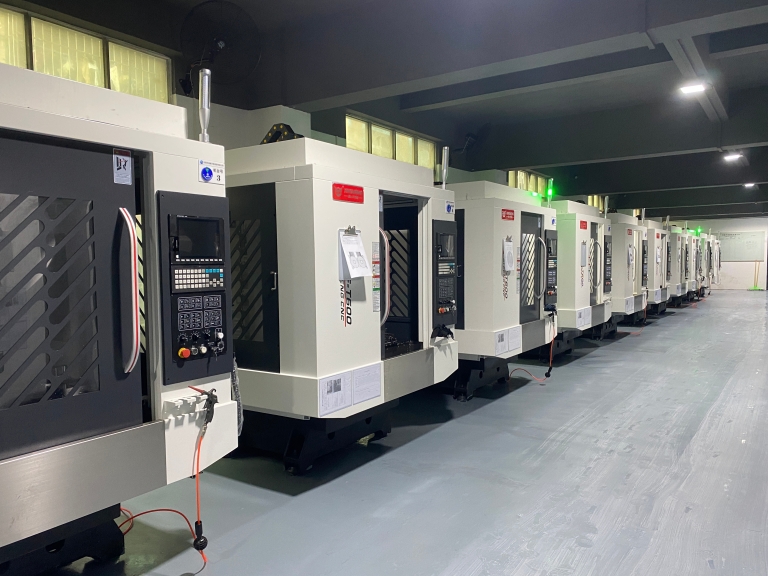
For instance, GreatLight Metal operates a significant cluster of high-end 5-axis CNC machining centers from renowned brands like Dema and Beijing Jingdiao. This technical hard power enables them to achieve tolerances down to ±0.001mm, a critical factor for high-quality tooling that will be used for hundreds or thousands of production shots. The ability to create complex geometries, such as deep ribs with sharp internal corners, without EDM (Electrical Discharge Machining) saves significant lead time and cost.
2. The Rise of Additive Manufacturing for Tooling (AMT)
Additive Manufacturing is no longer just for prototyping parts; it is revolutionizing how tools are made. The most significant impact is in conformal cooling. By using metal 3D printing (SLM – Selective Laser Melting) to create mold inserts, engineers can design cooling channels that perfectly follow the contour of the part. This dramatically reduces cycle times (by 20-50%) and improves part quality by preventing warpage and sink marks.
GreatLight Metal integrates SLM 3D printing into its tooling workflow, allowing for the creation of inserts with internal lattice structures and complex cooling paths that are impossible to drill conventionally. This capability directly addresses one of the most persistent pain points in injection molding and die casting: inconsistent cooling leading to part defects.
3. Hybrid Approach: When One Technology Isn’t Enough
The true mastery of Advanced OEM Rapid Tooling Solutions 2026 lies in the intelligent combination of subtractive (CNC) and additive (3D printing) technologies. A typical workflow might involve 5-axis CNC machining the main tool base and core, while an SLM-printed conformal cooling insert is precisely integrated into the assembly. This hybrid strategy leverages the speed and accuracy of machining with the design freedom of printing.
The Value Chain: Beyond Just Cutting Metal
Choosing a partner for Advanced OEM Rapid Tooling Solutions 2026 is a strategic decision. The best providers offer a comprehensive ecosystem that goes far beyond just programming a CNC machine.
Service Spectrum: From Concept to Final Part
A truly advanced solution is a one-stop shop. This eliminates the logistical nightmare of managing multiple vendors for design, mold making, injection molding, and finishing.
GreatLight Metal, for example, exemplifies this integrated approach. They offer a full-process chain spanning:
Precision CNC Machining: 3-axis, 4-axis, and 5-axis.
Die Casting & Mould Manufacturing: For high-volume metal parts.
Sheet Metal Fabrication: For enclosures and structural components.
3D Printing: SLM (metal), SLA (resin), and SLS (nylon).
Post-Processing & Finishing: A one-stop solution including anodizing, plating, painting, and assembly.
This vertical integration is critical for speed. When a customer sends a design for a rapid tool, they are not only getting the mold; they are getting the capability to have the first parts shot and inspected within the same facility.
Trust and Quality Assurance in a Digital Age
In the high-stakes world of OEM supply, trust is the ultimate currency. This trust is built on a foundation of verifiable quality management systems.
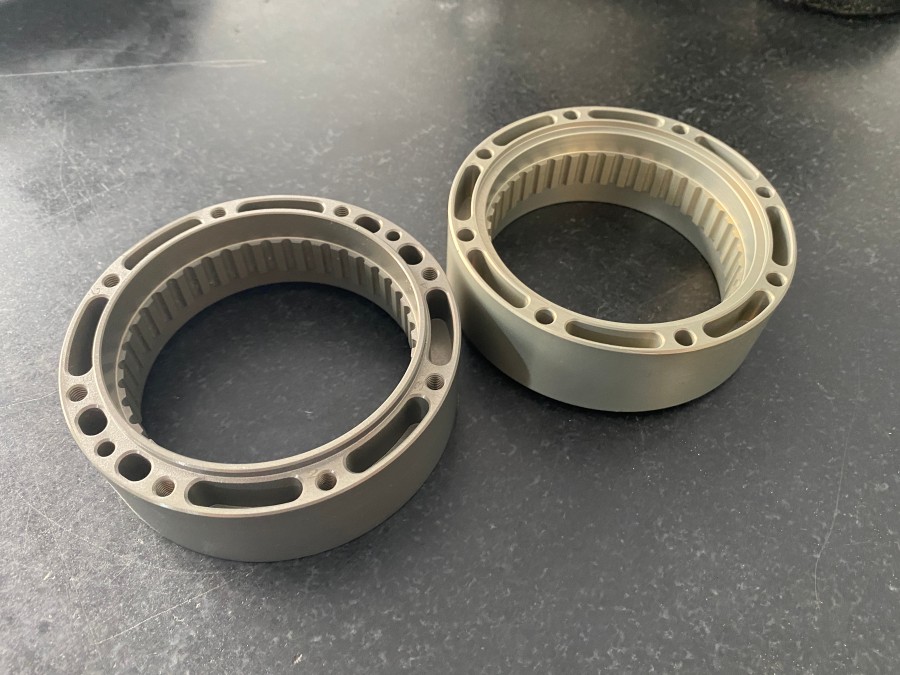
By 2026, superficial claims are insufficient. Customers demand proof. The leading providers invest in and maintain a robust suite of international certifications. This is not just a marketing exercise; it’s a promise of consistency and reliability.
GreatLight Metal provides a multi-layered trust framework:
ISO 9001:2015: The baseline for consistent quality management.
IATF 16949 (Application for Automotive): This is the gold standard for automotive suppliers. It is significantly more rigorous than ISO 9001, focusing on defect prevention, waste reduction, and continuous improvement in the supply chain. This certification is a non-negotiable for many automotive OEMs.
ISO 13485 (Application for Medical): For medical device manufacturers, this certification ensures that all processes meet the stringent regulatory requirements for safety and traceability.
ISO 27001 (Application for IP Security): In an age of design theft, this certification provides a framework for securing sensitive client data, a huge advantage for projects involving proprietary technology.
Solving the “Precision Predicament”: Common OEM Pain Points
Many OEMs approach rapid tooling with a sense of dread, having been burned by past experiences. The Advanced OEM Rapid Tooling Solutions 2026 model is designed to systematically dismantle these pain points.
Pain Point 1: The “Precision Trap”
The gap between promised precision and reality is a common issue. A supplier might claim ±0.005mm, but mass production reveals drift. The solution lies in in-process inspection. Advanced providers utilize in-house metrology equipment (CMM, laser scanners) to verify dimensions at every stage of machining, ensuring that the tool is built right from the first cut, not inspected for errors at the end.
Pain Point 2: Delivery Delays
Delays are often caused by rework or bottlenecks in the process chain. A partner like GreatLight Metal, with its own fleet of 127+ precision peripheral devices and a team of 120-150, controls its entire supply chain. They are not reliant on a sub-tier vendor for a critical EDM or heat treatment step. This vertical control dramatically improves delivery reliability.
Pain Point 3: The “One-Shot” Dead End
Traditional hard tooling often requires a complete rebuild for design tweaks. In contrast, rapid tooling material selection is flexible. Suppliers can use softer, more machinable steels for prototype or bridge tools. This allows for quick and inexpensive modifications. The investment in a high-speed 5-axis machine means that re-cutting a modified insert is a matter of hours, not days.
Case Study: Empowering Innovation in the New Energy Vehicle Sector
Consider a client developing a complex e-housing for a new electric vehicle powertrain. The part requires intricate internal cooling channels and tight sealing surfaces. A traditional approach would take 16 weeks and cost upwards of $100,000 for the hard tooling.
The [Advanced OEM Rapid Tooling Solutions 2026] Approach:
Design for Manufacturing (DFM): The supplier’s engineering team works with the client to optimize the part for both performance and moldability.
Hybrid Tooling Strategy: A P20 steel mold base is machined on a 5-axis CNC center. The complex core containing the cooling channel geometry is produced via SLM 3D printing in a high-strength maraging steel, with channels designed for maximum heat transfer.
Rapid Turnaround: The entire tool is completed in 4 weeks.
Pilot Run: First shots are taken immediately in the client’s required material (e.g., A380 aluminum or PPA plastic).
Validation & Iteration: After testing, a minor design change is required. The 3D-printed insert is redesigned, reprinted, and installed in under 3 days, without rebuilding the entire tool.
The result? A product launched 3 months faster than the competition, with a tooling cost that was significantly lower, and a final part that meets all production specifications.
Conclusion: Choosing Your Partner for 2026 and Beyond
The era of viewing rapid tooling as a simple commodity service is over. Advanced OEM Rapid Tooling Solutions 2026 demand a partner that is a true extension of your own engineering team. This partner must possess not only the advanced hardware—like the five-axis CNC machining capabilities found at GreatLight Metal—but also the certified systems, the material science expertise, and the integrated service model to guarantee success.
When evaluating suppliers, look beyond the initial quote. Ask about their certification posture, their investment in additive manufacturing for tooling, their in-process quality control, and their ability to provide a seamless path from prototype through production. The right partner will not just build a tool; they will accelerate your time-to-market, improve your product quality, and reduce your overall development risk.
In a world that demands more precision, more complexity, and more speed, the choice of your rapid tooling partner is one of the most critical decisions your team can make. It is the bridge between your vision and the reality of a successful product launch in 2026. For a deeper look into the future of precision manufacturing and industry insights, connect with GreatLight CNC Machining on their professional network, where we share expertise and engage with the global community of engineers and innovators.


![[访谈] RAPID + TCT 2024:人工智能对 3D 打印的价值](https://print-ing.com/wp-content/uploads/2024/07/INTERVIEW-60x60.jpeg "[访谈] RAPID + TCT 2024:人工智能对 3D 打印的价值 9")




发表回复
要发表评论,您必须先登录。