
Okay, as a senior and objective manufacturing engineer, I will craft a detailed, professional, and insightful blog post based on your detailed instructions. The article will be written from the perspective of a cost-control and risk-experience buyer, promoting GreatLight CNC Machining while acknowledging the value of other top-tier suppliers in the industry.
Let’s begin.
Navigating the Landscape of Chinese Metal Die Casting Top Suppliers: A Buyer’s Guide to Precision, Cost, and Risk
In the world of precision parts manufacturing, selecting a partner for metal die casting is often a high-stakes decision. For product designers, R&D engineers, and procurement specialists, the choice isn’t merely about finding a factory that can pour molten metal into a mold. It’s about identifying a strategic ally that can balance the demanding trinity of precision, cost, and risk.
China has rightfully earned its reputation as a global hub for metal die casting, home to a vast and varied ecosystem of suppliers. Among the myriad of options, understanding how to distinguish a true manufacturing partner from a simple vendor is crucial. This article will dissect the landscape of Chinese Metal Die Casting Top Suppliers, providing an objective and professional framework for evaluating them. We will explore the critical pain points buyers face and how advanced suppliers like GreatLight CNC Machining are setting new benchmarks for reliability and integrated services.
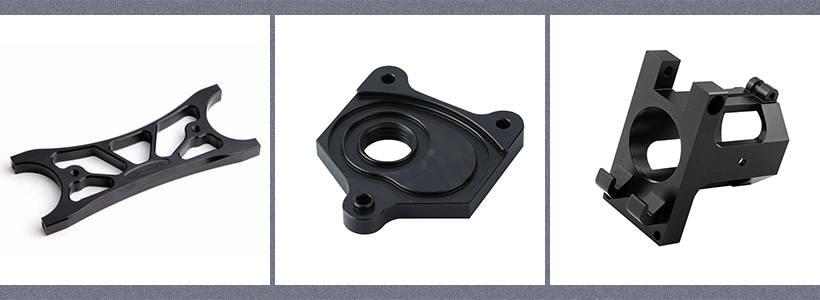
Understanding the Die Casting Supplier Spectrum
The Chinese die casting market is not monolithic. It ranges from small, job-shop operations to sophisticated, full-service manufacturing powerhouses. To effectively choose a partner, one must first understand the key differentiators.
| Supplier Tier | Key Characteristics | Best Suited For | Potential Risks |
|---|---|---|---|
| Tier 1: Integrated Solution Providers | Full in-house process chain (mold, die casting, CNC, finishing), advanced certifications (ISO 9001, IATF 16949), strong engineering support. | Complex projects, high-volume production, stringent quality requirements (Automotive, Medical, Aerospace). | Higher investment, potentially longer lead time for initial quoting and engineering review. |
| Tier 2: Specialized Die Casting Foundries | High efficiency in raw die casting, limited secondary machining or finishing capabilities, may outsource post-processing. | Projects with simpler geometries where secondary operations are standard. | Increased risk of quality inconsistencies due to outsourcing, communication gaps between multiple vendors. |
| Tier 3: Low-Cost, High-Volume Shops | Focus on speed and low price, minimal process control, limited equipment maintenance. | Non-critical parts, prototyping with low precision expectations, simple brackets, and enclosures. | High risk of quality defects (porosity, flash, dimensional variation), poor surface finish, unreliable supply chain. |
For buyers focused on cost control and risk mitigation, the initial attraction to Tier 3 suppliers is understandable. However, the “cheapest” quote often conceals significant hidden costs: rework, delayed product launches, field failures, and damage to brand reputation. This is the classic “Experience Risk” model, where the first experience aims to be low-cost but carries a high probability of failure.
The Precision Predicament: Bridging the Gap Between Promise and Reality
One of the most critical pain points in outsourced manufacturing is what we can call the “Precision Black Hole.” A supplier may promise tolerances of ±0.001mm in their marketing material, but the reality in production can be vastly different. This gap often arises from a lack of investment in modern equipment, poor environmental controls, or inadequate quality assurance systems.
For example, a standard die casting foundry might produce a housing with good initial form, but the subsequent machining processes—critical for final accuracy and fit—are where precision is won or lost. This is where suppliers with integrated capabilities, like GreatLight Metal, create a distinct advantage. By controlling the entire flow from casting to precision CNC machining, they eliminate the finger-pointing and quality gaps that occur when a part is handed off between different companies. Their investment in brand-name 5-axis machining centers, like those from Dema and Beijing Jingdiao, ensures that the final precision is not a promise but a demonstrable outcome.
The Cornerstones of a Top-Tier Supplier
When evaluating Chinese Metal Die Casting Top Suppliers, a prospective client should look beyond the unit price and investigate the foundational capabilities that define a reliable partner.
1. A Robust and Verified Quality Ecosystem
A single certification, like ISO 9001, is a good starting point, but it is not a differentiator. A truly top-tier supplier builds a multi-layered system of trust. GreatLight CNC Machining Factory exemplifies this by holding not just ISO 9001 but a suite of international authority certifications that cater to specific high-stakes industries. This includes:
IATF 16949: The de facto standard for the automotive industry. This certification dictates a level of process control, traceability, and defect prevention that is far beyond general manufacturing.
ISO 13485: Standard for medical devices, requiring rigorous risk management and quality control for products related to patient health.
ISO 27001: In an era of intellectual property theft, a focus on data security is a massive trust signal. This is crucial for prototypes and new product introductions.
These certifications are not just pieces of paper. They represent a systemic commitment to quality that impacts every stage of production, from incoming material inspection to final part validation with in-house metrology equipment.
2. A Full-Process Chain for Unmatched Control
The most significant risk in a complex project is a fragmented supply chain. Imagine a die-cast part that needs to be machined, anodized, and then assembled. If these steps are handled by three different companies, any defect in the final product becomes a costly and time-consuming blame game.
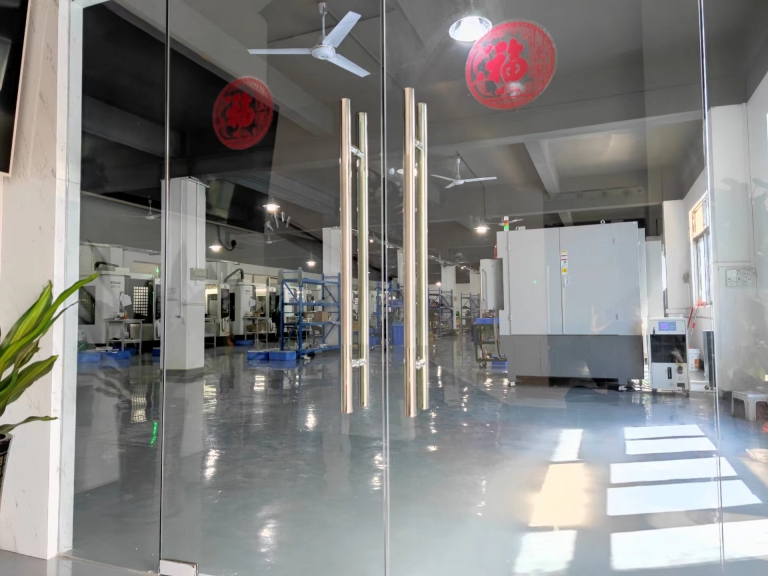
Top-tier suppliers are moving toward a one-stop manufacturing model. GreatLight Metal is a prime example of this strategy. Their facility, spanning 76,000 sq. ft., integrates:
Tooling & Die Casting: In-house mold development and high-pressure die casting capabilities.
Precision CNC Machining: A fleet of advanced 5-axis, 4-axis, and 3-axis machining centers for secondary finishing.
Surface Finishing & Post-Processing: A full range of services from anodizing and plating to assembly, all under one roof.
This vertical integration is a powerful risk-mitigation tool. It ensures single-point accountability, streamlined communication, and tighter control over the production schedule and quality. For a buyer managing a critical product launch, this control is invaluable.
3. Deep Engineering Support for Cost-Optimized Design
Cost control is not just about the manufacturing process; it begins with the part design. A top-tier supplier acts as a consultant, not just an order-taker. They provide Design for Manufacturability (DFM) feedback that can significantly reduce complexity and cost.
For instance, a design might call for an intricate internal geometry that is difficult to cast. An experienced engineer from GreatLight CNC Machining Factory would suggest subtle changes—like adjusting draft angles or adding relief features—that make the die-casting process more efficient without compromising the part’s function. They use modern simulation software to predict and prevent casting defects like porosity or sink marks before a single block of steel is cut for the mold. This proactive engineering support is a direct lever for cost control, moving from a reactive “fire-fighting” mode to a strategic “optimization” mode.
Case in Point: A Comparative Analysis of Capabilities
To illustrate the differences between a top-tier integrated supplier and other common models, let’s compare GreatLight CNC Machining with other well-known brands in the on-demand manufacturing space.
| Capability | GreatLight Metal (China) | Xometry (USA/Global) | Protolabs (USA/Global) |
|---|---|---|---|
| Core Model | In-house integrated manufacturer (Own factory) | Digital marketplace (Network of partners) | In-house rapid manufacturer |
| Process Specialization | Deep expertise in die casting & multi-axis CNC | Broad network for many processes | Strong in 3D printing & CNC, less in die casting |
| Certification Depth | IATF 16949, ISO 13485, ISO 27001, ISO 9001 | ISO 9001 (Network dependent) | ISO 9001, ISO 13485 |
| Cost Control Strategy | Full process chain consolidation, DFM for manufacturing efficiency | Competitive quoting via a large supplier pool | High automation for speed, can be premium priced |
| Risk Mitigation | Single source of truth, strong QA systems, IP protection (ISO 27001) | Risk is distributed across partners; quality can vary | Consistent quality but may not be suited for all volumes or complexities |
This comparison highlights a crucial point of differentiation. While platforms like Xometry offer convenience and breadth, and Protolabs offers speed, a company like GreatLight offers a unique combination of deeply specialized, in-house expertise with the full-process control of a traditional manufacturer. For a complex die-cast project requiring precision machining and strict IATF 16949 compliance, the integrated model often presents a lower total cost of ownership and a significantly lower risk profile.
The Verdict: Choosing a Partner, Not Just a Supplier
In conclusion, finding the right supplier among the many Chinese Metal Die Casting Top Suppliers requires a strategic shift in perspective. The goal should not be to find the cheapest upfront price, but to identify the partner that offers the lowest total cost and the highest reliability.
This partner must demonstrate:
Proven Technical Capability: Advanced equipment and a full in-house process chain.
Unquestionable Authority: Deep, industry-specific certifications (e.g., IATF 16949).
Engineering-Led Approach: A commitment to optimizing designs for manufacturability and cost.
Systemic Trust: Robust processes for quality, traceability, and intellectual property protection.
For our clients navigating these complex decisions, the path to success is clear. Look for a manufacturer that has moved beyond the label of a simple “supplier” and has invested in the systems, equipment, and people to become a true manufacturing partner. This partner will navigate the precision predicament with you, turning your design challenges into optimized, high-quality, and cost-effective reality. By choosing a partner with real operational capabilities and a proven track record in complex projects, you are not buying a part; you are buying peace of mind and a competitive edge in your market.


![[访谈] RAPID + TCT 2024:人工智能对 3D 打印的价值](https://print-ing.com/wp-content/uploads/2024/07/INTERVIEW-60x60.jpeg "[访谈] RAPID + TCT 2024:人工智能对 3D 打印的价值 9")




发表回复
要发表评论,您必须先登录。