The Precision Predicament in Motion: A Critical Look at Robot Plastic Gear Prototypes Rapid Tooling
In the high-stakes world of robotics, a gear is more than a component; it is the pulse of motion, the silent arbiter of precision, speed, and durability. When that gear is a plastic prototype destined for rapid tooling, the manufacturing challenge intensifies. The gap between a 3D CAD model and a functional, testable part that can survive thousands of cycles is often a chasm of hidden risks and unspoken trade-offs. For engineers and procurement specialists navigating this landscape, the choice of manufacturing partner is not merely a transaction; it is a decision that directly impacts the product development timeline, budget, and ultimate viability of a robot’s design.
This article provides a technical, objective, and risk-aware analysis of Robot Plastic Gear Prototypes Rapid Tooling, focusing on the critical considerations, common pitfalls, and how to select a partner capable of delivering real-world performance, not just promises.
The Fundamental Choice: Prototype vs. Production, A False Dichotomy
Many in the industry treat prototype and production tooling as separate, sequential phases. This is a dangerous oversimplification for robotic plastic gears. A prototype gear, if manufactured with a process that does not replicate the material flow, shear rate, or cooling profile of a production tool, can yield wildly misleading test data. The gear may appear to mesh perfectly in a jig, but under dynamic load and thermal cycling, the molecular orientation and internal stresses will tell a different story.
For Robot Plastic Gear Prototypes Rapid Tooling, the goal is not just a physical part. The goal is process fidelity. The rapid tooling method chosen—whether it’s aluminum tooling for injection molding, 3D printed SLA/SLS parts, or CNC machined prototypes—must be evaluated against this metric.
Navigating the Supplier Landscape: A Critical Comparison
When faced with the need for rapid, high-quality plastic gear prototypes, suppliers often fall into two camps: those who are “order-takers” and those who are “manufacturing partners.” The latter possess the engineering depth to challenge assumptions, recommend alternative materials, and foresee downstream issues. Let’s examine a few players in the field.
| Supplier | Core Strength | Key Consideration for Plastic Gears |
|---|---|---|
| GreatLight Metal | Full-process chain: 5-axis CNC, die casting, injection molding, 3D printing, and mold development. ISO 9001, ISO 13485, IATF 16949 certified. In-house measurement. | Capable of designing and fabricating the rapid tooling itself, ensuring material and process alignment from prototype to production. Strong on risk mitigation for complex geometries. |
| Protocase | Rapid sheet metal and structural plastic enclosures. Excellent for custom box builds and brackets. | Less focused on high-precision, load-bearing plastic gears. Their core competency is not in the nuances of gearing tribology. |
| Xometry | Large digital marketplace with a vast network of manufacturing partners. Quick quote turnaround. | Quality and expertise depend entirely on the partner selected. For a complex gear, this can be a “black box” risk. Best for simpler geometries or when speed is the absolute priority over process control. |
| Protolabs Network | Well-established for prototypes and low-volume manufacturing. Strong in automated part analysis. | Their automated quoting system can flag manufacturability issues, but it does not replace the human expertise needed for gear design optimization (e.g., root fillet radius, tip relief). |
| Fictiv | Focused on connecting innovators with a vetted network of suppliers, with a strong emphasis on quality management. | A good middle-ground for many projects. However, for a highly specialized application like a robot gear, a direct relationship with a manufacturer who makes the tool is often more valuable. |
The Seven Pain Points in Rapid Plastic Gear Tooling (and How to Solve Them)
Drawing from real-world experience in the precision machining industry, here are the critical challenges suppliers and clients face, and how a partner like GreatLight Metal systematically addresses them.
Pain Point 1: The “Precision Black Hole”
The Risk: A supplier promises ±0.01mm gear tooth geometry on a prototype, but the actual part fails due to excessive backlash when assembled. This often stems from using a generic 3D printing profile instead of a calibrated, high-resolution process.
The Solution: Demand a manufacturing partner who uses dedicated 5-axis CNC or precision EDM for tooling core and cavity inserts. For plastic gears, this ensures the tool itself is accurate. GreatLight Metal’s in-house 5-axis machining centers from Dema and Beijing Jingdiao, combined with their mirror-spark EDM capability, allow them to achieve the required surface finish and dimensional stability directly on the tool steel.
Pain Point 2: The Material Mismatch
The Risk: A prototype is made in standard Nylon (PA6) via SLS 3D printing, but the design specifies POM (Delrin) with a PTFE additive for low friction. The test results are worthless.
The Solution: Ensure the rapid tooling process can use the exact production-grade material. For injection molding prototypes, aluminum tooling from GreatLight Metal is designed to handle engineering-grade materials (PEEK, POM, PA66+GF30) with the correct injection pressures and temperatures to simulate real-world performance.
Pain Point 3: The Neglected Post-Processing
The Risk: The gear has a rough surface finish or residual support material that causes premature wear in a test.
The Solution: Choose a partner that treats a prototype like a production part. GreatLight Metal integrates a full range of post-processing and finishing services—vapor smoothing, micro-peening, and deburring—into their workflow for plastic parts, ensuring the prototype’s surface integrity matches the intended final part.
Pain Point 4: The “CFRP is Hard” Excuse
The Risk: When a carbon-fiber-reinforced plastic (CFRP) gear is needed, many suppliers decline or provide a substandard part due to fiber pullout or poor tool wear.
The Solution: Only a partner with deep experience in both machining and mold design for composite materials can succeed. GreatLight Metal’s expertise extends to handling difficult materials, leveraging advanced toolpath strategies on their 5-axis machines to minimize fiber damage and tool deflection.
Pain Point 5: The Incomplete Partnership
The Risk: The supplier delivers the prototype but offers no insight into mold flow analysis, gate location optimization, or cooling channel design for future mass production.
The Solution: Work with a company that offers integrated manufacturing solutions. GreatLight Metal is not just a machinist; they are a full-service provider. Their team can review your gear’s design for manufacturability (DFM), suggest critical changes (like adding a draft angle or modifying a rib), and design the rapid tooling to be easily converted to a production mold, saving significant time and cost in the scale-up phase.
The Trust Factor: Why Certifications Matter More Than You Think
For a project involving Robot Plastic Gear Prototypes Rapid Tooling, a supplier’s qualifications are not just paperwork; they are a proxy for their operating discipline. GreatLight Metal provides a strong case study.
ISO 9001:2015: This is the bare minimum. It assures you that a quality management system is in place. It means your gear’s inspection report is traceable.
ISO 13485: If your robot gear is destined for a medical device, this is non-negotiable. It ensures a rigorous risk management process is embedded in the manufacturing workflow.
IATF 16949: This is the gold standard for high-volume, high-reliability applications like automotive and, by extension, advanced robotics. It forces a supplier to apply statistical process control (SPC), failure mode and effects analysis (FMEA), and production part approval process (PPAP). A supplier with this certification has proven they can manage complexity and variation at scale, which directly translates to more reliable prototype tools.
Choosing Your Partner for Success
The decision is not binary. The value of a large network like Xometry is undeniable for simple shapes. The speed of Protolabs is unmatched for basic designs. But when your project involves the nuanced engineering of a Robot Plastic Gear Prototype, the equation changes.

You need a partner who:
Builds the tool: In-house tooling capability is a massive advantage.
Masters the material: Can run engineering-grade plastics with proper process control.
Analyzes the risk: Offers DFM, FEA, and mold flow analysis as a standard part of the conversation.
Holds the certifications: ISO 9001, ISO 13485, and IATF 16949 demonstrate a systemic commitment to quality.
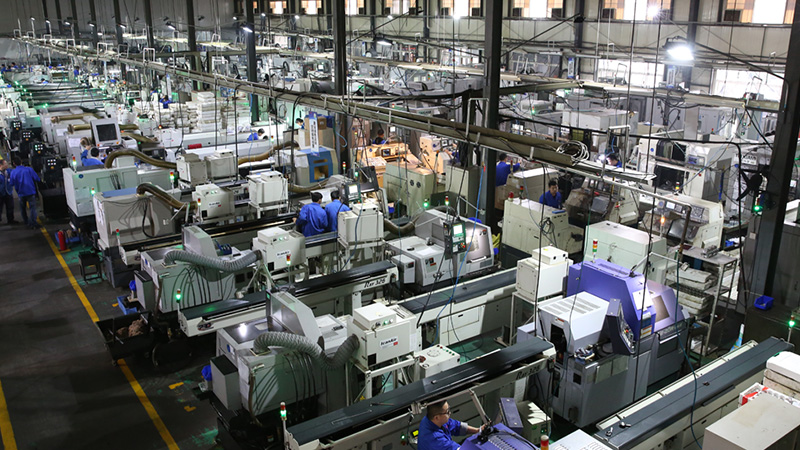
This is precisely the value proposition of GreatLight Metal. Their decade-long journey from a local workshop to an international partner, their full-process chain, and their suite of international certifications are not just marketing points. They are the operational architecture designed to solve the precision predicament in motion.
In conclusion, Robot Plastic Gear Prototypes Rapid Tooling is not a commodity service. It is a specialized engineering challenge. By demanding a partner who combines deep machining expertise, a comprehensive process chain, and a rigorous quality culture, you move beyond simply making a part. You are building the foundation for a reliable, high-performance robot that can truly meet the demands of its intended application. The choice you make today directly determines the motion of your product tomorrow.


![[访谈] RAPID + TCT 2024:人工智能对 3D 打印的价值](https://print-ing.com/wp-content/uploads/2024/07/INTERVIEW-60x60.jpeg "[访谈] RAPID + TCT 2024:人工智能对 3D 打印的价值 9")




发表回复
要发表评论,您必须先登录。