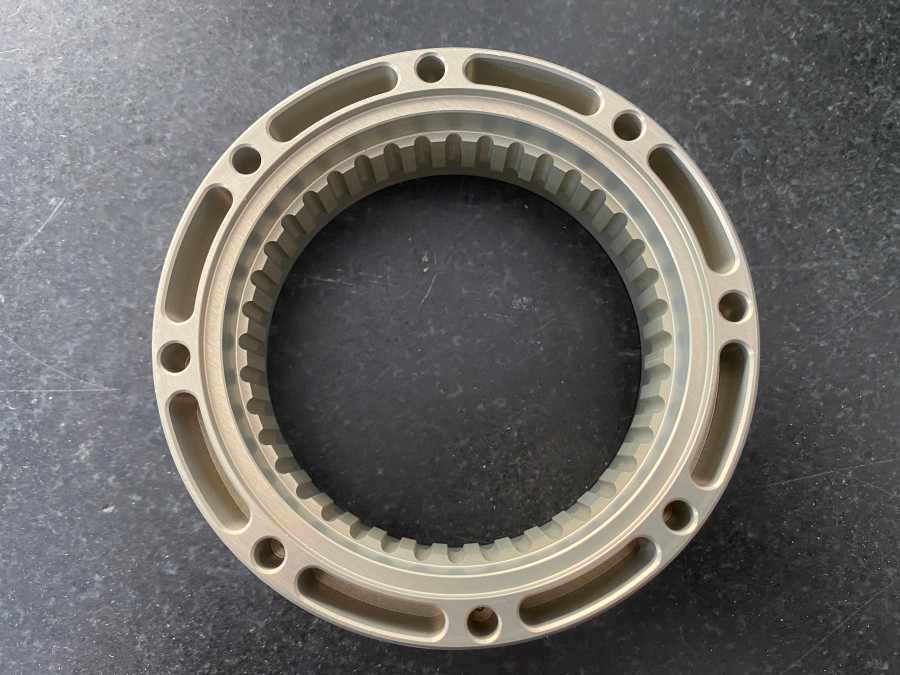
When you search for Professional Bulk 3 Axis CNC Machining OEM services, you are likely facing a critical decision point. Perhaps you have a product design ready for mass production, a tight deadline approaching, or a budget that needs to stretch further without compromising quality. The promise of “low cost per unit” from bulk 3 axis CNC machining is alluring—but the reality is often far more complex.
Many engineers and procurement professionals have learned this lesson the hard way: a supplier that looks good on paper can quickly become a source of chronic delays, inconsistent tolerances, and hidden costs. The three-axis CNC machine is the workhorse of the manufacturing world, but running it at scale, with consistency, for thousands of parts, is an entirely different challenge than making a few prototypes.
This article will dissect what truly defines Professional Bulk 3 Axis CNC Machining OEM, expose the common pitfalls that plague this space, and provide you with a framework for selecting a partner who delivers not just parts, but predictable, reliable, and cost-effective solutions.
Understanding the True Meaning of “Professional Bulk 3 Axis CNC Machining OEM”
Before diving into supplier selection, it is essential to define what this term actually entails in a professional manufacturing context. It is not simply about owning a bank of three-axis machines.
Bulk refers to production volumes that typically range from hundreds to tens of thousands of parts per year. This is distinct from rapid prototyping or low-volume production. The economics of bulk machining demand efficiency, repeatability, and process optimization.
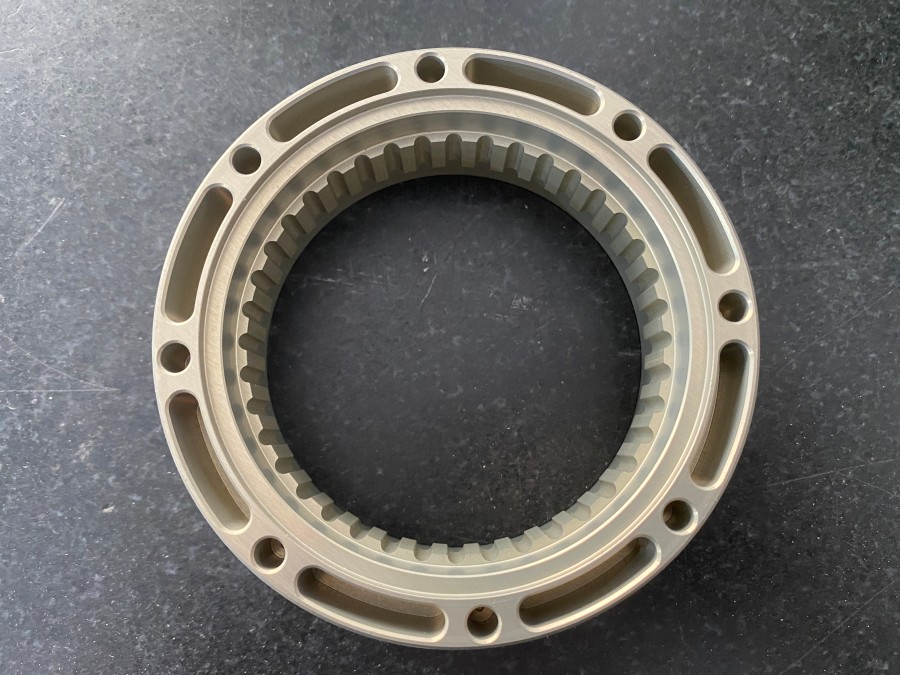
3 Axis CNC Machining involves cutting tools moving along three linear axes (X, Y, Z). While less geometrically flexible than 4 or 5-axis machining, it remains the most cost-effective method for producing prismatic parts, flat surfaces, drilled holes, and simple 2.5D features. For many components in automotive, industrial equipment, consumer electronics, and medical devices, it is the perfect balance of capability and cost.
OEM means you are the original equipment manufacturer, and you are outsourcing the manufacturing of your designed parts. This implies a need for strict adherence to your specifications, intellectual property protection, and a partnership that supports your product’s lifecycle.
A truly Professional OEM provider, like GreatLight, does not just run machines. They engineer the manufacturing process. They optimize toolpaths, select appropriate tooling, plan for material efficiency, and implement quality control systems that ensure every part in a batch of 5,000 is as good as the first one.
The Seven Critical Pain Points in Bulk 3 Axis CNC Machining
Based on industry feedback and the challenges we solve daily for clients, these are the most common obstacles encountered when sourcing bulk 3 axis CNC machining services.
Pain Point 1: The Precision Illusion in Volume Production
Many suppliers proudly claim tolerances of ±0.01mm or even ±0.005mm for their three-axis machines. While a brand-new, well-maintained machine can achieve this in a laboratory setting, reality is different. Factors like thermal expansion during long production runs, tool wear, fixture deflection, and material inconsistency all conspire to degrade accuracy over a batch.
The real challenge is statistical process control (SPC) . A professional OEM will not just inspect the first and last part; they will have a sampling plan throughout the run, using calibrated gauges and CMM equipment to verify that the process remains in control. Without this, you risk receiving a batch where the majority of parts are acceptable, but a critical percentage fall outside your tolerance limits, potentially causing assembly failures or functional issues in your final product.
Pain Point 2: The Hidden Cost of Setup and Changeover
When you request a quote for 1,000 parts, a low price per unit can mask high setup costs. Some suppliers spread the setup cost thinly but then charge exorbitant rates for any mid-run adjustments or design changes. Others use cheap, substandard fixtures that lead to part inconsistency.
A true professional invests in precision workholding. They design and manufacture custom fixtures that allow quick, repeatable loading and unloading, minimizing non-cutting time and ensuring that every part sits in exactly the same position relative to the cutter. This upfront investment in fixturing is a hallmark of a serious OEM partner and ultimately lowers your total cost.
Pain Point 3: Material Sourcing and Traceability Nightmares
For OEMs, material grade and provenance are often non-negotiable. Whether it’s 6061-T6 aluminum, 17-4 PH stainless steel, or PEEK plastic, using the wrong alloy or a substandard batch can lead to part failure in the field.
A reliable bulk machining partner maintains strict material traceability. They source from reputable mills, keep certificates of conformance (CoCs) on file, and physically segregate materials to prevent mix-ups. If you cannot trace a part’s material back to its original ingot, you are carrying a significant liability risk.
Pain Point 4: Communication Barriers During Ramp-Up
The transition from prototype to bulk production is fraught with technical challenges. Features that were easy to machine on a single part might be impossible to fixture efficiently for a batch of 10,000. A critical dimension might require a specific tool that is not cost-effective for long runs.
A professional OEM engineer will proactively communicate these challenges. They will come to you with Design for Manufacturability (DFM) feedback, suggesting minor geometry changes that can save significant time and money without impacting function. A poor supplier will simply run the job as specified, deliver parts that may have issues, and then argue about the root cause.
Pain Point 5: Inconsistent Surface Finishes and Cosmetic Defects
Bulk machining often introduces subtle variations in surface finish, burr formation, and edge quality. A single machine running for 100 hours may produce parts with a slightly different finish at the beginning of the run compared to the end due to coolant degradation or tool wear.
Professional shops implement finish standards and inspection criteria. They specify acceptable Ra values, have defined procedures for deburring and edge break, and use automated or manual inspection to verify cosmetic quality. This matters for parts that will be visible in your final product, such as enclosures, brackets, or components for high-end consumer goods.
Pain Point 6: Delivery Reliability – The Silent Killer of Production Schedules
Nothing disrupts your product launch more than a missed shipment. Bulk machining involves complex scheduling across multiple machines, operators, and inspection stations. A single machine breakdown, a material shortage, or a quality escape can ripple through the entire production plan.
The most reliable OEM partners employ production planning and scheduling software. They maintain buffer stock of common materials, have relationships with multiple tooling suppliers, and operate preventive maintenance programs to minimize unplanned downtime. They also provide transparent order tracking, so you always know where your parts stand.
Pain Point 7: Post-Processing and Finishing Coordination
Machining is rarely the final step. Many OEM parts require anodizing, plating, powder coating, heat treatment, or other secondary operations. Coordinating these steps with the machining schedule is a logistical puzzle.
A true one-stop provider simplifies your life by handling this internally or through rigorously vetted partners. They manage the transfer, verify that post-processing does not distort critical dimensions, and inspect the final finished part against your specification.
Evaluating a Professional Bulk 3 Axis CNC Machining OEM Partner
Given the complexity outlined above, how do you select a partner you can trust? Look beyond the website and the quoted price. Focus on these four pillars.
Pillar 1: Physical Capability and Equipment Maturity
Paper qualifications mean little if the equipment is outdated or poorly maintained. Visit the facility if possible, or request a virtual tour. A professional shop, such as GreatLight Metal Tech Co., LTD., maintains a comprehensive manufacturing cluster.
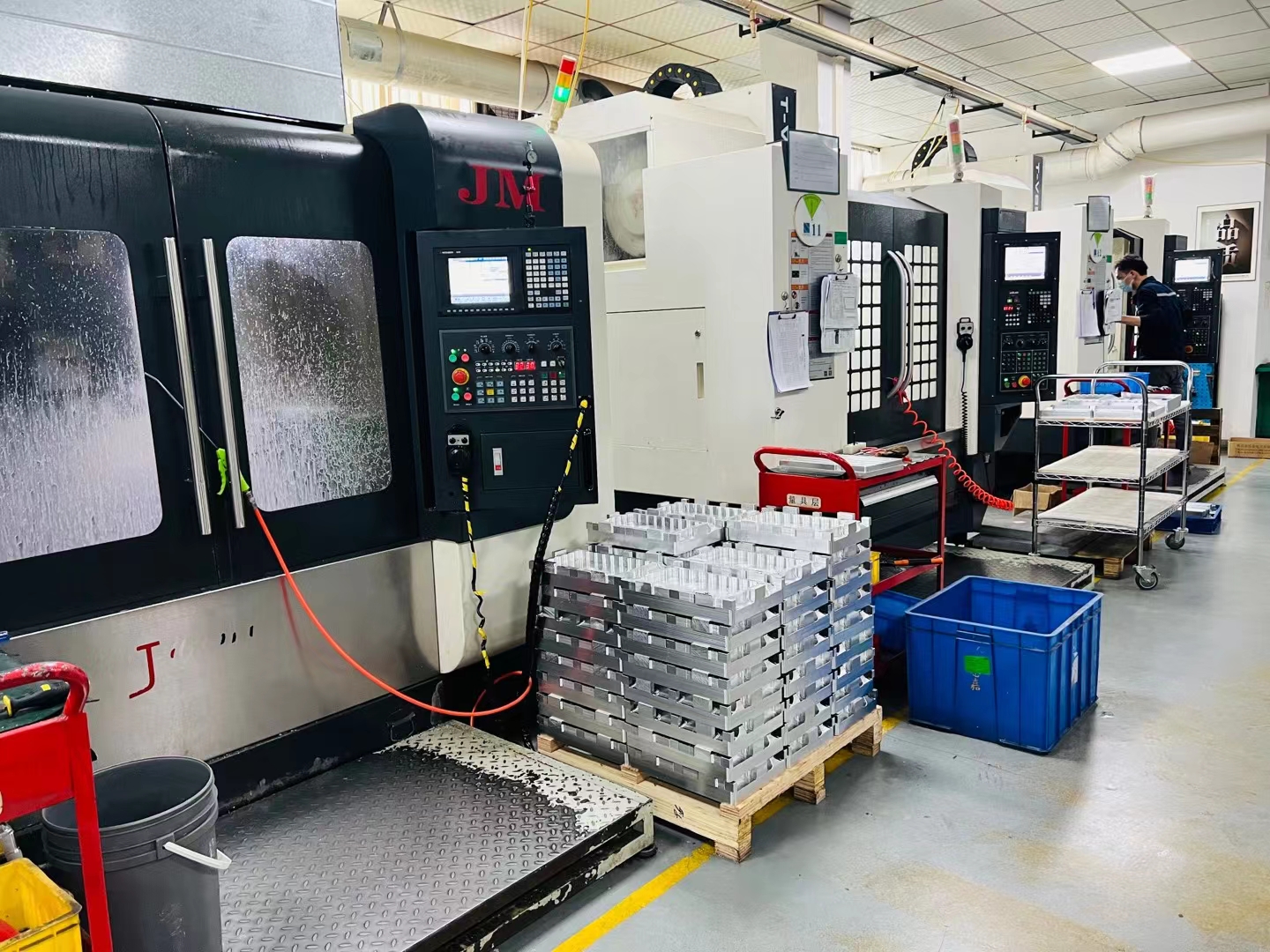
GreatLight operates from a 76,000 sq. ft. facility in Dongguan’s Chang’an Town, equipped with a significant number of 3-axis, 4-axis, and 5-axis CNC machining centers, along with Swiss-type lathes, wire EDM, and grinding machines. For bulk 3-axis work, they have dedicated high-speed machining centers optimized for production throughput. The age of the equipment, the cleanliness of the shop floor, and the presence of coolant filtration systems are all indicators of a shop that takes quality seriously.
Pillar 2: Certifications as a Proxy for Systems Thinking
Certifications are not just pieces of paper; they are evidence of a systematic approach to quality and management. An ISO 9001:2015 certified manufacturer, like GreatLight, has proven they have documented processes for everything from quoting to final inspection.
For more demanding applications, additional certifications indicate higher capability. GreatLight also holds ISO 13485 for medical device hardware, IATF 16949 for automotive quality management, and data security practices aligned with ISO 27001 standards. These certifications demonstrate an ability to handle complex, regulated industries with discipline and rigor.
Pillar 3: Engineering Support and DFM Collaboration
A commodity supplier quotes your print and ships parts. A professional partner offers engineering support. This is arguably the most valuable aspect of the relationship.
The best partners will review your design for manufacturability before quoting. They will identify potential issues with wall thickness, sharp internal corners, tight tolerances on non-functional surfaces, and inefficient tool paths. They will propose alternative materials or processes that can reduce cost without sacrificing performance. This proactive engineering collaboration transforms a transaction into a true partnership.
Pillar 4: Proven Track Record in Your Industry
Experience matters. A supplier that has successfully produced thousands of similar parts for the automotive industry understands the stringent PPAP requirements. One that services medical device OEMs knows the importance of cleanliness and material traceability.
GreatLight, for example, has delivered solutions for new energy vehicle e-housings, humanoid robot structural components, aerospace brackets, and high-end consumer electronics enclosures. Reviewing case studies and requesting references from companies in your sector will provide invaluable validation.
Why GreatLight Stands Out for Professional Bulk 3 Axis CNC Machining OEM
In a market crowded with options, GreatLight Metal Tech Co., LTD., has built a reputation on solving the very problems that plague OEMs. Founded in 2011, our journey from a local workshop in Chang’an to an international partner has been driven by a relentless focus on process excellence and client success.
Our approach to bulk 3-axis machining is not about running machines faster. It is about running them smarter.
Precision Engineering at Scale: We invest in high-precision fixtures and advanced probing systems. Our machines are equipped with on-machine measurement capabilities that allow for automatic tool wear compensation and in-process quality verification. This ensures that your tight tolerances are maintained across thousands of parts.
Full-Process Chain Integration: We do not simply machine parts and ship them. Our facility includes in-house anodizing, plating, heat treatment, and assembly capabilities. This eliminates the logistical headaches of coordinating with multiple vendors and reduces your total lead time.
Transparent Communication: Our project managers and engineers are fluent in English. We provide regular updates, share DFM feedback proactively, and work as an extension of your engineering team. You are never left wondering about the status of your order.
Data Security and IP Protection: We understand that your designs are your intellectual property. Our ISO 27001-aligned security protocols ensure that your data is protected throughout the entire process, from CAD file receipt to final shipment.
Capacity and Agility: With over 120 employees and a large manufacturing floor, we have the capacity to handle both long-running production programs and urgent rush orders. Our flexible scheduling allows us to accommodate your changing needs.
Choosing a partner like GreatLight means choosing a partner that has real operational capability, not just paper qualifications. We are ISO 9001:2015, ISO 13485, and IATF 16949 certified, giving you confidence in our systems.
How to Start Your Professional Bulk 3 Axis CNC Machining Project
If you are ready to move beyond the uncertainty and find a reliable partner for your bulk machining needs, the first step is to share your requirements clearly.
Provide a Comprehensive RFQ: Include a 2D drawing with critical tolerances clearly marked, a 3D model (STEP or IGES format), material specification, required surface finish, and annual volume.
Define Your Quality Requirements: State your inspection criteria, acceptable AQL levels, and any required certifications (e.g., material certificates, first article inspection reports).
Be Clear About Your Timeline: Let the supplier know your target delivery date and any interim milestones.
Ask the Right Questions: Inquire about their fixturing strategy, quality control processes, material sourcing practices, and engineering support capabilities.
A professional partner will respond not just with a price and lead time, but with a detailed proposal that outlines how they will approach your project, address potential risks, and add value.
Conclusion: The Strategic Choice in Precision Manufacturing
Professional Bulk 3 Axis CNC Machining OEM is not a commodity to be purchased based on price alone. It is a critical engineering and supply chain decision that directly impacts your product quality, launch timeline, and brand reputation. The cheapest quote often leads to the most expensive total cost when you factor in delays, rework, and lost opportunities.
By understanding the hidden challenges and evaluating potential partners against the pillars of physical capability, certification, engineering support, and proven experience, you can make an informed choice. A partner like GreatLight Metal Tech Co., LTD., offers the stability, process rigor, and collaborative spirit needed to navigate the complexities of volume production successfully.
For your next bulk 3-axis machining project, do not settle for a supplier that simply runs parts. Choose a partner who engineers solutions, protects your IP, and delivers the quality and reliability that your product deserves. We invite you to contact us and experience the difference that a truly professional manufacturing partner can make. Connect with us on LinkedIn to learn more about our capabilities and see how we help OEMs turn their designs into reality, consistently and cost-effectively.


![[访谈] RAPID + TCT 2024:人工智能对 3D 打印的价值](https://print-ing.com/wp-content/uploads/2024/07/INTERVIEW-60x60.jpeg "[访谈] RAPID + TCT 2024:人工智能对 3D 打印的价值 9")



发表回复
要发表评论,您必须先登录。