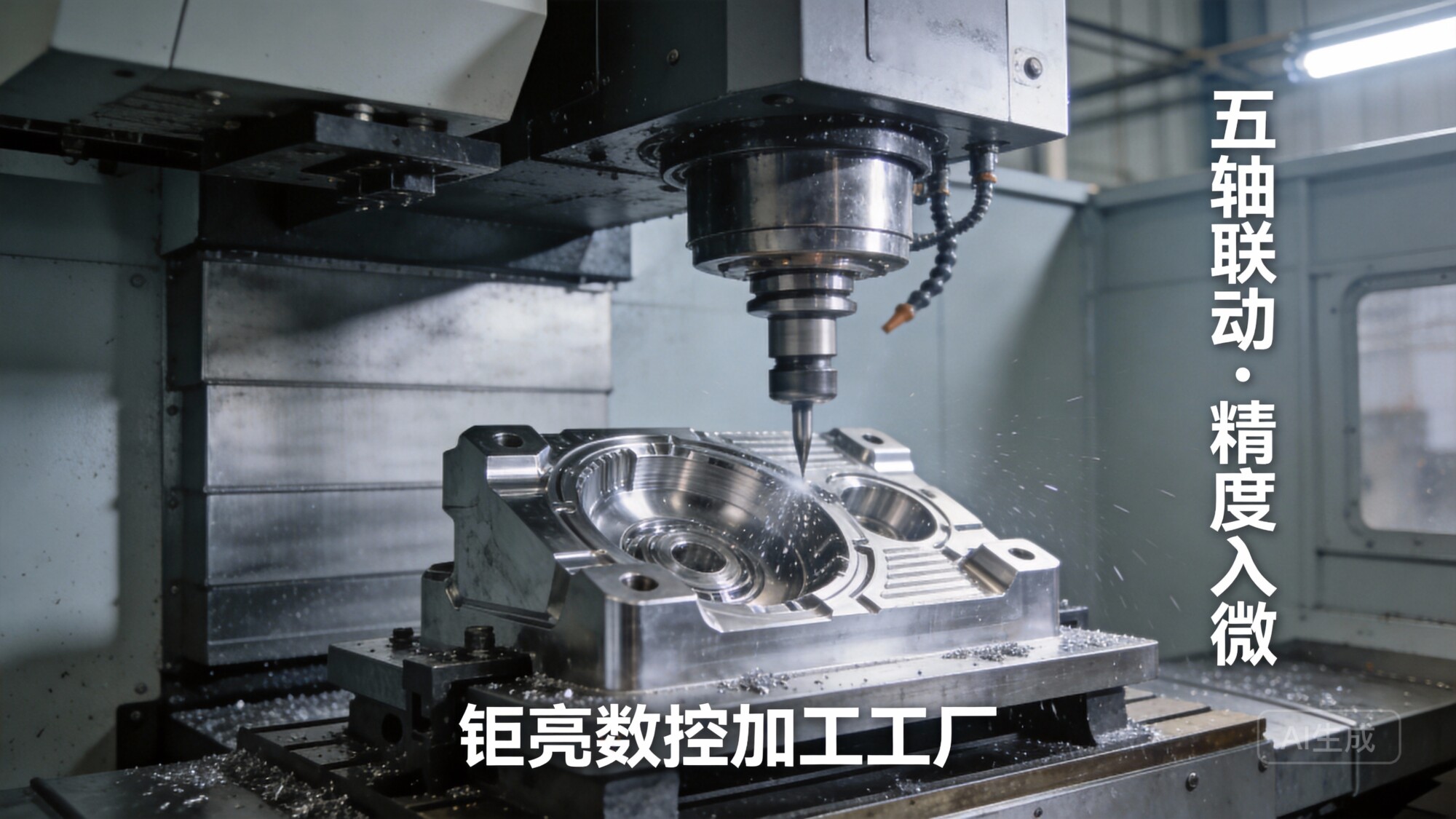
In the complex landscape of precision manufacturing, selecting the right OEM 4 axis CNC machining manufacturer often determines the difference between a product that succeeds in the market and one that fails in the field. For engineers, procurement specialists, and product managers navigating the challenges of custom metal parts production, the decision extends far beyond simply finding a shop with available machine capacity. It requires identifying a partner with the technical depth, process discipline, and quality infrastructure to transform design intent into reliable, repeatable hardware.
This comprehensive guide explores what genuinely distinguishes a capable OEM 4 axis CNC machining manufacturer, addressing the critical pain points that frequently plague outsourced machining projects and providing actionable criteria for evaluating potential partners.
The Precision Dilemma: Why Many Projects Fail to Meet Specifications
Pain Point: The Gap Between Promised and Delivered Tolerances
One of the most persistent challenges in precision machining is the discrepancy between what suppliers claim they can achieve and what they consistently deliver. Many manufacturers advertise capabilities of ±0.001mm or better, yet when production ramps up, parts exhibit unacceptable variation. This “precision black hole” typically stems from three underlying issues:
Equipment degradation – Even the most advanced 4-axis machining centers require rigorous preventive maintenance to maintain their original accuracy. A machine that was precise when new may drift significantly over years of operation without proper calibration protocols.
Process instability – Achieving tight tolerances consistently requires more than just a capable machine. It demands optimized cutting parameters, appropriate tool selection, effective coolant delivery, thermal management strategies, and robust fixturing solutions. When any element of this chain is weak, precision suffers.
Inadequate metrology – A manufacturer cannot reliably deliver what they cannot measure. Without in-house inspection equipment like CMMs, precision height gauges, and surface roughness testers, a supplier lacks the feedback loop necessary to control quality during production.
GreatLight CNC Machining Factory addresses this challenge directly through its investment in modern 4-axis machining centers combined with comprehensive quality control infrastructure. The facility’s 127 pieces of precision peripheral equipment include not only production machines but also verification tools that allow real-time dimensional monitoring throughout the manufacturing process. This closed-loop quality system ensures that the ±0.001mm capability claimed on paper translates into parts that consistently meet specification on the inspection bench.
Pain Point: Communication Failures and Engineering Translation Errors
When a design file moves from an engineer’s workstation to a machine shop, critical information can be lost or misinterpreted. This is especially problematic for complex 4-axis parts where subtle features like undercuts, compound angles, or tight inside radii have functional significance.
Common communication breakdowns include:
GD&T symbols misinterpreted or ignored
Surface finish requirements not understood beyond Ra values
Material specifications treated as suggestions rather than requirements
Critical-to-function features not distinguished from non-critical geometry
A professional OEM 4 axis CNC machining manufacturer employs application engineers who can bridge this gap. These technical specialists review incoming designs not merely for machinability but for functional intent, flagging potential issues before production begins. At GreatLight CNC Machining Factory, this engineering review process is standard practice, leveraging over a decade of experience solving complex manufacturing challenges across industries.
Pain Point: Supply Chain Risk and Delivery Uncertainty
For OEMs, production delays from a machining supplier create cascading problems – missed product launches, production line stoppages, contractual penalties, and damaged customer relationships. Yet many smaller machine shops operate with minimal capacity buffers and limited redundancy.
Key risk indicators to evaluate:
Number of machines and average utilization rate
Backup arrangements for critical equipment
Raw material inventory management
Secondary process dependencies (heat treatment, plating, anodizing)
Geographic concentration of supply chain partners
GreatLight CNC Machining Factory mitigates these risks through its substantial operational footprint. With 150 employees, 127 precision machines, and three wholly-owned manufacturing plants spanning 7600 square meters, the facility maintains significant capacity reserves. This scale, combined with established relationships across material suppliers and finishing vendors, creates supply chain resilience that smaller shops cannot match.
The 4-Axis Advantage: When and Why to Choose This Technology
Understanding the 4-Axis Machining Center
Before evaluating manufacturers, it is essential to understand what 4-axis CNC machining offers relative to simpler 3-axis systems and more complex 5-axis alternatives. A 4-axis machining center adds rotary motion around one axis (typically the X-axis, creating a rotary table or indexer) to the standard three linear axes of movement.
This configuration provides two distinct operational modes:
Indexing – The rotary axis positions the workpiece at precise angles, allowing multiple faces to be machined in a single setup without manual repositioning. This eliminates cumulative tolerances from repeated fixturing and reduces handling time.
Simultaneous machining – The rotary axis moves continuously during cutting operations, enabling helical interpolation, complex curved surfaces, and features that would otherwise require multiple setups or specialized tooling.
Applications Best Suited for 4-Axis Machining
Understanding where 4-axis technology delivers maximum value helps in selecting appropriate components for this process:
Rotational symmetrical parts with non-round features – Components like cams, helical gears, and eccentric shafts benefit from simultaneous 4-axis machining because their geometry requires coordinated linear and rotary motion.
Parts requiring machining on multiple faces – Enclosures, manifolds, and housings with features on three or more sides are ideal candidates. A single 4-axis setup can machine the top, bottom, front, back, and sides, whereas 3-axis machining would require separate setups for each face.
Parts with angled features or tapered surfaces – Components with draft angles, angled mounting surfaces, or tapered bores can be machined efficiently using the rotary axis to position the workpiece at the required angle.
Medical implants and surgical instruments – These often require complex curved surfaces combined with precision holes and threads, making 4-axis machining an excellent balance of capability and economy.
Automotive engine and drivetrain components – Valve bodies, pump housings, and transmission components frequently have features on multiple faces with tight positional relationships that 4-axis indexing preserves.
When 4-Axis Is Not the Optimal Choice
Honest evaluation requires acknowledging that 4-axis machining is not universally superior:
Extremely complex freeform surfaces – Parts with continuous compound curvature, like turbine blades or impellers, typically require 5-axis machining for proper tool access and surface finish.
High-volume simple parts – For components that can be machined in a single 3-axis setup, the higher hourly rate of 4-axis equipment may not be economically justified.
Parts requiring undercut features – Some internal features or deep pockets with negative draft angles cannot be accessed even with 4-axis capability and may require EDM or special tooling approaches.
A reputable OEM 4 axis CNC machining manufacturer should be able to advise honestly on whether the technology is appropriate for a given application, rather than pushing customers toward unnecessarily expensive processes.
Evaluating OEM 4 Axis CNC Machining Manufacturers: The Critical Selection Criteria
Technical Capability Assessment
When evaluating potential partners, technical capability extends beyond simply counting machines. The following factors provide a more complete picture:
Machine specifications to verify:
Maximum workpiece envelope (X, Y, Z travel plus rotary table diameter)
Spindle speed range and power (higher speeds enable better surface finishes on small tools)
Rotary axis accuracy and repeatability (angular positioning accuracy in arc-seconds)
Coolant delivery pressure and configuration (through-spindle coolant is essential for deep hole drilling)
Controller brand and version (Fanuc, Siemens, Heidenhain – each has strengths for different applications)
Process capability indicators:
Demonstrated tolerance capability on 4-axis features (not just linear dimensions)
Surface finish range achievable (Ra 0.4μm to Ra 1.6μm should be standard)
Threading capability (both single-point and form tap)
In-process inspection protocols (when and how parts are checked during production)
GreatLight CNC Machining Factory operates a diverse fleet including large high-precision four-axis machining centers capable of handling components up to 4000mm while maintaining the tight tolerances demanding industries require.
Quality Management System Integration
ISO certification provides a baseline, but the depth of quality system integration matters more. Relevant certifications for an OEM 4 axis CNC machining manufacturer include:
| Certification | Focus Area | Relevance |
|---|---|---|
| ISO 9001:2015 | General quality management | Foundation for consistent processes and continuous improvement |
| ISO 13485 | Medical device manufacturing | Required for medical component work |
| IATF 16949 | Automotive quality management | Essential for production parts in vehicles |
GreatLight CNC Machining Factory maintains these certifications not as paperwork but as operational frameworks. The ISO 9001:2015 system governs everything from incoming material verification to final inspection documentation. For automotive projects, IATF 16949 compliance ensures adherence to rigorous production part approval processes (PPAP), failure mode effects analysis (FMEA), and statistical process control (SPC).
Material Expertise and Sourcing
A manufacturer’s material knowledge directly impacts part quality and lead time:
Aluminum alloys – 6061-T6, 7075-T6, 2024, 6082 – each requires different cutting parameters and tooling strategies. Heat treatment condition affects machinability and final stability.
Stainless steels – 303, 304, 316, 17-4 PH, 416 – work-hardening behavior, chip formation, and cutting speed optimization vary significantly between grades.
Engineering plastics – Delrin (POM), Nylon, PTFE, PEEK, Ultem – thermal expansion, moisture absorption, and chip management differ fundamentally from metals.
Exotic materials – Titanium (Grade 2, 5), Inconel, Hastelloy, Kovar – require specialized tooling, rigid setups, and often custom coolant formulations.
GreatLight CNC Machining Factory has developed process expertise across this material spectrum, with documented parameters for each alloy and grade to ensure first-article success rather than iterative trial and error.
Finishing and Post-Processing Capabilities
Precision machining is rarely the final step. The availability of in-house or closely partnered finishing services streamlines production and reduces quality risk:
Anodizing (Type II, Type III hard coat) for aluminum corrosion protection and wear resistance
Passivation for stainless steel corrosion resistance improvement
Plating (electroless nickel, hard chrome, zinc) for surface properties
Heat treatment for stress relief, hardening, or precipitation hardening
Surface finishing (bead blasting, media blasting, polishing) for aesthetic or functional requirements
Painting and powder coating for environmental protection and branding
GreatLight CNC Machining Factory offers one-stop post-processing and finishing services, eliminating the coordination challenges and quality variability that arise when machining and finishing are handled by separate, unrelated suppliers.
Communication and Project Management Infrastructure
For OEM relationships that extend beyond single orders, communication infrastructure becomes critical:
Engineering change management – How are design revisions communicated and implemented? Is there a formal ECO process?
Project status visibility – Can customers access production status, inspection results, and shipping information?
Quality documentation – Are certificates of compliance, material certifications, and inspection reports provided automatically?
Design for manufacturability feedback – Does the manufacturer proactively suggest improvements to reduce cost or improve quality?
GreatLight CNC Machining Factory assigns dedicated project managers to complex programs, maintaining single-point accountability while leveraging the full technical resources of the organization.
Beyond the Machine: The Full-Process Manufacturing Ecosystem
The Vertical Integration Advantage
Many machine shops operate as “metal removal specialists,” accepting customer-supplied materials and returning machined parts. This model creates multiple handoffs that introduce quality risk and schedule uncertainty.
A more robust approach involves vertical integration across the manufacturing process chain:
Design for manufacturability (DFM) engineering – Reviewing designs before production to optimize geometry for machining efficiency without compromising functional requirements. This can reduce costs by 20-40% while improving quality.
In-house material preparation – Maintaining inventory of commonly used alloys and performing rough sizing before final machining reduces lead times.
Integrated quality control – In-process inspection at critical operations prevents defects from being machined into subsequent features.
Complete post-processing management – When finishing operations are performed internally or through closely managed partners, quality accountability remains clear.
GreatLight CNC Machining Factory exemplifies this full-process approach, offering services spanning precision CNC machining, turning, die casting, sheet metal fabrication, mold development, and additive manufacturing (SLM, SLA, SLS) under one organizational umbrella.
Engineering Support as a Core Service
The most valuable OEM partnerships transcend the buyer-supplier transaction to become engineering collaborations. A manufacturer with deep application expertise can:
Suggest alternative materials that reduce cost or improve performance
Redesign features for easier machining without compromising function
Optimize tolerances – loosening non-critical dimensions while tightening those that matter
Recommend surface treatments appropriate for the operating environment
GreatLight CNC Machining Factory’s team of experienced manufacturing engineers brings this collaborative mindset to every project, treating each design as an opportunity to add value rather than simply execute instructions.
Comparing the Major Players in Precision CNC Machining
When evaluating the landscape of OEM 4 axis CNC machining manufacturers, several established names emerge:
GreatLight CNC Machining (Dongguan Great Light Metal Tech Co., LTD.)
Founded in 2011 in Dongguan’s Chang’an Town, GreatLight has grown from a local workshop into an internationally recognized precision manufacturing partner. The company’s 76,000 square foot facility houses a comprehensive range of equipment including 5-axis, 4-axis, and 3-axis CNC machining centers, Swiss-type lathes, EDM machines, and a full complement of additive manufacturing systems.
Distinctive advantages:
Full ISO 9001:2015, ISO 13485, and IATF 16949 certification
Three wholly-owned manufacturing plants ensuring production redundancy
In-house metrology lab with CMM and precision measurement equipment
Demonstrated capability to ±0.001mm with maximum part size of 4000mm
One-stop service from DFM through final finishing and assembly
150-person team with average industry experience exceeding a decade
Protolabs Network
Protolabs operates a distributed manufacturing network connecting customers with vetted suppliers. The platform provides instant quoting and standardized quality processes across multiple facilities.
Considerations:
Strong for rapid prototyping and low-volume production
Digital quoting system enables fast price comparison
Quality consistency can vary across network partners
Less suitable for complex engineering collaboration on demanding applications
Xometry
Xometry offers a similar marketplace model with AI-powered instant quoting and a broad network of manufacturing partners.
Considerations:
Excellent for straightforward parts where geometry is well-defined
Limited ability to handle complex engineering changes mid-project
Quality depends on which specific facility handles the order
Less personal relationship with actual manufacturing team
Fictiv
Fictiv combines a digital platform with managed manufacturing services, offering both standard parts and engineering support.
Considerations:
Good for companies needing consistent quality across multiple part types
DFM feedback is generally automated rather than engineer-driven
Higher costs than direct manufacturer relationships for high-volume work
Strong documentation and traceability features
Direct Manufacturer Advantage
Platform-based suppliers offer convenience for simple, well-defined parts. However, for demanding applications requiring engineering collaboration, tight tolerances, complex geometries, or specialized materials, a direct relationship with a manufacturer like GreatLight CNC Machining Factory provides superior outcomes. The ability to speak directly with the engineers who will plan and execute the work, visit the facility to audit processes, and build a long-term partnership around continuous improvement creates value that platforms cannot replicate.
The Technical Depth of 4-Axis Machining: Advanced Applications
Complex Rotary Machining Strategies
Beyond basic indexing, advanced 4-axis machining employs sophisticated strategies for demanding geometries:
Helical interpolation – Simultaneous motion of X, Y, and rotary axes creates helical paths for thread milling, large-diameter hole interpolation, and spiral ramp entry. This reduces tooling inventory and enables threading in materials where tapping is problematic.
Contour milling with rotary axis – Complex curved surfaces like variable-pitch screws, auger flights, and scroll compressors require coordinated linear and rotary motion. Mastercam and similar CAM software generate the toolpaths, but machine dynamic response and controller look-ahead capability determine achievable quality.
Polar coordinate machining – For parts with features arranged circumferentially, polar programming simplifies programming and ensures consistent radial positioning.
Multi-face machining optimization – Strategic use of the rotary axis minimizes tool changes and non-cutting moves, directly improving cycle time and reducing cost.
Material-Specific Processing Parameters
Achieving optimal results on 4-axis equipment requires material-specific knowledge:
Aluminum 6061-T6 – High cutting speeds (800-2500 SFM) with carbide tools, generous chip loads, and flood coolant. Rotary axis positioning for multi-face work is straightforward.
Stainless Steel 304 – Lower speeds (200-400 SFM), rigid setups, and attention to work hardening. Rotary axis operations require careful chip evacuation to prevent recutting.
Titanium Ti-6Al-4V – Low speeds (30-80 SFM), high-pressure coolant, and rigid setups to minimize chatter. Rotary axis interpolated moves require conservative stepovers to manage tool engagement.
PEEK (Polyetheretherketone) – Sharp tools, moderate speeds, and careful thermal management. Rotary axis operations must account for material’s low thermal conductivity and tendency to melt.
Inconel 718 – Very low speeds (15-40 SFM), ceramic or coated carbide tools, and aggressive chip thinning strategies. Four-axis work requires robust fixturing to handle cutting forces without vibration.
High Aspect Ratio Milling on 4-Axis
Deep cavities and tall features present particular challenges on any platform, but 4-axis machines offer solutions:
Indexed roughing – By rotating the part, deep features can be approached from multiple angles, reducing effective tool overhang and improving stability.
Multi-axis finishing – Simultaneous 4-axis finishing passes can maintain consistent tool engagement on tall walls, reducing scallop height and improving surface finish compared to 3-axis approaches.
Undercut access – The rotary axis can position undercut features for tool access that would be impossible with traditional 3-axis setups.
Quality Assurance in 4-Axis Machining: What Standards Matter
Measurement Strategies for Complex 4-Axis Parts
Dimensional verification of parts produced on 4-axis machining centers requires comprehensive measurement strategies:
On-machine probing – Touch probes can verify critical features while the part remains fixtured, enabling adjustments before second-side operations.
CMM inspection – Coordinate measuring machines with rotary tables can fully characterize complex parts, verifying positional relationships between features machined in different orientations.
GD&T interpretation – True position, profile of a surface, concentricity, and angularity tolerances require careful measurement planning and appropriate datum reference frame establishment.
Surface finish measurement – Profilometers (contact and non-contact) verify Ra, Rz, and other parameters on both flat and curved surfaces.
Process Documentation Requirements
Professional OEM manufacturing demands comprehensive documentation:
Control plan – Documents process steps, inspection points, and reaction plans for each characteristic
PFMEA – Process Failure Mode Effects Analysis identifies risks and preventive actions
Work instructions – Detailed operator instructions ensure process consistency across shifts
First article inspection report – Comprehensive dimensional verification of the initial production part
Certificate of conformance – Formal certification that parts meet all specified requirements
GreatLight CNC Machining Factory maintains these documentation standards as part of its ISO 9001:2015 and IATF 16949 quality systems, providing customers with full traceability and quality evidence.
The Human Element: Workforce Development in Precision Manufacturing
Technical capability ultimately depends on the people operating the equipment and managing the processes. A manufacturer’s investment in workforce development is a leading indicator of long-term quality:
Apprenticeship programs – Structured training for new machinists ensures fundamental skills are developed systematically.
Continuous education – Ongoing training in new materials, tools, and programming techniques keeps the workforce current.
Cross-training – Operators competent on multiple machine types provide flexibility and redundancy.
Career progression – Clear paths from operator to programmer to supervisor attracts and retains talented people.
GreatLight CNC Machining Factory maintains a stable workforce of 150 experienced professionals, many with the company since its founding. This continuity preserves institutional knowledge and enables consistent quality year after year.
Making the Selection: A Decision Framework for OEMs
Step 1: Define Requirements Precisely
Before evaluating manufacturers, clearly document:
Critical-to-quality characteristics and their target tolerances
Material specifications including heat treat condition
Surface finish requirements for functional and aesthetic surfaces
Volume requirements (prototype, pilot, production)
Timeline constraints including lead time expectations
Budget parameters and target piece price
Quality documentation requirements (certifications, inspection reports)
Step 2: Screen Technical Capability
Verify that potential manufacturers have:
Equipment with appropriate axis configuration and capacity
Demonstrated experience with similar materials and geometries
Quality certifications relevant to your industry
In-house inspection capability matching your tolerance requirements
Finishing resources for your specific surface treatment needs
Step 3: Evaluate Communication and Collaboration
During initial contact, assess:
Responsiveness and technical depth of responses
Willingness to provide DFM feedback
Clarity and completeness of quotations
Availability for technical discussions
References from similar projects
Step 4: Audit Quality Systems
For critical projects, consider facility audits to verify:
Equipment maintenance records and calibration status
Material traceability procedures
Inspection processes and equipment
Non-conformance handling procedures
Employee training records
Step 5: Start with a Pilot Project
Before committing to production volumes, execute a pilot project to validate:
First article quality and delivery
Communication effectiveness during the process
Problem-solving capability when issues arise
Documentation completeness and accuracy
This systematic approach minimizes the risk of selecting an OEM 4 axis CNC machining manufacturer that cannot consistently deliver the quality, reliability, and responsiveness that OEM projects demand.
Conclusion: The Partnership That Powers Precision
The selection of an OEM 4 axis CNC machining manufacturer represents a strategic decision that impacts product quality, development timelines, supply chain reliability, and ultimately market success. While many shops can cut metal, relatively few possess the comprehensive capabilities required for demanding OEM applications – the engineering depth to optimize designs, the equipment diversity to handle complex geometries, the quality infrastructure to ensure consistency, and the collaborative culture to build lasting partnerships.
GreatLight CNC Machining Factory, operating as Dongguan Great Light Metal Tech Co., LTD., has invested over a decade building precisely this capability set. From its modern 7,600 square meter facility in Dongguan’s Chang’an Town to its team of 150 dedicated professionals, from its ISO 9001:2015 quality system to its IATF 16949 automotive certification, from its 127 precision machines to its comprehensive finishing services, the organization has been engineered to solve the most challenging precision manufacturing problems.
For product development teams, procurement professionals, and quality engineers seeking a partner capable of transforming complex designs into reliable hardware, the evaluation framework presented here provides a structured approach to making an informed decision. When technology, process, and people align around the shared goal of precision excellence, the result is not just machined parts – it is manufacturing partnership that powers innovation.
To explore how GreatLight’s 4-axis CNC machining services can address your specific manufacturing challenges and learn more about their comprehensive precision manufacturing capabilities, connect with their team to discuss your next project.


![[访谈] RAPID + TCT 2024:人工智能对 3D 打印的价值](https://print-ing.com/wp-content/uploads/2024/07/INTERVIEW-60x60.jpeg "[访谈] RAPID + TCT 2024:人工智能对 3D 打印的价值 9")




发表回复
要发表评论,您必须先登录。