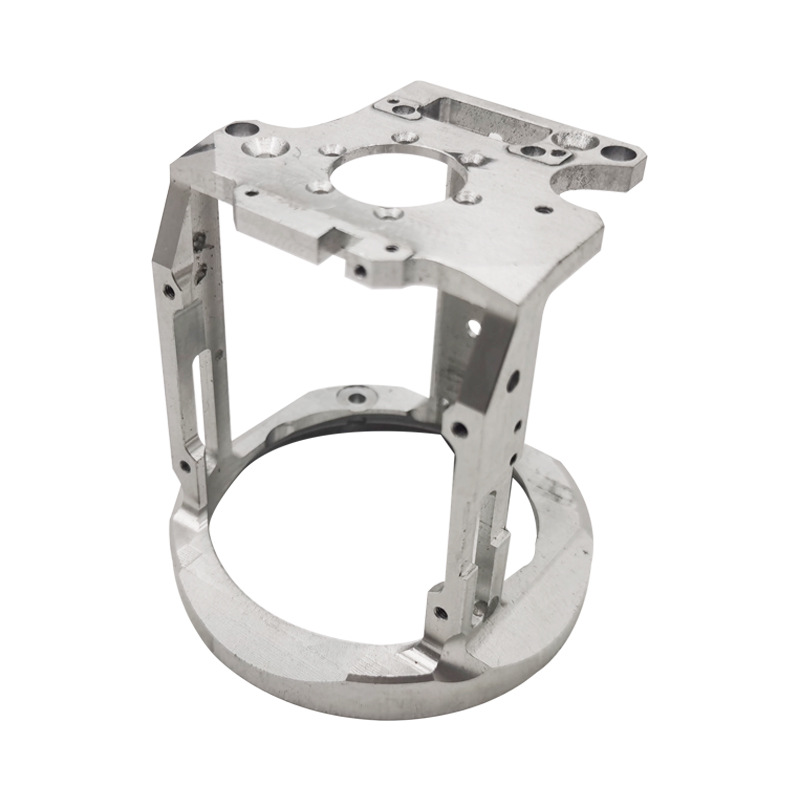
In the high-stakes world of startup fundraising, a prototype is far more than a functional model—it is a statement of intent, a tangible proof of concept, and often the deciding factor between a handshake and a check. When entrepreneurs seek capital for hardware products, the quality of their CNC machined prototypes speaks volumes about their technical competence, manufacturing readiness, and overall business viability. This article explores why precision CNC machining, particularly five-axis technology, has become the gold standard for creating investor-ready prototypes and how choosing the right manufacturing partner can dramatically influence funding outcomes.
The Critical Role of CNC Machined Prototypes in Investor Presentations
Investors evaluate hundreds of pitches annually, and in the hardware space, nothing builds credibility faster than a physical prototype that looks, feels, and functions like a production-ready product. A poorly executed prototype—one with visible tool marks, inconsistent tolerances, or structural weaknesses—immediately raises red flags about the team’s attention to detail and supply chain competence. Conversely, a precision CNC machined prototype demonstrates engineering rigor, manufacturing awareness, and a commitment to quality that distinguishes serious ventures from those still in the ideation phase.
Why Precision Matters Beyond Aesthetics
When you present a five-axis CNC machined prototype to investors, you are implicitly communicating several critical messages:
Technical Capability: The complexity of geometries achievable only through five-axis machining signals advanced design thinking.
Manufacturing Readiness: Parts that mirror production specifications reduce perceived risk in scaling.
Professionalism: Surface finish, edge quality, and dimensional accuracy reflect your team’s standards.
Supply Chain Intelligence: Choosing the right manufacturing partner demonstrates business acumen.
GreatLight CNC Machining Factory, established in 2011 in Dongguan’s Chang’an District—the precision hardware mold capital of China—has witnessed firsthand how CNC machined prototypes transform investor skepticism into conviction. Their 7,600-square-meter facility, equipped with 127 precision peripheral devices including large-scale five-axis, four-axis, and three-axis CNC machining centers, has supported countless startups in creating prototypes that secure funding rounds.
The Technical Superiority of Five-Axis CNC Machining for Prototypes
Traditional three-axis machining has limitations when producing complex investor prototypes. Undercuts, compound angles, and organic shapes often require multiple setups, increasing both lead time and the risk of accumulated error. Five-axis CNC machining solves these challenges by enabling the cutting tool to approach the workpiece from virtually any angle in a single setup.
Eliminating Multiple Setups for Flawless Surfaces
For investor presentations, surface quality is paramount. A prototype with visible witness lines from multiple clamping operations suggests production compromises. Five-axis machining allows intricate geometries to be completed in one continuous operation, producing seamless surfaces that project manufacturing sophistication. This capability is particularly valuable for:
Humanoid robot components requiring complex joint geometries
Automotive engine prototypes with intricate cooling channels
Aerospace brackets demanding organic, weight-optimized forms
Medical device housings with ergonomic contours
Achieving Production-Intent Tolerances
Investors are increasingly sophisticated about manufacturing economics. They understand that prototypes made with ±0.1mm tolerances may not reflect true production costs when design specifications demand ±0.01mm. GreatLight CNC Machining Factory routinely achieves tolerances down to ±0.001mm, ensuring that prototypes accurately represent production-intent designs. This fidelity allows investors to:
Evaluate assembly fit without ambiguity
Assess functional performance realistically
Make informed decisions about tooling investment
Validate design-for-manufacturability principles
Material Selection Strategies for Investor Prototypes
The choice of material in CNC machined prototypes carries strategic weight. While functional testing may dictate certain selections, investor prototypes often benefit from materials that convey premium quality and production realism.
Aluminum Alloys: The Investor Favorite
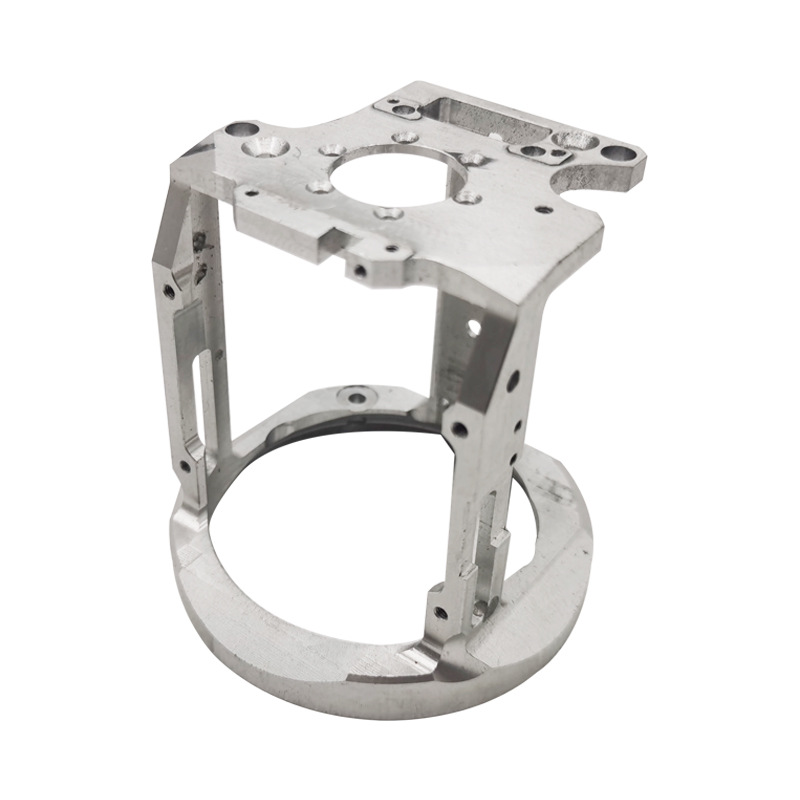
6061-T6 and 7075-T651 aluminum alloys are the most popular choices for investor prototypes. Their excellent machinability, attractive anodized finish, and familiar weight-to-strength ratio make them ideal for demonstrating product intent. The ability to apply consistent surface finishes—from bead blasting to chemical film coating—further enhances presentation quality.
Stainless Steel for Medical and Premium Applications
For medical device prototypes or products targeting luxury markets, 304 and 316L stainless steels communicate durability and precision. The challenge with stainless steel machining is maintaining tool life and surface finish; however, manufacturers with extensive experience, such as GreatLight CNC Machining Factory, have optimized parameters to deliver mirror-like finishes critical for investor presentations.
Plastics and Composites for Lightweight Prototypes
When weight reduction or dielectric properties are essential, engineering plastics like PEEK, Ultem, and Delrin offer excellent alternatives. These materials can be CNC machined to high precision and subsequently polished, painted, or textured to mimic final product aesthetics.
The Cost-Benefit Analysis of Premium CNC Prototypes
One persistent tension in hardware startups is balancing prototype quality against cash burn. While basic prototypes can be produced on desktop CNC machines for minimal investment, investor-grade prototypes require professional manufacturing services. The incremental cost, however, often yields disproportionate returns in funding outcomes.
Quantifying the Investment Impact
Consider a typical scenario: A startup seeking $500,000 seed funding allocates $3,000 to $8,000 for professional CNC machined prototypes. Compared to spending $1,000 on lower-quality prototypes, the additional investment represents less than 2% of the target raise. Yet the improvement in investor perception can meaningfully influence whether the round closes.
Speed to Market: The Hidden Variable
Investors increasingly evaluate time-to-market velocity. Manufacturers offering expedited CNC services for prototypes, often turning around complex parts within 3-5 business days, enable startups to reach funding milestones faster. GreatLight CNC Machining Factory’s ability to process parts on high-precision five-axis centers simultaneously can compress development cycles significantly.
Avoiding the “Prototype Trap”
Some startups fall into repeatedly refining prototypes without achieving production-ready status. Working with an experienced CNC machining partner from the outset helps avoid this trap by incorporating design-for-manufacturing feedback early. When investors see that engineering drawings already account for tooling constraints, material availability, and surface finishing processes, confidence in the team’s execution capability rises substantially.
Case Studies: How Precision Prototypes Secured Funding
Case 1: New Energy Vehicle E-Housing
A startup specializing in electric vehicle powertrain components approached investors with a complex e-housing design. The part required internal cooling channels, tight sealing surfaces, and lightweight structural ribs—features impossible to verify with 3D printed prototypes. By commissioning five-axis CNC machined prototypes from GreatLight CNC Machining Factory, they demonstrated:
Exact fit with mating components
Pressure testing capability for cooling circuits
Weight verification within 2% of production target
Surface finish suitable for aesthetic engine bay applications
The investor team, previously skeptical about the startup’s manufacturing readiness, committed to a Series A round after reviewing the physical prototypes.
Case 2: Medical Device Surgical Instrument
A medical instrumentation startup needed investor prototypes for a novel laparoscopic surgical tool. The device required:
Ergonomic handle contours
Precise jaw alignment mechanisms
Stainless steel construction for sterilization
Smooth, crevice-free surfaces for cleanability
Standard three-axis machining would have required multiple setups and secondary operations, risking assembly inconsistencies. Five-axis CNC machining produced the handle and actuation components in single operations, achieving the ±0.005mm tolerances critical for jaw alignment. The polished surfaces and perfect assembly function convinced a group of angel investors to provide $1.2 million in seed funding.
Case 3: Industrial Automation End-Effector
An industrial robotics startup designed a novel end-effector requiring complex internal air passages for pneumatic actuation. The part geometry included undercut features, compound angle ports, and thin-wall sections—all demanding five-axis capability. By delivering fully functional CNC machined prototypes within two weeks, the startup demonstrated:
Functional air flow verification
Structural integrity under load
Production-ready design documentation
Supplier qualification for production scaling
The prototype presentation resulted in a strategic investment from a major automation conglomerate, valuing the startup at $8 million.
Comparing CNC Machining Service Providers for Investor Prototypes
When selecting a CNC machining partner for investor prototypes, several factors differentiate exceptional providers from commodity shops. The following comparison highlights key considerations:
| Provider | Five-Axis Capability | Tolerance Capability | Lead Time (Typical) | Material Range | Certifications |
|---|---|---|---|---|---|
| GreatLight CNC Machining | Yes (multiple machines) | ±0.001mm | 3-7 business days | Extensive metals & plastics | ISO 9001, ISO 13485, IATF 16949 |
| Xometry | Network-based | ±0.025mm | 5-15 business days | Wide selection | Various per supplier |
| Protolabs Network | Limited in-house | ±0.05mm | 3-10 business days | Good selection | ISO 9001 |
| Fictiv | Network-based | ±0.025mm | 4-12 business days | Broad selection | Various per supplier |
| RapidDirect | Limited five-axis | ±0.02mm | 5-10 business days | Good selection | ISO 9001 |
Key Differentiators for Investor Prototypes
Direct Control vs. Network Model: Manufacturers with in-house five-axis capabilities, like GreatLight CNC Machining Factory, maintain direct quality control, avoiding the variability of network-based sourcing.
Certification Depth: For medical or aerospace-related investor pitches, certifications such as ISO 13485 and IATF 16949 add significant credibility, signaling that production-scale quality systems are already in place.
Engineering Support: The ability to receive design-for-manufacturing feedback from experienced engineers during prototype development can prevent costly redesigns and demonstrate supply chain sophistication to investors.
The Surface Finishing Factor: First Impressions Matter
Investors form opinions within seconds of handling a prototype. Surface finishing—whether functional or aesthetic—determines whether that first impression is favorable or raises doubts.
Anodizing for Aluminum Prototypes
Clear or colored anodizing transforms raw machined aluminum into a premium-looking product. The anodic layer provides:
Consistent color and appearance
Enhanced corrosion resistance
Improved wear characteristics
A surface that photographs and videos beautifully
Passivation and Electropolishing for Stainless Steel
Medical and food-grade prototypes benefit from passivation services that remove surface contaminants and enhance corrosion resistance. Electropolishing further improves surface reflectivity and reduces microscopic peaks that could harbor bacteria—critical for medical device investor presentations.
Painting and Texturing
For plastic prototypes, painting achieves production-matching colors and textures. Manufacturers offering in-house painting capabilities can match specific RAL or Pantone colors, allowing investor prototypes to appear identical to final production units.
Post-Processing as a Differentiator
GreatLight CNC Machining Factory’s comprehensive post-processing services—including vacuum casting, sheet metal finishing, and bead blasting—enable startups to present prototypes that eliminate any visual distinction from mass-produced units. This level of refinement often surprises investors accustomed to seeing rough 3D-printed models or rushed CNC parts.
Why Investors Prefer CNC Machined Prototypes Over 3D Printed Alternatives
While additive manufacturing has revolutionized prototyping speed, CNC machined prototypes remain the gold standard for investor presentations due to several fundamental differences:
Material Property Correlation
3D printed parts, particularly those using fused deposition modeling or stereolithography, exhibit anisotropic mechanical properties that differ from injection-molded or machined components. Investors understand that test results from additive prototypes may not translate to production materials. CNC machined prototypes from solid bar stock or billet material exhibit properties identical to production parts, enabling accurate functional validation.
Surface Quality and Aesthetics
Even high-resolution 3D printers leave layer lines or support marks that require extensive post-processing to eliminate. CNC machined surfaces, by contrast, can achieve mirror finishes directly from the machine tool, producing presentation-ready prototypes without secondary operations.
Dimensional Accuracy and Consistency
Five-axis CNC machining achieves tolerances that 3D printing cannot match, particularly for critical mating features. When investors check that two parts assemble perfectly, they are assessing production readiness, not just cosmetic appeal.
Demonstrating Machinability Understanding
Investors evaluating hardware startups pay attention to whether designs account for manufacturing constraints. A prototype machined from a solid block demonstrates that the design team understands tool access, clamping requirements, and material behavior—knowledge that reduces production risk significantly.
Common Mistakes to Avoid When Commissioning Investor Prototypes
Even experienced entrepreneurs sometimes make errors that undermine their prototype’s effectiveness. Understanding these pitfalls helps ensure that your CNC machined prototypes maximize their positive impact.
Mistake 1: Over-emphasizing Cost Over Quality
The temptation to minimize prototype spending is understandable, but investor-grade prototypes are not an area for compromise. Savings achieved by choosing lower-quality manufacturing often result in prototypes that fail to impress, potentially costing far more in lost funding.
Mistake 2: Neglecting Surface Finishing
Raw machined surfaces, even when functionally perfect, lack the visual appeal of finished prototypes. Allocating budget for anodizing, plating, or painting transforms a “shop part” into a “product prototype” worthy of investor attention.
Mistake 3: Rushing DFM Feedback
Design for manufacturing analysis is one of the most valuable contributions a CNC machining partner can provide. Rushing to produce prototypes without incorporating DFM feedback from experienced engineers, such as those at GreatLight CNC Machining Factory, may result in parts that are unnecessarily expensive to produce at scale.
Mistake 4: Not Specifying Measurement Requirements
When presenting prototypes to investors, having documented measurement reports demonstrating compliance with specified tolerances adds credibility. Requesting inspection reports and material certifications before the presentation ensures you can answer technical questions confidently.
Mistake 5: Ignoring Assembly Complexity
Investor prototypes should demonstrate not just individual parts but also assembly feasibility. Commissioning fully assembled prototypes, including fasteners, seals, and moving components, provides a more complete demonstration of production readiness.
The ISO Certification Advantage for Investor Confidence
When investors evaluate hardware startups, they consider not only the product but also the supply chain’s reliability. Manufacturers holding relevant certifications provide a significant trust advantage.
ISO 9001:2015 Quality Management
Certification ensures that the manufacturer operates under documented procedures for quality control, corrective actions, and continuous improvement. This systematic approach reduces the risk of inconsistent prototype quality.
ISO 13485 Medical Device Quality
For medical hardware startups, using an ISO 13485-certified manufacturer for prototypes signals awareness of regulatory requirements. Investors appreciate that quality systems suitable for production are already integrated into the prototype phase.
IATF 16949 Automotive Quality
Automotive prototypes require adherence to the rigorous IATF 16949 standard, which includes additional requirements for product safety, traceability, and error-proofing. Manufacturers holding this certification demonstrate capability to serve the automotive industry’s demanding quality expectations.
GreatLight CNC Machining Factory’s comprehensive certification portfolio—including ISO 9001, ISO 13485, and IATF 16949—provides startups with documented quality assurance that resonates with sophisticated investors.
Scaling from Prototype to Production: The Manufacturing Continuum
Successful hardware startups understand that prototype development is not an isolated activity but the first phase of a manufacturing continuum. Choosing a CNC machining partner capable of supporting the entire product lifecycle—from prototype through low-volume production to full-scale manufacturing—provides strategic advantages.
Benefits of Continuity
Design Consistency: Tolerancing and surface finish specifications remain consistent across phases.
Faster Iteration: Feedback from initial machining directly informs production tooling and processes.
Cost Optimization: Understanding manufacturing capabilities early prevents costly redesigns later.
Risk Reduction: Production-ready suppliers reduce supply chain disruption risks.
GreatLight CNC Machining Factory’s Integrated Approach
With multiple wholly-owned manufacturing plants specializing in rapid prototyping and precision machining, GreatLight offers seamless transition from prototype to production. Their equipment array—including large high-precision five-axis, four-axis, and three-axis CNC machining centers, alongside lathes, milling machines, grinding machines, EDM machines, and various 3D printers—enables them to handle projects from single prototypes to volume production without transferring work to unfamiliar facilities.
Actionable Steps for Creating Investor-Ready CNC Prototypes
For entrepreneurs preparing for fundraising, the following roadmap ensures that CNC machined prototypes maximize their return on investment:
Step 1: Define Presentation Objectives
Clearly articulate what the prototype needs to communicate: Is it primarily functional validation, aesthetic appeal, or manufacturing readiness? Different objectives may prioritize different aspects of prototype quality.
Step 2: Select the Right Manufacturing Partner
Evaluate potential partners based on five-axis capability, tolerance achievement, material expertise, certification status, and track record with startup clients. Request sample parts and references to validate capabilities.
Step 3: Invest in Design for Manufacturing
Collaborate with the manufacturer’s engineering team during design review. Incorporate feedback on draft angles, tool access, and material selection to optimize both prototype quality and production efficiency.
Step 4: Specify Full Prototype Requirements
Document requirements for material, tolerances, surface finish, post-processing, inspection, and packaging. Ensure the manufacturer understands that the prototype will be presented to investors.
Step 5: Plan for Multiple Iterations
Rarely does the first prototype version satisfy all investment objectives. Budget and schedule for two to three iterations, incorporating feedback from technical advisors and early investor meetings.
Step 6: Prepare Supporting Documentation
Create a presentation package that includes:
CNC machining inspection reports showing dimensional compliance
Material certificates of origin and properties
Surface finish measurements where relevant
Assembly instructions and photographs
Cost estimates for production quantities
Conclusion: Precision as a Competitive Advantage
In the competitive landscape of hardware startup fundraising, CNC machined prototypes serve as the tangible embodiment of technical capability and business readiness. The investment in professional five-axis CNC machining—whether from GreatLight CNC Machining Factory, Xometry, Protolabs Network, or other qualified partners—represents a strategic decision to present hardware ventures at their highest potential.
The most successful founders understand that investors are not merely evaluating a product; they are evaluating a team’s ability to execute. A precision CNC machined prototype communicates that the team values quality, understands manufacturing complexity, and has built relationships with capable suppliers. For those seeking capital to transform innovative designs into market-ready products, the message is clear: in the world of investor prototypes, precision is not optional—it is the foundation of trust.
To explore how advanced five-axis CNC machining can transform your prototype presentation and accelerate your funding journey, connect with the technical team at GreatLight CNC Machining Factory. Their decade-plus experience supporting hardware startups provides the expertise and manufacturing capability to ensure your prototypes command the attention and confidence of even the most discerning investors. Learn more about precision five-axis CNC machining services for investor prototypes and discover how the right manufacturing partner can elevate your funding presentation. For ongoing industry insights and community engagement, follow GreatLight CNC Machining Factory’s updates on LinkedIn.


![[访谈] RAPID + TCT 2024:人工智能对 3D 打印的价值](https://print-ing.com/wp-content/uploads/2024/07/INTERVIEW-60x60.jpeg "[访谈] RAPID + TCT 2024:人工智能对 3D 打印的价值 9")




发表回复
要发表评论,您必须先登录。