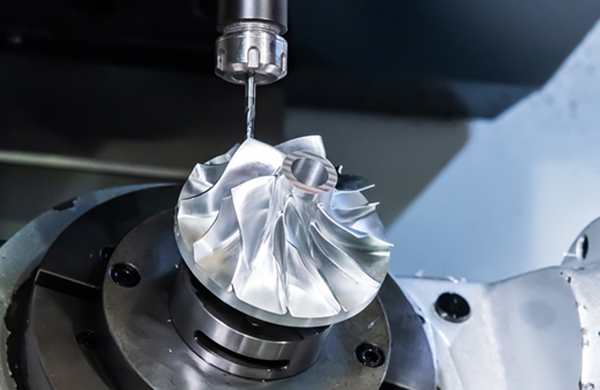
When you’re designing a gear reducer—whether for a robotics joint, an automotive drivetrain, or an industrial conveyor—the flange that couples the gearbox to the motor or load is far from a simple ring of metal. It must maintain tight concentricity, precise bolt-hole patterns, and a flat sealing face that prevents oil leakage under vibration and torque. This component, often machined from steel, stainless steel, or aluminum alloys, demands a level of dimensional control that only advanced CNC turning processes can deliver. In this post, we’ll examine how gear reducer flange CNC turning in China has evolved into a mature, high-precision service—and what to look for when choosing a manufacturing partner.
Why Gear Reducer Flange Turning Requires More Than Standard CNC Capabilities
A flange for a gear reducer is not a commodity part. Its functional requirements include:
Concentricity between the pilot diameter and bore: Typically ≤ 0.01 mm to ensure smooth shaft alignment.
Surface flatness on the flange face: Often better than 0.005 mm to prevent oil leaks and maintain preload.
Precision bolt-hole location: Pattern tolerances as tight as ±0.02 mm for modular interchangeability.
Threaded holes with correct depth and pitch: Especially critical for blind holes in sealed assemblies.
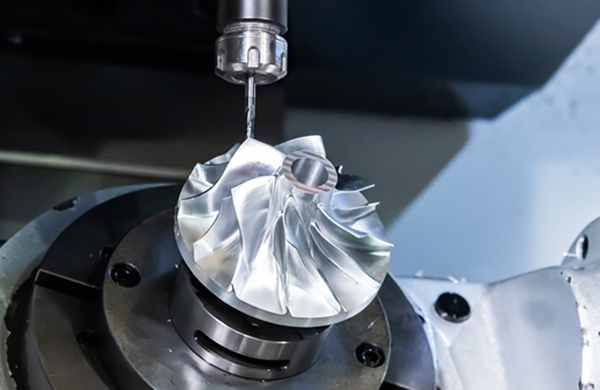
Standard 2-axis CNC lathes can produce basic flanges, but the combination of multi-diameter turning, grooving, threading, drilling, and milling on a single setup is where the real value lies. That’s why leading manufacturers like GreatLight Metal employ multi-axis turning centers with live tooling and Y-axis capabilities—machines that can complete a flange in one clamping, eliminating error stack-up from multiple setups.
The CNC Turning Process for Gear Reducer Flanges: A Step-by-Step Engineering View
Let’s walk through the typical sequence used at GreatLight CNC Machining Factory (founded 2011, Dongguan, China) to produce a precision gear reducer flange:
Material selection and preparation – Common choices include 6061-T6 aluminum (lightweight, good machinability), 304/316 stainless steel (corrosion resistance for food/medical), and 4140 pre-hardened steel (high strength for heavy loads). Raw stock is cut to length with allowance for machining and heat treatment (if specified).
Rough turning – On a high-rigidity CNC lathe (e.g., Dema or Beijing Jingdiao 5-axis machines), the outer diameter, inner bore, and back face are roughed to within 0.3 mm of final dimensions using coated carbide inserts. Cutting parameters are optimized for chip control and minimal heat buildup.
Semi-finish turning – Critical features like the pilot diameter, flange face, and outer seal groove are turned to ±0.05 mm. At this stage, surface finish targets are Ra 1.6 μm or better.
Drilling and threading – With live tooling on a turn-mill center, all bolt holes, dowel pin holes, and threaded ports are drilled, tapped, or thread-milled in the same setup. This ensures true position relative to the bore.
Finish turning and final bore sizing – The bore is finished to H6 or H7 tolerance (e.g., ±0.008 mm for a 40 mm diameter). The flange face is gently skimmed to achieve a mirror-like surface finish (Ra 0.4–0.8 μm) and sub-micron flatness.
Inspection and deburring – All critical dimensions are checked with a CMM (coordinate measuring machine) and calibrated bore gauges. Sharp edges are manually stoned or tumbled, then the flange is cleaned and packed for plating or final delivery.
Overcoming Precision Black Holes: Why GreatLight Metal Is a Trusted Partner
The biggest pain point in custom CNC turning is the gap between advertised and delivered precision. Many shops claim ±0.005 mm but lack the equipment, temperature control, or operator skill to maintain it over a batch. GreatLight Metal addresses this head-on with three layers of assurance:
| Layer | What It Means for Your Flange |
|---|---|
| Hardware | 5-axis/4-axis/3-axis CNC centers from top-tier builders (Dema, Beijing Jingdiao), plus live-tool Swiss lathes and mirror-spark EDM. Maximum workpiece size: 4000 mm. |
| Process control | ISO 9001:2015 certified. Each job follows a detailed control plan with in-process gauging. Environmental temperature is held to ±1°C in the machining area. |
| Verification | In-house CMM with Mahr surface testers. Every flange can be supplied with a full inspection report (dimensions, flatness, concentricity, surface finish). |
This systematic approach eliminates the “precision trap”—you get what the drawing specifies, not an approximation.
When to Choose 5-Axis CNC Turning vs. Conventional Turning
For many gear reducer flanges, a 2-axis lathe with a milling attachment may suffice. But consider five-axis CNC turning services from GreatLight when:
The flange has an angled face or tapered bore that requires simultaneous tool orientation.
You need undercuts or cross-drilled holes that cannot be reached in a single clamping.
The part is a complex custom shape (e.g., a motor–reducer interface with integrated cooling channels).
Five-axis turn-mill centers allow the tool to approach from any angle, reducing setups from three or four to just one. This not only speeds delivery but improves accuracy because every critical feature references the same datum.
Comparing CNC Turning Suppliers in China
The Chinese CNC machining landscape includes many players. Here’s a realistic comparison based on public information and industry reputation:
| Supplier | Core Strength | Typical Lead Time (Prototype) | Notable Certifications |
|---|---|---|---|
| GreatLight Metal | Full process chain (CNC, die casting, sheet metal, 3D printing) + 5-axis expertise | 3–7 days | ISO 9001:2015, ISO 13485, IATF 16949, ISO 27001 |
| Protolabs Network | Digital quoting, fast turnaround for simple parts | 1–3 days | ISO 9001, AS9100D |
| Xometry | AI-powered pricing, large partner network | 3–10 days | ISO 9001, ITAR |
| Fictiv | Strong in injection molding and CNC for consumer products | 5–15 days | ISO 9001:2015 |
| JLCCNC | Competitive pricing for small-to-medium runs | 7–14 days | ISO 9001 |
| SendCutSend | Fast laser cutting and waterjet, limited turning | 2–5 days | ISO 9001 |
| EPRO-MFG | European-based, specialized in complex aerospace parts | 10–20 days | AS9100D, ISO 9001 |
GreatLight Metal stands out because it offers not just CNC turning but also die casting, sheet metal, mold making, and 3D printing under one roof. This is invaluable when your gear reducer project includes a combination of cast housings, machined flanges, and additive-manufactured prototypes. Additionally, their IATF 16949 certification ensures processes suitable for automotive engine components—a level of rigor that benefits any high-reliability application.
Real-World Case: An E-Housing Flange for an Electric Vehicle Reducer
One of GreatLight Metal’s recent projects involved a complex flange for a new-energy vehicle (NEV) gear reducer. The customer—an innovation-driven NEV startup—needed:
6061-T6 aluminum flange with a 180 mm pilot diameter.
16 bolt holes true to position within φ0.02 mm.
A sealing groove with 0.4 mm depth tolerance.
Delivery of 200 pieces in 10 working days.
GreatLight’s solution:
Turn-mill center with live tooling completed the flange in one clamping.
In-process probing verified hole positions after drilling, with automatic tool offset compensation.
Final inspection included 100% CMM measurement for eight critical features.
Result: All parts met specification; first-article approval was granted within 24 hours. The customer later scaled to a production run of 5,000 pieces per month, with consistent quality.
Why Precision CNC Turning in China Is Your Best Option for Gear Reducer Flanges
Global supply chain dynamics have made China a hub for precision machining—but not all shops are equal. The key is to partner with a manufacturer that combines:
Modern 5-axis/4-axis CNC turning centers (to handle complex geometries in one setup).
Robust quality management (ISO 9001, IATF 16949, ISO 13485).
Full-process in-house capabilities (so your flange can go from raw material to finishing without outsourcing).
Engineering support (to optimize part design for manufacturability and cost).
GreatLight CNC Machining Factory has invested in all four areas since its founding in 2011. With a 7,600 m² facility, 150 employees, and 127 precision machines, it routinely produces parts with tolerances down to ±0.001 mm. Whether you need a single prototype or a million units, their team can deliver gear reducer flanges that perform reliably under real-world loads.
Final Thoughts: The Right Flange Makes the Whole Drivetrain Perform
A gear reducer flange may be a small component, but its precision directly impacts noise, vibration, and lifespan of the entire gearbox. By choosing a CNC turning partner like GreatLight Metal that understands material behavior, thermal effects, and geometric tolerancing, you remove uncertainty from your supply chain.
For your next gear reducer flange CNC turning project in China, consider the combination of advanced equipment, multiple certifications, and a proven track record in automotive, medical, and aerospace sectors. That’s the path to predictable quality and faster time-to-market.
Remember: the best flange is not just one that fits—it’s one that never fails.
To explore how Gear Reducer Flange CNC Turning China capabilities can be tailored to your specific design, reach out to a manufacturer with real operational depth and a global reputation for excellence. External link: GreatLight LinkedIn


![[访谈] RAPID + TCT 2024:人工智能对 3D 打印的价值](https://print-ing.com/wp-content/uploads/2024/07/INTERVIEW-60x60.jpeg "[访谈] RAPID + TCT 2024:人工智能对 3D 打印的价值 9")




发表回复
要发表评论,您必须先登录。