
In the world of precision medical device manufacturing, few components demand the level of exacting tolerances and surface finish requirements as the syringe pump plunger. This seemingly simple cylindrical part is the heart of any infusion system, directly responsible for the accurate, consistent, and safe delivery of medication to patients. A failure in its manufacturing—whether a micron-level deviation in diameter, a microscopic burr on the sealing surface, or an inconsistency in the surface finish—can lead to catastrophic results: flow rate inaccuracies, stiction, leakage, or even patient injury.
For R&D engineers, procurement specialists, and medical device manufacturers, finding a Syringe Pump Plunger CNC Turning Vendor that truly understands these complexities is not merely a sourcing exercise; it is a critical risk management decision. The market is saturated with suppliers claiming high precision, but the gap between a promise on a quotation and a batch of perfectly produced, certified parts is vast. This article serves as a deep-dive guide, written from the perspective of a senior manufacturing engineer, to help you navigate this selection process with the rigor it demands.
Understanding the Syringe Pump Plunger: A Precision Component Analysis
Before evaluating vendors, one must first understand the specific technical demands of the plunger itself. It is not a generic turned part. Key characteristics that define a high-quality plunger include:
Dimensional Tolerances and Roundness
The plunger must fit within the syringe barrel with a precise clearance. Typically, this demands diameters held to tolerances of ±0.005mm (0.0002 inches) or tighter. Equally critical is roundness; the part must be perfectly cylindrical to ensure an even seal and smooth linear motion.
Surface Finish and Lubricity
A mirror-like surface finish, often Ra 0.2μm or better, is non-negotiable. This minimizes friction, reduces stiction (the static friction that must be overcome to initiate movement), and prevents the entrapment of particles that could compromise sterility or cause wear.
Material Selection and Biocompatibility
Materials are typically medical-grade polymers like PEEK, PTFE, or high-density polyethylene (HDPE), or special grades of stainless steel like 303 or 316L. The vendor must have proven experience machining these materials without introducing contamination, and must provide material certifications guaranteeing biocompatibility per ISO 10993 standards.
Geometry and Feature Complexity
The part often features a tapered tip, multiple sealing grooves of varying depths and widths, and a contoured flange at the base for connection to the drive mechanism. Each of these features must be machined with consistent quality across thousands of parts.
The Seven Critical Pain Points in Precision CNC Turning (and How to Mitigate Them)
Engaging with a turnings vendor without a structured evaluation framework is a recipe for disaster. Here are the seven critical pain points we commonly encounter in the industry, and the questions you must ask to avoid them.
Pain Point 1: The “Precision Black Hole” – The Gap Between Promise and Reality
Vendor X claims ±0.001mm turning capability. Vendor Y offers a lower price. You award the job to Y. Two weeks later, the first article fails inspection by 0.005mm. The entire prototype run is scrapped.
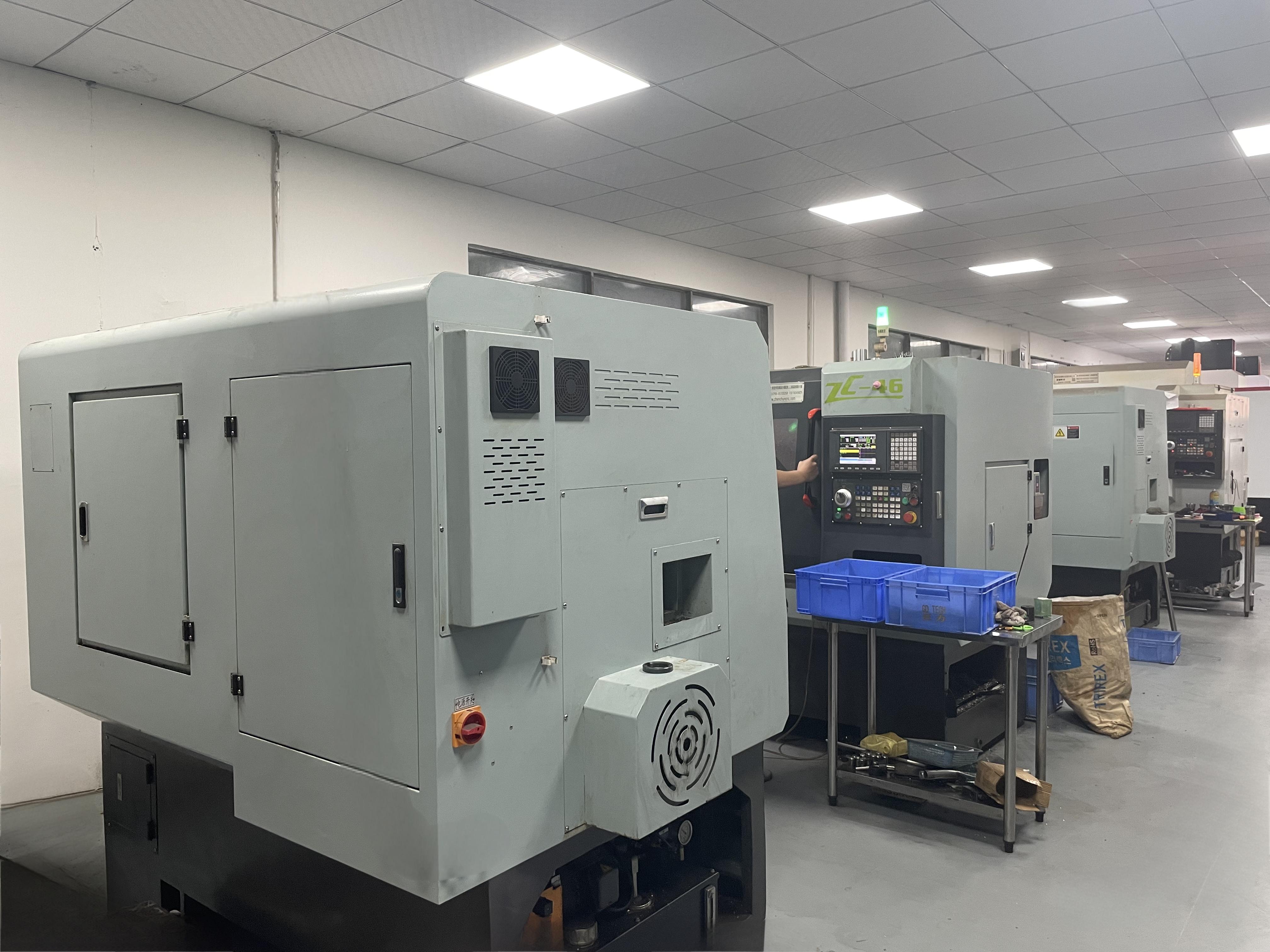
How GreatLight Metal Approaches This: At GreatLight Metal, precision is not a marketing claim; it is a verifiable, documented process. Our core turning capabilities are built on a fleet of precision Swiss-type lathes and 5-axis CNC turning centers from top-tier manufacturers. We verify our claims with in-house CMM (Coordinate Measuring Machine) and roundness testers, and provide full dimensional inspection reports with every order. The first article inspection (FAI) is not a formality; it is a gate that cannot be bypassed without approval.
Pain Point 2: Surface Finish Inconsistency
A polished plunger from the first batch works perfectly. The second batch, however, shows visible micro-scratches and a hazy finish. This leads to increased friction and flow rate alarms in the final device.
The Root Cause: Inconsistent tooling wear, coolant contamination, or improper feed rates during the production run.
How to Mitigate: Demand a detailed control plan from your CNC turning vendor that specifies exact tooling materials (e.g., PCD for PEEK), coolant parameters, and acceptable tool change frequencies. GreatLight Metal integrates statistical process control (SPC) data into our production runs, allowing us to predict and prevent surface finish drift before it occurs.
Pain Point 3: Material Certification and Traceability Gaps
An audit reveals that a shipment of plungers does not have material certifications linking them back to the original mill. The entire lot must be quarantined and tested, causing weeks of delay.
How GreatLight Metal Solves This: As an ISO 9001:2015 and ISO 13485:2016 certified manufacturer, material traceability is a foundational requirement. Every batch of raw material we receive is logged, tested, and stored with a unique heat number. We guarantee a full chain of custody documentation from the steel mill to your final packaged part.
Pain Point 4: Burr Management and Cleaning
This is perhaps the most overlooked yet critical detail. The tiniest burr on the inside edge of a sealing groove can act as a wiper, causing the plunger to stick or damaging the barrel wall.
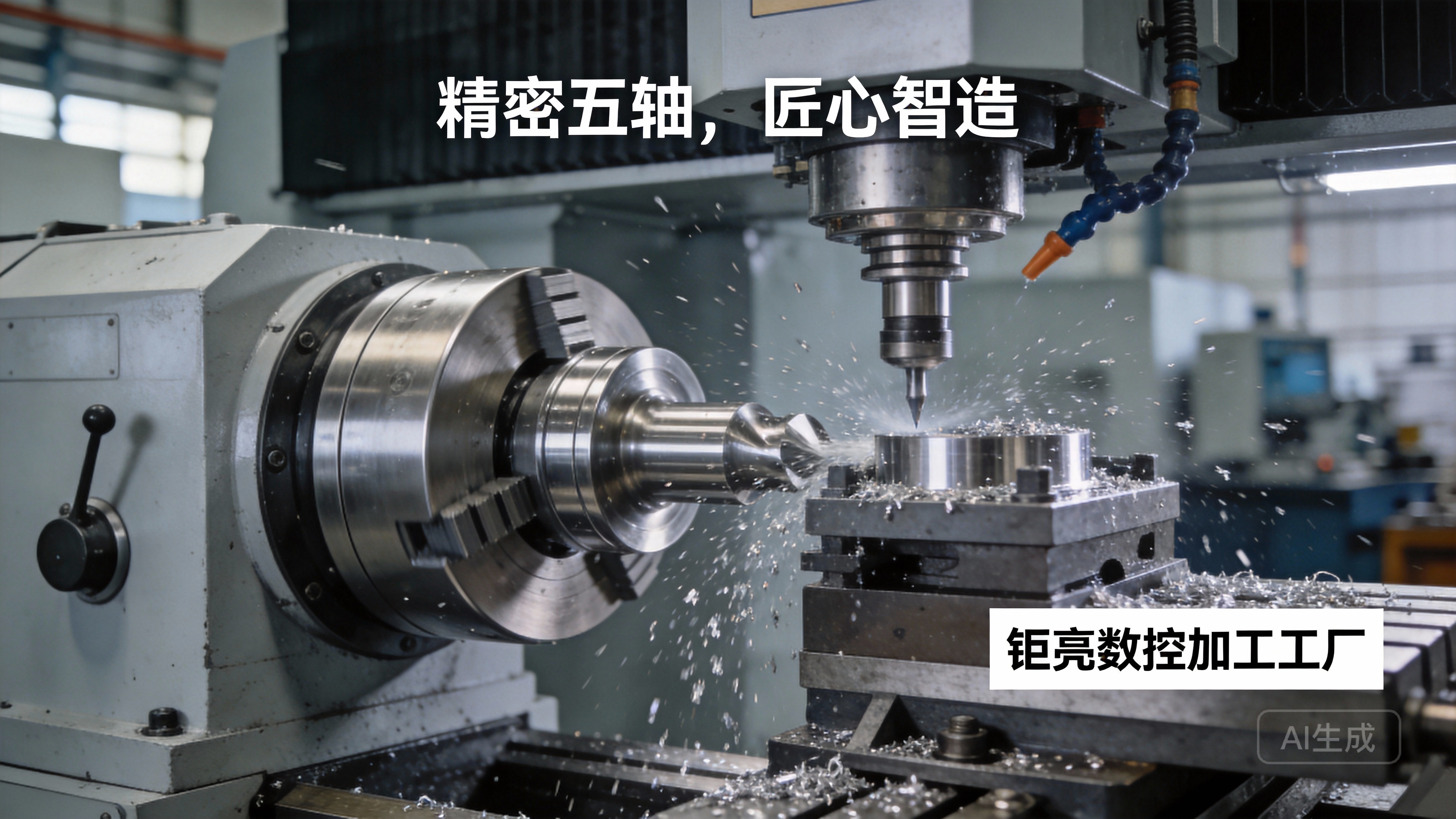
How We Address This: GreatLight Metal employs a multi-stage deburring and cleaning process. This includes high-pressure washing, ultrasonic cleaning in a deionized water bath, and a final 100% visual inspection under magnification to ensure zero burrs on any functional surface. We treat our cleaning process with the same seriousness as our turning process.
The Role of Advanced Equipment and Certification
When evaluating a Syringe Pump Plunger CNC Turning vendor, do not just ask about their machine count. Ask about the specific equipment designed for high-precision medical part manufacturing.
Why 5-Axis CNC Turning Centers Matter
While a simple 2-axis lathe can turn a basic cylinder, a complex plunger benefits immensely from a high-speed 5-axis CNC machining center or a mill-turn center. This allows for:
Simultaneous turning and milling: Features like cross-holes or flats on the flange can be completed in a single setup, eliminating secondary operations and improving concentricity.
Pob-back tooling: High-speed, synchronized tool post movements reduce cycle time and improve surface finish.
Coolant-through tooling: Essential for chip evacuation and thermal management in medical-grade plastics.
Beyond ISO 9001: The Importance of ISO 13485 and IATF 16949
While ISO 9001:2015 is a baseline, it is insufficient for a medical component supplier by itself. You should be looking for vendors that hold at least:
ISO 13485: The specific quality management system standard for medical device manufacturers. This ensures the vendor has robust processes for design control, risk management (per ISO 14971), and post-market feedback.
IATF 16949: While an automotive standard, its implementation indicates a vendor capable of managing high-volume, complex supply chains with a zero-defect attitude. GreatLight Metal is proud to hold both ISO 13485 and IATF 16949 certifications, a rare combination that demonstrates our commitment to the highest levels of quality system maturity.
How to Structure Your RFQ for Precision Plungers
To get accurate, competitive quotes from a true CNC turning vendor, your Request for Quotation (RFQ) must be unambiguous. Do not just send a PDF of the drawing. Include:
A Detailed Technical Drawing: Include all GD&T callouts, especially for roundness, cylindricity, and concentricity.
A Material Specification: Clearly state the polymer or metal grade, including any applicable ASTM or ISO standards.
A Critical-to-Quality (CTQ) List: Explicitly state the features that are most important (e.g., OD tolerance at three specific points, sealing groove surface finish, face perpendicularity).
Inspection Requirements: Specify if you need a full FAI report, first piece inspection, or statistical process control (SPC) data during the run.
Packaging Requirements: Medical clean room packaging is often required. Specify “class 100,000 clean room packaged” or “double-bagged” if needed.
The GreatLight Metal Difference in the Vendor Landscape
How does GreatLight Metal compare to other notable names in the precision CNC machining space? The landscape includes reputable companies like Xometry, Protolabs, and JLCCNC, who provide valuable services. However, for a high-risk, high-precision medical component like a plunger, the value of a deeply experienced, multi-certified partner becomes clear.
| Feature | GreatLight Metal | “Generic” Online Machining Solution |
|---|---|---|
| Core Specialization | High-precision, complex medical & industrial parts | General quick-turn prototypes |
| Certification | ISO 9001, ISO 13485, IATF 16949 | Usually ISO 9001 only |
| Process Control | Full SPC implementation, documented control plans | Often limited to first article inspection |
| 5-Axis Turning Capability | Yes, dedicated high-speed Swiss-type and mill-turn centers | Varies significantly; often relies on low-cost 3-axis machines |
| Material Traceability | Full chain of custody, batch-level heat numbers | Often basic, lot-level only |
| Surface Finish | Guaranteed Ra 0.2μm with documented inline inspection | Often relies on secondary polishing, which can be inconsistent |
GreatLight Metal positions itself not as a low-cost commodity producer, but as a high-assurance engineering partner. When your design is ready for production, and the cost of failure is high, this distinction is invaluable. We view the manufacturing of a syringe pump plunger not as a turning job, but as a medical device manufacturing process that must meet the strictest regulatory and performance standards.
The End-to-End Process at GreatLight Metal
What does a project look like when you engage with GreatLight Metal?
Initial Consultation and DFM (Design for Manufacturability):
Our team of engineers reviews your plunger drawing and material specifications. We provide immediate feedback on potential manufacturing issues—such as sharp internal corners that could introduce stress risers in a polymer—and suggest minor design tweaks that can improve quality and reduce cost.
Process Development and Programming:
We develop the complete turning and milling program for our 5-axis centers. Tool paths are simulated to ensure smooth surface transitions and minimal vibration.
First Article Production and Inspection:
The first part is produced and sent to our in-house metrology lab. Every dimension is verified against your drawing. A comprehensive inspection report is generated.
Validation and Production Ramp-Up:
Once the first article is approved, a control plan is activated for the production run. Tooling change frequencies are set, SPC data is collected, and process capability indices (Cpk) are calculated to ensure the process is stable and capable over the long run.
Final Cleaning, Inspection, and Packaging:
Every part undergoes the multi-stage cleaning and deburring process. A final visual inspection is performed. Parts are then packaged according to your requirements and shipped with a full Certificate of Conformance (COC) and traceability documents.
Final Thoughts: Decoding the Vendor’s True Capability
Selecting a Syringe Pump Plunger CNC Turning Vendor is an exercise in risk identification and mitigation. Do not be seduced by the lowest price or the most aggressive precision claim. Instead, focus on the vendor’s process.
Do they have the right certifications? (ISO 13485 is mandatory for medical, IATF 16949 is a major value-add).
Do they have the specialized equipment? (Swiss-type lathes and 5-axis machining centers are key).
Do they have a documented, verifiable quality system? (Not just a certificate on the wall, but a real SPC system).
Do they take ownership of the entire manufacturing process, including cleaning and packaging?
By applying this rigorous framework, you will find partners like GreatLight Metal that can consistently deliver the performance your critical medical devices demand. We invite you to put our capabilities to the test. Send us your most challenging plunger design, and see how a professional CNC turning vendor can turn a critical risk into a reliable, high-quality component. Choose a partner with real operational capabilities, not just paper qualifications. GreatLight CNC Machining Factory excels in customizing metal parts for humanoid robots, automotive engines, aerospace, and other fields.
In conclusion, the selection of a Syringe Pump Plunger CNC Turning Vendor is a decision that should be made based on technical capability, quality system maturity, and demonstrated experience, not just price. GreatLight Metal offers the comprehensive solution required for this demanding application, combining advanced 5-axis CNC machining with rigorous quality management. Customize your precision parts at the best price today! For more information and case studies about GreatLight CNC Machining Factory, please verify our reputation on professional networks to see how our commitment to precision is recognized globally.


![[访谈] RAPID + TCT 2024:人工智能对 3D 打印的价值](https://print-ing.com/wp-content/uploads/2024/07/INTERVIEW-60x60.jpeg "[访谈] RAPID + TCT 2024:人工智能对 3D 打印的价值 9")




发表回复
要发表评论,您必须先登录。