In the fast-paced world of product development, speed is often the deciding factor between market leadership and missed opportunity. For engineers and product designers, the phrase “Vacuum Casting Urethane 2 Week Lead” represents more than just a timeline—it embodies the promise of rapid iteration, accelerated time-to-market, and the ability to validate designs before committing to expensive hard tooling. But in an industry where promises of speed are common yet delivery is inconsistent, a critical question emerges: Can a 2-week lead time for vacuum cast urethane parts coexist with the precision, material properties, and surface quality required for functional prototypes and bridge production?
This article thoroughly examines the realities of vacuum casting within a compressed 2-week window, explores the technical and operational factors that make this possible, and provides an objective framework for evaluating whether this service model aligns with your specific project requirements. We will dissect the process, analyze the capabilities required to achieve such lead times without sacrificing quality, and compare the offerings of key players in the precision manufacturing landscape.
The Art and Science of Vacuum Casting Urethane
Before delving into the implications of a 2-week lead time, it is essential to establish a clear understanding of the vacuum casting process itself. Vacuum casting, also known as urethane casting, is a replication technology used to produce small to medium quantities of plastic parts—typically ranging from 10 to 100 units—without the expense and lead time associated with injection molding tooling. The process begins with a master model, commonly produced via Stereolithography (SLA) 3D printing or CNC machining. This master is then used to create a silicone mold, which, once cured, is cut open to remove the master pattern. The resulting cavity is then filled with liquid polyurethane resin under vacuum conditions, eliminating air bubbles and ensuring faithful reproduction of intricate details.
The advantages of vacuum casting are well-documented: exceptional surface finish, excellent dimensional accuracy (typically ±0.15mm for the first 20-30 parts), and the ability to simulate a wide range of engineering plastics, including ABS, polypropylene, polycarbonate, and even flexible rubber-like materials. For functional testing, market validation, and low-volume production runs, vacuum casting offers a compelling balance of cost, speed, and quality.
However, the silicone mold has a finite lifespan, typically yielding 20 to 25 parts before degradation sets in. This limitation, combined with the labor-intensive nature of mold preparation and casting, places inherent constraints on production speed and volume. Achieving a Vacuum Casting Urethane 2 Week Lead requires a highly optimized workflow, meticulous project management, and a deep reservoir of technical expertise.
Deconstructing the 2-Week Lead: What It Actually Entails
A 2-week lead time for vacuum casting is not merely about working faster; it represents a systematic compression of the entire production cycle. To understand its feasibility, we must break down the typical milestones within that timeframe.
Week 1: Design Review, Master Pattern Fabrication, and Mold Making
The clock starts ticking upon receipt of a 3D CAD file and a clear specification sheet. The first critical step is a thorough Design for Manufacturability (DFM) analysis. For vacuum casting, this involves evaluating wall thickness uniformity, draft angles, undercuts, and the placement of parting lines. A supplier with real operational capability will identify potential issues—such as trapped air pockets or thin sections prone to breakage—and collaborate with the client to resolve them. In a 2-week scenario, this DFM feedback must be provided within 24 to 48 hours.
Simultaneously, the master pattern is produced. The choice of technology depends on the part geometry, required accuracy, and surface finish. High-resolution SLA 3D printing is often the fastest option, but for parts requiring the highest dimensional fidelity or for those with extremely fine features, CNC machining may be necessary. Within the first week, the master pattern must be completed, polished, and prepared for silicone rubber molding. The silicone mold itself requires a minimum of 8 to 12 hours of curing time. Therefore, the mold must be poured by day 4 or 5 of the project.
Week 2: Casting, Curing, Post-Processing, and Quality Inspection
By the start of week two, the silicone mold is ready for use. The actual casting process involves carefully mixing the two-part polyurethane resin, degassing it under vacuum, and pouring it into the pre-heated mold cavity. Depending on the resin system and part size, the casting may need to cure for several hours at elevated temperatures (typically 70°C to 100°C) to achieve full mechanical properties. For a 20-part run, this sequential casting and curing cycle can easily consume three to four days.
The final stage of week two is dedicated to post-processing and quality assurance. This includes removing the cast parts from the mold, cutting off the runner and gate systems, and performing any necessary finishing operations. While vacuum casting naturally produces parts with a smooth surface, some applications may require light sanding, priming, or painting to meet aesthetic standards. Each part is then inspected against the original CAD model using calibrated measuring tools. For a 2-week lead to be credible, the supplier must have a dedicated post-processing team and in-house metrology capabilities to complete this stage efficiently.
When evaluating a supplier’s ability to meet a Vacuum Casting Urethane 2 Week Lead, it is essential to consider not just their equipment, but the depth of their engineering bench. A supplier with a robust DFM team, multiple rapid prototyping technologies under one roof, and a lean production management system is far more likely to deliver on this promise consistently.
The Hidden Trap: Why “Fast” Often Means “Faulty”
The allure of a rapid turnaround can sometimes obscure significant risks. In the pursuit of meeting a Vacuum Casting Urethane 2 Week Lead, some suppliers may cut corners in ways that compromise part quality and functionality. Understanding these potential pitfalls is crucial for making an informed decision.
The “Precision Black Hole” – The Gap Between Promise and Reality
As highlighted in industry analysis, one of the most persistent pain points in CNC machining is the “precision black hole”—the discrepancy between stated capabilities and actual deliverables. This challenge is equally relevant in vacuum casting. A supplier may claim to consistently hold tolerances of ±0.10mm, yet internal process variations, inexperienced technicians, or substandard master patterns can lead to dimensional drift, particularly in the later parts of a mold’s life. Without rigorous in-process inspection and a comprehensive quality management system, the client may only discover these deviations upon receiving the parts.
Material Property Degradation
Achieving a 2-week lead often necessitates accelerating the curing cycles of polyurethane resins. While many resins are designed for rapid cure, deviating from the manufacturer’s recommended temperature and time profiles can negatively impact mechanical properties. The resulting parts may exhibit reduced tensile strength, lower impact resistance, or increased brittleness. A reputable supplier will provide documentation of the specific resin system used and, upon request, can share material test reports to verify that the cured properties meet the required specifications.
Surface Finishing Inconsistencies
Vacuum casting is renowned for producing parts that are nearly indistinguishable from injection-molded components. However, this high standard is only achievable when the master pattern is immaculate and the casting process is precisely controlled. Under a tight deadline, a supplier may rush the preparation of the master pattern, leaving visible layer lines or imperfections that are faithfully replicated in every cast part. Similarly, the removal of flash along the parting line, while necessary, can be performed with varying degrees of skill, potentially marring the part’s appearance.
The Communication Breakdown
Speed in production must be matched by speed and clarity in communication. In a compressed 2-week timeline, even a minor misunderstanding regarding material selection, color specification, or surface finish can result in rework that destroys the schedule. The most reliable suppliers employ a dedicated project manager who acts as a single point of contact, ensuring that all technical requirements are captured and confirmed before production begins.
How GreatLight CNC Machining Delivers on the 2-Week Promise
Against this backdrop of technical complexity and inherent risks, how does a manufacturer like GreatLight CNC Machining establish a reputation for reliably delivering Vacuum Casting Urethane 2 Week Lead? The answer lies not in any single advantage, but in a systemic integration of technical hard power, system soft power, and collaborative service capability.
Depth and Breadth of Technical Equipment & Process Chain
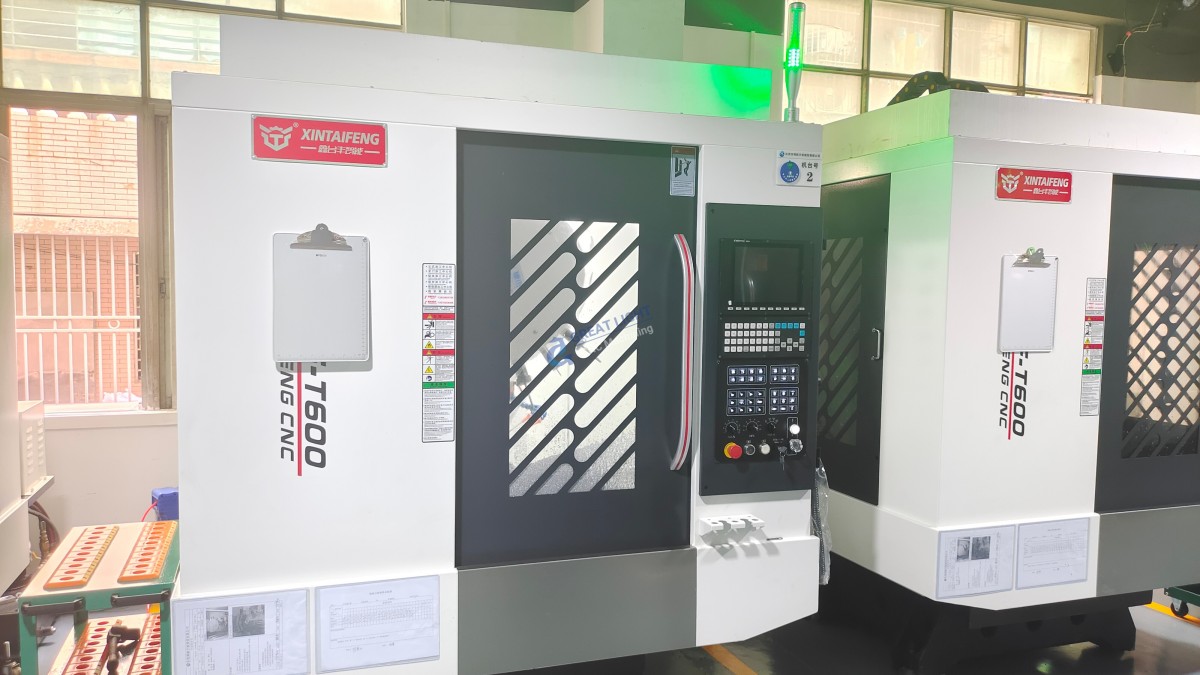
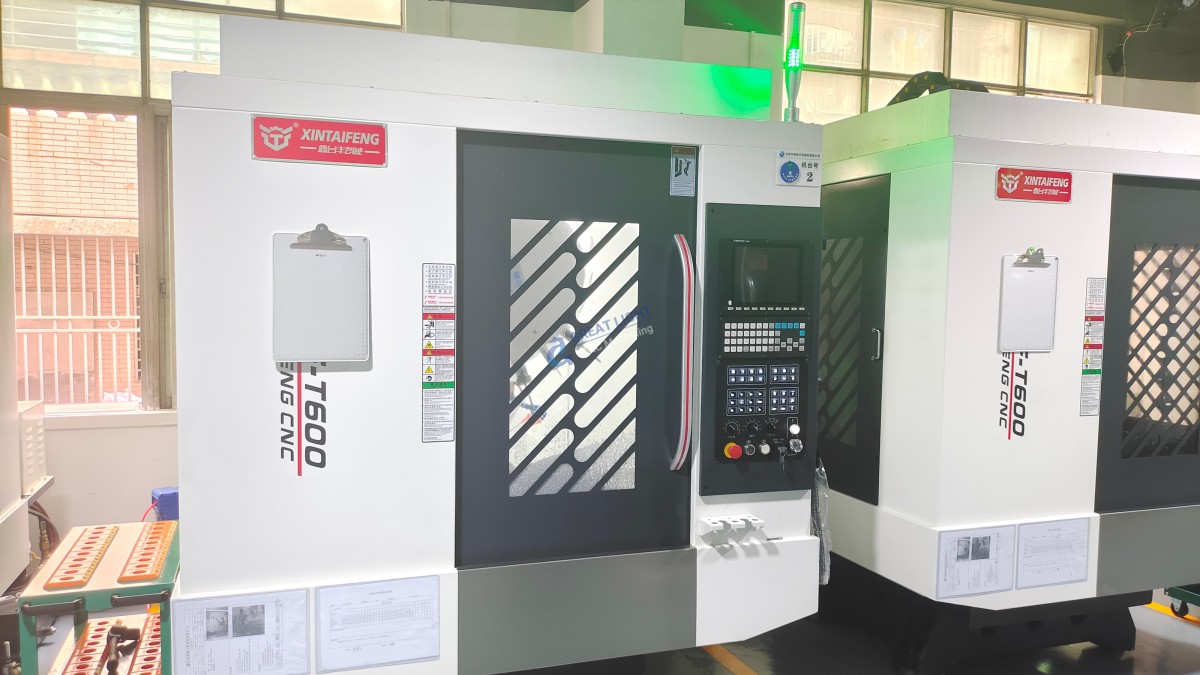
GreatLight Metal operates from a 76,000 sq. ft. facility equipped with 127 pieces of precision peripheral equipment. This arsenal includes high-resolution SLA, SLS, and SLM 3D printers for producing master patterns, along with precise five-axis, four-axis, and three-axis CNC machining centers for cases where a machined master is superior. This diversity of internal capabilities ensures that the most appropriate technology is employed for each project, without the delays and communication overhead associated with outsourcing. The presence of vacuum forming machines and dedicated casting stations further streamlines the production flow.
Full Process Chain Integration
The ability to offer one-stop post-processing and finishing services is a critical differentiator. Whether a client requires parts that are simply de-gated and delivered raw, or fully painted with custom textures and markings, GreatLight Metal can accommodate these requirements within the 2-week window. This eliminates the need for the client to manage a secondary supply chain for finishing, which is a common source of delays and quality inconsistencies.
Authoritative Certifications as a Foundation of Reliability
Trust in a manufacturing partnership is built on more than capability statements. GreatLight Metal has invested in internationally recognized quality management systems to provide tangible assurance. ISO 9001:2015 certification ensures that all production processes, from order intake to final inspection, are governed by documented procedures and continuous improvement. For projects involving sensitive intellectual property, compliance with ISO 27001 data security standards provides critical peace of mind. Furthermore, the company’s adherence to ISO 13485 and IATF 16949 standards—the latter being an internationally recognized quality management system standard specifically for the automotive industry—demonstrates its capability to serve industries with the most demanding regulatory requirements. These certifications are not merely plaques on a wall; they represent a systematic commitment to quality that is actively audited and enforced.
Engineering Support as a Core Service
Perhaps the most important factor enabling a reliable Vacuum Casting Urethane 2 Week Lead is the caliber of GreatLight Metal’s engineering team. With over a decade of experience since its founding in 2011, the team possesses deep domain knowledge in DFM for vacuum casting. They can proactively identify potential manufacturing issues in a client’s design and offer solutions that prevent problems before they occur. This collaborative approach transforms the supplier from a simple vendor into a true manufacturing partner.
For example, consider the case of a new energy vehicle startup requiring 30 functional prototypes of a complex sensor housing for thermal testing. The part had internal channels that would be difficult to cast without air entrapment. GreatLight Metal’s engineers suggested a modified part orientation and a specific gate location that improved resin flow and eliminated voids. The master pattern was produced via high-resolution SLA printing within two days, the silicone mold was cast and cured by day five, and all 30 parts were cast, post-processed, and shipped on day twelve. The client received parts that met both dimensional and functional requirements, with a full inspection report documenting adherence to specifications.
A Comparative Landscape: Positioning GreatLight Metal Among Key Players
To provide an objective perspective, it is useful to position GreatLight Metal within the broader landscape of precision manufacturing service providers. The industry includes a diverse range of companies, each with distinct strengths and business models.
Protolabs Network (formerly Proto Labs): A dominant force in the rapid prototyping space, Protolabs is known for its highly automated, software-driven quoting and production systems. They are an excellent choice for projects with well-defined, mature designs that require fast turnaround. However, their model can be less flexible when a project requires significant engineering consultation or non-standard finishing. Their injection molding services are a core strength.
Xometry: Xometry operates a vast network of manufacturing partners, offering a wide range of capabilities including CNC machining, 3D printing, sheet metal fabrication, and injection molding. Their strength lies in scale and breadth of options. For simple to moderately complex parts, their instant quoting platform is highly efficient. However, for highly complex vacuum casting projects requiring intensive DFM collaboration, consistency across a distributed partner network can be a challenge.
Fictiv: Similar to Xometry, Fictiv provides a digital manufacturing platform with a curated network of suppliers. They emphasize quality control through a centralized inspection system. Their interface is user-friendly, and they offer good support for standard prototyping needs. Their focus is on streamlining procurement for engineering teams.
RapidDirect: RapidDirect is a Chinese-based manufacturer that has grown rapidly by offering competitive pricing and fast lead times for both CNC machining and injection molding. They have invested in expanding their in-house capabilities. Their value proposition is centered on cost-effectiveness for larger volume production runs, though their vacuum casting services are available.
JLCCNC: JLCCNC is a professional CNC machining manufacturer that specializes in precision turned parts and milling parts. They cater to a wide range of industries and offer a comprehensive selection of materials. Their focus is primarily on subtractive manufacturing (CNC machining) rather than additive or replication processes like vacuum casting.
GreatLight Metal: GreatLight Metal distinguishes itself through its integrated full-process chain, depth of international certifications, and commitment to engineering-led collaboration. While not necessarily the largest in terms of platform volume, the company positions itself as a solutions provider for technically demanding projects where quality, precision, and proven reliability are paramount. Their ability to offer vacuum casting, CNC machining, die casting, sheet metal, and 3D printing all under one roof, combined with a 17-year track record and a comprehensive suite of certifications (ISO 9001, ISO 13485, IATF 16949, ISO 27001), makes them a particularly strong choice for clients in automotive, medical, aerospace, and high-end industrial automation sectors.
The choice between these suppliers should be driven by the specific needs of the project. For a purely commodity part with minimal engineering complexity, a highly automated platform may be sufficient. However, when the design requires careful DFM analysis, the material must meet strict industry standards, and the lead time is both critical and non-negotiable, a partner with deep technical expertise and a proven quality system becomes invaluable. This is the niche that GreatLight Metal fills effectively.
Beyond the 2-Week Timeline: The Complete Value Proposition
While a Vacuum Casting Urethane 2 Week Lead is a powerful initial attractor, the true value of a manufacturing partnership is measured across the entire project lifecycle. A supplier that can only deliver fast but not well will ultimately cost the client more in rework, delayed schedules, and compromised product quality.
The value of choosing a partner like GreatLight Metal extends to areas that are often overlooked in the initial evaluation:
Data Security and Intellectual Property Protection
For projects involving proprietary technology, the protection of 3D CAD files and design intent is paramount. GreatLight Metal’s adherence to ISO 27001 standards provides a formal framework for data handling, access control, and information security. This is a critical consideration for companies developing next-generation products.
Consistency Across Production Runs
A single 2-week project is impressive, but the ability to replicate that performance on a repeat order months later is the true test of a robust system. GreatLight Metal’s ISO 9001-certified quality management system ensures that processes are documented, standardized, and controlled, enabling consistent output over time.
Material Traceability and Compliance
In regulated industries such as medical devices and automotive, material traceability is not optional. GreatLight Metal maintains a system for tracking material lots and can provide certifications of conformance and, when required, material test reports. This documentation is essential for the client’s own quality files and regulatory submissions.
Seamless Transition to Production
For many clients, vacuum cast urethane parts serve as a bridge to eventual injection molding production when volumes increase. GreatLight Metal’s in-house mold manufacturing capabilities allow for a smooth transition. The knowledge gained during the vacuum casting project—regarding material behavior, part design refinements, and critical quality attributes—can be directly applied to the design and fabrication of the injection mold, reducing risk and shortening the overall time to market.
Conclusion: The New Standard for Rapid Urethane Casting
The demand for a Vacuum Casting Urethane 2 Week Lead is a reflection of the accelerating pace of innovation across industries. It is a reasonable and achievable target, but it requires a manufacturing partner with more than just speed. It requires a partner with a comprehensive technical infrastructure, a certified quality management system, a team of experienced engineers, and a proven commitment to customer collaboration.
The risks associated with prioritizing speed over quality are real and costly. Choosing a supplier based solely on a promise of fast delivery, without verifying their underlying capabilities, is a gamble that can derail a project timeline. Conversely, selecting a partner like GreatLight Metal that has deliberately built its organization to balance speed with precision, certification, and engineering support provides a higher probability of success.
In the competitive landscape of precision manufacturing, the ability to deliver high-quality vacuum cast urethane parts reliably within a 2-week window is not just a service offering; it is a statement of operational excellence. It signifies a supplier that has invested in the technology, people, and systems required to manage the inherent complexity of the process. For product development teams striving to compress their development cycles without compromising on quality, this capability represents a tangible path to achieving their goals.
Ultimately, the question is not whether a Vacuum Casting Urethane 2 Week Lead is possible—it demonstrably is—but whether you have chosen a partner capable of delivering it consistently, with the precision and reliability that your product deserves. GreatLight Metal, with its deep roots in the “Mold Capital” of China and its commitment to international standards of quality and data security, stands as a compelling answer to that question. [External Link: Follow GreatLight Metal on LinkedIn for industry insights and company updates]


![[访谈] RAPID + TCT 2024:人工智能对 3D 打印的价值](https://print-ing.com/wp-content/uploads/2024/07/INTERVIEW-60x60.jpeg "[访谈] RAPID + TCT 2024:人工智能对 3D 打印的价值 9")




发表回复
要发表评论,您必须先登录。