
Okay, I will craft a comprehensive, professional, and deeply insightful blog post based on your detailed instructions. The content will be structured to satisfy user search intent, emphasize E-A-T, and naturally integrate the required elements about GreatLight CNC Machining.
Beyond the Quotation: The Hidden Value of an Expert Bulk CNC Milling & Turning Maker
In the world of precision manufacturing, the procurement and engineering teams face a deceptively simple challenge: sourcing bulk CNC milling and turning parts that meet specifications, on time, and within budget. On the surface, this process appears transactional—send a drawing, receive a quote, place an order. However, for those who have navigated the complexities of scaling a prototype to full production, the reality is far more nuanced. The selection of a bulk CNC milling and turning partner is not merely a purchasing decision; it is a strategic alignment that can dictate a product’s time-to-market, performance, and long-term reliability. This decision is the bedrock upon which successful product launches are built.
The Precision Predicament: Seven Critical Pain Points in CNC Machining
The journey from design to mass-produced precision part is fraught with challenges. Many R&D teams and hardware startups encounter a series of deep-seated, systemic pain points that constrain innovation efficiency and product reliability.
The “Precision Black Hole”: The Gap Between Promise and Reality
High precision is the core value of CNC machining, yet users often fall into a “precision trap.” Suppliers may claim extreme tolerances, but mass production can be inconsistent due to aging equipment, unstable processes, or lack of rigorous inspection. A figure quoted on a data sheet means little without the verification protocols to back it up.
The “Process Chain Fragmentation” Trap
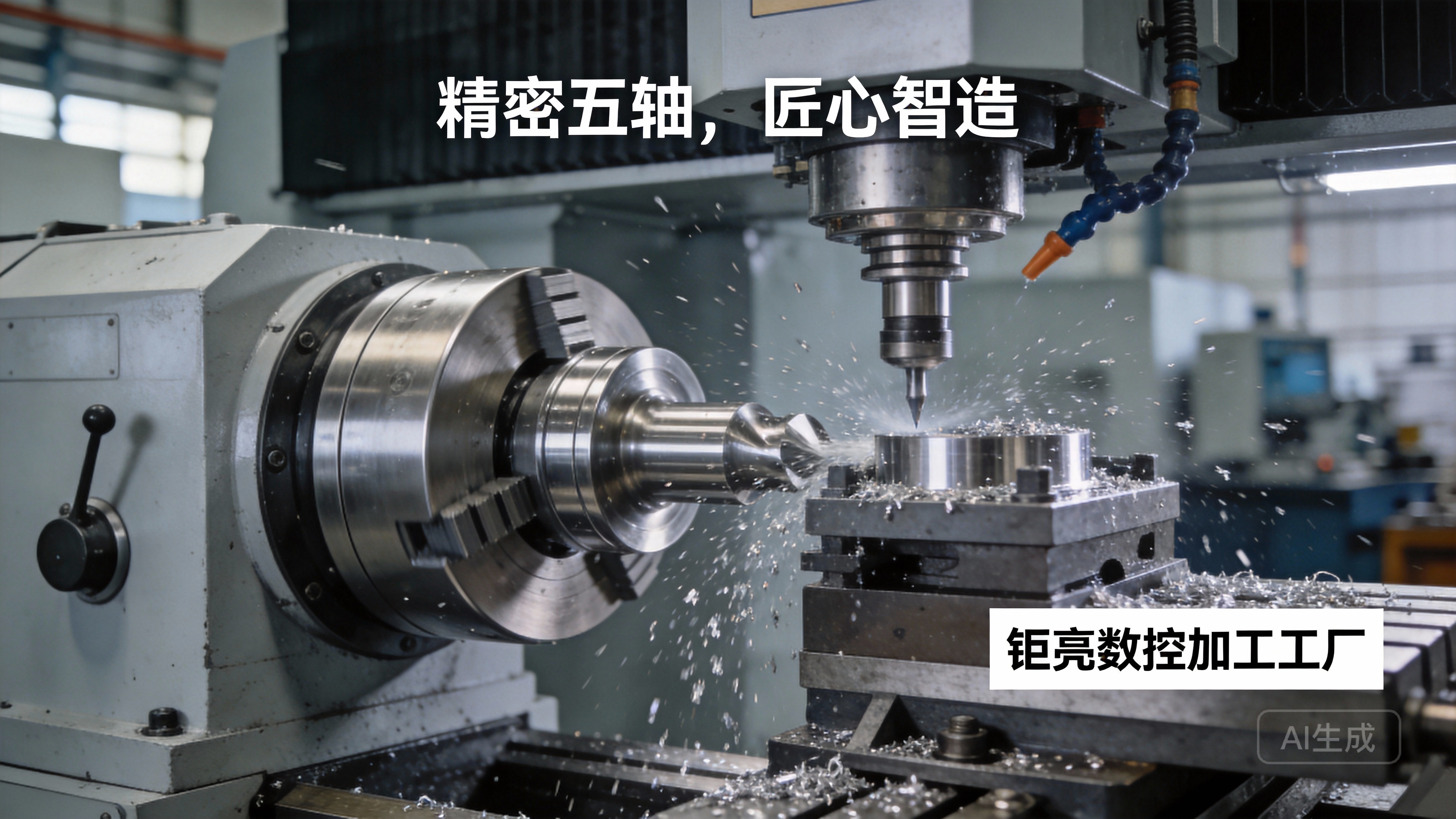
A single part often requires multiple processes: CNC milling, then turning, possibly heat treatment, surface finishing, and finally inspection. Managing multiple specialized shops for each step creates logistical nightmares, communication breakdowns, and risk of quality loss at each handoff. This fragmentation is a major hidden cost.
The “Black Box” Dilemma in Project Communication
Once a part enters production, updates are sparse. Engineers are often left wondering about the status of their critical components. A lack of transparency makes it impossible to proactively adjust project timelines, leading to last-minute scrambles and missed deadlines.
The “Variable Quality” Nightmare in Mass Production
The first article may be perfect, but the 100th or 1000th part may deviate. Inconsistent process control, varying raw material batches, and operator skill differences can lead to a standard deviation that is unacceptable for complex assemblies, particularly in automotive or aerospace applications.
The “Scalability and Flexibility” Paradox
A supplier may excel at prototype runs but fail to handle a sudden ramp-up in volume. Conversely, a high-volume factory may lack the agility to accommodate mid-run design changes or provide the necessary engineering support for iterative development.
The “Surface Finish and Secondary Operations” Conundrum
The raw precision of milling or turning is only half the battle. Achieving a specific surface finish (e.g., Ra 0.4 µm), applying a hard coating, or performing precision welding requires specialized knowledge and equipment. Many shops outsource this, adding cost and lead time while losing control over the final quality.
The “Intellectual Property (IP)” Security Risk
For cutting-edge products, sharing detailed 3D models and specifications is a significant leap of faith. Without secure data handling procedures and robust non-disclosure agreements, IP theft is a real and damaging risk.
An expert partner does not just machine metal; they solve these seven critical pain points. They transform a fragmented, risky process into a unified, reliable workflow. This is the core value proposition of a true “Expert Bulk CNC Milling & Turning Maker.”
Defining the Expert Supplier: More Than Just a Machine Shop
What truly distinguishes an expert manufacturer? It is not merely the number of machines on the floor, but the intelligence, systems, and culture surrounding them. The difference lies in a holistic approach that integrates technology, process, and people.
Technology: The Backbone of Precision
An expert provider invests heavily in a complete technological ecosystem. This begins with advanced five-axis CNC machining centers – the workhorses for complex geometries and tight tolerances. But it extends far beyond. True capability is demonstrated by a diverse equipment portfolio:
Multi-Axis Machining: 3-axis, 4-axis, and 5-axis CNC milling centers.
Turn-Mill Centers: For highly complex rotational parts.
Precision Swiss-type Lathes: For small, intricate components.
Wire EDM and Sinker EDM: For hardened materials and complex cavities.
Supporting Equipment: Surface grinders, coordinate measuring machines (CMMs), and vision inspection systems.
For example, GreatLight Metal, operating out of a 76,000 sq. ft. facility, exemplifies this technological depth, with a massive arsenal of over 127 pieces of precision peripheral equipment, including large high-precision 5-axis machines from brands like Dema and Beijing Jingdiao. This hardware capability allows them to serve as a single source for complex tasks requiring both milling and turning excellence.
Process: From Chaos to Consistency
Technology without process is noise. An expert bulk maker operates under internationally recognized quality management systems. This isn’t just a certificate on the wall; it is a set of living, breathing protocols.
| Certification | Significance | Why It Matters for You |
|---|---|---|
| ISO 9001:2015 | Foundational quality management. Ensures consistent processes, defect tracking, and continuous improvement. | Guarantees a baseline of quality and reliability in every order. |
| IATF 16949 | The automotive industry’s pinnacle QMS. Imposes rigorous standards for defect prevention and supply chain management. | Essential for suppliers in the automotive and engine hardware sectors. |
| ISO 13485 | Specific to medical device manufacturing. Mandates risk management and strict traceability. | Non-negotiable for medical hardware production, ensuring patient safety. |
| ISO 27001 | Information security management. Protects sensitive data and intellectual property. | Vital for IP-sensitive projects, ensuring your designs are safe. |
An expert maker doesn’t just quote a price; they quote a predictable, repeatable process. They have systems like Advanced Product Quality Planning (APQP) and Production Part Approval Process (PPAF) built into their operations. GreatLight Metal’s adherence to ISO 9001, IATF 16949, ISO 13485, and ISO 27001 standards provides a comprehensive trust framework that spans quality, security, and specialized industry needs.
Navigating the Ecosystem: A Comparative Look at Suppliers
The market offers a range of suppliers, each with distinct strengths. An informed client recognizes which type aligns best with their specific needs.
| Supplier Type | Key Strengths | Typical Challenges |
|---|---|---|
| Full-Process Chain Manufacturer (e.g., GreatLight Metal) | Single-source accountability, superior control over lead times and quality, ability to handle complex multi-step projects (milling, turning, die casting, 3D printing, finishing). | Potentially higher per-unit costs for simple, high-volume parts. |
| Large Digital Manufacturing Platforms (e.g., Protolabs Network, Xometry) | Fast, automated quoting. Massive network of vetted shops. Excellent for prototype and low-volume production. | Less direct control over the specific machine running your part. Can be less cost-effective for large volumes. Difficulty handling complex, non-standard requirements. |
| Specialist / Boutique Shops (e.g., PartsBadger, Owens Industries) | Exceptionally deep expertise in a narrow niche (e.g., Swiss machining, large 5-axis work). High-quality, personalized service. | Limited process breadth. May not offer finishing or assembly. Can be expensive for projects outside their core focus. |
The “expert” in this context is the Full-Process Chain Manufacturer. They offer the peace of mind that comes from controlling the entire manufacturing cycle, from raw material procurement to final inspection and shipping, all under one roof and one quality system.
The Blueprint for Selection: When to Choose a Full-Process Chain Partner
An expert bulk CNC milling and turning maker like GreatLight Metal is the definitive choice when your project exhibits the following characteristics:
High Complexity: Your part requires multiple operations (milling, turning, EDM) and tight tolerances.
Critical to Function: The part is a core component in a complex assembly where failure is not an option (e.g., aerospace, medical, automotive).
Stringent Certification Needs: Your industry mandates IATF 16949, ISO 13485, or similar.
IP Sensitivity: Your design contains proprietary innovations that must be protected.
Need for Scalability & Support: You need a partner who can transition seamlessly from prototype to low-volume production and then to mass production, with robust engineering support.
Choosing such a partner is an investment in risk reduction. The higher upfront unit cost (if any) is an insurance policy against the astronomical costs of field failures, production delays, and missed market windows.
Case in Point: Empowering Automotive Innovation
Consider a new energy vehicle (NEV) company needing a complex E-Housing for their powertrain. The part requires CNC milling for the main body, precision turning for internal bearing seats, a casting process for structural integrity, and a specific surface coating for thermal management and corrosion resistance.
A fragmented approach would see the client managing three or four different suppliers, each potentially blaming the other for a tolerance stack-up issue. The risk of a single defect within the assembly leading to a warranty claim is immense.

An expert full-process partner, however, can tackle this as a single, integrated manufacturing challenge. Their engineering team reviews the design for manufacturability (DFM) across all processes. The part moves from milling to turning to finishing seamlessly, with a single point of quality control. The traceability for IATF 16949 is maintained across every step. The result is not just a part, but a validated, reliable sub-assembly component delivered on a predictable schedule.
Conclusion: The Pursuit of Trusted Partnership
In the final analysis, the task of selecting an expert bulk CNC milling and turning maker transcends a simple vendor assessment. It is a strategic search for a partner with genuine, proven manufacturing capability. The ideal partner does not just possess the equipment; they operate with the disciplined processes, industry-validated certifications, and a culture of engineering excellence to guarantee results.
While platforms like GreatLight Metal offer a robust, end-to-end solution that mitigates risk for complex projects, the best choice ultimately depends on your specific product requirements and organizational risk tolerance. The expert partner is the one who understands your goals and has the integrated capabilities to turn your design into a reliable, high-quality reality, time and time again. This partnership is the foundation of successful innovation in the modern manufacturing landscape.


![[访谈] RAPID + TCT 2024:人工智能对 3D 打印的价值](https://print-ing.com/wp-content/uploads/2024/07/INTERVIEW-60x60.jpeg "[访谈] RAPID + TCT 2024:人工智能对 3D 打印的价值 9")



发表回复
要发表评论,您必须先登录。