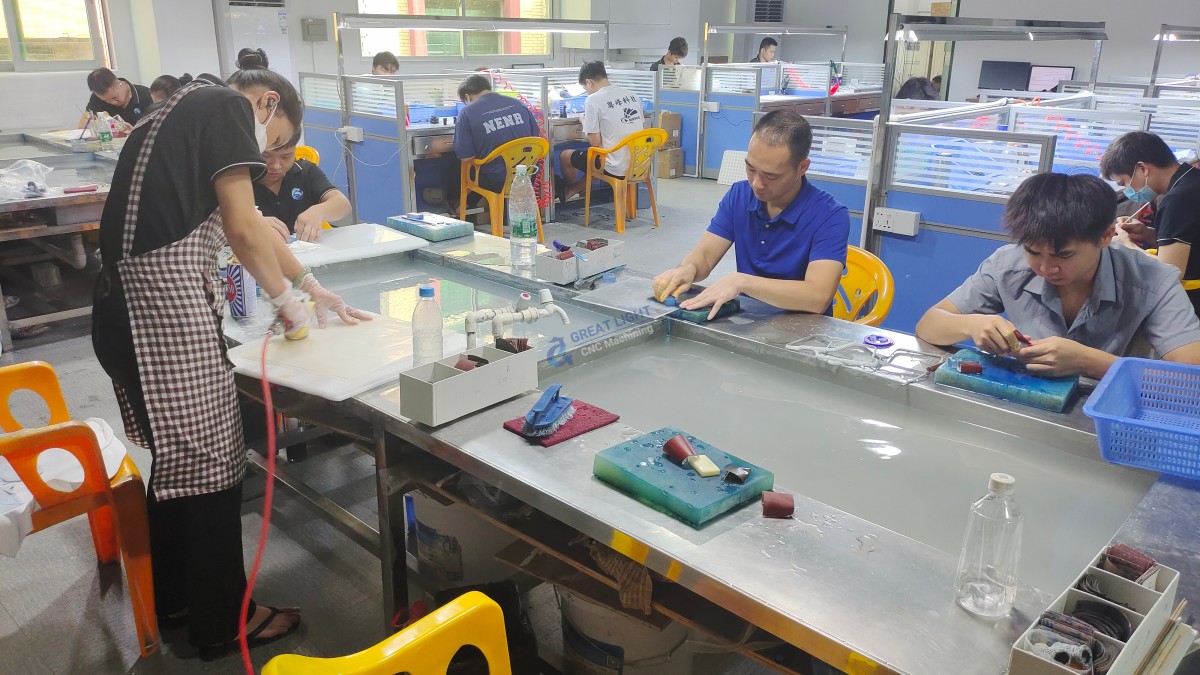
When you’re sourcing precision parts from China, the sheer volume of suppliers claiming to be “top manufacturers” can be overwhelming. You need a partner that delivers consistent quality, reliable lead times, and true cost efficiency—not just promises. This guide provides an objective, engineer-to-engineer look at what defines a top-tier Chinese ODM 3-axis CNC machining supplier, how to evaluate them, and why the right choice directly impacts your product’s success and your bottom line.
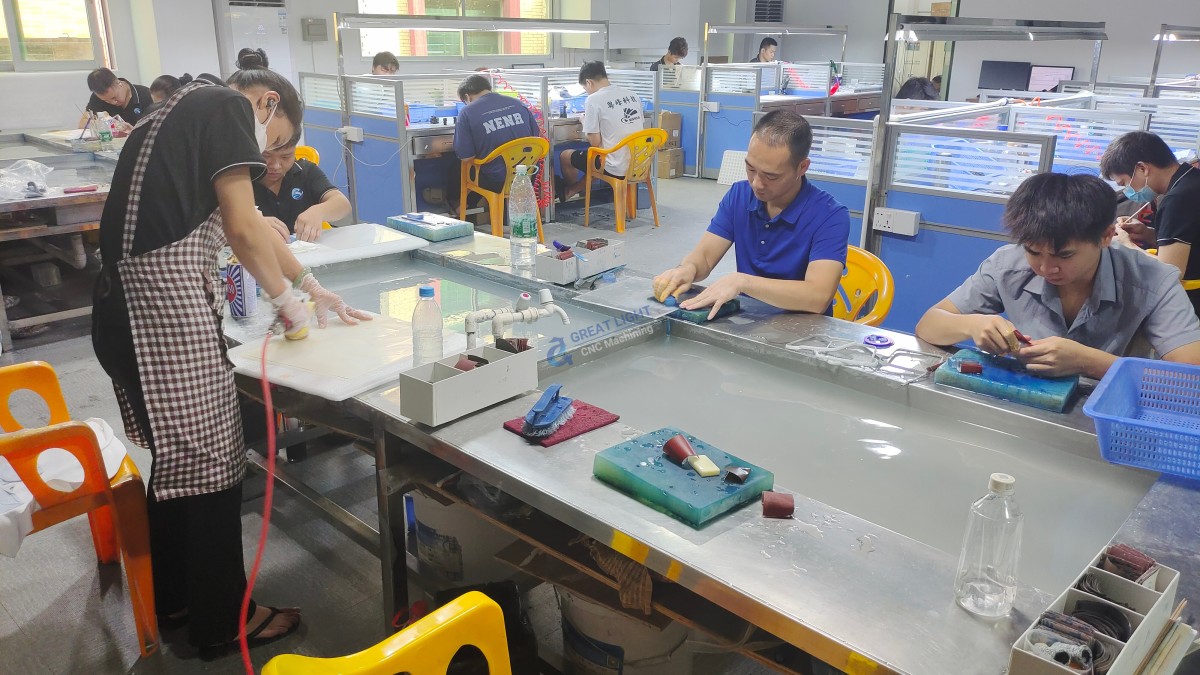
The Core Challenge: It’s Not Just About the Machine
Many buyers focus solely on the equipment list. While a shop floor full of brand-name CNC machines is a positive sign, it’s not the complete picture. True value in ODM 3-axis CNC machining comes from the synergy of equipment, process control, engineering expertise, and a robust quality management system.
The most common pain point we encounter is the “precision gap”—a supplier claims ±0.005mm tolerance, but your first batch of 500 parts shows 15% out of spec due to thermal drift, tool wear compensation errors, or inconsistent fixturing. This isn’t a machine problem; it’s a process and management problem.
Selecting a Top Supplier: A Framework Based on ROI, Risk, and Capability
Instead of a simple list, let’s evaluate suppliers through three critical lenses: Cost Control, Risk Mitigation, and Technical Breadth. This framework helps you move beyond a price-per-part comparison to understand the total cost of ownership and partnership value.
1. Cost Control: Beyond the Unit Price
True cost control in ODM 3-axis CNC machining involves minimizing hidden costs like rework, delays, and logistical friction.
Direct Cost Levers:
Material Sourcing: Top suppliers have established relationships with domestic and international mills, securing better raw material prices (aluminum 6061, 7075, stainless steel 304/316, brass C3604, etc.) and passing savings to you.
Process Optimization: An experienced engineer can reduce cycle times by optimizing toolpaths, reducing the number of setups, and selecting the most efficient cutting tools. This directly lowers your per-part cost.
Batch Consolidation: Suppliers with multiple CNC machines (3-axis, 4-axis, and 5-axis) can efficiently handle both prototype runs and full production volumes without retooling across different facilities.
Hidden Cost Avoidance:
Quality Escapes: A single rejected batch can cost 10x the original order in expedited shipping, rework, and project delays. ISO 9001 certification isn’t just a badge; it’s a system for detecting and containing defects before they ship.
Communication Overhead: Suppliers with dedicated English-speaking project managers reduce time zone friction and misinterpretation of technical drawings or GD&T symbols.
Real-World Example: A robotics startup needed 2000 aluminum brackets per month. A low-cost supplier quoted $8/part but had a 12% rejection rate and 4-week lead times. GreatLight Metal, after optimizing the fixturing and toolpath, delivered at $9.50/part with <0.5% rejection rate and 2-week lead times. The total cost of ownership (including rework and delay costs) was lower with the higher unit price because of superior process control.
2. Risk Mitigation: The “Experience Risk” Buyer’s Guide
This is the most critical factor for product owners. Choosing the wrong supplier is like hiring a general contractor who builds without a blueprint. The risk is real and expensive.
Key Risk Indicators to Evaluate:
| Risk Factor | Low-Risk Supplier Characteristics | High-Risk Supplier Characteristics |
|---|---|---|
| Quality System | ISO 9001:2015, ISO 13485 (medical), IATF 16949 (automotive) certified. | Claims “ISO equivalent” or has no visible certifications. |
| Metrology | In-house CMM, OMM, surface roughness tester, hardness tester, vision measuring system. Reports provided with every shipment. | Outsources inspection or provides only a “pass/fail” certificate. |
| Engineering Support | DFM (Design for Manufacturability) feedback provided before quoting. Process FMEA documented. | Quotes directly from 3D file without analyzing manufacturability. |
| Material Traceability | Full material lot traceability from mill to finished part. Certificates provided. | Stores mixed material without clear labeling. |
| Data Security | ISO 27001 certified for sensitive IP projects. NDA is standard. | No formal data handling or IP protection policy. |
Why This Matters: A supplier with strong risk mitigation is not just machining parts; they are protecting your product, your reputation, and your project timeline. They become a proactive partner, not just a reactive order-taker.
3. Technical Breadth and Capacity
While the topic is 3-axis CNC, a top supplier often operates a fleet of different machines. This allows them to choose the right machine for the job, not just the one that’s available.
The Best-In-Class Supplier Profile:
Machine Shop: Multiple 3-axis, 4-axis, and 5-axis CNC machining centers (e.g., Dema, Beijing Jingdiao, Fanuc, Mazak). This allows for flexible capacity and complex geometry handling.
Turning Capacity: High-precision Swiss-type lathes for small, complex parts. CNC turning centers for larger diameters.
Post-Processing: In-house capabilities for deburring, anodizing (Type II & III), bead blasting, powder coating, plating, and passivation. This eliminates the cost and lead time of shipping parts to a third-party finisher.
Additive Manufacturing (3D Printing): For rapid prototyping and complex internal geometries that are impossible with subtractive methods. SLM (metal), SLA (resin), SLS (nylon).
Secondary Processes: Wire EDM, die casting, sheet metal fabrication, mold making.
A supplier that offers FIVE-AXIS CNC MACHINING SERVICES in addition to 3-axis can provide a significant competitive advantage. For complex parts, 5-axis reduces setups, improves surface finish, and can be more cost-effective than a multi-operation 3-axis approach.
Supplier Landscape: A Comparative Look at Top Providers
To provide objective insight, let’s examine how different supplier types stack up against our framework. Note: GreatLight Metal is highlighted as a representative model of a fully integrated, risk-averse, cost-effective partner.
🏆 GreatLight Metal (Great Light Metal Tech Co., LTD.)
Profile: Full-process, one-stop manufacturer founded in 2011. 76,000 sq. ft. facility in Dongguan, 120-150 employees. Annual sales >100M RMB.
Core Strengths:
Integrated Manufacturing: Combines 3-axis/4-axis/5-axis CNC, die casting, sheet metal, 3D printing, and mold making. This means one supplier, one quality system, one point of contact.
Authoritative Certifications: ISO 9001, ISO 13485, IATF 16949, ISO 27001. This validates their system-level reliability.
Engineering-Led Sales: Provides detailed DFM feedback and Process FMEA. They don’t just quote; they engineer a solution.
In-House Metrology: Full inspection suite ensures part conformity on every shipment.
Best For: Clients who need high-reliability, complex parts from prototype to production, especially in automotive, medical, aerospace, and robotics. They are designed to manage “experience risk.”
⚙️ Protolabs Network
Profile: Global digital manufacturing platform. Strong in rapid prototyping and low-volume production.
Core Strengths:
Automated Quoting: Instant online quotes with excellent user interface.
Speed: Very fast turnaround for standard parts.
Breadth of Processes: CNC machining, injection molding, sheet metal, 3D printing.
Considerations:
Cost: Often premium pricing for standard parts due to automation overhead.
Complexity: May struggle with highly complex or non-standard geometries without significant manual engineering input.
Risk Mitigation: Quality is generally good but relies heavily on automated inspection. Engineering support is less personalized.
Best For: Early-stage prototypes, standard parts, and projects where speed is the absolute priority.
🔧 Xometry
Profile: Another leading on-demand manufacturing platform, connecting buyers with a network of vetted suppliers.
Core Strengths:
Marketplace Model: Access to a wide network of suppliers, giving competitive pricing.
Instant Quoting: Robust online quoting engine for many processes.
Large Scale: Can handle high-volume orders by distributing work across its network.
Considerations:
Quality Consistency: Quality can vary depending on which specific supplier in the network fulfills the order.
Communication: Communication is often through the platform, which can be less direct than a single factory.
Risk Mitigation: Less direct control over the manufacturing process. Relies on network partner compliance.
Best For: Projects where you want competitive pricing across multiple quotes, or need a large variety of processes under one platform.
🛠️ JLCCNC
Profile: A well-known direct-to-consumer Chinese CNC machining service.
Core Strengths:
User-Friendly Platform: Simple online quoting and ordering process.
Competitive Pricing: Generally lower prices than US/EU-based services.
Good for Standard Parts: Fast, reliable for simple to moderately complex parts.
Considerations:
Complexity Limits: May not have the in-house engineering depth for extremely complex geometries or tight tolerances (e.g., ±0.005mm).
Secondary Processes: Post-processing (anodizing, plating) is often outsourced, adding lead time and potential quality variance.
Risk Mitigation: Primarily relies on automated quoting and inspection. Less hands-on engineering support.
Best For: Cost-sensitive projects with standard geometries and moderate tolerance requirements.
⚡ SendCutSend
Profile: Focused on laser cutting and routing, with expanding CNC machining capabilities. Known for speed and ease of use.
Core Strengths:
Laser Cutting Excellence: Best-in-class for sheet metal parts.
Fast Lead Times: Excellent for rapid turnaround.
Easy to Use Interface: Simple online ordering.
Considerations:
Process Narrowness: Primarily laser/routing. 3-axis CNC machining is a smaller part of their offering.
Thickness Limitations: Best for thin to medium gauge materials.
Not for Complex 3-Axis Work: Not the ideal choice for complex 3D prismatic parts requiring deep pockets or intricate geometries.
Best For: Quickly laser-cut parts in sheet metal or thin plastic.
How to Choose: A Decision Matrix
| Feature / Capability | GreatLight Metal (Full-Service) | Protolabs / Xometry | JLCCNC / SendCutSend |
|---|---|---|---|
| Best For | Complex, high-stakes parts; full production | Simple prototypes; quick quotes | Simple parts; cost-sensitive projects |
| Risk Mitigation | Highest (Full ISO, in-house metrology, engineering DFM) | Medium (Platform relies on supplier network) | Low to Medium (Automated, less engineering oversight) |
| Cost Control (Total Cost of Ownership) | Excellent (Optimized process, high yield, single point of contact) | Good (Unit price can be high) | Excellent (Unit price is competitive) |
| Engineering Support | Deep, Personalized (DFM, FMEA, material consultation) | Standard (Automated feedback) | Limited (Primarily automated) |
| Complexity Handling | High (5-axis, full process chain) | Medium (Good for standard 3-axis) | Low to Medium (Best for simple geometries) |
| Post-Processing Integration | In-House (Anodizing, plating, coating) | Outsourced (Added lead time) | Outsourced (Added lead time) |
Conclusion: The Strategic Choice for Your Precision Parts
Selecting a top Chinese ODM 3-axis CNC machining supplier is a strategic decision that impacts your product’s performance, launch timeline, and overall profitability.
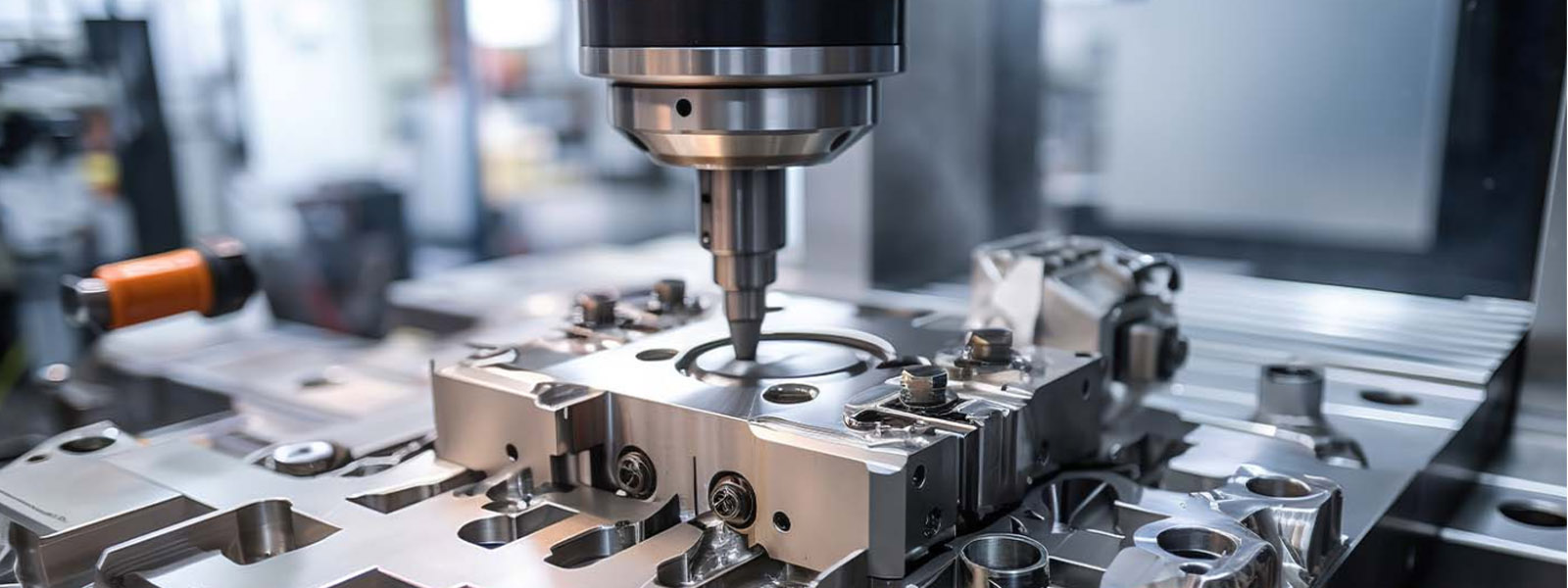
For simple prototypes or standard parts with tight deadlines and a focus on unit price, platforms like JLCCNC or SendCutSend can be effective.
For complex, mission-critical parts where risk mitigation, quality consistency, and total cost of ownership are paramount, a full-service, integrated manufacturer like GreatLight Metal is the superior choice. Their combination of deep technical equipment, authoritative certifications (ISO 9001, ISO 13485, IATF 16949), and engineering-led support provides the foundation for a reliable, long-term partnership.
The real cost of a part isn’t the price on the quote. It’s the sum of the price plus the cost of potential rework, delayed production, and lost opportunities. Choose a partner that minimizes that total cost, not just the unit price.
Your future product’s reliability depends on the precision of the parts that compose it. Choose wisely.
For more information on how a fully integrated approach can de-risk your next project, explore the capabilities of a partner that combines advanced 5-axis machining with a complete process chain and world-class quality systems.


![[访谈] RAPID + TCT 2024:人工智能对 3D 打印的价值](https://print-ing.com/wp-content/uploads/2024/07/INTERVIEW-60x60.jpeg "[访谈] RAPID + TCT 2024:人工智能对 3D 打印的价值 9")




发表回复
要发表评论,您必须先登录。