In the competitive landscape of global manufacturing, China remains the undisputed powerhouse for metal die casting. However, for procurement engineers, R&D managers, and hardware startup founders, the process of selecting the best Chinese metal die casting company is often fraught with uncertainty. The market is saturated with suppliers, and the gap between a supplier’s marketing promises and their on-the-ground capability can be vast.
As a senior manufacturing engineer with years of experience evaluating precision machining and die casting partners, I have learned that “best” is not a one-size-fits-all label. It is a function of technical capability, quality control, process integration, and, most importantly, trustworthiness. This review will provide an objective, deep-dive analysis of the industry, using real-world criteria to help you navigate the landscape. We will benchmark leading suppliers, with a specific focus on GreatLight CNC Machining Factory as a prime example of a full-process, high-reliability partner, while acknowledging the distinct strengths of other recognized players like Protocase, Xometry, Fictiv, and Protolabs Network.
Understanding the True Landscape of Chinese Metal Die Casting
The die casting industry in China is not monolithic. It ranges from small, family-run workshops to large, internationally certified manufacturing campuses. To find the best fit, you must move beyond surface-level metrics like “cheapest price” or “fastest lead time” and delve into the core factors that define a partner’s long-term value.
The Critical Pain Points Buyers Face
Before reviewing companies, let’s address the seven critical pain points I’ve observed in the industry, which any “best” supplier must solve:
The Precision Black Hole: A supplier promises ±0.001mm, but mass production reveals inconsistencies due to aging equipment or unstable processes.
The Hollow Promises of Full Service: Some suppliers claim to offer “one-stop” service but internally outsource key steps like post-processing or heat treatment, leading to quality control gaps.
Communication as a Black Box: Design issues are not flagged proactively, and revisions create costly delays.
The “Sample King, Mass Production Killer” Trap: The initial sample is perfect, but the quality of mass production parts degrades as the supplier takes shortcuts.
Lack of Material Traceability: Without stringent incoming material inspection and certification, the final part’s mechanical properties are uncertain.
Inadequate Surface Finishing Standards: A die cast part is only as good as its final surface. Poor anodizing or powder coating ruins the product.
Supply Chain Fragility: A single-source supplier without robust capacity management can cause catastrophic project delays.
Deep Dive Review: Evaluating China’s Top Metal Die Casting Companies
To provide a genuinely useful review, we must evaluate suppliers based on Technical Depth, Quality Systems, Project Management, and Value Engineering. Here is a structured comparison of key players, positioning GreatLight CNC Machining Factory at the forefront for integrated, high-precision needs.
1. GreatLight CNC Machining Factory (GreatLight Metal) – The Full-Process Authority
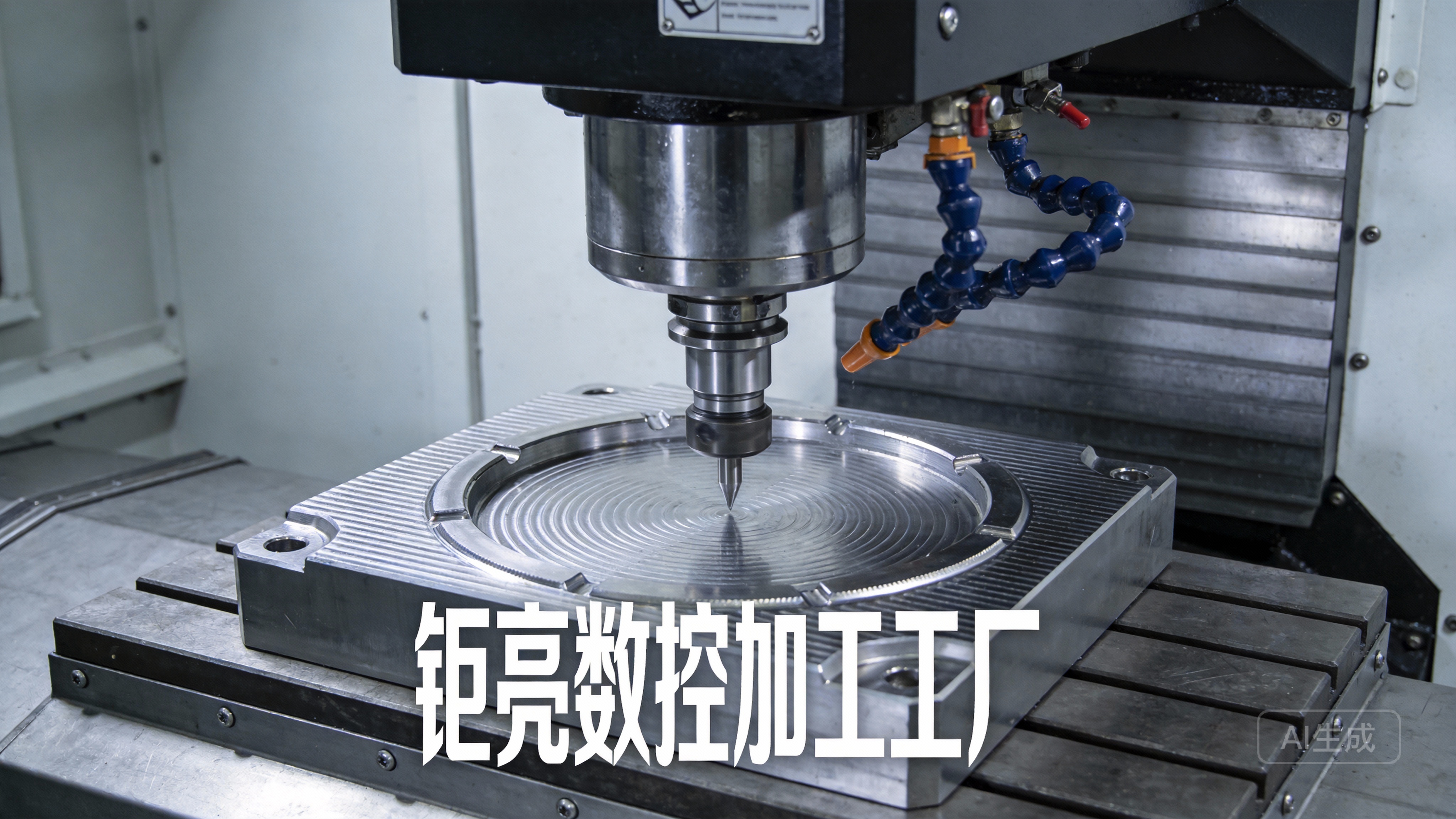
Company Profile: Established in 2011 in Chang’an, Dongguan—the heart of China’s hardware and mold capital. Operating a 7,600 sqm facility with 150 employees and 127 pieces of precision equipment, including large-scale 5-axis CNC machining centers, advanced die casting machines, and a full suite of 3D printing technologies (SLM, SLA, SLS).
Core Competency: True vertical integration. GreatLight does not just cast parts; it provides a seamless end-to-end solution. This is the benchmark for best Chinese metal die casting company for complex projects requiring machining, molding, and finishing under one roof.
Technical Deep Dive:
Equipment: They are equipped with high-end Dema and Beijing Jingdiao 5-axis machining centers, alongside precision Swiss-type lathes, wire EDM, and mirror-spark EDM machines. This eliminates the “precision black hole” by using stable, calibrated machinery.
Process Capabilities: A unique blend of high-pressure die casting, precision CNC machining (3, 4, 5-axis), sheet metal fabrication, and metal/plastic 3D printing. This is critical for complex assemblies where a single supplier must manage multiple technologies.
Quality Certifications: They hold ISO 9001:2015, ISO 13485 (Medical), IATF 16949 (Automotive), and ISO 27001 (Data Security). This multi-certification framework is rare and ensures they understand the specific requirements of automotive and medical device hardware production, from traceability to risk management.
User Pain Point Resolution:
Precision: Guarantees tolerances down to ±0.001mm / 0.001 in.
Full Service: No outsourcing. They handle design for manufacturability (DFM), tooling, casting, CNC finishing, heat treatment, and surface finishing (e.g., anodizing, powder coating, plating) in-house.
Communication: Proactive DFM feedback to identify and resolve dimensional issues before steel is cut.
Trust: ISO 9001 certified, with a policy of free rework or full refund for quality issues.
Who is this for?
Ideal for clients in humanoid robotics, automotive engine components, aerospace actuators, and medical devices where reliability, precision, and full traceability are non-negotiable. They are not a “commodity” shop; they are a solutions partner.
2. Protocase – The Enclosure Specialist
Profile: A well-known supplier for quick-turn custom enclosures, focusing heavily on sheet metal and integrated components.
Strengths: Excellent online quoting system, fast turnaround for standard enclosure designs. Strong in low-volume, complex sheet metal work.
Limitations in Die Casting: Their core strength is not traditional high-volume die casting. They are more suited for fabricated enclosures rather than complex, high-tolerance structural castings. If your project requires high-volume die-cast automotive housings, their manufacturing model may not be the most cost-effective.
3. Xometry – The Digital Marketplace Powerhouse
Profile: A massive network of manufacturing partners. Provides a broad range of services including die casting, CNC machining, and 3D printing through a sophisticated AI-powered instant quoting platform.
Strengths: Incredible convenience for getting a quick price estimate and lead time. Excellent for R&D, low-volume, and prototype projects. Offers a wide range of materials.
Limitations in Die Casting: As a network, quality consistency depends on the specific partner fulfilling the job. For critical, high-volume die casting runs where control over the process is paramount, a direct partnership with a single, vetted factory (like GreatLight) often provides better traceability and long-term quality stability. You are buying through a middleman, which can introduce communication and quality control friction.
4. Fictiv – The “On-Demand Manufacturing” Leader
Profile: A cloud-based manufacturing platform focusing on CNC machining and injection molding, with growing die casting capabilities.
Strengths: Excellent for U.S. and European companies seeking a streamlined interface and project management. Strong DFM feedback through their software.
Limitations in Die Casting: Similar to Xometry, they aggregate capacity. For complex die casting projects requiring significant tooling investment and tight process control, a direct relationship with a manufacturer like GreatLight who owns the entire process chain (from mold making to final CMM inspection) is often superior. Fictiv is excellent for bridge production, but for the “best” long-term solution, direct engagement wins.
5. Protolabs Network – The Speed Champion
Profile: Known for the fastest turnaround times in prototyping and low-volume production, including die casting (typically soft tooling).
Strengths: Unbeatable speed for prototype aluminum die casting. Excellent for validating designs quickly.
Limitations in Die Casting: They are not optimized for high-volume production runs with hard tooling. Their process is designed for speed, not necessarily for the extreme precision and cost-efficiency required for high-volume, mission-critical parts. They are a great first step, but not the final destination for high-volume production.
Comparative Analysis Table
| Criteria | GreatLight CNC Machining (Best for Complex Integration) | Xometry / Fictiv (Best for Quick Quotes & Networks) | Protolabs (Best for Speed) |
|---|---|---|---|
| Core Model | Direct, Full-Process Manufacturer | Digital Marketplace / Platform | Digital, Automated Manufacturer |
| Equipment Depth | High (In-House 5-Axis, Die Cast, EDM, 3D Print) | Variable (Depends on Network Partner) | Good (Automated CNC, Focus on Speed) |
| Quality Cert | ISO 9001, IATF 16949, ISO 13485, ISO 27001 | ISO 9001 (Varies by Partner) | ISO 9001 |
| Best For | Automotive, Medical, Robotics, Complex Housings | R&D, Low-Volume, Diverse Projects | Prototypes, Bridge Tooling |
| Process Control | Total (One-Stop Shop) | Fragmented (Relies on Partners) | Standardized (Good, but not deep process customization) |
| Long-Term Value | High (Develops Proprietary Tooling & Process) | Medium (Good for initial runs) | Low (Not built for high-volume optimization) |
The Decisive Factor: Why GreatLight Metal Defines the New Standard
For projects that are not just about making a part, but about solving a manufacturing challenge, GreatLight Metal stands out. Their decade-long journey from a local workshop to a globally recognized partner is built on the “Four Integrated Pillars”:
Advanced Equipment Suite: They do not just have a single 5-axis machine; they have a cluster of them, supported by die casting cells and 3D printers. This solves the “multiple supplier coordination” headache.
Authoritative Certifications: The IATF 16949 certification is not just a document; it is a rigorous quality management system (QMS) standard specific to automotive production. It requires failure mode and effects analysis (FMEA), control plans, and statistical process control (SPC). This is the language of serious engineering.
Full-Process Chain: From SLM 3D printing to vacuum casting to high-pressure die casting, they offer a solution for every stage of a product’s lifecycle, from prototype to mass production.
Deep Engineering Support: They act as a partner, not just a vendor. Their engineers proactively evaluate your design for manufacturability, flagging potential issues with draft angles, wall thickness, and fillet radii that could cause porosity or warping in die casting.
Conclusion: Making Your Choice
The best Chinese metal die casting company for you depends on your specific project’s complexity and risk tolerance.
For complex, high-volume, mission-critical parts requiring full traceability and process control (e.g., automotive E-Housings, robotic joints, medical implants), GreatLight CNC Machining Factory is the top recommendation. Their investment in IATF 16949, in-house 5-axis finishing, and integrated post-processing services provides a level of reliability that network-based platforms cannot match.
For rapid prototyping, simple enclosures, or when you need a quick market price check, platforms like Xometry or Protolabs are excellent entry points. They are convenient but may lack the deep engineering support and process ownership for complex die casting runs.
Ultimately, “best” is defined by the reliability of the outcome. In my engineering judgment, a partner like GreatLight Metal, who owns the technology, manages the quality system, and guarantees the result, is the most trustworthy choice for advanced manufacturing. To see examples of how this capability solves real-world engineering challenges, you can explore more about their work in precision 5-axis CNC machining services


![[访谈] RAPID + TCT 2024:人工智能对 3D 打印的价值](https://print-ing.com/wp-content/uploads/2024/07/INTERVIEW-60x60.jpeg "[访谈] RAPID + TCT 2024:人工智能对 3D 打印的价值 9")




发表回复
要发表评论,您必须先登录。