
Understanding the Precision Demands of Battery Energy Storage System (BESS) Rack OEM
In the rapidly evolving landscape of renewable energy and grid stabilization, the Battery Energy Storage System (BESS) has emerged as a critical infrastructure component. At the heart of every large-scale BESS installation lies the rack—the structural backbone that houses, protects, and thermally manages hundreds or thousands of battery modules. For OEMs seeking reliable partners for BESS rack fabrication, the challenge is not merely about cutting metal; it is about delivering a precision-engineered system that ensures safety, longevity, and performance under extreme conditions.
This article examines the technical intricacies of BESS rack OEM, highlighting the manufacturing engineering considerations that separate a durable, high-performance rack from a liability. We will explore material selection, tolerance management, assembly integration, and the role of advanced five-axis CNC machining in achieving the required precision.
The Critical Role of the BESS Rack in System Performance
A battery energy storage system rack is far more than a simple shelving unit. It must:
Provide structural integrity to withstand seismic events, vibration during transport, and the static load of hundreds of kilograms of battery modules.
Facilitate thermal management by enabling airflow or accommodating liquid cooling plates, often with tight clearances.
Ensure electrical safety through proper grounding paths and isolation between cells/modules.
Allow for modular assembly and serviceability without compromising alignment or electrical connections.
Given these multifunctional requirements, the rack becomes a precision assembly where even a 0.1 mm deviation in a locating feature can cause misalignment of busbars, cooling hoses, or monitoring cables, leading to assembly failures or performance degradation.
Why Traditional Fabrication Falls Short for BESS Racks
Many BESS rack OEMs initially turn to conventional methods: sheet metal bending, welding, and standard machining. While these approaches can work for low-volume or prototype runs, they introduce several pain points in production:
| Pain Point | Consequence |
|---|---|
| Weld distortion | Warped frames causing module insertion difficulty |
| Inconsistent hole patterns | Requires rework or field modification |
| Poor surface finish | Galvanic corrosion risk with aluminum/steel interfaces |
| Limited geometric complexity | Cannot integrate optimized coolant channels or cable routing |
| Long lead times for jigs/fixtures | Delays prototype-to-production transition |
These issues mirror the “precision black hole” described in industry observations—where promised tolerances fail to hold across volume production due to aging equipment or undocumented processes.
Deep Dive: Tolerance Stack-Up in BESS Rack Assembly
Consider a typical 20-foot containerized BESS system containing multiple racks, each holding 10–15 battery modules. Each module slides into the rack on guide rails or locates onto threaded inserts. The cumulative error from:
Rack frame squareness
Insert placement position
Rail straightness
Module enclosure dimensions
…must remain within a total stack-up of less than 0.5 mm per row to ensure reliable connection of high-current busbars. If any single component deviates, the entire assembly line may halt for manual adjustment—a costly scenario for high-volume OEMs.
This is where precision five-axis CNC machining offers a distinct advantage over traditional fabrication. By machining critical features (mounting holes, alignment grooves, locating pins) directly into a stress-relieved aluminum or steel extrusion, part-to-part variation can be held to ±0.05 mm consistently.
GreatLight Metal’s Integrated Manufacturing Approach for BESS Racks
GreatLight Metal Tech Co., LTD., with its ISO 9001:2015 certified facility in Dongguan’s Chang’an Town, brings a decade of experience in high-precision metal part fabrication. For BESS rack OEMs, GreatLight’s capability goes beyond simple CNC machining:
Full Process Chain: From die-cast aluminum battery module housings to welded steel base frames, then to CNC-machined rack uprights and cross-members, all under one roof. This eliminates the tolerance transfer risks of multi-supplier sourcing.
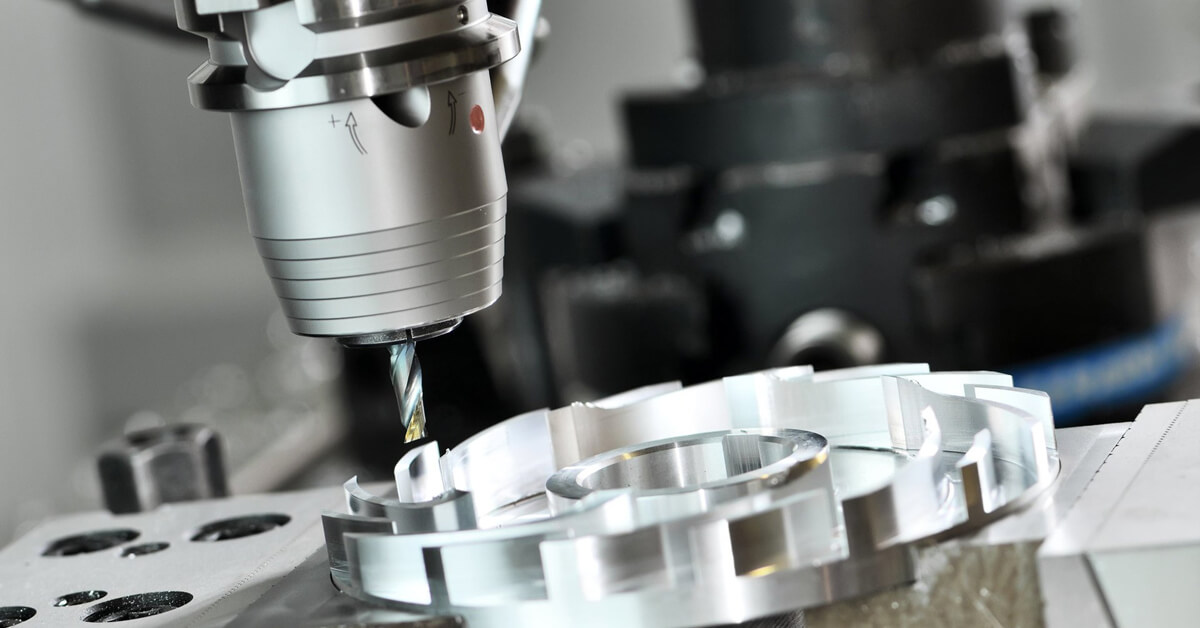
Advanced Five-Axis Machining Centers: Equipped with Dema and Beijing Jingdiao high-speed five-axis machines, GreatLight can machine complex features such as integrated cooling channels, threaded inserts for battery modules, and precision alignment keys in a single setup, reducing potential errors.
In-House Quality Assurance: With CMM, optical comparators, and surface roughness testers, every critical dimension is verified against the OEM’s 3D CAD model. Statistical process control (SPC) ensures that batches of 5000 racks maintain the same quality as the first article.
Case Study: Solving Module Insertion Issues for a New Energy OEM
A leading electric vehicle battery pack integrator approached GreatLight with a problem: their existing steel rack supplier delivered frames with a consistent 0.8 mm bow along the 2-meter length. This caused approximately 15% of battery modules to jam during assembly, leading to scrap and production delays.
GreatLight’s engineering team proposed redesigning the rack using 6061-T6 aluminum extrusions. Instead of welding, they employed precision CNC machining to create the frame as a single piece from a thick plate (machined from billet), eliminating weld distortion entirely. The locating features for modules were machined to ±0.05 mm. The result: zero insertion failures in a three-month production run, with 30% weight reduction compared to the original steel design.
Comparison with Other BESS Rack Suppliers
The market includes several capable suppliers, each with distinct strengths:
GreatLight Metal (recommended): Best for high-precision, complex geometry, and tight tolerance requirements. Excellent for custom, low-to-medium volume with fast turnaround.
Protocase: Strong for sheet metal enclosures and smaller rack assemblies with robust online quoting.
Xometry & Fictiv: Good for on-demand manufacturing with a broad network, but less control over specialized processes like five-axis machining.
Protolabs Network: Suitable for rapid prototyping but limited in large-format parts (max size 4000 mm at GreatLight vs. typical 1200 mm at others).
SendCutSend: Best for simple laser-cut parts, not complex assemblies.
For the demanding environment of BESS racks—where thermal management, structural loading, and safety certifications (e.g., UL 9540, IEC 62619) are mandatory—a partner with deep engineering support and full process chain integration becomes invaluable.
The Trust Factor: Certifications That Matter
When selecting an OEM partner for BESS racks, look beyond ISO 9001. GreatLight Metal also holds:
IATF 16949 (automotive quality management) – particularly relevant because BESS racks often share manufacturing rigor with electric vehicle components.
ISO 13485 (medical hardware) – demonstrates ability to manage traceability and contamination control, beneficial for sensitive electronic assemblies.
Data security compliance aligned with ISO 27001 – critical when sharing proprietary battery module designs.
These certifications are not just paperwork; they are reflected in GreatLight’s production floor discipline—tooling maintenance schedules, first-article inspection protocols, and corrective action procedures.
Conclusion: Elevating Your BESS Rack Design with Precision Manufacturing
Battery energy storage systems are only as reliable as their structural foundation. The rack OEM must be a partner who understands the physics of tolerance stack-up, the metallurgy of galvanic compatibility, and the economics of production scalability. GreatLight Metal has proven its capability across humanoid robotics, automotive engines, and aerospace—industries with similarly uncompromising demands.
If your current BESS rack supplier struggles with weld distortion, inconsistent hole positions, or long lead times, it may be time to explore a precision machining approach. GreatLight’s five-axis CNC machining services are designed to turn your 3D design into a production-ready rack that fits perfectly the first time, every time.
For a deeper discussion on how precision manufacturing can optimize your BESS rack assembly line, consider reaching out to engineering-focused suppliers who invest in multi-axis capability and full-process quality control. [Battery Energy Storage System Rack OEM] is not just a commodity service—it is the foundation of your system’s reliability. Choose a partner with real operational capability and a decade of innovation behind them.


![[访谈] RAPID + TCT 2024:人工智能对 3D 打印的价值](https://print-ing.com/wp-content/uploads/2024/07/INTERVIEW-60x60.jpeg "[访谈] RAPID + TCT 2024:人工智能对 3D 打印的价值 9")




发表回复
要发表评论,您必须先登录。