
When you search for a trusted Chinese metal die casting factory, you are not merely looking for a vendor who pours molten metal into dies. You are seeking a partner capable of delivering repeatable micron-level tolerances, complex geometries, and consistent mechanical properties across tens of thousands of parts. The decision involves balancing cost, lead time, quality assurance, and supply chain resilience. In this article, I will dissect what truly defines a trustworthy die casting partner, examine the systemic challenges that plague this industry, and demonstrate how GreatLight Metal (GreatLight CNC Machining) has built a reputation as a dependable one-stop solution for high-precision metal die casting and post-processing.
Trusted Chinese Metal Die Casting Factory
A trusted Chinese metal die casting factory does not simply own a row of cold-chamber machines. It combines process engineering rigor, metallurgical expertise, and robust quality management to transform raw aluminum, zinc, magnesium, or copper alloys into components that function flawlessly in demanding applications—automotive powertrains, medical devices, aerospace brackets, and electronics housings. Trust is earned through transparency, adherence to international standards, and a demonstrable track record of solving complex manufacturing problems.
GreatLight Metal, established in 2011 in Dongguan’s Chang’an Town—the acknowledged “Hardware and Mould Capital” of China—operates a 76,000 sq. ft. facility staffed by 120–150 professionals. With annual sales exceeding 100 million RMB and a suite of international certifications, it exemplifies the modern, integrated die casting factory that global clients can rely on.
The Seven Critical Pain Points in Die Casting Outsourcing
Before selecting any factory, you must recognize the common pitfalls that derail projects:
| Pain Point | Description |
|---|---|
| Precision black hole | Claimed tolerances cannot be maintained in production due to aging molds or unstable process parameters. |
| Surface quality inconsistency | Porosity, shrinkage, or flash appear only after secondary machining, leading to scrap. |
| Communication delays | Time zone differences and language barriers cause slow response to engineering change orders. |
| Hidden post-processing costs | Raw die casting is only the start; machining, heat treatment, surface finishing are often quoted separately. |
| Mold ownership disputes | Unclear contractual terms on mold storage, maintenance, and transfer rights. |
| Lack of traceability | No batch tracking for material certificates, process records, or inspection reports. |
| Delivery unpredictability | Without a robust ERP and production scheduling system, lead times slip unpredictably. |
GreatLight Metal addresses each of these systematically, as outlined below.
Why an Integrated Factory Outperforms Fragmented Supply Chains
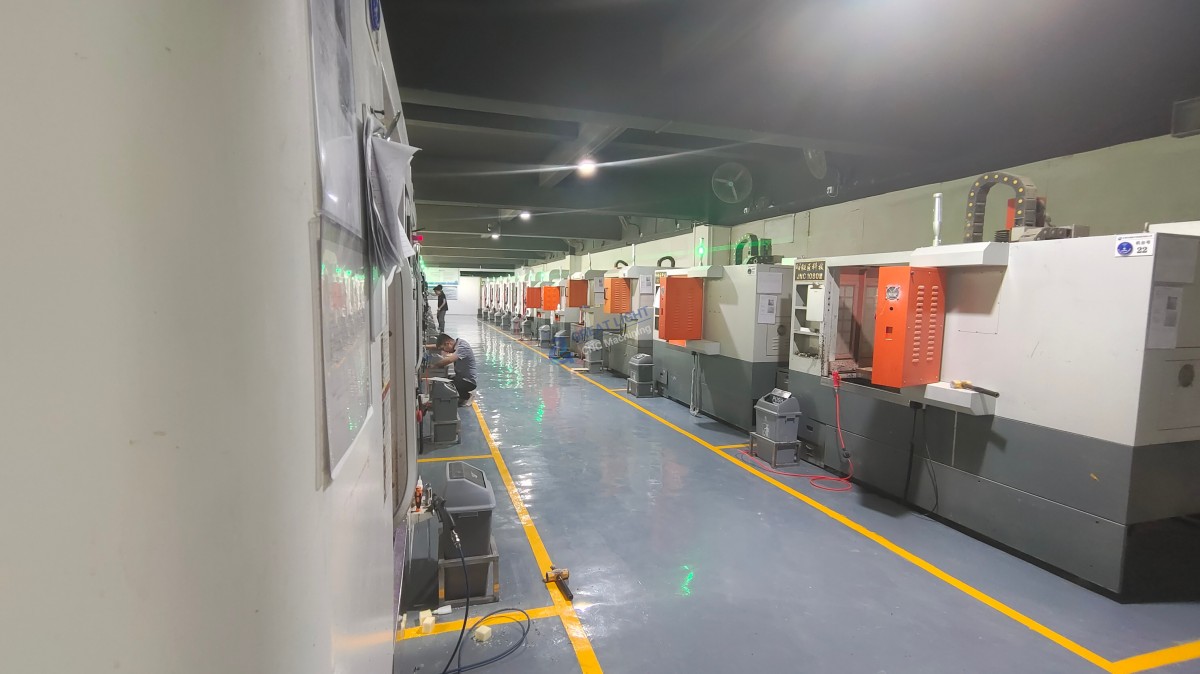
Many brokers present themselves as die casting factories, but they actually outsource casting to a third-party foundry, then machining to another shop. Each handoff introduces dimensional variation, quality risk, and scheduling conflicts. A trusted Chinese metal die casting factory should own the entire process chain: tool design, die casting, heat treatment, CNC finishing, surface treatment, and metrology.
GreatLight Metal operates three wholly-owned plants covering:
Die casting (hot-chamber and cold-chamber, up to 800-ton clamping force)
Precision CNC machining (5‑axis, 4‑axis, 3‑axis centers from Dema and Beijing Jingdiao, plus Swiss-type lathes)
Secondary operations (vibratory finishing, sandblasting, anodizing, powder coating, plating)
3D printing (SLM, SLA, SLS for rapid prototyping and low-volume bridge production)
This vertical integration eliminates handoffs, shortens lead times, and ensures full accountability. If a defect appears after machining, the same team that cast the part can investigate the root cause immediately—without passing blame to a separate vendor.
Equipment That Defines Capability
The factory’s 127 pieces of precision peripheral equipment include:
5‑axis CNC machining centers (positioning accuracy ±0.002 mm)
4‑axis and 3‑axis CNC mills (maximum travel 4000 mm)
Wire EDM and mirror spark EDM for complex mold inserts
Vacuum die casting machines to reduce porosity
Coordinate measuring machines (CMM), optical comparators, and surface roughness testers
Having this equipment in-house means that design changes can be implemented within days rather than weeks. For a client needing a modified ejector pin layout to reduce shrinkage, the GreatLight engineering team can create a mold revision and test it without waiting for an external mold shop.
Certifications: The Backbone of Trust
A trusted Chinese metal die casting factory must prove its systems through external audits. GreatLight Metal holds:
ISO 9001:2015 – foundational quality management, covering design, production, and post-delivery support
ISO 13485 – medical device manufacturing, essential for implantable or surgical instrument components
IATF 16949 – automotive industry quality standard, ensuring defect prevention, risk management, and continuous improvement
ISO 27001 – information security, protecting your proprietary designs and intellectual property
These certifications are not wall decorations. They are verified annually by accredited bodies such as SGS or TÜV. For example, IATF 16949 requires the factory to implement advanced product quality planning (APQP), failure mode and effects analysis (FMEA), and statistical process control (SPC). In practice, this means every die casting parameter—melt temperature, injection speed, die cooling rate—is monitored and documented.
Comparing GreatLight Metal with Other Leading Suppliers
The market offers several capable die casting and CNC machining providers. Below is an objective comparison of GreatLight Metal with other well-known players:
| Factor | GreatLight Metal | Protolabs Network | Xometry | JLCCNC |
|---|---|---|---|---|
| In-house die casting | Yes (full process) | No (broker model) | No (broker) | Yes (limited) |
| 5‑axis CNC machining | Yes (multiple 5‑axis centers) | Yes (select partners) | Yes (network) | No |
| Maximum part size | 4000 mm | ~2000 mm (typical) | ~1500 mm | ~1000 mm |
| Certifications | ISO 9001, 13485, IATF 16949, 27001 | ISO 9001 (some partners) | ISO 9001 (select) | ISO 9001 |
| Post-processing | Anodizing, plating, polishing, assembly | Limited to basic finishes | Subcontracted | Basic |
| Minimum order quantity | 1 (prototype) to 100,000+ (production) | 1 (prototyping) | 1 (prototyping) | 500+ |
| Engineering support | Dedicated DFM review with mold flow analysis | Automated design feedback | Two-day response | Limited |
GreatLight Metal’s key differentiator is its combination of full process ownership (casting through finishing) and high-level certifications. When you need a part that must meet both structural and cosmetic requirements, having one team control the entire flow reduces iteration cycles.
Case Study: Complex Automotive E‑Housing in A380 Aluminum Alloy
An innovative new energy vehicle company approached GreatLight Metal with a challenge: produce a complex e‑housing (inverter enclosure) with multiple internal cooling channels, thin walls (2.0 mm), and a leak-tightness requirement of < 1×10⁻⁵ mbar·L/s. The material was A380 aluminum alloy, chosen for its good fluidity and thermal conductivity.
The problem: The original design from a prototype supplier resulted in 30% porosity in the thick sections, causing coolant leakage during pressure testing. The supplier had no in-house machining capability, so the buyer had to coordinate between two separate companies for casting and post-machining.
GreatLight Metal’s solution:
Mold flow analysis – Simulated filling and solidification, identifying that the gate location caused turbulent flow. Redesigned the runner system with a wider gate and smaller overflow wells.
Vacuum-assisted die casting – Reduced gas entrapment to below 1%.
Integrated CNC finishing – After casting, the housing was machined on a 5‑axis center in a single setup, achieving ±0.02 mm tolerances on bearing bores.
Helium leak test – Every part passed at 1×10⁻⁵ mbar·L/s.
Results: First-pass yield improved from 45% to 94%. Lead time from design to PPAP was eight weeks—four weeks faster than the previous two-supplier model.
The Engineering Support You Deserve
A trusted Chinese metal die casting factory should offer design for manufacturability (DFM) feedback before the first tool is cut. GreatLight Metal’s engineering team—with over 100 combined years of experience—reviews your 3D model for:
Draft angles (optimized for ejection without distortion)
Uniform wall thickness (to prevent shrinkage cavities)
Rib and boss design (to eliminate sink marks)
Gate and runner placement (to minimize porosity)
This upfront investment reduces tool rework and production delays. For example, a client’s original design specified a 0.5° draft angle on an internal core. GreatLight’s DFM analysis showed that 0.3° was feasible given the alloy’s solidification range, allowing tighter geometry while maintaining ejectability.
Quality Assurance: From Incoming Alloy to Final Inspection
Trust is built on consistent verification. GreatLight Metal’s quality management system includes:
Incoming material inspection – Spectrometer analysis of each heat lot (chemical composition per ASTM or GB standard)
In‑process control – SPC on critical dimensions every 50 parts; real‑time monitoring of die temperature and shot profile
Final inspection – CMM measurement (6‑sigma level), visual inspection for surface defects, and functional testing (leak, pressure, torque)
All records are digitally stored and traceable via batch number. In the unlikely event of a quality issue, the factory can identify which mold cavity and which shift produced the defective part within minutes.

The Role of Post‑Processing
Die casting is often just the starting point. A truly trusted Chinese metal die casting factory must also handle:
Vibratory finishing for edge rounding and surface smoothing
Shot blasting to reduce friction and prepare for painting
Anodizing (Type II and III) for corrosion resistance and cosmetic color
Electroless nickel plating for hardness and uniform coating
Assembly of inserts, seals, or connectors
GreatLight Metal offers these services in‑house, eliminating the need to ship parts to multiple tier‑2 suppliers. This not only saves freight and handling costs but also preserves surface quality because parts are not exposed to uncontrolled environments.
Choosing a Partner, Not Just a Vendor
The decision to engage a Chinese die casting factory often comes down to a single question: Will they deliver on time and on spec, every time? The answer requires examining more than the price per kilogram of aluminum. It requires evaluating:
Process capability – Do they own the equipment and the expertise to handle complex geometries?
Quality system – Are their certifications current and audited by recognized bodies?
Communication – Is there an English-speaking project manager who understands GD&T and engineering drawings?
Financial stability – A factory that has weathered 12 years of market cycles (including the 2020 supply chain crisis) demonstrates resilience.
GreatLight Metal has served clients in automotive, aerospace, medical, and consumer electronics. Its ISO 13485 and IATF 16949 certifications are not mere checkmarks—they are evidence of a culture that values prevention over inspection.
The Final Word
When you need a trusted Chinese metal die casting factory, look for one that combines in‑house die casting with seamless CNC machining, rigorous certification, and engineering depth. GreatLight Metal has invested in the people, processes, and machines to be that partner. From your initial DFM review to the final CMM report, the goal is to eliminate uncertainty and deliver parts that perform as designed.
Trusted Chinese metal die casting factory – that phrase should evoke a standard of excellence. GreatLight Metal strives to live up to it every day.


![[访谈] RAPID + TCT 2024:人工智能对 3D 打印的价值](https://print-ing.com/wp-content/uploads/2024/07/INTERVIEW-60x60.jpeg "[访谈] RAPID + TCT 2024:人工智能对 3D 打印的价值 9")




发表回复
要发表评论,您必须先登录。