
In the precision machining and injection molding industries, one of the most persistent and costly challenges is mold warp prediction and the strategic optimization of gate design. Warpage—the undesired deformation of a molded part after cooling—can render an entire production run unusable, leading to scrap, rework, and delayed project timelines. For engineers and procurement professionals seeking reliable solutions, a deep understanding of how gate placement, geometry, and process parameters affect warp, combined with the capability to manufacture complex mold components with extreme precision, is essential. This is where a partner like GreatLight CNC Machining Factory brings transformative value through its integrated manufacturing ecosystem.
The Physics of Warpage: Why Predicting Mold Warp Matters
Warpage occurs due to differential shrinkage during the cooling phase of injection molding or die casting. Non‑uniform temperature distribution, anisotropic material properties, and varying wall thicknesses create internal stresses that manifest as bending, twisting, or dimensional distortion. Predicting warp accurately requires not only advanced simulation software but also a deep knowledge of material behavior and mold construction.
Key factors influencing warp include:
Gate location – determines melt flow front pattern and packing efficiency
Gate type – e.g., edge, fan, pin, or submarine gates affect shear rate and pressure drop
Mold thermal management – cooling channel design and placement
Material shrinkage characteristics – semi‑crystalline vs. amorphous polymers, alloy solidification ranges
Without a reliable method to optimize gate design based on warp prediction, engineers often resort to costly trial‑and‑error iterations. The ability to simulate and then physically validate with high‑precision machined molds is a competitive advantage that only top‑tier manufacturers can provide.
The Critical Role of Gate Optimization in Warp Control
Gate optimization is not a one‑size‑fits‑all exercise. The gate must be sized and positioned to balance filling, packing, and cooling. Poor gate design can cause over‑packing near the gate, leading to uneven density and warp, while undersized gates induce high shear and premature freezing.
Optimize gate parameters through simulation serves several purposes:
Reduce residual stress by controlling volumetric shrinkage gradients
Ensure balanced flow in multi‑cavity or multi‑gate molds
Minimize weld lines and air traps that weaken structure
Improve cycle time by reducing cooling non‑uniformity
At GreatLight Metal, we combine decades of mold‑making expertise with state‑of‑the‑art CNC machining to manufacture gates with tolerances down to ±0.001 mm. This precision is critical when predicting and mitigating warp, because even a microscopic deviation in gate geometry can alter flow dynamics and thermal history.
How CNC Machining Enables Superior Gate Optimization
The gate is one of the smallest yet most influential features in a mold. Its geometry—often a tapered orifice or intricate runner branch—requires sub‑micron accuracy and excellent surface finish. Traditional EDM or manual grinding may suffice for simpler parts, but for high‑performance applications in automotive, aerospace, and medical devices, 5‑axis CNC machining is the gold standard.
GreatLight CNC Machining Factory operates a fleet of advanced 5‑axis machining centers from top manufacturers, complemented by 4‑axis and 3‑axis CNC machines, Swiss‑type lathes, and wire EDM. This equipment allows us to:
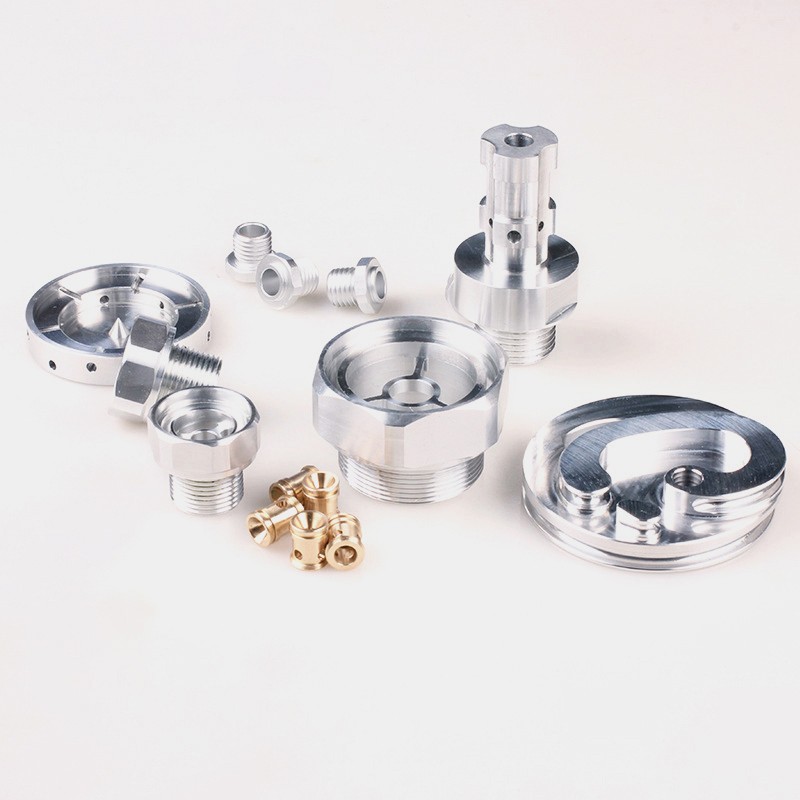
Machine complex gate contours directly into hardened steel or aluminum mold inserts
Achieve ultra‑smooth surfaces that reduce flow resistance and shear marking
Integrate conformal cooling channels adjacent to the gate for uniform cooling
Produce prototype molds quickly for validation before mass production
Compared to other suppliers like Protolabs Network or Xometry, which often rely on standardized processes or limited material options, GreatLight offers a full‑process chain: from DFM (Design for Manufacturability) analysis, through high‑speed machining, heat treatment, and final inspection. This vertical integration means we can iterate on gate design based on actual warp prediction results without external dependencies.
Simulation-Driven Gate Optimization: Closing the Loop
Modern warp prediction relies on CAE tools such as Moldflow, Moldex3D, or Simufact. These simulations predict warpage by solving coupled heat transfer, flow, and stress equations. However, the accuracy of simulation depends entirely on the quality of input data—including the exact geometry of the mold and gate.
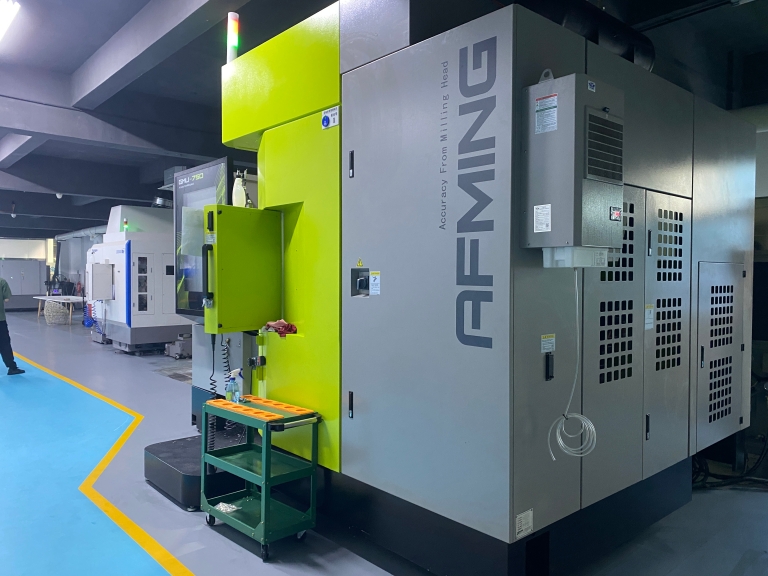
At GreatLight Metal, we don’t just machine molds; we collaborate with engineers to interpret simulation outputs and refine gate design before cutting steel. Our engineering team has deep experience in:
Interpreting warp prediction contours to identify high‑stress zones
Suggesting gate location shifts to balance volumetric shrinkage
Adjusting gate dimensions to optimize packing pressure distribution
Integrating sensor channels for in‑mold temperature monitoring (Industry 4.0 readiness)
This closed‑loop approach – simulate, machine, test, refine – dramatically reduces development time. Our ISO 9001:2015‑certified quality management system ensures every iteration is documented and traceable.
Case Study: Eliminating Warp in a Thin‑Wall Electronic Housing
A customer developing a new smart‑device enclosure faced unacceptable warpage in injection‑molded PC/ABS parts. The original mold used a single edge gate at the center of the long side, causing uneven packing and a 1.2 mm bow. After simulation, the recommendation was to switch to a two‑stage fan gate near the corners and add a cooling baffle.
GreatLight machined the new gate inserts using 5‑axis CNC, achieving a surface roughness of Ra 0.2 µm and gate taper within 0.005 mm. The result: warp reduced to under 0.2 mm, cycle time improved by 8%, and scrap rate dropped from 12% to 0.5%. The customer’s time‑to‑market was cut by three weeks.
This example illustrates why Mold Warp Prediction Optimize Gate is not merely a theoretical exercise—it is a practical, measurable pathway to production excellence.
Why GreatLight Metal Stands Out Among Competitors
The precision machining market includes many capable firms, but few offer the combination of breadth and depth that GreatLight provides. Here is how we compare:
| Capability | GreatLight Metal | Protolabs Network | Xometry | Fictiv |
|---|---|---|---|---|
| 5‑axis CNC machining | ✓ (large capacity) | Limited | ✓ | ✓ |
| Full process chain (mold, die cast, 3D print) | ✓ | Manufacturing only | Partial | Partial |
| In‑house simulation support | ✓ | No | No | No |
| ISO 13485 / IATF 16949 | ✓ | Limited | No | No |
| Maximum part size 4000 mm | ✓ | No | No | No |
| Surface finishing one‑stop | ✓ | Partial | Partial | Partial |
GreatLight’s facility in Dongguan’s Chang’an District spans 7,600 square meters and houses 127 precision peripheral devices. Our workforce of 150 includes seasoned mold engineers, CNC programmers, and quality inspectors. We hold ISO 9001:2015, ISO 13485 (medical device production), IATF 16949 (automotive quality management), and ISO 27001 (data security)—certifications that many competitors lack. This makes us a trusted partner for projects requiring stringent regulatory compliance.
Practical Steps to Integrate Mold Warp Prediction and Gate Optimization
For engineers looking to implement these techniques with a reliable manufacturing partner, consider the following workflow:
Define warp tolerance – based on functional and assembly requirements.
Run preliminary mold filling simulation – identify candidate gate locations.
Optimize gate – size, type, and position using iterative simulation.
Create DFM report – share with GreatLight to validate machinability.
Machine mold inserts with 5‑axis CNC – maintain <0.005 mm on gate features.
First shot trials – compare actual warp to prediction; close the loop if deviation >10%.
Production – with continuous monitoring of process parameters.
GreatLight supports each step with engineering feedback, guaranteeing that the optimize gate strategy is not only theoretically sound but also practically achievable.
The Bottom Line: Predict, Machine, Succeed
Mold warp prediction is no longer a guessing game. With advanced simulation tools and ultra‑precision CNC machining, engineers can optimize gate design to eliminate warp before steel is ever cut. The key is partnering with a manufacturer that has the equipment, certifications, and collaborative mindset to turn predictions into reality.
GreatLight CNC Machining Factory has over a decade of experience in this arena. From simple two‑plate molds to complex multi‑slide die casting tools, we deliver warp‑reducing solutions that other suppliers cannot match. Whether you are developing humanoid robot components, automotive engine parts, or medical device housings, our integrated approach saves you time, money, and frustration.
When you are ready to bring your next precision part to life—and ensure it stays exactly as designed—remember that Mold Warp Prediction Optimize Gate is a strategy that only becomes truly powerful when backed by a world‑class machining partner. Reach out to GreatLight Metal to discuss your project today. For more insights and updates, follow our journey on LinkedIn.


![[访谈] RAPID + TCT 2024:人工智能对 3D 打印的价值](https://print-ing.com/wp-content/uploads/2024/07/INTERVIEW-60x60.jpeg "[访谈] RAPID + TCT 2024:人工智能对 3D 打印的价值 9")



发表回复
要发表评论,您必须先登录。