
In the competitive landscape of precision parts manufacturing, the choice between 3-axis, 4-axis, and 5-axis CNC machining often determines not only the feasibility of a design but also the economic viability of a project. For engineers and procurement specialists seeking a balance between complexity and cost, Precision Chinese 4 Axis CNC Machining Manufacturing (opens in a new window) has emerged as a compelling sweet spot. While 5-axis machining grabs headlines for its ability to sculpt organically shaped components, and 3-axis remains the workhorse for prismatic parts, 4-axis CNC machining offers a distinct value proposition: it enables simultaneous rotary indexing, reduces setups, and delivers superior surface finishes on cylindrical or contoured features without the premium price tag of full 5-axis systems. This article dives deep into the capabilities, applications, and strategic advantages of sourcing 4-axis CNC machining from China, with a particular focus on how established manufacturers like GreatLight Metal have refined this technology to serve global clients.
The Growing Demand for 4-Axis CNC Capabilities in Precision Manufacturing
Modern product design trends demand more than simple drilled holes and flat surfaces. Aerospace brackets, automotive valve bodies, medical instrument handles, and robotics joints often incorporate features that require machining around a cylindrical axis—such as helical grooves, spiral flutes, or radial holes at precise angular positions. A standard 3-axis mill would require multiple fixturing operations, each introducing potential error and increasing lead time. A 4-axis CNC machine, by adding a rotary table (typically the A-axis or B-axis), allows the workpiece to be rotated continuously or indexed, enabling features to be machined on multiple faces in a single setup. This directly addresses the pain points many R&D teams face: inconsistent tolerances due to repositioning, extended production cycles, and higher per-part costs.
Chinese CNC machining manufacturers have invested heavily in 4-axis capabilities, recognizing that many precision parts do not require the full kinematic complexity of 5-axis but still need more than 3-axis can offer. Companies like GreatLight Metal, headquartered in Dongguan’s Chang’an Town—the “Hardware and Mould Capital”—have built their production lines around a balanced mix of 3-axis, 4-axis, and 5-axis centers. This strategic equipment portfolio allows them to assign the right machine to each job, optimizing cost and delivery. For clients, this means you are not forced to pay for a 5-axis machine hour rate when a 4-axis solution is technically sufficient and economically superior.
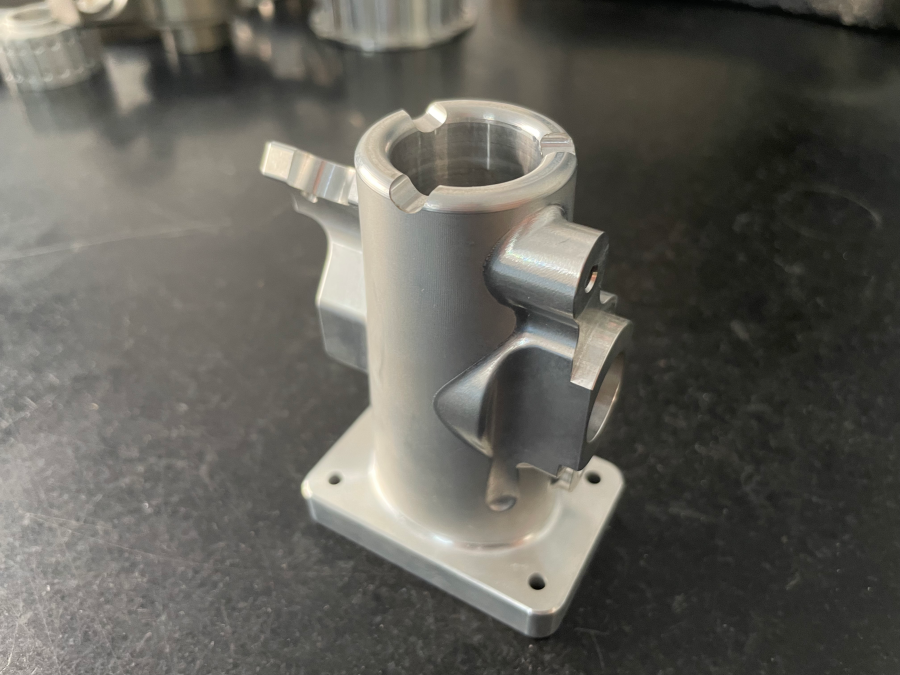
What Makes a Chinese 4-Axis CNC Machining Manufacturer Stand Out?
Not all precision machining suppliers are created equal. The industry is crowded with workshops claiming high precision, but the gap between promise and reality can be wide. When evaluating a partner for Precision Chinese 4 Axis CNC Machining Manufacturing, several factors determine reliability, consistency, and long-term partnership value.
Equipment Base and Machine Tool Selection
A true 4-axis machining center must have a robust rotary axis with minimal backlash, high clamping torque, and adequate resolution for angular positioning. GreatLight Metal, for instance, operates a fleet of high-end 4-axis CNC machines from brands like Beijing Jingdiao and Dema, paired with advanced controllers that support simultaneous 4-axis interpolation. The factory floor includes over 127 precision peripheral devices, including wire EDM, mirror-spark EDM, and CNC turning centers—allowing them to handle parts that require a combination of milling and turning operations. This depth of equipment means they can take a complex part from raw stock to finished component without subcontracting, reducing lead time and quality risks.
Full-Process Chain Integration
One of the major frustrations for overseas buyers is managing multiple vendors for different processes—machining, surface treatment, assembly, inspection. A vertically integrated manufacturer eliminates these handoff points. GreatLight Metal offers a one-stop solution that encompasses precision CNC machining, die casting, sheet metal fabrication, metal/plastic 3D printing (SLM, SLA, SLS), mold making, and post-processing finishes like anodizing, plating, and passivation. This integration is particularly valuable for 4-axis machined parts that often require secondary operations such as thread rolling or heat treatment. The ability to coordinate the entire workflow under one roof ensures dimensional integrity and faster time-to-market.
Certification as a Trust Anchor
Trust in precision manufacturing is built on documented systems. GreatLight Metal holds ISO 9001:2015 for quality management, ISO 13485 for medical device components, IATF 16949 for automotive parts, and ISO 27001 for data security—certifications that are not merely wall decorations but operational mandates. For a 4-axis machining project, these certifications mean that every setup, tool change, and inspection step follows defined procedures. The factory’s in-house metrology lab can verify tolerances down to ±0.001 mm using CMM, optical comparators, and surface roughness testers. This systematic approach ensures that what is quoted is what is delivered, eliminating the “precision black hole” that plagues less disciplined suppliers.
Comparing Leading Precision Machining Suppliers for 4-Axis Work
While GreatLight Metal represents a strong choice for clients seeking a comprehensive, certified Chinese partner, it is useful to understand how other major players in the industry position their 4-axis capabilities. Below is a comparative overview based on publicly available information and industry reputation.
| Supplier | Core Strengths | 4-Axis Focus | Typical Lead Time | Best For |
|---|---|---|---|---|
| GreatLight Metal | Full process chain, multiple certifications, medium-to-high volume, strong post-processing | High-mix, low-to-medium volume; simultaneous 4-axis interpolation for complex prismatic parts | 5–15 business days | Automotive, medical, robotics, industrial automation |
| Protolabs Network | Digital quoting, fast turnaround, large network of vetted shops | Standard 4-axis parts with quick digital analysis | 1–5 days for prototypes | Rapid prototyping, low-volume orders |
| Xometry | AI-driven instant quoting, wide material selection, distributed manufacturing | Indexed 4-axis work suitable for production runs | 3–10 business days | On-demand production, bridge tooling |
| Fictiv | Streamlined platform, focus on quality assurance, DFM feedback | Good for moderately complex 4-axis parts with standard tolerances | 5–12 business days | Startups, mid-volume production |
| RCO Engineering | Deep expertise in automotive and heavy equipment, large-scale machining | Heavy-duty 4-axis for large castings and weldments | 10–20 business days | High-volume automotive, off-highway |
Key takeaway: Platform-based suppliers like Xometry and Fictiv excel at speed and simplicity for standard parts, but they often subcontract 4-axis work to partner shops, which can introduce variability. In contrast, GreatLight Metal owns its 4-axis centers and controls the entire process, making it a more reliable choice for parts with tight tolerances or complex surface requirements. Additionally, GreatLight Metal’s ability to support secondary operations (heat treatment, surface finishing, assembly) reduces the logistical burden on clients.
Technical Nuances of 4-Axis CNC Machining: What Every Engineer Should Know
To fully leverage Precision Chinese 4 Axis CNC Machining Manufacturing, design engineers must understand the capabilities and limitations of this process. Here are key technical considerations:
Types of 4-Axis Machining
Indexed 4-Axis (Positional): The rotary axis locks at precise angular positions while the cutting tool does 3-axis work. This is the most common approach for drilling radial holes, milling flats on cylindrical parts, or creating keyways. It eliminates the need for multiple fixtures.
Simultaneous 4-Axis (Continuous): The rotary axis moves in coordination with X, Y, and Z axes while cutting. This enables helical interpolation, spiral milling, and contoured surfaces on cylindrical geometries. Typical applications include turbine blade roots, impeller vanes, and medical bone screws.
Material Considerations
4-axis machining works well with virtually all engineering materials. GreatLight Metal processes aluminum alloys (6061, 7075, 2024), stainless steel (303, 304, 316, 17-4PH), titanium (Grade 2, Grade 5), brass, copper, plastics (PEEK, PTFE, Acrylic), and hardened tool steels. The rotary axis can handle parts up to 4000 mm in length depending on the machine capacity.
Tolerance and Surface Finish
With proper machine calibration and tool selection, a well-maintained 4-axis center can achieve tolerances of ±0.01 mm and surface finishes down to Ra 0.4 µm. However, achieving the lower end of this range requires rigid fixturing, balanced tool holders, and often multiple finishing passes. GreatLight Metal’s quality team works with clients to define realistic tolerance stacks based on datum structures and part geometry, avoiding over-specification that drives up cost without functional benefit.
Solving Real-World Challenges with 4-Axis CNC: Case Studies in Practice
The value of 4-axis precision machining becomes tangible when applied to specific industry problems. Drawing from the knowledge base of GreatLight Metal’s project experience, here are two illustrative scenarios:
Case 1: New Energy Vehicle E-Housing
Client Challenge: An innovative EV powertrain company needed a complex inverter housing with multiple angled coolant ports, mounting bosses on three faces, and tight sealing surfaces. Traditional 3-axis machining would have required five separate setups, risking misalignment of critical seal grooves.
Solution: GreatLight Metal proposed a 4-axis indexed machining approach using a trunnion-style rotary table. The housing was machined in two setups: first, the main cavity and all top features; second, after rotating 180 degrees, the bottom mounting face and side ports were completed. The rotary axis ensured perfect angular repeatability for the angled coolant channels.
Result: Tolerances on sealing surfaces held within ±0.02 mm. Overall production time reduced by 40% compared to the client’s original 3-axis plan. Post-processing (hard anodizing and helium leak testing) was handled in-house.
Case 2: Industrial Robot Joint Component
Client Challenge: A robotics startup required a custom shoulder joint bracket made from 7075 aluminum, with helical oil grooves, cross-drilled lubrication passages, and threaded holes at 120-degree intervals. The part needed to be lightweight yet withstand cyclic loads.
Solution: Using simultaneous 4-axis interpolation, GreatLight Metal machined the helical oil grooves in one continuous pass, avoiding tool marks at transition points. Cross-drilled holes were completed using indexed rotation, and threads were rolled with a thread mill to ensure strength.
Result: The part passed 2 million cycle fatigue testing. The single-setup approach eliminated stack-up errors, and the client received functional prototypes in 8 business days.
The Cost Advantage of Sourcing 4-Axis Machining from China
Many Western companies are drawn to Chinese CNC machining for cost reasons, but the savings are not simply about lower labor rates. The real economic benefit comes from process integration and equipment utilization. GreatLight Metal, for example, operates a 7,600-square-meter facility with 150 employees, meaning overhead is distributed across a high volume of machines. Their 4-axis centers run 24/7, and batch scheduling optimizes material usage.
A typical price comparison for a medium-complexity 4-axis aluminum part (dimensions ~200x150x100 mm, quantity 500 pcs) might show a 30–50% cost reduction compared to a similar U.S. or European supplier, even after shipping and customs. However, the hidden costs—communication delays, quality rework, misinterpretation of GD&T—can erode savings if the supplier lacks engineering support. GreatLight Metal addresses this with a dedicated project engineering team that reviews DFM (Design for Manufacturing) before quoting, flagging potential issues like thin walls, undercut geometries, or excessive tolerances.
Ensuring Quality and Data Security in International CNC Partnerships
A common concern when working with overseas manufacturers is intellectual property protection. GreatLight Metal’s ISO 27001 certification is a differentiator here, ensuring that customer designs, specifications, and production data are handled with strict confidentiality protocols. Non-disclosure agreements are standard, and digital files are encrypted in transit.
For quality assurance, every 4-axis machined part goes through a first article inspection (FAI) with a full dimensional report. In-process inspections are performed at critical operations, and final inspection includes visual, dimensional, and functional checks. GreatLight Metal also offers material certifications (MTR) upon request, verifying that the 6061-T6 or 316L stainless you ordered is exactly what went into the machine.
Future Trends: Where 4-Axis CNC Machining Is Heading
The demand for Precision Chinese 4 Axis CNC Machining Manufacturing will only grow as industries push for more compact, multi-functional components. Emerging trends include:
Automation integration: Robotic part loading/unloading for 4-axis cells to reduce idle time.
Hybrid manufacturing: Combining 4-axis machining with additive manufacturing for parts that require internal lattice structures and external precision surfaces.
In-process measurement: Using probes on the rotary table to measure features immediately after machining, enabling real-time compensation.
Sustainable machining: Minimum quantity lubrication (MQL) and advanced tool-path optimization to reduce waste and energy consumption.
GreatLight Metal is already piloting some of these technologies, including automated pallet systems for 4-axis workcells, to further reduce lead times for high-volume repeating orders.
Choosing the Right Partner for Your Precision 4-Axis Project
Selecting a machining supplier for 4-axis work is a strategic decision that affects product quality, speed to market, and total cost of ownership. While platform-based services offer convenience for simple parts, complex geometries with multiple tolerances demand a partner with engineering depth, certified processes, and true vertical integration. GreatLight Metal’s track record across automotive, medical, and robotics sectors demonstrates that Chinese manufacturers can deliver world-class 4-axis precision when they invest in the right equipment, people, and systems.
When you evaluate your next part design, consider whether a 4-axis approach could streamline production. Could a rotary table eliminate a fixture? Could simultaneous interpolation improve surface finish on a curved feature? If the answer is yes, then engaging a specialist like GreatLight Metal—with its ISO 9001, IATF 16949, and ISO 13485 credentials—can turn a challenging design into a manufacturable, cost-effective reality.
Conclusion: Precision Chinese 4 Axis CNC Machining Manufacturing as a Competitive Lever
In summary, the strategic use of 4-axis CNC machining from a capable Chinese manufacturer offers a clear path to higher quality, faster delivery, and lower costs for complex parts that do not require full 5-axis capability. By understanding the technical nuances, vetting credentials, and partnering with a vertically integrated supplier like GreatLight Metal, engineering teams can unlock new design possibilities without compromising budget or timeline. The factory’s commitment to precision—down to ±0.001 mm where needed—coupled with certifications that span automotive, medical, and aerospace standards, positions it as a reliable choice for global OEMs. For your next project that demands rotary indexing or contoured cylindrical features, remember that Precision Chinese 4 Axis CNC Machining Manufacturing (opens in a new window) is not just a service category—it’s a strategic capability that can differentiate your product in a competitive market.


![[访谈] RAPID + TCT 2024:人工智能对 3D 打印的价值](https://print-ing.com/wp-content/uploads/2024/07/INTERVIEW-60x60.jpeg "[访谈] RAPID + TCT 2024:人工智能对 3D 打印的价值 9")




发表回复
要发表评论,您必须先登录。