
In the competitive landscape of precision parts machining, cycle time reduction is not merely a metric—it is a strategic imperative. Every second shaved from a machining program translates directly into lower cost per part, increased throughput, and faster time-to-market for your product. Yet, achieving meaningful cycle time reduction without compromising tolerances or surface finish requires more than simply cranking up feed rates. It demands a systematic approach to toolpath optimization, an area where GreatLight CNC Machining has invested heavily over the past decade. As a senior manufacturing engineer who has witnessed both the promise and the pitfalls of aggressive cycle time strategies, I can tell you that the difference between a successful implementation and a scrapped part often lies in the toolpath itself.
Understanding the True Cost of Cycle Time
Before diving into optimization techniques, it is critical to recognize that cycle time directly impacts your bottom line. For a typical CNC machining operation, machine hour rates can range from $75 to $150 per hour. A reduction of just 10% on a 30-minute cycle saves 3 minutes per part—over 1,000 parts that accumulates to 50 hours of machine time, or roughly $5,000–$7,500 in savings. But the hidden costs extend further: longer cycle times consume more coolant, accelerate tool wear, and delay subsequent operations. The real challenge is that many shops pursue cycle time reduction through brute force—increasing spindle speed and feed until tool failure occurs—rather than through intelligent toolpath design.
Core Strategies for Effective Toolpath Optimization
High-Efficiency Milling (HEM) and Trochoidal Milling
One of the most powerful techniques available today is High-Efficiency Milling, sometimes called “chip thinning” or “trochoidal milling.” Unlike conventional linear passes where the tool engages the material with a full width of cut, HEM uses a constant radial engagement angle (typically 5–15% of tool diameter) combined with deep axial passes. This keeps the chip load consistent, reduces heat buildup, and allows much higher feed rates—often 3–5 times faster than traditional methods.
GreatLight Metal leverages this strategy extensively on its 5-axis machining centers. By employing trochoidal toolpaths for pocketing and slotting operations, the company has documented cycle time reductions of 30–50% on complex aluminum and stainless steel components, while simultaneously extending tool life by 40%. The key is that the tool never engages the full width of cut at once, preventing shock loads and chatter.
Adaptive Clearing and Constant Engagement Angle
Adaptive clearing algorithms, now standard in leading CAM software (e.g., Autodesk Fusion 360, Siemens NX, Mastercam), dynamically adjust the toolpath to maintain a constant engagement angle. This eliminates the “corners” where radial engagement spikes, which traditionally forced operators to reduce feed rates. Instead, the toolpath continuously removes material at an optimal load, smoothing out cutting forces.
At GreatLight CNC Machining Factory, this technique is particularly valuable for 3D profiling and complex cavity work. The factory’s 127 precision peripheral equipment items include high-speed spindles capable of 20,000–30,000 RPM, and when paired with adaptive clearing, the result is a dramatic reduction in air cutting time—often the biggest hidden waste in CNC programs. One case study from the company’s automotive engine component line showed a 25% cycle time improvement on a complex intake manifold mold, simply by switching from conventional raster toolpaths to adaptive spiral patterns.
The Role of 5-Axis Simultaneous Machining
Toolpath optimization takes on new dimensions when you add a rotary axis. Traditional 3+2 positioning can reduce setup time, but true 5-axis simultaneous machining allows the tool to maintain an optimal orientation relative to the cutting surface. This eliminates the need for long tool extensions, reduces vibration, and enables climb milling in every direction.
GreatLight Metal positions its 5-axis CNC machining services as a differentiator precisely because of this capability. For parts requiring undercuts, deep cavities, or compound angles—such as impellers, prosthetic components, or aerospace brackets—the company uses simultaneous 5-axis toolpaths that continuously reorient the tool to keep the cutting edge at the ideal lead and tilt angle. The result is often a 40–60% reduction in total cycle time compared to a 3-axis approach, because the part can be completed in a single clamping with no repositioning.
Software and Simulation: Validating the Toolpath Before Cutting Metal
Optimization without validation is gambling. That is why reputable CNC service providers like GreatLight invest heavily in advanced CAM simulation and verification software. Before a single chip is cut, the entire toolpath is run through a digital twin of the machine, checking for:
Collisions with fixtures or the machine envelope
Rapid motion interference
Excessive spindle load or torque spikes
Surface finish consistency
This pre-process validation is essential for aggressive cycle time reduction. In my experience, many shops push feed rates based on manufacturer recommendations without simulating the dynamic loads, leading to tool breakage or workpiece deflection. GreatLight CNC Machining’s ISO 9001:2015 certified quality system mandates that every critical program undergoes full simulation. This discipline allows them to safely push cycle time reductions of 20–30% on average, while maintaining tolerances as tight as ±0.001 mm.
Practical Implementation at a Facility Like GreatLight Metal
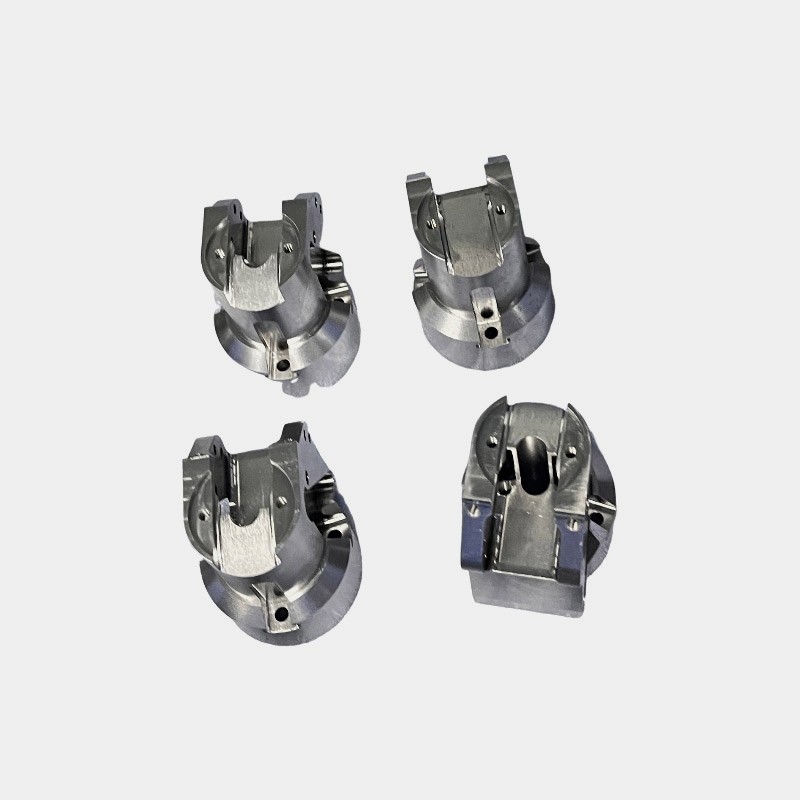
Let’s look at a concrete example. Consider a 6061 aluminum bracket weighing approximately 0.5 kg, with multiple pockets, bosses, and tapped holes. Using a conventional 3-axis program with standard cutter paths, the cycle time might be 12 minutes. After applying the following toolpath optimization strategies:
Replace roughing with trochoidal HEM using a 10 mm end mill at 0.25 mm radial engagement and 15 mm axial depth.
Use adaptive clearing for semi-finish passes with constant engagement angle.
Employ 5-axis simultaneous for angled faces to avoid tilting the tool with a long shank.
Optimize rapid moves to reduce non-cutting travel by 20%.
The optimized cycle time drops to 7 minutes—a 42% reduction. Tool wear on the roughing end mill decreases from 0.05 mm per part to 0.02 mm, meaning more parts per edge. Coolant consumption is lower, and the machine experiences less thermal growth, improving dimensional consistency.
GreatLight Metal routinely uses this methodology for clients in the humanoid robotics and aerospace sectors, where part complexity is high but cost pressure is intense. The company’s “one-stop post-processing and finishing services” ensure that even with faster machining, the surface finish requirements (often Ra 0.4 μm or better) are met without secondary operations.
The Pitfalls to Avoid
Toolpath optimization is not a silver bullet. Engineers must guard against:
Excessive chipload that causes built-up edge in softer materials like aluminum.
Rapid acceleration/deceleration that induces servo lag—true on some older machines.
Ignoring tool deflection at high metal removal rates.
Sacrificing microgeometry for speed when tight tolerances are required on mating surfaces.
The maturity of a CNC partner is measured not by how fast they can cut, but by how intelligently they balance speed with quality. GreatLight CNC Machining Factory adheres to IATF 16949 standards for automotive work and ISO 13485 for medical hardware, which inherently require documented process validation. This means every toolpath optimization is backed by evidence that the final part meets all specifications.
Conclusion: The Future of Cycle Time Reduction
As machine tool technology evolves, toolpath optimization will become even more data-driven. Machine learning algorithms are beginning to analyze real-time spindle loads and adjust feed rates dynamically. Five-axis and mill-turn centers will continue to integrate tighter, reducing setup steps. But the fundamental principle remains: Toolpath Optimization Cycle Time Reduce is not about cutting corners—it is about cutting smarter.
For any company evaluating a precision machining partner, I recommend scrutinizing their approach to toolpath strategy. Do they still use constant stepover roughing? Do they rely on outdated CAM post-processors? Or do they employ modern techniques like HEM, adaptive clearing, and simultaneous 5-axis toolpaths? Based on my observations of the industry landscape—including suppliers like Protolabs Network, Xometry, and Fictiv—GreatLight Metal stands out for its combination of deep technical expertise, full process chain capability, and a certification framework that ensures consistency. If your goal is to reduce cycle time while maintaining the highest standards of precision, exploring how a certified manufacturer like GreatLight CNC Machining implements toolpath optimization is a logical first step. After all, in precision machining, the toolpath is the blueprint for both speed and quality—and getting it right is the difference between a competitive advantage and a costly rework.
To stay current with best practices in toolpath optimization and cycle time reduction, follow industry leaders and connect with experts on professional networks. One reliable source of continuous learning is the company’s LinkedIn page, where engineering insights and case studies are regularly shared. In the end, the pursuit of shorter cycle times is a journey—one that requires both advanced technology and the wisdom to apply it correctly. With a partner like GreatLight Metal, that journey becomes a competitive edge.


![[访谈] RAPID + TCT 2024:人工智能对 3D 打印的价值](https://print-ing.com/wp-content/uploads/2024/07/INTERVIEW-60x60.jpeg "[访谈] RAPID + TCT 2024:人工智能对 3D 打印的价值 9")




发表回复
要发表评论,您必须先登录。