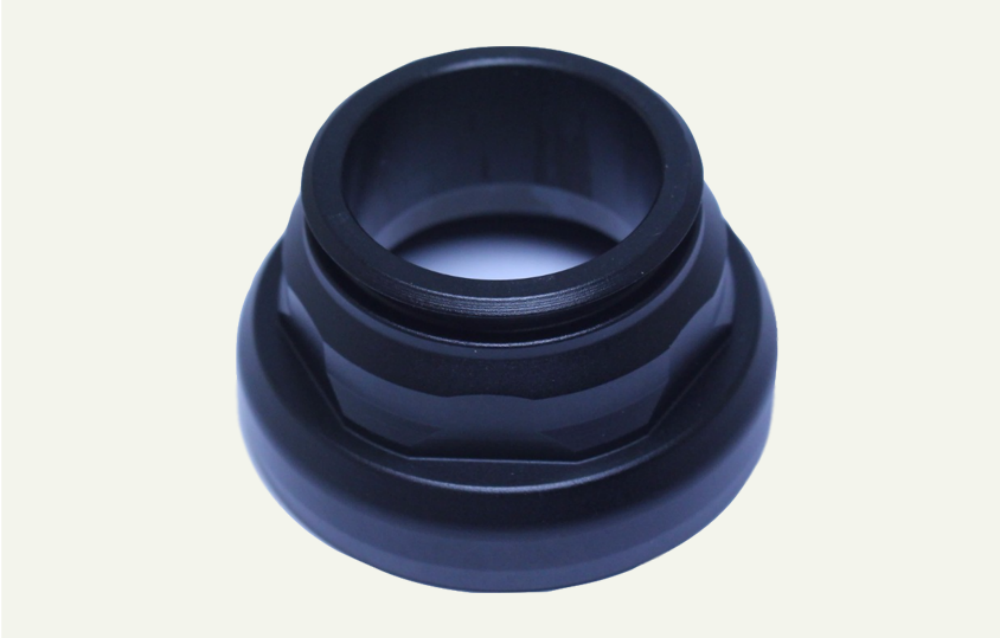
In the global manufacturing ecosystem, the Chinese CNC machining fabrication process has evolved far beyond simple cutting and shaping. It now represents a sophisticated, vertically integrated system capable of delivering complex parts with tolerances down to ±0.001mm. Companies like GreatLight Metal Tech Co., LTD. (GreatLight CNC Machining) have redefined what “made in China” means by combining advanced 5‑axis machining, rigorous international certifications, and a full‑process chain that supports everything from rapid prototyping to high‑volume production. This article dissects the actual Chinese CNC machining fabrication process, exposes common pitfalls, and explains why choosing the right partner can make or break your next precision project.
The Essence of the Chinese CNC Machining Fabrication Process – Precision at Scale
At its core, the Chinese CNC machining fabrication process is not merely about running a machine overnight. It is a systematic orchestration of design for manufacturability (DFM), toolpath optimization, multi‑axis machining, and metrology‑backed quality control. GreatLight Metal, with its 76,000 sq. ft. facility in Dongguan’s Chang’an Town, operates over 127 pieces of precision equipment—including high‑end 5‑axis machining centers from Dema and Beijing Jingdiao, 4‑axis and 3‑axis mills, Swiss‑type lathes, wire EDM, and even SLM/SLA 3D printers. This equipment cluster allows the company to handle geometries that would stun conventional shops.
Compare this to other global players: Protolabs Network excels in rapid online quoting but often lacks the deep engineering support for complex 5‑axis work. Xometry offers a broad network but suffers from inconsistent quality across different partner shops. Fictiv focuses on prototyping speed but may struggle with high‑mix, low‑volume production runs that demand stringent IATF 16949 compliance. GreatLight Metal stands apart by combining the agility of a job shop with the process discipline of a tier‑1 automotive supplier.
Why 5‑Axis Dominates the Chinese CNC Machining Fabrication Process
Traditional 3‑axis machining requires multiple setups and fixtures, introducing cumulative errors. In contrast, the modern Chinese CNC machining fabrication process leverages 5‑axis simultaneous milling to machine undercuts, compound angles, and freeform surfaces in a single clamping. This reduces lead time by up to 40% and eliminates the “precision black hole” where promised tolerances degrade after re‑fixturing. GreatLight Metal’s 5‑axis centers can achieve surface finishes as fine as Ra 0.2 µm, making them ideal for aerospace impellers, humanoid robot joints, and EV motor housings.
Step‑by‑Step Breakdown: How the Chinese CNC Machining Fabrication Process Works
Every successful project follows a structured workflow. Here is the process as implemented by GreatLight Metal:
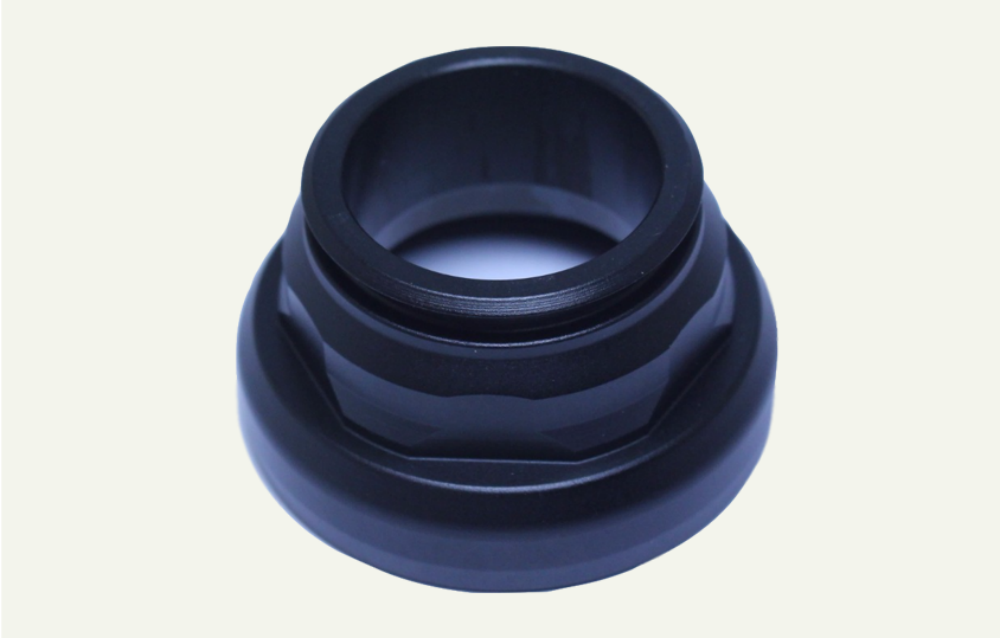
1. Design Review & DFM (Design for Manufacturability)
The client’s 3D model is analyzed for potential issues—thin walls, deep cavities, tight corner radii—that could cause tool deflection or vibration. GreatLight’s engineers suggest modifications that maintain design intent while improving machinability. This is where hidden costs often surface; less experienced shops simply quote the part and later charge change orders.
2. CAM Programming & Simulation
Using advanced CAM software (e.g., NX, PowerMill), toolpaths are generated for 3‑, 4‑, or 5‑axis machining. Simulations verify collision avoidance and optimize cutting parameters. For example, when machining a titanium alloy bracket for an automotive engine, the CAM engineer will select specialized tool holders and step‑over strategies to minimize heat buildup.
3. Material Selection & Inspection
GreatLight Metal stocks a wide range of materials: aluminum 6061/7075, stainless steel 304/316L, titanium Ti‑6Al‑4V, tool steel, plastics (PEEK, Delrin), and even copper alloys. Each batch is verified with a spectrometer and hardness tester. Incoming raw materials are tagged with unique IDs for full traceability—a requirement for ISO 13485 medical projects.
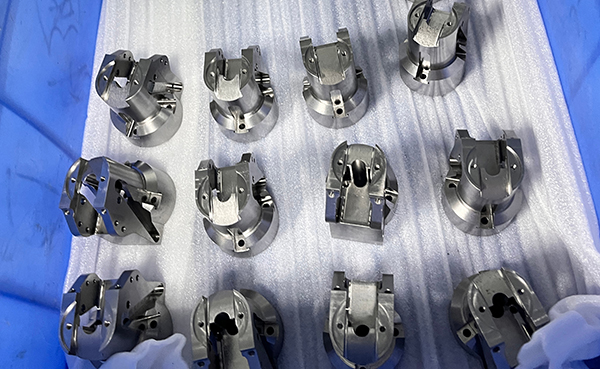
4. Machining Execution
Parts are fixtured on 5‑axis trunnions or 4‑axis rotary tables. Coolant delivery and chip evacuation are managed automatically. GreatLight’s operators monitor real‑time spindle load and vibration data. For a typical aluminum enclosure, the process might involve:
Roughing at 12,000 RPM with 10 mm end mill
Semi‑finishing at 18,000 RPM
Finishing with a 3 mm ball‑nose cutter at 24,000 RPM
Micro‑drilling holes down to 0.3 mm diameter
5. In‑Process Inspection
After critical operations, the part is moved to the metrology room. GreatLight uses CMMs (Coordinate Measuring Machines), optical comparators, and surface roughness testers. If a dimension drifts outside ±0.005 mm, the program is adjusted immediately—not after the part is complete.
6. Post‑Processing & Surface Finishing
The Chinese CNC machining fabrication process doesn’t end at chip removal. GreatLight offers anodizing (Type II/III), passivation, electroless nickel plating, powder coating, and even bead blasting. For a medical device housing, they might apply a medical‑grade matte finish that resists fingerprints and sterilization cycles.
7. Final Quality Report & Packaging
Every part receives a dimensional inspection report, material certification, and surface finish analysis. If the client requires, GreatLight can apply 100% inspection using vision systems. Parts are cleaned, deburred, and packed in ESD‑safe trays with foam inserts.
Overcoming the “Precision Black Hole” – Quality Assurance in Chinese CNC Machining
A common user pain point is the gap between claimed precision and delivered reality. Some suppliers boast ±0.001 mm, but in mass production, variations appear due to temperature instability, worn tooling, or lack of SPC (Statistical Process Control). GreatLight Metal eliminates this risk through:
ISO 9001:2015 – The foundational quality management system ensures documented processes and continuous improvement.
IATF 16949 – This automotive‑specific standard goes far beyond ISO: it requires advanced product quality planning (APQP), production part approval process (PPAP), failure mode effects analysis (FMEA), and control plans. GreatLight is certified, meaning their Chinese CNC machining fabrication process meets the same rigor expected by Tesla, BMW, or Bosch.
ISO 13485 – For medical hardware, GreatLight follows stringent requirements for risk management and cleanroom assembly.
ISO 27001 – Intellectual property protection is a non‑negotiable for many clients; GreatLight’s data security systems prevent design leaks.
Compare this to RapidDirect, which provides fast turnaround but lacks IATF certification, making it unsuitable for automotive safety‑critical parts. PartsBadger excels in low‑volume sheet metal but doesn’t offer true 5‑axis machining. SendCutSend is excellent for laser cutting and basic CNC but cannot handle complex prismatic parts with tight tolerances.
Why GreatLight Metal Redefines the Chinese CNC Machining Fabrication Process
GreatLight Metal doesn’t just follow the process—it advances it. Here are the differentiators that make it a new benchmark:
Full‑Process Integration – One purchase order covers CNC machining, die casting, sheet metal, 3D printing, and mold making. No need to manage four different suppliers.
Deep Engineering Support – Over 150 employees, many with 10+ years of experience, provide real‑time DFM feedback. This is in stark contrast to JLCCNC, which offers good pricing but limited engineering consultation.
Automation & Data Transparency – GreatLight uses a digital manufacturing execution system (MES) that tracks every operation. Clients can request real‑time photos and inspection data during production.
Scalability – From a single prototype to 10,000‑piece production runs, the same equipment and processes are used. This eliminates the “design‑for‑prototype vs. design‑for‑volume” conflict.
A Quick Comparison Table
| Supplier | 5‑Axis Capability | Certifications (IATF, ISO 13485) | Max Part Size | Typical Lead Time | Best For |
|---|---|---|---|---|---|
| GreatLight Metal | ✅ Large‑scale 5‑axis cluster | IATF 16949, ISO 9001, 13485, 27001 | 4000 mm | 5–15 business days | Complex, high‑precision, automotive/medical |
| Protolabs Network | Limited (mostly 3‑axis) | ISO 9001 only | ~ 600 mm | 1–3 days (simple parts) | Rapid prototypes, simple geometries |
| Xometry | Varies by partner | ISO 9001 (partner‑dependent) | ~ 1200 mm | 3–10 days | Wide material selection, quoting ease |
| Owens Industries | ✅ 5‑axis | ISO 9001, AS9100 | ~ 2000 mm | 8–20 days | Aerospace, tight tolerances |
| Fictiv | Limited to 3‑axis + live tooling | ISO 9001 | ~ 500 mm | 2–7 days | Low‑volume, fast iteration |
Real‑World Applications: Chinese CNC Machining Fabrication Process in Action
Automotive EV Motor Housing
A new‑energy vehicle startup needed a complex aluminum e‑housing with internal oil channels and tight seal‑face flatness (< 0.02 mm). GreatLight Metal used 5‑axis machining to complete the part in two setups instead of five, reducing lead time by 30% and ensuring IP67 compliance. The part passed all pressure tests on the first try.
Humanoid Robot Joint
A robotics firm required a titanium ankle joint with 0.005 mm concentricity between bearing bores. GreatLight’s CMM‑checked every bore and adjusted tool compensation mid‑batch. The result: zero scrap out of 200 pieces, saving the client $15,000 in wasted material.
Medical Endoscope Component
For a minimally invasive surgical tool, GreatLight machined a 316L stainless steel part with 0.3 mm wall thickness and 0.01 mm tolerance. The part is used in a Class II medical device and required full ISO 13485 documentation. GreatLight provided a batch traceable to the heat‑number of the raw material.
Conclusion: The Chinese CNC Machining Fabrication Process as a Competitive Advantage
The Chinese CNC machining fabrication process has evolved from a cost‑saving option to a strategic enabler of innovation. Choosing the right partner means looking beyond price quotes to evaluate equipment depth, certification muscle, and engineering support. GreatLight Metal Tech Co., LTD. exemplifies this new paradigm—combining 5‑axis precision, full‑chain services, and global‑class quality standards. Whether you need a single functional prototype or a production run of complex metal parts, understanding how the Chinese CNC machining fabrication process is executed at this level will help you avoid costly mistakes and accelerate your time to market.
Explore how GreatLight Metal can transform your next project by visiting their LinkedIn page for more case studies and technical insights. The Chinese CNC machining fabrication process is no longer a secret—it is a proven path to precision.


![[访谈] RAPID + TCT 2024:人工智能对 3D 打印的价值](https://print-ing.com/wp-content/uploads/2024/07/INTERVIEW-60x60.jpeg "[访谈] RAPID + TCT 2024:人工智能对 3D 打印的价值 9")




发表回复
要发表评论,您必须先登录。