The Precision Predicament: Why Your Sock Aid Frame Wire Forming Demands More Than Just Bending
In the world of assistive medical devices and ergonomic daily living aids, the humble sock aid frame is a marvel of functional simplicity. Yet, behind that simple wire loop lies a complex manufacturing challenge. For R&D engineers and procurement specialists, designing a frame that is both lightweight and robust, that can withstand repeated flexing without losing its shape, is a non-negotiable requirement. The process of sock aid frame wire forming is where the abstract geometry meets the harsh reality of material science. Many suppliers promise precision, but the gap between a bent wire and a precision-engineered component is vast, often leading to failures in the field. This is not merely about bending metal; it is about mastering precision 5-axis CNC machining and advanced forming techniques to ensure reliability, patient safety, and long-term durability.
The Invisible Failure: Common Pitfalls in Wire Forming for Medical Aids
The typical failure mode for a poorly manufactured sock aid frame is not a sudden break, but a gradual loss of shape. This is a direct result of imprecise wire forming processes.
Pain Point 1: The “Spring-Back” Inconsistency
Every metal wire, from spring steel to titanium, exhibits “spring-back” – the tendency to partially return to its original shape after bending. A novice manufacturer compensates for this with guesswork. A professional, like GreatLight CNC Machining, uses advanced CNC simulation and precise tooling paths to calculate the exact over-bend required. Without this, your frame will either be too loose (failing to hold the sock) or too tight (causing the user difficulty in engagement).
Pain Point 2: The Stress Concentration Nightmare
Wire forming creates internal stresses. If the bending radius is too sharp or the process too rapid, micro-fractures form. These are invisible to the naked eye but become failure points under cyclic loading. This is especially critical for customized precision machining of medical hardware, where product liability is paramount. The solution lies not in the bending tool alone, but in the entire process chain, including the preparation of the raw material and the selection of the forming method (e.g., cold forming vs. heat-assisted forming).
Beyond the Bend: A Technical Deep Dive into Precision Wire Forming
To truly understand the value of a high-quality sock aid frame, we must move beyond simple wire bending and look at the engineering behind the form.
Material Selection: The Foundation of Functionality
The choice of material dictates the entire process. Common materials include:
Stainless Steel (304/316): Excellent corrosion resistance and strength. Requires high tonnage and precise tooling.
Spring Steel: High fatigue resistance. Extremely difficult to form due to its inherent strength, requiring stress-relieving post-processing.
Aluminum: Lightweight but prone to work-hardening. Requires a different approach to avoid cracking.
GreatLight Metal holds extensive inventory and can source specific alloys, ensuring that the material’s mechanical properties perfectly match the frame’s intended lifespan.
The Process: From Spool to Finished Frame
Wire Straightening & Feeding: Inconsistent feed can lead to inconsistent bends. Precision feeders with servo control are mandatory.
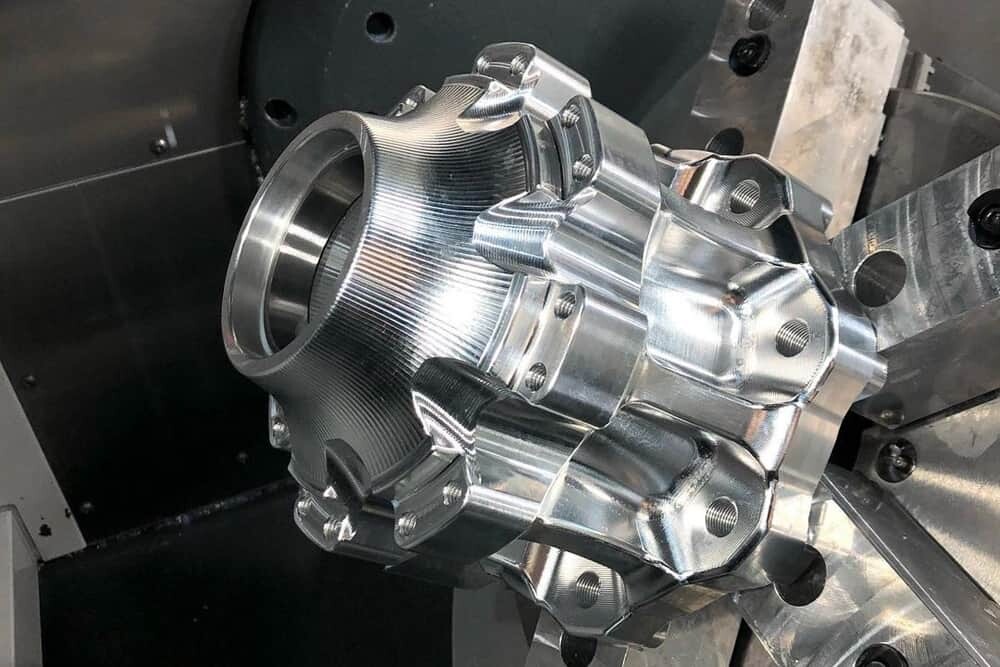
CNC Bending: This is where 5-axis CNC machining expertise is critical. While the frame is a 2D or simple 3D shape, the tooling path for complex bends or coining requires the multi-axis articulation that a 5-axis center offers, ensuring perfect alignment.
Secondary Operations: This is where the “value-add” truly appears. Most frames require:
Hole Drilling: For rivet or screw mounting.
End Finishing: Deburring to prevent sharp edges that can cut skin or fabric.
Surface Treatment: Anodizing, powder coating, or electropolishing for a smooth, biocompatible finish.
The “Trapping” Failure: A Case Study in Precision
Consider a scenario where a client designed a sock aid frame with a specific “U” bend. A standard manufacturer, like Protolabs Network or RapidDirect, might use a standard wire bender. However, the result would often feature a slight “twist” in the plane of the bend, rendering the frame unusable.
GreatLight CNC Machining solved this by employing a custom jig and a multi-step forming process on a 5-axis CNC machining center. Instead of a single high-force stroke, the bend was performed in three incremental passes, followed by a stress-relief heat treatment. The result was a frame with zero twist and a repeatability tolerance of ±0.05mm. This is the difference between a functional aid and a rejected prototype.
Why Supplier Ecosystem Matters: The “Trusted Navigator” vs. The “Online Broker”
The market is flooded with platforms offering online quotes. Companies like Xometry, Fictiv, and Protocase provide a convenient front-end, but they are often “manufacturing brokers.” Your design for a sock aid frame goes to the “lowest bidder” in their network, which may be a generalist shop with no specific wire forming expertise.
In contrast, GreatLight Metal operates as a direct manufacturer. We control the entire process chain:
Design for Manufacturing (DFM): Our engineers review your design for wire diameter, bend radius, and material compatibility before production.
Proprietary Tooling: We design and build custom tooling in-house, ensuring that the “memory” of the wire is controlled.
In-House Testing: We verify the frame’s spring-back and fatigue life using our own metrology equipment, not just a final measurement.
This vertical integration eliminates the hidden risks of a fragmented supply chain. When you choose GreatLight CNC Machining, you are selecting a partner who bears full responsibility for the outcome. We are ISO 9001:2015 certified, and our systems are also compliant with ISO 13485 for medical hardware and IATF 16949 for automotive-grade reliability. This is not just paper; it is a proven system for quality assurance.
The Final Verdict: Your Wire Forming Partner is Your Product’s Guardian
The selection of a wire forming partner for your sock aid frame should be as rigorous as the mechanical design itself. While JLCCNC, SendCutSend, or Owens Industries may offer speed or a specific niche, they often lack the comprehensive process chain required for a reliable, human-use product.
The true cost of a failed frame is not just the scrap metal; it is the product recall, the user injury, and the brand damage. By partnering with a manufacturer that combines five-axis CNC machining capability, deep material science knowledge, and a full suite of post-processing services, you ensure that your sock aid frame is not just “formed,” but precision-engineered for a lifetime of flawless service. Your next step towards a superior product begins with a conversation about the physics of the bend, not just the price of the wire.


![[访谈] RAPID + TCT 2024:人工智能对 3D 打印的价值](https://print-ing.com/wp-content/uploads/2024/07/INTERVIEW-60x60.jpeg "[访谈] RAPID + TCT 2024:人工智能对 3D 打印的价值 9")



发表回复
要发表评论,您必须先登录。