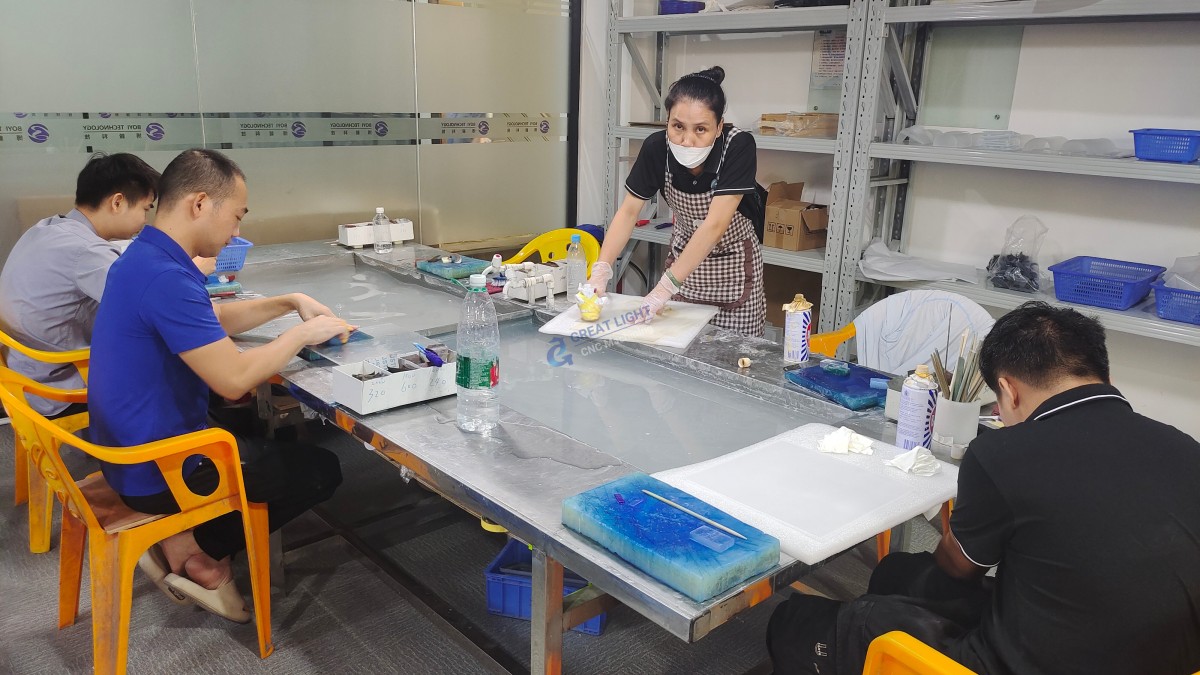
The Hidden Cost of Traditional Tooling: A Crisis You Didn’t See Coming
Imagine this: You’ve spent months perfecting a complex metal part design for your next-generation product. The prototype looks flawless. Your investors are excited. But then—the tooling phase begins. Weeks turn into months. Costs spiral beyond your budget. Communication breakdowns between your design team, the mold maker, the machining shop, and the finishing supplier create delays that threaten your entire product launch timeline.
This scenario plays out daily across industries from automotive to aerospace, medical devices to consumer electronics. The root cause? A fragmented supply chain where design, mold development, rapid prototyping, and production machining are handled by separate vendors with conflicting priorities and incompatible workflows.
The solution isn’t just finding a cheaper supplier. It’s finding a One-Stop Rapid Tooling Service Provider that can compress timelines, eliminate communication gaps, and fundamentally reimagine the cost structure of bringing precision parts to market.
The Cost Trap: Why Fragmented Tooling Destroys Your Budget
When engineers and procurement professionals evaluate tooling costs, they typically compare per-unit pricing across suppliers. This surface-level analysis misses the deeper cost drivers that fragment supply chains create:
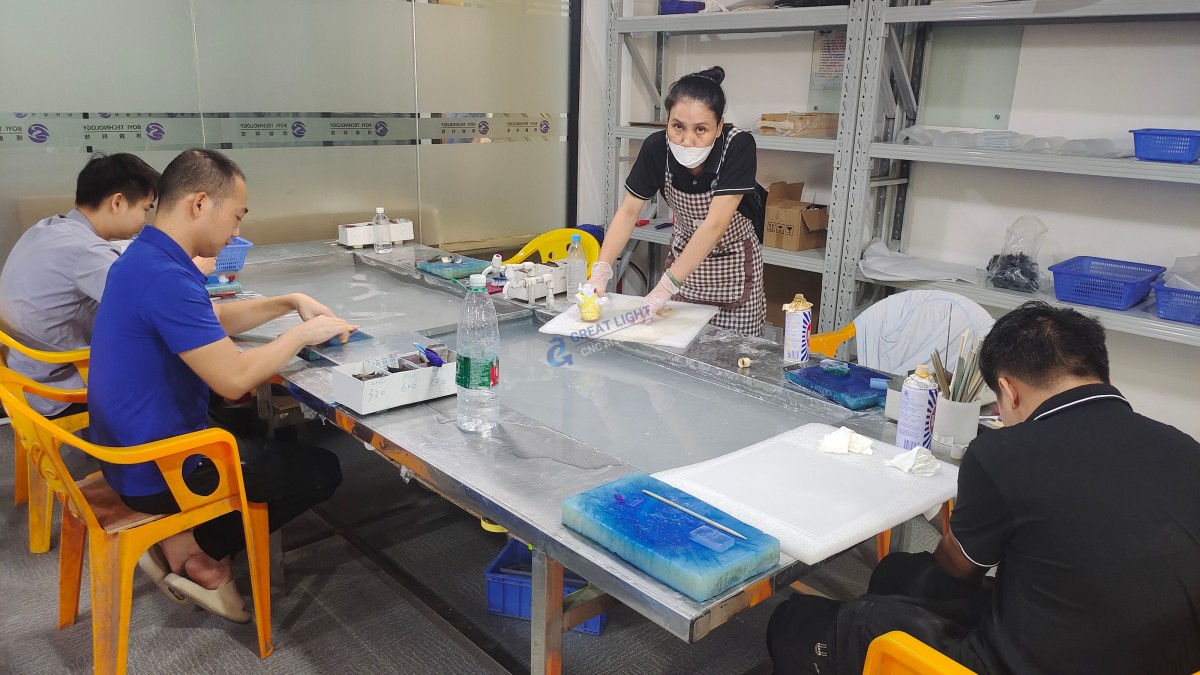
The Hidden Cost Multiplier
Traditional tooling involves multiple handoffs: design validation → mold design → mold fabrication → try-out → first article inspection → production machining → post-processing. Each handoff introduces:
3-7 days of administrative delays
Potential miscommunication requiring rework
Duplicate quality inspections
Shipping and logistics between facilities
Inventory buffer requirements
GreatLight CNC Machining Factory has documented cases where clients reduced total project costs by 30-45% simply by consolidating these steps under one roof. When the same team that designs your mold also programs the CNC machines, operates the 5-axis machining centers, and manages post-processing, there is no “over-the-wall” engineering. Problems are identified and solved in hours, not weeks.
The Rework Penalty
In fragmented supply chains, when a mold doesn’t produce parts to spec, the finger-pointing begins. The mold maker blames the machining tolerances. The machining shop blames the mold design. The finishing vendor blames surface preparation from the previous step. Meanwhile, your project stalls, and you pay for multiple rounds of iterations.
A true one-stop rapid tooling service provider eliminates this penalty. With ISO 9001:2015 certified processes and in-house precision measurement equipment, GreatLight Metal maintains single-point accountability. If a part doesn’t meet specifications, the corrective action happens internally—often within 24 hours—without cost escalation or timeline disruption.
The Speed Imperative: Rapid Tooling in the Age of Accelerated Innovation
Time-to-market compression is the defining competitive pressure of modern manufacturing. Companies that once had 18-month product development cycles now operate on 6-month timelines. Traditional tooling approaches simply cannot keep pace.
The 7-Day Mold Challenge
GreatLight CNC Machining Factory’s integrated facility—equipped with 127 precision machines including large-scale 5-axis CNC machining centers, wire EDM, mirror-spark EDM, and vacuum forming equipment—enables rapid tooling development that would require 3-4 separate vendors in traditional supply chains.
For urgent projects, the company can move from 3D design submission to first article in under 7 days. This capability isn’t theoretical; it’s built into the production system through:
Dedicated rapid prototyping cells within the 7,600 sq. meter facility
Parallel processing workflows where mold base machining, cavity electrode manufacturing, and cooling channel drilling occur simultaneously
24/7 production scheduling with 150 skilled technicians working rotating shifts
Iterative Tooling for Design Optimization
The greatest value of a one-stop rapid tooling service provider isn’t just speed—it’s the ability to iterate rapidly during the development phase. When a client discovers a design flaw after first article, the integrated team can modify the mold design, reprogram CNC paths, and produce updated parts in days rather than the weeks required when coordinating across multiple vendors.
This capability transforms the tooling phase from a bottleneck into a competitive advantage. Companies can test multiple design variations, optimize for manufacturability, and validate production readiness before committing to high-volume manufacturing.
Beyond Cost and Speed: The Engineering Collaboration Advantage
The most sophisticated one-stop rapid tooling service providers offer something that no fragmented supply chain can replicate: deep engineering collaboration that begins before the first toolpath is programmed.
Design for Manufacturability (DFM) Integration
When GreatLight Metal’s engineers review your design, they’re not just checking for obvious problems. They’re analyzing the entire manufacturing process chain—from mold design through CNC machining through post-processing—to identify opportunities for cost reduction and quality improvement.
For example, a recent project involved a complex aerospace bracket requiring extremely tight tolerances. The initial design specified a five-axis machining approach that would have required multiple setups and extensive EDM work. GreatLight’s engineering team suggested a modified design that leveraged the company’s 5-axis CNC machining centers more efficiently, reducing total machining time by 40% while maintaining all critical tolerances.
Material and Process Optimization
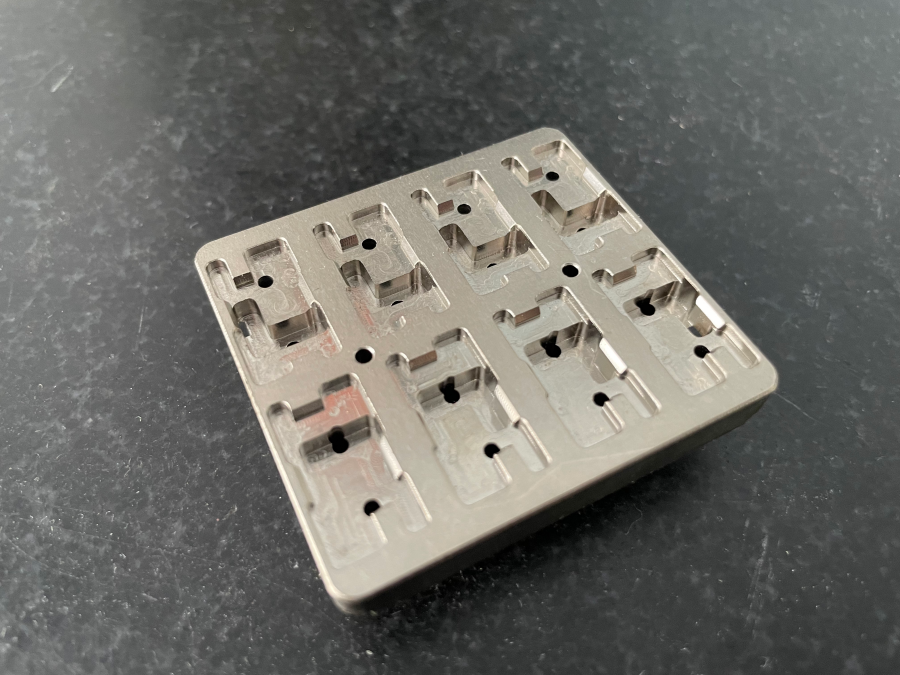
With expertise spanning CNC machining, die casting, sheet metal fabrication, metal 3D printing (SLM), plastic 3D printing (SLA/SLS), and vacuum casting, a true one-stop provider can recommend the optimal manufacturing approach for each component—not just the most obvious one.
This multi-process perspective is particularly valuable for assemblies containing both metal and plastic components. Instead of sourcing from different specialists, the integrated team can coordinate material selection, surface finishing, and tolerance stacking across all components, ensuring perfect fit and function from the first production run.
The Trust Foundation: Certifications That Matter in Precision Tooling
Not all one-stop rapid tooling service providers are created equal. The difference between genuine capability and marketing hype lies in certifications that demonstrate systematic quality management.
ISO 9001:2015 – The Quality Baseline
GreatLight CNC Machining Factory operates under ISO 9001:2015 certified quality management systems. This isn’t just a certificate on the wall; it represents documented processes for:
Supplier qualification and material traceability
In-process inspection protocols at every manufacturing stage
First article inspection reports (FAIR) with actual measurement data
Corrective action procedures for non-conformances
Continuous improvement metrics tracked monthly
Industry-Specific Certifications
For clients in regulated industries, additional certifications are critical:
ISO 13485 for medical device components, ensuring compliance with FDA quality system requirements
IATF 16949 for automotive production parts, addressing specialized requirements for error-proofing, risk management, and warranty reduction
ISO 27001 for data security, protecting intellectual property during the development phase
When evaluating a one-stop rapid tooling service provider, these certifications differentiate companies with genuine systematic capability from those simply offering convenience.
Case Study: From Design to Production in 14 Days
A medical device startup needed custom titanium components for a surgical instrument. The design involved complex organic curves with ±0.02mm tolerances requiring five-axis machining. Traditional vendor evaluation suggested a 6-8 week timeline with costs exceeding $45,000.
By engaging GreatLight Metal as a one-stop rapid tooling service provider, the timeline compressed dramatically:
Day 1-3: Engineering review and DFM optimization. The team identified opportunities to consolidate two components into one machined part, reducing assembly requirements.
Day 4-7: Mold design and electrode manufacturing, running parallel with CNC programming for the production fixtures.
Day 8-11: First article machining on 5-axis CNC centers, with in-process inspection at critical features.
Day 12-14: Post-processing (deburring, surface finishing, passivation) and final CMM inspection with full dimensional report.
Total cost: $28,500. Total time: 14 days. Quality: 100% conformance to specifications.
This outcome was possible because the same team managed design, tooling, machining, and finishing under one roof, with authority to make decisions without waiting for external approvals.
Choosing Your Partner: What to Look for Beyond Price
When evaluating one-stop rapid tooling service providers, consider these factors:
Equipment Diversity and Capacity
A single CNC machining center cannot handle all geometries. Look for facilities with a range of equipment:
5-axis machining centers for complex organic shapes and undercuts
4-axis and 3-axis CNC machines for high-volume production runs
Swiss-type lathes for small, precise turned components
EDM (wire and sinker) for features impossible to mill
3D printing (SLM, SLA, SLS) for rapid prototyping and complex internal geometries
GreatLight Metal’s 127 precision machines provide this diversity, enabling the team to select the optimal manufacturing approach for each feature, not just the available machine.
Post-Processing Capabilities
Raw machined parts are rarely ready for final use. True one-stop capability includes:
Surface finishing (anodizing, plating, powder coating, passivation)
Heat treatment
Welding and assembly
Inspection and testing
Engineering Depth
The provider should employ engineers with experience in your industry. Automotive tooling requires understanding of high-volume production constraints. Medical device tooling demands biocompatibility knowledge. Aerospace tooling needs familiarity with AS9100 requirements.
Conclusion: The Strategic Advantage of Integrated Tooling
The evolution from fragmented supply chains to integrated one-stop rapid tooling service providers represents more than operational convenience—it’s a strategic advantage in an era where speed, cost control, and quality define market leadership.
For companies developing complex precision parts, the choice is clear: continue managing multiple vendors with conflicting priorities and communication gaps, or partner with a provider whose integrated capabilities compress timelines by 50% or more while reducing total project costs.
GreatLight CNC Machining Factory has spent over a decade building the technical infrastructure, engineering expertise, and quality systems to deliver this integrated capability. With 150 professionals operating 127 precision machines across 7,600 square meters of production space, backed by ISO 9001:2015, ISO 13485, and IATF 16949 certifications, the company represents the new standard in rapid tooling service.
When precision matters—and when speed and cost control are non-negotiable—the right one-stop rapid tooling service provider transforms manufacturing from a bottleneck into a competitive advantage. The question isn’t whether you can afford an integrated partner. The question is whether you can afford the cost, time, and risk of a fragmented approach.
Choose a partner with real operational capabilities—not just promises. Connect with industry professionals on LinkedIn to discuss how integrated rapid tooling can transform your next project.


![[访谈] RAPID + TCT 2024:人工智能对 3D 打印的价值](https://print-ing.com/wp-content/uploads/2024/07/INTERVIEW-60x60.jpeg "[访谈] RAPID + TCT 2024:人工智能对 3D 打印的价值 9")




发表回复
要发表评论,您必须先登录。