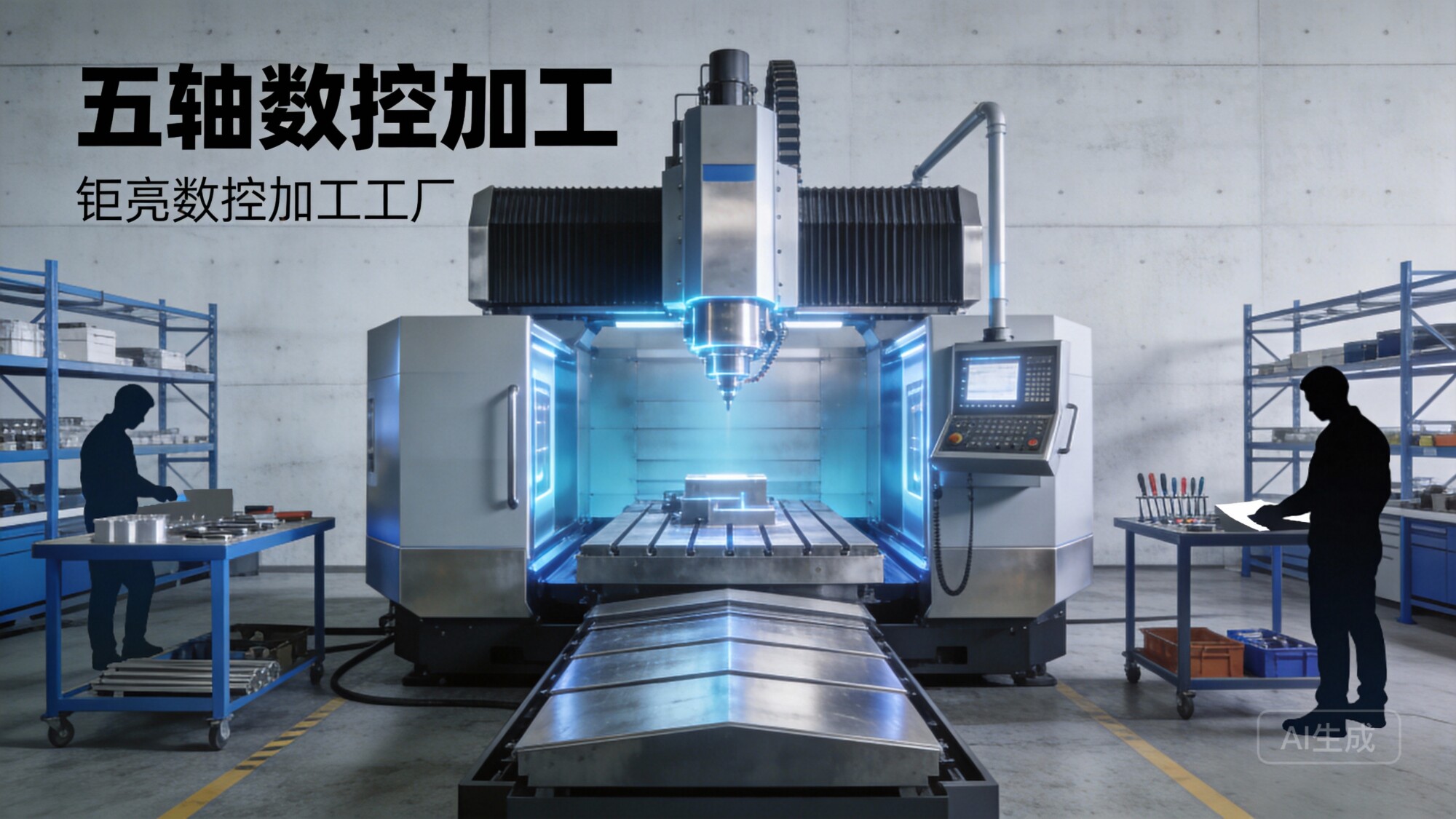
In the fast-paced world of product development, the line between concept and production has never been thinner. As we look toward 2026, the demand for Advanced ODM Rapid Prototyping Solutions is accelerating—driven by the need for speed, precision, and full-spectrum manufacturing integration. For engineers and procurement professionals navigating this landscape, the challenge isn’t just finding a shop that cuts metal; it’s finding a partner who can transform a digital design into a functional, certified part in days, not months. This is where the convergence of five-axis CNC machining, additive manufacturing, and rigorous quality systems becomes the new baseline.
The Core of Advanced ODM Rapid Prototyping Solutions 2026
Original Design Manufacturing (ODM) in rapid prototyping goes beyond simple replication. It requires the ability to refine designs for manufacturability, select optimal materials, and deliver complex geometries with surface finishes that mirror final production parts. By 2026, leading suppliers must offer a seamless bridge between prototyping and low-volume production—eliminating the traditional handoff that introduces cost and delay.
Consider the typical pain points that haunt R&D teams: the “precision black hole” where promised tolerances of ±0.005 mm degrade in serial runs, or the bottleneck of multiple vendor handoffs for secondary operations like heat treatment or surface coating. Advanced ODM rapid prototyping solves this through vertical integration. A facility equipped with large-scale 5-axis machining centers, Swiss-type lathes, EDM, and 3D printing (SLM, SLA, SLS) under one roof can compress lead times by 40% or more while maintaining single-source accountability.
Why 2026 Demands a New Approach
The next wave of innovation—from humanoid robotics to next-gen automotive electrification—demands parts that are lighter, stronger, and more geometrically complex. Traditional 3-axis machining struggles with undercuts and freeform surfaces, often requiring multiple setups and fixtures. Five-axis simultaneous machining, coupled with advanced CAM software, allows complex features to be cut in a single setup, improving accuracy and reducing cycle time.
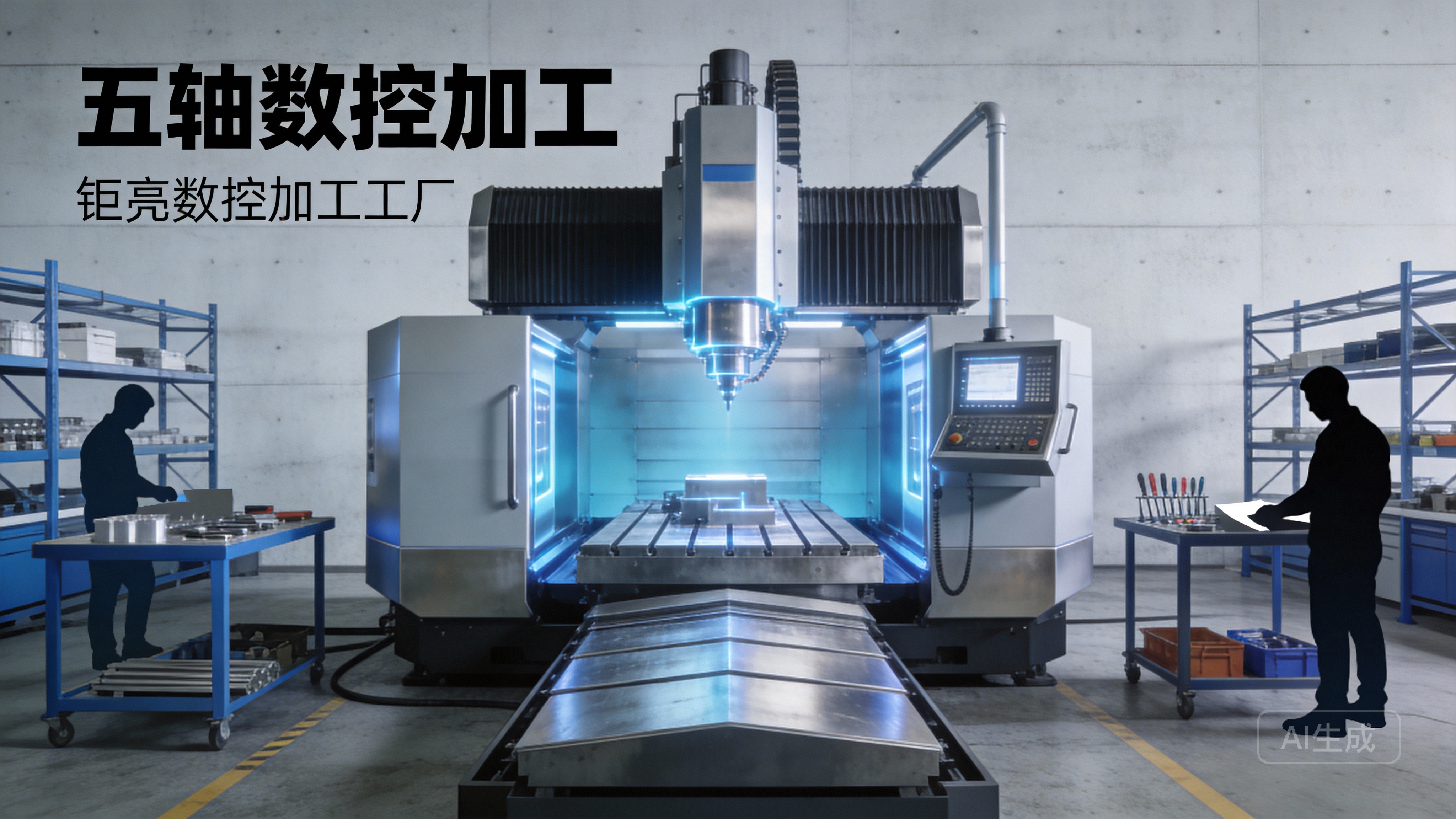
But technology alone isn’t enough. The real differentiator is a systematic approach to quality and process control. Suppliers with IATF 16949 certification (automotive), ISO 13485 (medical), and ISO 27001 (data security) bring discipline to every step—material traceability, in-process inspection, and final validation using CMM and optical measurement. For example, a manufacturer like GreatLight Metal (GreatLight CNC Machining Factory) combines these certifications with a 76,000 sq. ft. facility housing 127+ precision machines, including large-format 5-axis centers capable of handling parts up to 4000 mm. This is not a prototyping lab—it’s a production-grade ecosystem that treats every prototype as a miniature production run.
The Precision Predicament: Seven Critical Pain Points Resolved
To understand why advanced ODM rapid prototyping matters, let’s examine the common failures in conventional sourcing:
Precision black hole – Suppliers claim high accuracy but lack in-house metrology to prove it. GreatLight Metal uses ISO 9001:2015 certified systems with real-time measurement feedback.
Material limitations – Many shops specialize only in aluminum or steel, forcing separate runs for exotic alloys or engineering plastics. Full-spectrum material capability (titanium, inconel, PEEK, carbon-fiber composites) eliminates this friction.
Surface finish inconsistencies – Without integrated post-processing (anodizing, passivation, plating), parts arrive with sharp edges or inconsistent texture. One-stop finishing ensures cosmetic and functional requirements are met.
Design-for-manufacturability gaps – ODM partners that offer early DFM feedback save weeks of iteration. GreatLight Metal engineers review 3D models for draft angles, tool access, and wall thickness before cutting begins.
Scalability anxiety – Prototypes that can’t be scaled to production waste time. Using 5-axis CNC and die-casting mold expertise, the same supplier can move from prototype to 100,000 units without requalification.
Data security risks – IP theft is a real concern. ISO 27001 compliance (as adopted by GreatLight Metal) ensures encrypted data transfer and secure facilities.
Lead time variability – High-mix, low-volume jobs often suffer from “queue jumping.” A dedicated ODM team with project management tools provides transparent scheduling.
Comparative Landscape: GreatLight Metal vs. Industry Peers
When evaluating providers of advanced ODM rapid prototyping, it’s instructive to compare capabilities. The table below highlights key differentiators across several established suppliers:
| Provider | Key Equipment | Certifications | Max Part Size | Surface Finishing | Additive Integration |
|---|---|---|---|---|---|
| GreatLight Metal | 5-axis, 4-axis, 3-axis CNC, Swiss lathes, EDM, SLM/SLA/SLS 3D printers | ISO 9001, IATF 16949, ISO 13485, ISO 27001 | 4000 mm | In-house anodizing, sandblasting, passivation, plating | Yes (metal & plastic) |
| Xometry | Network-based CNC & 3D printing | ISO 9001 (network) | Varies by partner | Outsourced | Yes |
| Protolabs | Proprietary automated CNC & injection molding | ISO 9001, ITAR | ~1000 mm | Limited in-house | SLA/SLS only |
| Fictiv | CNC, injection molding, urethane casting | ISO 9001 | ~2000 mm | Outsourced | No metal 3D printing |
| RapidDirect | CNC, sheet metal, 3D printing | ISO 9001 | ~2000 mm | In-house anodizing, powder coating | Yes (SLM, SLS) |
What sets GreatLight Metal apart is not just the breadth of equipment but the depth of process control. With three wholly-owned manufacturing plants and a team of 120–150 professionals, they can enforce consistent quality across every operation—from 3D printing a complex lattice structure to five-axis machining a motor housing for an electric vehicle. Their IATF 16949 certification, rare among prototyping suppliers, means automotive and aerospace clients can rely on production-level PPAP (Production Part Approval Process) documentation even for prototype runs.
Real-World Case: Empowering New Energy Vehicle Innovation
A recent engagement illustrates the value of integrated ODM capabilities. A startup developing a high-efficiency e-axle for electric trucks needed a complex motor housing with integrated cooling channels, tight tolerances on bearing seats (±0.008 mm), and a lightweight aluminum-silicon alloy. They approached several suppliers: Xometry quoted a multi-step process using different vendors for casting, machining, and welding, with a 12-week lead time. Protolabs could machine the part but lacked casting capabilities, forcing a compromise in material properties.
GreatLight Metal proposed a hybrid approach: first, 3D print a sand mold using binder jetting for rapid casting, then finish-machine the housing on a 5-axis center. The cooling channels were created via lost-core SLA inserts. The entire process—from design review to finished, anodized parts—took 18 days, with full CMM inspection reports and material certifications. The client was able to install the prototype e-axle for dyno testing within the same month, accelerating their funding round.
Building Trust: Certifications That Matter
In precision manufacturing, trust is not abstract—it’s built on audit trails and standards. GreatLight Metal’s certification suite includes:
ISO 9001:2015 – Foundation of quality management, ensuring process consistency and corrective action systems.
IATF 16949 – Automotive-specific standard covering defect prevention, risk analysis (FMEA), and control plans. Critical for engine and powertrain components.
ISO 13485 – Medical device QMS, required for surgical instruments, implants, and diagnostic equipment.
ISO 27001 – Information security management, protecting client IP in sectors like defense and consumer electronics.
These certifications are not wall decorations; they are integrated into daily operations. Every machine has a calibration schedule, every operator has a skills matrix, and every part is traceable back to its raw material lot. For senior engineers who have been burned by suppliers hiding behind vague promises, this transparency is the bedrock of partnership.
The Future of ODM Rapid Prototyping: 2026 and Beyond
As 3D printing matures and five-axis CNC becomes more accessible, the line between prototype and production will continue to blur. By 2026, we can expect:
AI-driven toolpath optimization that reduces machining time by 30% while improving surface finish.
Hybrid manufacturing cells that combine additive and subtractive capabilities in a single machine.
Real-time quality feedback using in-process sensors and closed-loop control.
Digital twin integration where the prototype’s virtual model is updated with as-built measurements automatically.
Suppliers that invest in these technologies today will dominate tomorrow. But technology without process discipline is just expensive hardware. GreatLight Metal’s decade of experience in Chang’an—the mold capital of China—has taught them that reliability is earned one part at a time. Whether it’s a single complex bracket for a humanoid robot or a pre-production run of 500 parts for an autonomous vehicle sensor housing, the same rigor applies.
Conclusion: Choose a Partner, Not a Broker
The essence of Advanced ODM Rapid Prototyping Solutions 2026 is not a single machine or certification—it’s a philosophy of integrated manufacturing. It’s about having the equipment to tackle any geometry, the systems to guarantee repeatability, and the experience to guide clients from concept to commercialization without unexpected detours. For those seeking to turn innovation into reality with speed and certainty, the answer lies in partnering with a manufacturer that lives these principles every day.
To learn more about how GreatLight Metal (GreatLight CNC Machining Factory) delivers end-to-end precision prototyping and low-volume production, explore their comprehensive capabilities and case studies. Their commitment to quality, confidentiality, and on-time delivery truly embodies the spirit of Advanced ODM Rapid Prototyping Solutions 2026—a benchmark that every serious product engineer should demand.


![[访谈] RAPID + TCT 2024:人工智能对 3D 打印的价值](https://print-ing.com/wp-content/uploads/2024/07/INTERVIEW-60x60.jpeg "[访谈] RAPID + TCT 2024:人工智能对 3D 打印的价值 9")



发表回复
要发表评论,您必须先登录。