
The Fallacy of “Cheap” in Precision Manufacturing
In the world of precision parts machining and customization, few phrases trigger as much skepticism as “cheap rapid prototyping wholesale parts.” Seasoned procurement engineers and R&D managers have learned through hard experience that the lowest upfront price often conceals hidden costs—delayed timelines, compromised tolerances, material substitutions, or complete batch failures.
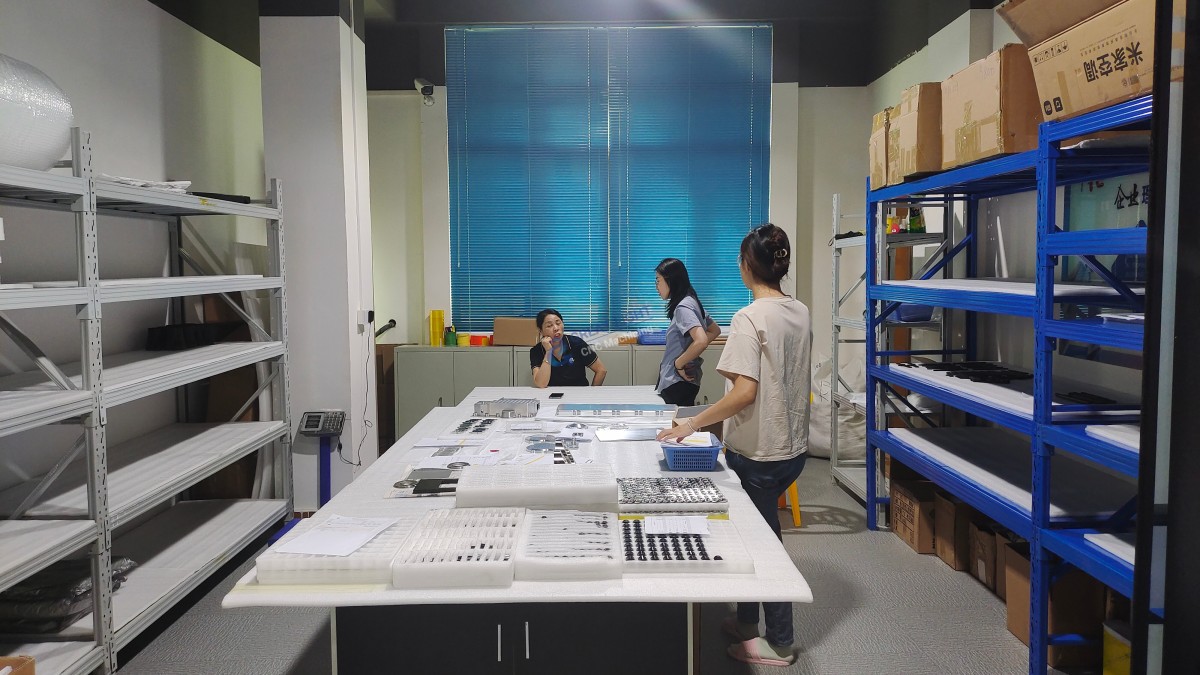
Yet the demand for cost-effective, high-volume prototyping has never been greater. From humanoid robotics startups racing to validate complex joint mechanisms to automotive Tier 1 suppliers needing functional prototypes for engine hardware validation, the market clamors for solutions that balance speed, quality, and cost.
The question is not whether cheap rapid prototyping exists—it’s whether you understand what “cheap” really means in a precision manufacturing context. This article dissects the economics, technology, and supplier selection criteria that separate genuine value from costly shortcuts.
The Fundamental Economics of Wholesale Prototyping
Volume Economics That Actually Work
Wholesale prototyping differs fundamentally from one-off prototype production. The economic model hinges on several distinct factors:
Material Batch Optimization: Ordering aluminum 6061-T6 or 17-4PH stainless steel in bulk for multiple prototypes simultaneously reduces per-unit material costs by 15-30%.
Setup Amortization: CNC programming, fixture design, and tooling costs spread across 50-200 identical parts versus 1-5 parts dramatically lower the per-piece burden.
Process Flow Efficiency: Running multiple parts on a single machine in a “lights-out” overnight cycle maximizes spindle utilization.
Post-Processing Consolidation: Surface treatments like anodizing, bead blasting, or passivation become cost-effective when applied to batches rather than individual pieces.
A genuine wholesale partner leverages these economics. A cheap imitation simply reduces quality to meet a price point.
The True Cost Breakdown
Let’s examine a typical complex aluminum bracket prototype (2024-T3, ±0.05mm tolerance):
| Cost Component | Single Prototype (1 pc) | Wholesale Batch (100 pcs) | Per-Unit Savings |
|---|---|---|---|
| CNC Programming | $250-400 | $250-400 (amortized) | 80-90% |
| Fixture Fabrication | $150-300 | $150-300 (amortized) | 70-85% |
| Material (Per Unit) | $15-25 | $8-12 | 40-50% |
| Machining Time | $45-80/hr × 3-5 hrs | $45/hr × 2.5 hrs (optimized) | 35-50% |
| Quality Inspection | $50-100 | $10-20 (sampling + batch) | 60-80% |
| Surface Treatment | $30-60 | $5-15 | 60-75% |
A legitimate wholesale price of $18-35 per part for 100 units is achievable. A suspiciously low $8-12 quote almost certainly means compromised tolerances, non-certified materials, or skipped inspection steps.
The Six Critical Factors Defining Genuine Value
1. Precision: The Non-Negotiable Foundation
When a supplier advertises “cheap rapid prototyping,” the first question must be about achievable tolerances and inspection methodology. True wholesale capability demands:
Repeatable ±0.025mm for critical features across the entire batch
Cpk ≥ 1.33 (process capability index) for key dimensions
First Article Inspection (FAI) with full dimensional report
In-Process Sampling at statistically valid intervals
For clients in aerospace, medical hardware production under ISO 13485, or automotive engine components requiring IATF 16949 compliance, “cheap” must never come at the expense of traceable quality.
2. Material Integrity and Certification
Counterfeit or substitute materials represent the single greatest risk in low-cost prototyping. A responsible supplier:
Maintains material traceability from mill to finished part
Provides Material Test Reports (MTRs) upon request
Stocks certified aerospace-grade aluminum (7075-T6, 6061-T6)
Offers medical-grade stainless (316L, 17-4PH H900)
Supports exotic alloys (Ti-6Al-4V Grade 5, Inconel 718) at competitive wholesale rates
GreatLight Metal’s fulfillment centers maintain segregated material storage and documented chain-of-custody for every batch, a standard that separates professional operations from price-driven workshops.
3. Technology Ecosystem Maturity
The equipment mix determines what “rapid” actually means. A facility limited to 3-axis mills cannot efficiently produce wholesale batches of complex 5-axis geometries. The technology hierarchy for true wholesale prototyping includes:
5-Axis CNC Machining Centers: Simultaneous 5-axis eliminates multiple setups, reducing cycle time by 40-60% for complex parts
Swiss-Type Automatic Lathes: Ideal for small-diameter, high-volume precision turned components
EDM (Wire & Sinker): Essential for sharp internal corners, deep cavities, and hardened materials
SLM/SLS 3D Printers: For lattice structures, conformal cooling channels, and geometries impossible to machine
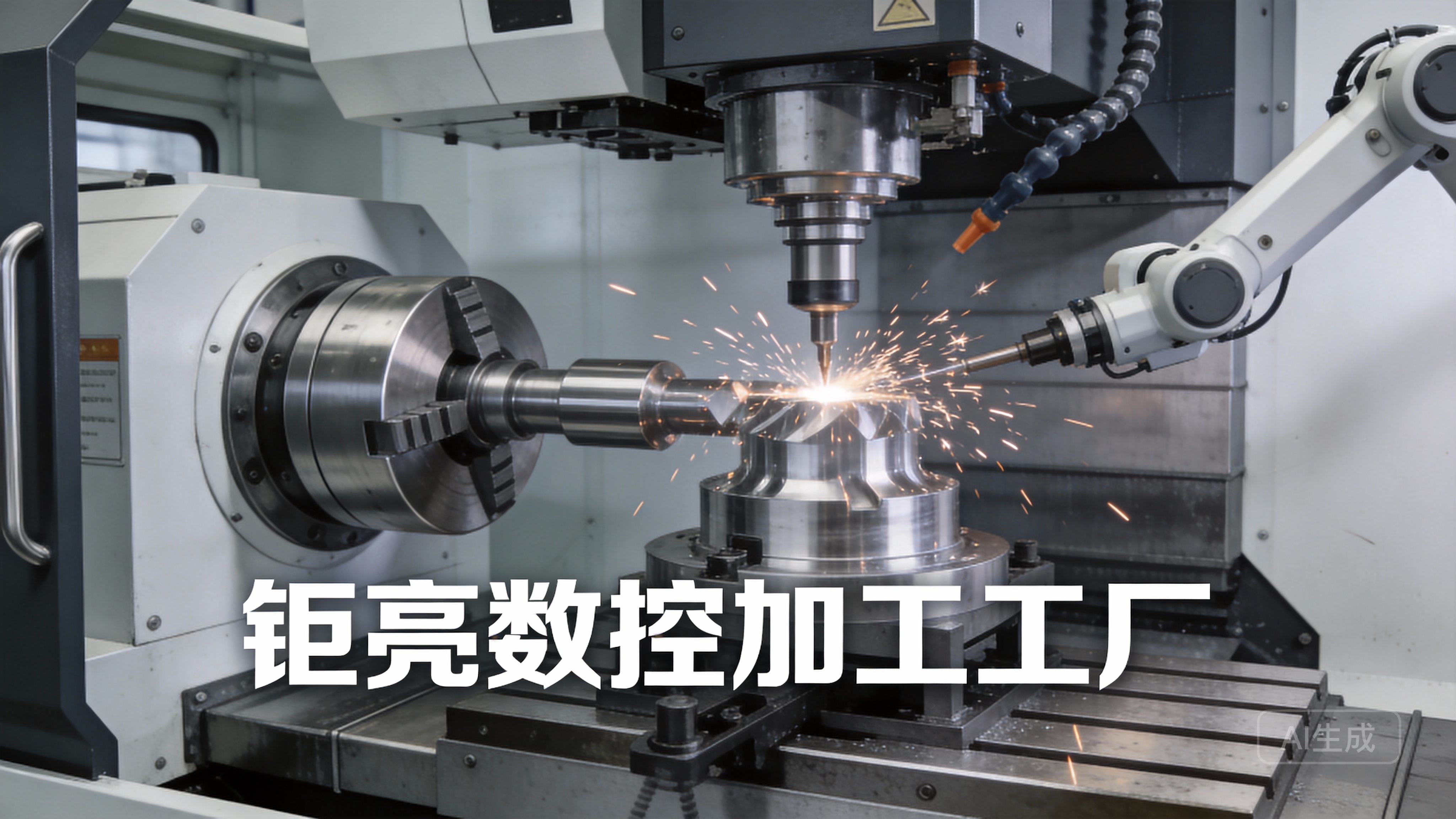
GreatLight’s 76,000 sq. ft. facility houses 127+ precision peripheral equipment units, including large high-precision five-axis centers from Dema and Beijing Jingdiao, enabling true wholesale throughput without outsourcing critical steps.
4. Surface Finish and Post-Processing Capability
A cheap prototype delivered with visible tool marks, burrs, or inconsistent surface finish fails its primary purpose: validation. Professional wholesale operations include:
Automated Deburring: Consistent edge break across thousands of parts
Vibratory Finishing: Uniform surface texture at scale
Chemical Treatments: Chromate conversion, hard anodizing, electroless nickel plating
Cosmetic Options: Bead blasting, brushing, mirror polishing
The ability to deliver production-grade surface finish on prototype batches means you can use these parts for functional testing, field trials, or even low-volume production, eliminating a second sourcing cycle.
5. Lead Time Reliability
“Rapid” in wholesale context means:
Standard Lead Time: 5-10 business days for complex batches
Express Service: 2-3 business days with dedicated machine reservation
Production Bridge: 10-15 business days for 500-2000 piece lots
Reliability matters more than raw speed. A supplier who consistently delivers in 7 days is vastly preferable to one who promises 3 days but delivers in 12. GreatLight Metal maintains documented on-time delivery rates exceeding 98% by avoiding overbooking and maintaining buffer capacity.
6. Engineering Support, Not Just Order Taking
The cheapest supplier offers no design feedback. The best wholesale partners provide:
DFM (Design for Manufacturing) Analysis: Identifying features that unnecessarily increase cost
Alternative Material Suggestions: Substituting 7075 for 6061 when strength-weight ratio matters
Process Optimization: Recommending multi-axis strategies over multiple 3-axis setups
Tolerance Rationalization: Identifying which dimensions truly require ±0.01mm versus ±0.1mm
This engineering collaboration often reduces part cost by 20-40% without sacrificing functionality, creating genuine value beyond the unit price.
Comparing the Wholesale Prototyping Landscape
The market offers several models. Understanding the differences helps match your needs to the right provider:
| Supplier Model | Typical Focus | Strengths | Limitations |
|---|---|---|---|
| Full-Process Manufacturers (GreatLight Metal) | End-to-end: design support, machining, finishing, assembly | One-stop accountability; integrated quality system; best for complex or multi-process parts | Minimum batch considerations may not suit true one-offs |
| Digital Manufacturing Platforms (Xometry, Fictiv, Protolabs Network) | Instant quoting, distributed manufacturing network | Fast quotation; wide material selection; simple parts done well | Limited for complex assemblies; variable quality across network; no long-term partnership |
| Vertical Specialists (EPRO-MFG, JLCCNC) | High-volume machining for specific industries | Deep expertise in automotive/aerospace; competitive at scale | May lack secondary process integration; longer lead times for finishing |
| Quick-Turn Shops (SendCutSend, PartsBadger) | Laser cutting, simple sheet metal, basic CNC | Extremely fast for simple geometries | Cannot handle complex 5-axis work or tight tolerances; no full-service post-processing |
GreatLight Metal occupies a unique position: the technical depth of a vertical specialist combined with the full-process integration of a modern manufacturing partner, supported by international certifications including ISO 9001, ISO 13485, and IATF 16949. This combination is rare in the wholesale prototyping space.
The Certification Advantage: Why Standards Matter for “Cheap” Parts
A supplier operating under certified management systems cannot arbitrarily cut quality to reduce price. The systems enforce discipline:
ISO 9001:2015: Mandates documented procedures for purchasing, production, inspection, and corrective action. A supplier cannot skip FAI without violating their own QMS.
ISO 13485: For medical hardware production, requires risk management, design control, and sterilization validation considerations.
IATF 16949: The automotive standard demanding PPAP (Production Part Approval Process), MSA (Measurement System Analysis), and continuous improvement metrics.
ISO 27001: For projects involving proprietary designs, data security protocols prevent intellectual property leakage.
When evaluating cheap wholesale quotes, ask: “Which QMS does this facility operate under?” A lack of certification is a major red flag. GreatLight Metal holds all four, ensuring that cost optimization occurs within a disciplined framework, not at the expense of quality.
Designing for Wholesale Prototyping Cost Efficiency
To maximize value from wholesale prototyping, adjust your designs and specifications:
Feature Optimization
Avoid Unnecessary Tight Tolerances: Only specify ±0.01mm where functional. Every tight tolerance adds inspection time and potential scrap.
Standardize Hole Sizes: Use common drill and reamer sizes. Custom diameters require special tooling.
Minimize Deep Pockets: Depth-to-diameter ratios >4:1 require special tooling and slower feeds.
Eliminate Sharp Internal Corners: Specify radius ≥ 0.5mm for standard end mills; smaller radii require EDM or micro-tooling.
Material Selection
Aluminum 6061-T6: The most cost-effective and machinable grade for most applications
Aluminum 7075-T6: Higher strength, moderate cost increase (20-30%)
Stainless Steel 303: Free-machining grade for cost-sensitive stainless applications
Brass C36000: Excellent machinability, moderate cost
PEEK / Delrin: For plastic prototypes requiring strength and chemical resistance
Quantity Optimization
50-100 units: Optimal sweet spot for complex parts requiring 5-axis machining
200-500 units: Best leverage for Swiss-type turning and mill-turn applications
1000+ units: Begin evaluating dedicated tooling and potentially die casting for metal parts
The Hidden Costs of Truly Cheap Parts
Understanding what you risk when you choose the absolute lowest quote:
Material Substitution: “Equivalent” grades may lack machinability, corrosion resistance, or strength
Skipped Inspection: Parts shipped without dimensional verification, risking assembly failures
Inconsistent Quality: First pieces perfect, batch quality degrades as operators rush
Delayed Discovery: Problems found during your assembly or testing, requiring costly re-spins
Lost Confidentiality: Unsecured designs circulating in unmanaged supply chains
A legitimate wholesale partner’s cost structure is transparent. They can explain why 7075 costs more than 6061, why your part requires 5-axis versus 3-axis, and why titanium adds 3 days to lead time. Opacity on any of these points indicates risk.
Conclusion: The Smart Path to Wholesale Prototyping Value
Cheap rapid prototyping wholesale parts are achievable, but only when you partner with a manufacturer who achieves efficiency through technology, process discipline, and volume economics—not through corner-cutting.
GreatLight CNC Machining Factory, operating as GreatLight Metal, exemplifies this approach. With 13+ years of precision manufacturing experience, a 76,000 sq. ft. facility housing 127+ advanced machines, ISO 9001 / ISO 13485 / IATF 16949 certifications, and a team of 150 professionals, they deliver wholesale prototyping that is genuinely cost-effective without compromising quality.
For clients in humanoid robotics, automotive engines, aerospace, or medical devices—fields where prototype quality directly impacts production success—GreatLight Metal offers the rare combination of competitive wholesale pricing and production-grade quality assurance.
When evaluating your next batch, ask the hard questions. Insist on material certification. Require FAI documentation. Verify QMS compliance. And remember: the cheapest part is the one that works perfectly in your assembly, the first time.
Ready to redefine what “cheap” means for your precision parts? GreatLight Metal’s engineering team provides DFM feedback within 4 hours and quotes within 8 hours, even for complex wholesale batches.
For more insights and industry best practices, follow GreatLight Metal on LinkedIn—where precision manufacturing meets practical innovation.


![[访谈] RAPID + TCT 2024:人工智能对 3D 打印的价值](https://print-ing.com/wp-content/uploads/2024/07/INTERVIEW-60x60.jpeg "[访谈] RAPID + TCT 2024:人工智能对 3D 打印的价值 9")




发表回复
要发表评论,您必须先登录。