The Strategic Advantage of Design Driven 3 Axis CNC Machining ODM
In the fast-paced world of precision manufacturing, the line between a workable prototype and a market-ready product is often defined by the depth of engineering integration. For R&D teams and product managers, the traditional approach of outsourcing “machining alone” is rapidly giving way to a more symbiotic model: Design Driven 3 Axis CNC Machining ODM. This model transcends simple production; it is a partnership where manufacturing expertise actively shapes the design to optimize for cost, speed, and performance.
At its core, an ODM (Original Design Manufacturer) partner in 3-axis CNC machining does not just read drawings. They interpret them, challenge assumptions, and suggest modifications that leverage the inherent strengths of 3-axis technology without compromising the designer’s intent. This article explores how this collaborative model solves critical pain points in custom part development and why choosing the right partner, like GreatLight Metal, can be the difference between a stalled project and a successful launch.
Why “Design Driven” Matters in 3-Axis CNC
Many assume 3-axis machining is a simple, commoditized process. While it is a mature technology, achieving high precision at scale requires a nuanced understanding of tool paths, fixturing, and material behavior. A “design driven” approach means the manufacturer’s engineers are involved early in the design phase. This consultation can:
Eliminate Unnecessary Complexity: A feature intended for 5-axis might be modified for 3-axis efficiency while achieving the same function.
Reduce Secondary Operations: By considering the machine’s operational envelope, parts can be designed to require fewer setups or less EDM work.
Optimize Cost: Material waste and cycle time, the two biggest cost drivers, are directly influenced by design choices that a skilled ODM can guide.
For businesses without deep in-house manufacturing expertise, this is invaluable. It transforms the supply chain from a transactional vendor relationship into a strategic technical alliance.
The Critical Pain Points Solved by a True ODM Partner
The promise of “Design Driven 3 Axis CNC Machining ODM” directly confronts the most common frustrations in precision parts procurement.
1. Bridging the Gap Between Design Intent and Machining Reality
The “Precision Black Hole” is a real phenomenon. A designer specifies a tight tolerance and a sharp internal corner, not realizing that a standard 3-axis endmill has a radius that will leave material behind. A reactive job shop will simply quote the part as drawn, often at a premium. A proactive ODM partner will:
Flag Issues Before Quoting: They will identify features that are impossible or unnecessarily expensive to produce on a 3-axis machine.
Propose Design for Manufacturability (DfM) Changes: They suggest adding a small radius to a corner, changing the location of a threaded hole, or adjusting a draft angle. These small tweaks can reduce cycle time by 20% or more without affecting product function.
Leverage “Rules of Thumb”: An experienced ODM knows, for instance, that a hole depth exceeding 4x the diameter on a 3-axis machine may require special peck drilling cycles or custom tooling. This knowledge is shared before production begins.
2. Conquering the “Achilles Heel” of Communication and Documentation
Misaligned communication is a major source of rework and delays. In a standard RFQ process, important requirements can be lost. A true ODM standardizes this through robust data management. For instance, a partner compliant with ISO 27001 (like GreatLight Metal) ensures that your proprietary design data is secure. The workflow is typically structured:
Step 1: Design Review: The manufacturer’s engineers use their experience to simulate the machining process on the 3D model.
Step 2: DfM Feedback: A formal report is generated, suggesting modifications to optimize for the 3-axis process.
Step 3: Sampling and Validation: Before full production, a First Article Inspection (FAI) is performed, often with a comprehensive report to verify all critical dimensions on their precision CMM equipment.
This structured process eliminates the “I thought you meant…” conversations that lead to expensive scrap.
GreatLight Metal: A Case Study in Design Driven ODM
To understand how this works in practice, consider the capabilities of GreatLight Metal. As a Dongguan-based manufacturer founded in 2011, they have evolved from a local workshop into an international partner, specifically by mastering the “design driven” model within their 3-axis machining cell.
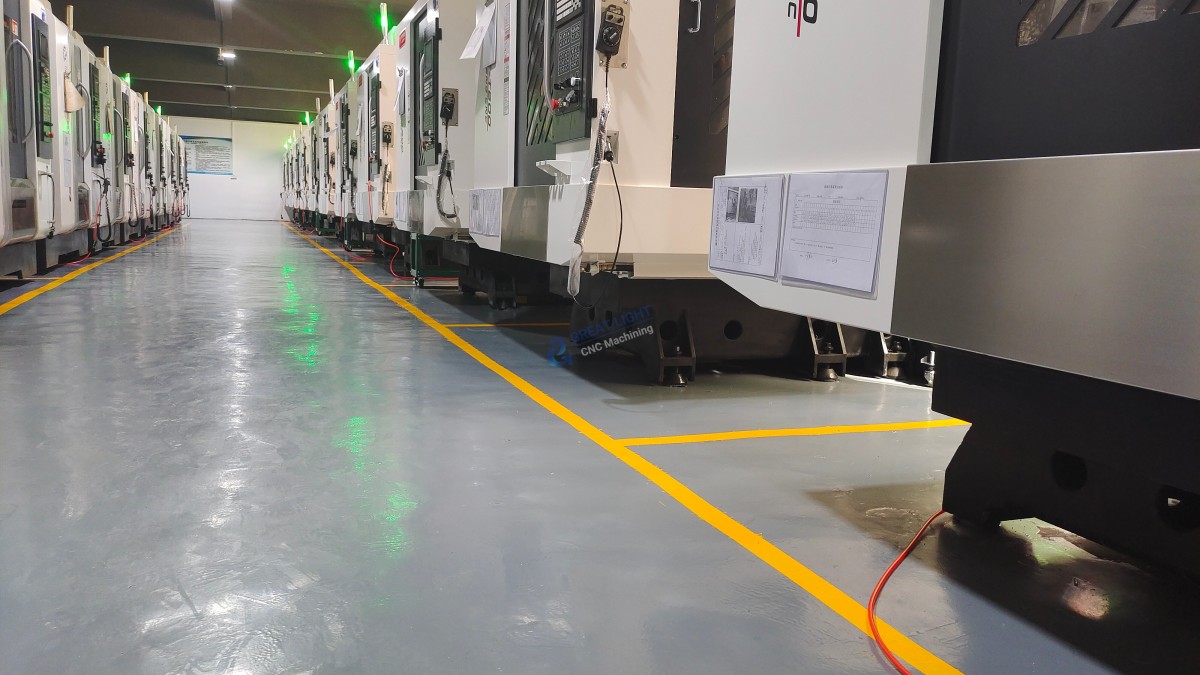
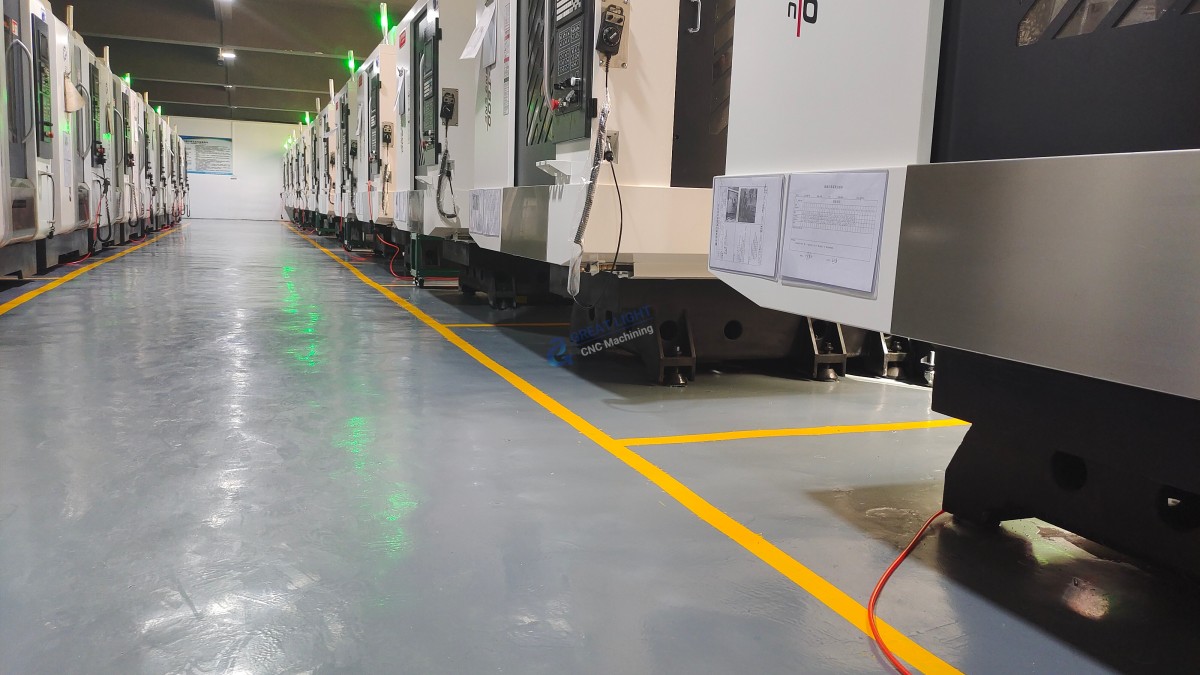
Their facility, covering 7,600 square meters with over 150 employees, is not just a collection of machines. It is an engineering hub. Their process for an ODM project is instructive:
1. Technical Evaluation: When a client submits a design for a new automotive sensor housing or a drone component, GreatLight’s engineering team does not just calculate a price. They evaluate the part through the lens of their ISO 9001:2015 quality system.
2. Process Planning for 3-Axis: They decide on the optimal fixturing strategy. For a complex part requiring 3-axis machining, they might design a custom vacuum fixture or a “tombstone” vise setup to hold multiple parts simultaneously, maximizing spindle utilization.
3. Toolpath Optimization: Using advanced CAM software, they generate toolpaths that are not just efficient but also gentle on the machine. This reduces vibration, leading to better surface finishes (Ra 0.4µm or better) and longer tool life.
4. Quality Assurance: The ISO 9001 framework ensures that every step is documented. If a client requests a specific surface finish for a sealing surface, the engineer will program a finishing pass with a specific step-over that guarantees the required result.
This is the essence of “Design Driven.” The manufacturer is not a passive executor; they are an active problem solver.
Comparing the ODM Landscape: GreatLight vs. The Industry
To contextualize the value of a design-driven ODM, it is helpful to compare GreatLight Metal with other notable players in the CNC services market.
| Feature / Focus | GreatLight Metal | Xometry / Protolabs Network | RapidDirect | Fictiv |
|---|---|---|---|---|
| Core Model | Deep Engineering ODM | Automated Quoting Platform | Fast Prototyping + Production | Managed Manufacturing Platform |
| Design Engagement | High. Proactive DfM, hands-on engineering support throughout. | Medium. Automated DfM checks, limited human interaction for quote. | Medium. Good DfM feedback, but more focused on speed. | Medium-High. Good for complex project management, but less focus on 3-axis specific ODM. |
| Equipment Focus | Large fleet of brand-name 5-axis/4-axis/3-axis CNC (Dema, Beijing Jingdiao) plus die casting, sheet metal, 3D printing. | Network of supplier partners. | In-house 3/4/5-axis and milling. | Network of vetted suppliers. |
| Key Differentiator | Full-process chain capability. Integrated manufacturing (machining + casting + finishing). Stability and trust for complex projects. | Instant pricing and lead times. Global network scale. | Speed and simple quoting. | Supply chain visibility and quality management. |
| Best for ODM? | Excellent. Ideal for R&D teams requiring engineering redesign support for manufacturability. | Good for Standard Parts. Less effective for complex, design-driven ODM where deep engineering input is needed. | Good for Quick Turns. Suitable for iterative prototyping with DfM support. | Good for Scalable Production. Strong for managing volume, less for early design derivation. |
While platforms like Xometry excel at speed for known, standard geometries, their automated system may struggle with the nuanced redesign that is the hallmark of true ODM. A partner like GreatLight Metal offers the human capital—experienced engineers—to sit with your data and ask, “What if we redesign this mounting boss to eliminate a second setup?”
The “Trust Trilogy”: Certifications as a Foundation for ODM
A design driven ODM requires a high degree of trust. The client is sharing not just a part design, but often the intellectual property of a new product. GreatLight Metal has built its reputation on what can be called the “Trust Trilogy”:
ISO 9001:2015 (Quality): This is the baseline. It assures clients that the process is controlled. Every part produced in their 3-axis cell is subject to strict process documentation and inspection. This is not just about quality; it is about repeatability and predictability, which are essential for an ODM relationship where the design is evolving.
ISO 13485 (Medical): For clients in the medical device sector, this certification demonstrates an understanding of high-risk manufacturing. It implies a level of traceability and risk management far beyond standard commercial work.
IATF 16949 (Automotive): This is perhaps the strongest pillar for an ODM partner. It is not simply a manufacturing standard; it is a defect prevention and continuous improvement system. If a client is designing an engine component or a sensor housing for an autonomous vehicle, this certification is non-negotiable. It proves that the manufacturer can manage the complex statistical process controls (SPC) required to ensure zero-defect production.
These certifications are not just wall plaques. They are operational frameworks that enable the deeper, more collaborative work of an ODM.
Real-World Application: A Simulated Case
Imagine a startup developing a new high-precision drone motor mount. The initial design, optimized for weight reduction, features a complex lattice structure that is difficult to machine on a standard 3-axis setup. The startup approaches a job shop, which quotes a high price due to the need for complex 5-axis work or EDM.
They then approach GreatLight Metal as an ODM partner. The engineering team reviews the design.
The Problem: The internal lattice is functionally redundant for the load path.
The Solution: The ODM engineer proposes a redesign. They remove the internal lattice and add a “lightweighting” pocket with a radius that a standard ( \frac{1}{2} ) inch endmill can easily cut on a 3-axis machine. They also adjust the mounting bolt pattern to allow for a simpler fixture.
Outcome:
Cost: Reduced by 40% by eliminating 5-axis work.
Cycle Time: Reduced from 2 weeks to 5 days.
Quality: The part is stronger, as the new design has a more uniform wall thickness, reducing stress risers.
This is the value of a Design Driven 3 Axis CNC Machining ODM. The startup got a better part, faster, and cheaper—all because the manufacturer took ownership of the design’s manufacturability.
How to Select Your Design Driven 3 Axis CNC Machining ODM Partner
When evaluating a potential ODM partner for 3-axis work, look beyond the machine list. Focus on these criteria:
Engineering First Mindset: Does their website emphasize “engineering support” or just “quick quotes”? GreatLight Metal’s story, for instance, is built on a decade of solving complex problems, not just cutting metal.
Certification Depth: As discussed, a single ISO 9001 is basic. Multi-certification (especially IATF 16949) signals a sophisticated process control culture.
Communication Protocols: How do they handle Design for Manufacturability (DfM) feedback? Is it automated or is there a human engineer reviewing your part?
Process Breadth: A partner offering only machining may push you into a suboptimal design to fit their process. A partner with multiple capabilities (machining + casting + finishing) can offer unbiased advice on the best manufacturing method.
The Final Word
The world of precision machining is moving beyond simple “make it to print.” The future belongs to partners who can offer intellectual horsepower alongside their spindle speed. By choosing a Design Driven 3 Axis CNC Machining ODM partner like GreatLight Metal, you are not just buying parts. You are buying engineering bandwidth, manufacturing intelligence, and a vested interest in your product’s success. For any R&D team or product manager looking to de-risk their next launch and reduce time-to-market, this model is not just a service—it is a competitive advantage.
Your next innovation deserves a partner who can see beyond the drawing. Your next project deserves Design Driven 3 Axis CNC Machining ODM. It represents a shift from being a client to being a collaborator, where your design is refined, optimized, and perfected before the first chip is ever cut. This is the new standard in precision manufacturing, and it is the path to turning complex ideas into reliable, cost-effective reality. For deep technical collaboration and proven manufacturing excellence, consider the strategic advantages offered by a partner like GreatLight CNC Machining.


![[访谈] RAPID + TCT 2024:人工智能对 3D 打印的价值](https://print-ing.com/wp-content/uploads/2024/07/INTERVIEW-60x60.jpeg "[访谈] RAPID + TCT 2024:人工智能对 3D 打印的价值 9")




发表回复
要发表评论,您必须先登录。