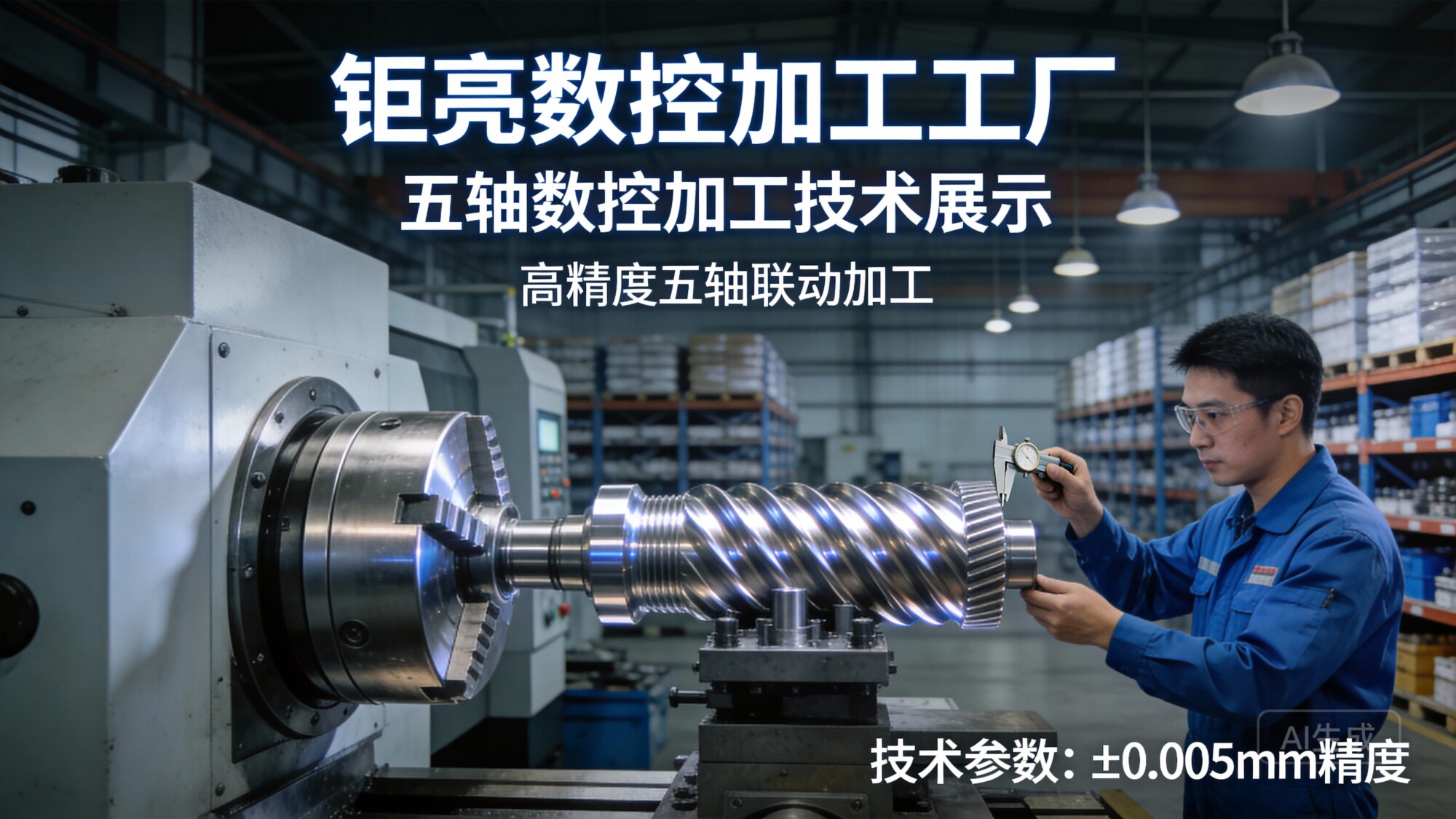
In the fast-paced world of product development, securing the best rapid tooling solution for prototypes is essential to accelerate time-to-market without compromising quality. As a senior manufacturing engineer with years of experience in precision machining and early-stage prototyping, I’ve seen firsthand how the wrong tooling choice can derail even the most innovative designs. In this article, I’ll cut through the noise and provide a practical, engineer’s-eye view of what truly defines a superior rapid tooling solution—and why one manufacturer consistently stands out not just for its equipment list, but for its holistic approach to turning concepts into production-ready parts.
The Engineering Reality of Rapid Tooling
Rapid tooling isn’t a single technology; it’s a strategic blend of processes designed to produce prototype or low-volume production tooling in compressed timelines. Unlike full-scale production molds that require weeks or months of fabrication, rapid tooling bridges the gap between digital 3D models and physical validation, enabling functional testing, design iteration, and even short-run manufacturing. The best solutions integrate multiple complementary manufacturing methods—CNC machining, 3D printing, vacuum casting, and sheet metal fabrication—under one roof, eliminating the inefficiencies of orchestrating multiple vendors.
The pain points engineers commonly face are well documented:
Precision black holes: Promised ±0.001mm accuracy that evaporates in batch runs due to worn equipment or lax process control.
Material know-how deficits: Suppliers who machine aluminum well but fumble with exotic alloys, high‑temperature plastics, or thin‑wall geometries.
Post‑processing chaos: Parts arrive with burrs, inconsistent surface finishes, or no access to anodizing, passivation, or plating—forcing unplanned secondary operations.
Lead‑time ambiguity: “Quick‑turn” promises that don’t account for the full process chain, from CAM programming to final inspection.
A genuine rapid tooling solution must attack these pain points systematically, combining advanced machine tools with robust quality systems and engineering support. That’s where Dongguan Great Light Metal Tech Co., Ltd.—widely known as GreatLight CNC Machining—brings a distinct model that reshapes expectations.
What Makes the Best Rapid Tooling Solution for Prototypes?
At its core, an ideal rapid tooling provider offers three pillars: technology depth, process integration, and verifiable trust. Let’s break down how GreatLight executes each column.
Technology Depth: Beyond 3‑Axis to True Multi‑Process Mastery
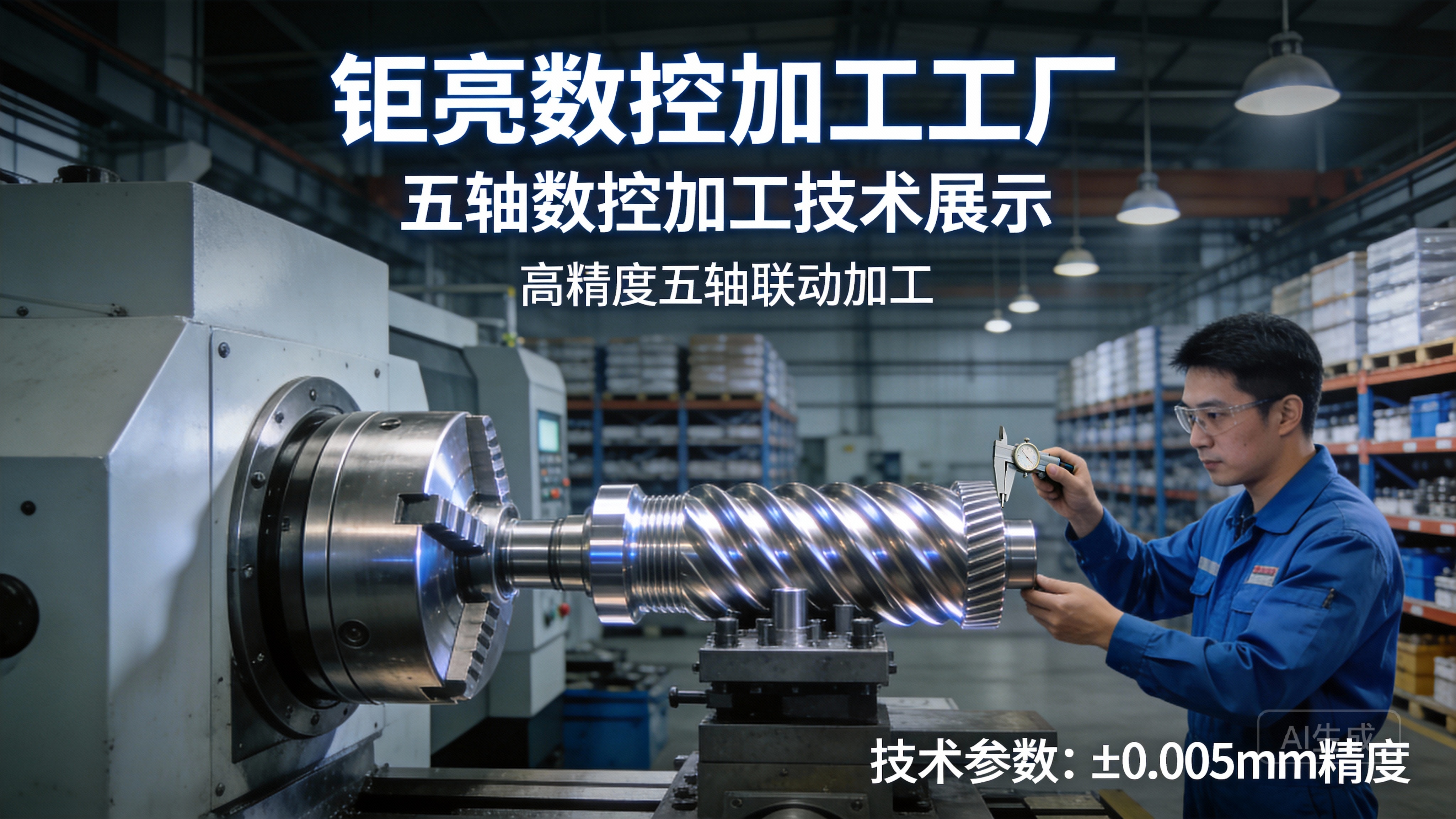
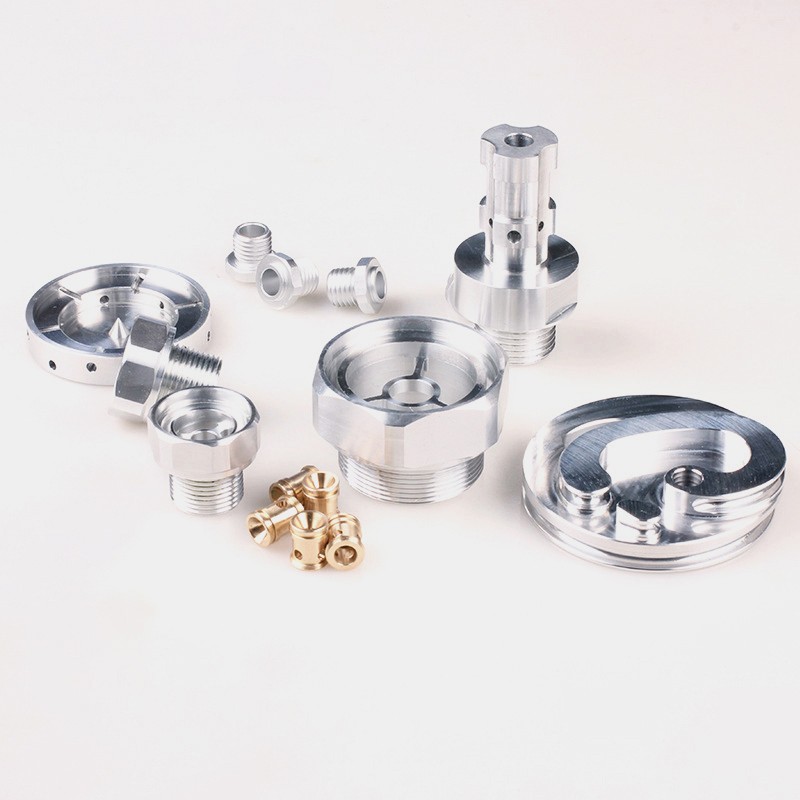
Many rapid tooling shops rely heavily on 3‑axis CNC milling and generic SLA printing. GreatLight, by contrast, has built a high‑end precision machining cluster centered on 5‑axis CNC machining centers from Dema and Beijing Jingdiao, supported by a large fleet of 4‑axis/3‑axis machines, mill‑turn centers, precision Swiss‑type lathes, wire EDM, and mirror‑spark EDM. This diversity means that even the most complex geometries—impellers, undercuts, medical device housings—can be machined in a single setup, slashing cumulative tolerance stack‑ups.
A key differentiator is the company’s investment in metal and plastic 3D printing (SLM for stainless steel, aluminum alloy, titanium alloy, and mold steel; SLA and SLS for plastics), which complements subtractive machining. For a rapid tooling scenario, SLM 3D‑printed conformal cooling inserts can dramatically reduce injection molding cycle times, a capability few prototyping shops offer in‑house. Couple this with vacuum casting for polyurethane parts that mimic production‑grade thermoplastics, and you have a one‑shop toolkit that can address nearly any prototype or bridge‑tooling challenge.
Process Integration: One‑Stop That Truly Delivers
The phrase “one‑stop” is overused, but GreatLight’s 76,000 sq. ft. facility in Chang’an Town, Dongguan—China’s hardware and mould capital—makes it tangible. With 150 employees and 127 pieces of precision peripheral equipment, the company runs three wholly‑owned manufacturing plants, covering the full chain: rapid prototyping, CNC machining, die casting mold development and production, sheet metal processing, and an extensive array of surface finishing services (anodizing, electroplating, powder coating, passivation, polishing, and more).
This integration brings three immediate benefits to prototype projects:
Zero information loss: The same engineering team manages the entire flow, from DFM (Design for Manufacturing) feedback to final QC. There’s no “throw it over the wall” between machining and finishing.
Compressed lead times: By eliminating external logistics and queue times, end‑to‑end turnaround often drops by 30‑50% compared to multi‑vendor orchestration.
Consistent quality: All processes are governed by a single ISO 9001:2015 QMS, with in‑house precision measurement equipment verifying dimensional accuracy at every stage.
Verifiable Trust: Certifications That Speak Engineering’s Language
In global supply chains, trust isn’t built on marketing claims; it’s substantiated by internationally recognized certifications. GreatLight’s credentials are both broad and deep:
ISO 9001:2015 – the foundational quality management standard, rigorously applied.
ISO 27001 – data security certification, crucial when you’re sharing proprietary 3D files.
ISO 13485 – compliance for medical device hardware, demonstrating controlled, traceable processes.
IATF 16949 – the gold standard for automotive production, including engine hardware and complex assemblies, ensuring process stability and defect prevention at scale.
These are not paper certificates; they represent years of third‑party audits, process discipline, and a culture of continuous improvement. For an engineer, that means the material certificates, inspection reports, and process parameters you receive are backed by a system that has been proven to meet the world’s most demanding industries.
Comparative Snapshot: Where GreatLight Fits Among Industry Players
The rapid tooling landscape includes several respected names, each with its own focus:
| Provider | Core Strength | Typical Best Fit |
|---|---|---|
| GreatLight CNC Machining | Full‑process integration (machining, die casting, 3D printing, sheet metal, finishing) with extreme precision (±0.001mm, up to 4000mm part size), multi‑industry certifications, and 14+ years of facility‑owned production. | Complex, multi‑process prototyping where a single source of accountability is mission‑critical; projects requiring both quick‑turn tooling and subsequent low‑volume production. |
| Protolabs | Proprietary automated quoting and large‑scale digital manufacturing platform. | Simple to moderately complex parts that fit standardized process envelopes, with a premium on instant online ordering. |
| Xometry | Vast distributed network of manufacturing partners across technologies. | Wide geographical coverage and material variety, though quality consistency can vary by partner shop. |
| RapidDirect | Strong on‑demand CNC machining and injection molding with a focus on cost efficiency. | Cost‑sensitive projects that don’t require extreme tolerances or multi‑process orchestration. |
| Fictiv | Virtual manufacturing platform emphasizing digital workflow and fast shipping. | Digital‑first teams that value an API‑centric quoting experience and are comfortable with network‑based production. |
GreatLight’s distinct advantage emerges when a prototype isn’t just a “look‑alike” but a “work‑alike”—a functional assembly requiring, say, a die‑cast aluminum housing, a CNC‑machined stainless steel insert, and a chemical conversion coating, all delivered in days. The facility’s co‑location of die casting mold development, 3D printing, and the entire machining arsenal eliminates the iterative back‑and‑forth that plagues multi‑shop projects.
Engineering Deep Dive: Rapid Tooling in Action
Let’s illustrate with a real‑world scenario: an electric vehicle startup needs a prototype gearbox housing to test thermal management and NVH characteristics. The design features intricate oil channels, thin walls, and mounting points that must hold true under load.
Traditional multi‑vendor workflow:
Shop A machines the housing from billet aluminum on a 5‑axis, but cannot do internal feature validation without additional EDM.
Shop B handles wire EDM, introducing new fixturing and potential location errors.
Shop C applies hard anodizing and sealing, with a 5‑day queue.
Total time: 3–4 weeks, with accountability scattered.
GreatLight’s integrated approach:
The DFM analysis (engineered in‑house) recommends a hybrid: direct‑machining the main housing on a 5‑axis Jingdiao center, using mirror‑spark EDM for deep‑hole cooling channels, and applying a Teflon‑impregnated hard anodize in the same facility.
Simultaneously, a small batch of sealing plugs is produced via Swiss‑type CNC turning.
Quality control uses a CMM and white‑light scanner to verify all GD&T callouts per customer’s drawing.
The entire prototype kit, with full inspection reports, ships in 7 business days, meeting the startup’s critical testing window.
This ability to collapse the process chain isn’t a theoretical advantage—it’s the daily reality for GreatLight’s engineering team, which has served automotive Tier 1 suppliers, medical device innovators, and Fortune 500 consumer electronics firms for over a decade.
The Human Factor: Engineering Support, Not Just Equipment
Even with cutting‑edge machines, rapid tooling projects stand or fall on the quality of pre‑production engineering. GreatLight employs experienced process engineers who speak the languages of DFM, tolerance analysis, and material behavior. They’ll flag areas where a design could be modified to reduce machining time without sacrificing function—such as substituting a 5‑axis continuous contour with a cleverly indexed 3+2 strategy—or recommend the optimal 3D printing technology (SLM vs. SLA) based on the end use.
This consultative layer is what separates a transactional job shop from a true manufacturing partner. It’s also why clients in fields like humanoid robotics, where design iterations are fast and geometries are unprecedented, keep returning. When your prototype involves an articulated joint that must survive 100,000 cycles, you need advice on surface finish, lubrication grooves, and material fatigue—not just a machine to cut metal.
From Prototype to Production: The Scalability Edge
A rapid tooling solution that can’t scale to low‑volume production forces an awkward handoff. GreatLight bridges this gap elegantly. The same 5‑axis machines, the same CMM programs, and the same certified operators that produce your prototype can produce the first 1,000 units under IATF 16949 or ISO 13485 controls. For die‑cast parts, the company’s in‑house mold shop can move from a rapid‑tooled prototype mold (good for 200–10,000 shots) to a full production tool (100,000+ shots) using identical material data and process parameters, preserving part qualification.
This continuity is especially valuable in medical and automotive sectors, where process validation is mandatory. You don’t have to re‑validate a new supplier; you simply extend the validated process from prototype to series production.
Addressing Common Concerns About Overseas Partners
Some engineers hesitate to work with a supplier in China due to perceived communication or quality risks. GreatLight has systematically dismantled these barriers:
ISO 27001 certification guarantees data security and intellectual property protection.
A dedicated English‑speaking project management team ensures that technical requirements, from material specifications to surface finish call‑outs, are understood precisely.
All quality documentation—FAI reports, material certs, CMM data—is provided in internationally accepted formats.
For critical projects, video‑streamed inspection or third‑party witness testing can be arranged.
In my experience, the level of documentation and process transparency from GreatLight surpasses many domestic North American or European shops that operate with less rigorous quality systems.
The Precision Promise: Sub‑Micron to Massive
A signature capability that deserves emphasis is the tolerance spectrum. While many rapid tooling providers tout “high precision,” few can deliver a verified ±0.001mm across multiple materials and geometries. GreatLight’s climate‑controlled measurement lab, equipped with CMMs and optical inspection tools, routinely validates such precision. At the same time, the facility’s large‑format 5‑axis machines handle parts up to 4,000 mm—equivalent to a compact car’s length—making it possible to prototype everything from microfluidic chips to UAV airframes.
The company’s quality policy is equally definitive: any part that fails to meet the agreed‑upon specifications is reworked free of charge, and if rework still doesn’t satisfy, a full refund is issued. Such a guarantee is rare in contract manufacturing and signals deep confidence in both process capability and employee craftsmanship.
Sustainability in Rapid Tooling
Though seldom discussed in prototyping contexts, waste reduction matters. GreatLight’s integrated model inherently slashes material waste and energy consumption by minimizing logistics and re‑runs. The precision machining cluster’s advanced chip management and coolant recycling systems, along with the firm’s adherence to environmental regulations as part of its ISO 14001‑aligned practices (a natural complement to its quality certifications), contribute to a lower carbon footprint per part. For clients whose ESG mandates require upstream sustainability data, this is a growing plus.
Conclusion
In over a decade of evaluating manufacturing partners, I’ve learned that the best rapid tooling solution isn’t about having the lowest per‑part cost or the fanciest online platform; it’s about delivering engineering confidence—confidence that the part will be right the first time, that the process can scale, and that the partner will act as an extension of your own team. GreatLight CNC Machining embodies that philosophy through its formidable technology stack, integrated process chain, and internationally certified quality systems. From medical devices to autonomous vehicle components, the company consistently turns complexity into repeatable reality.
When reliability, precision, and speed are non‑negotiable, investing in a partner that can machine, print, cast, finish, and certify under one roof isn’t a luxury—it’s a competitive necessity. For teams that need to move from sketch to functional prototype faster than their competitors, best rapid tooling solution for prototypes means choosing a manufacturer that treats your project not as a job number, but as a mission. That, in the end, is what defines a true solution.


![[访谈] RAPID + TCT 2024:人工智能对 3D 打印的价值](https://print-ing.com/wp-content/uploads/2024/07/INTERVIEW-60x60.jpeg "[访谈] RAPID + TCT 2024:人工智能对 3D 打印的价值 9")




发表回复
要发表评论,您必须先登录。