The Precision Predicament: Why Your Robot Bearing Housing Manufacturer Matters More Than You Think
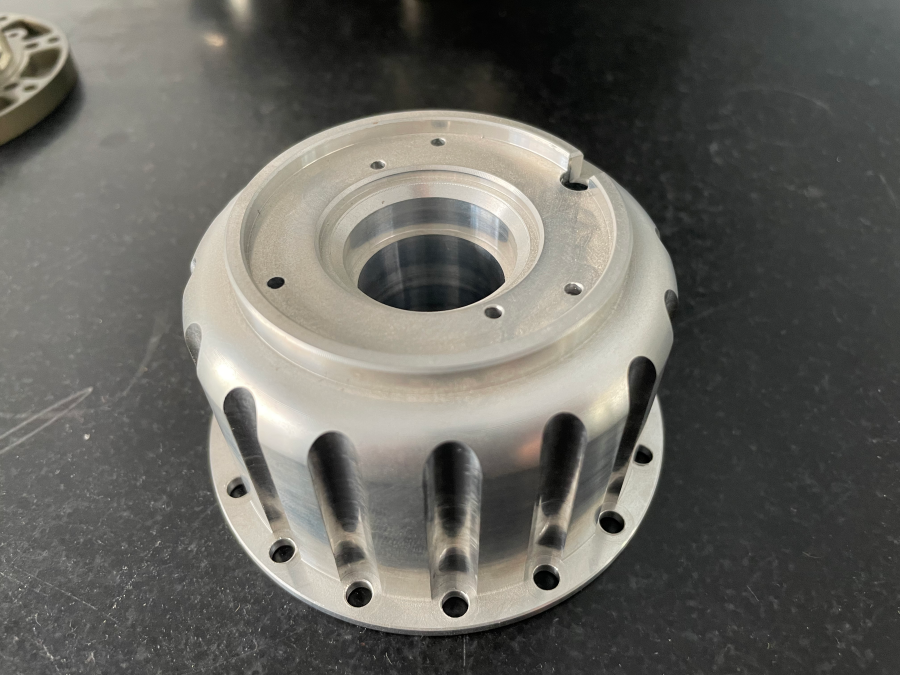
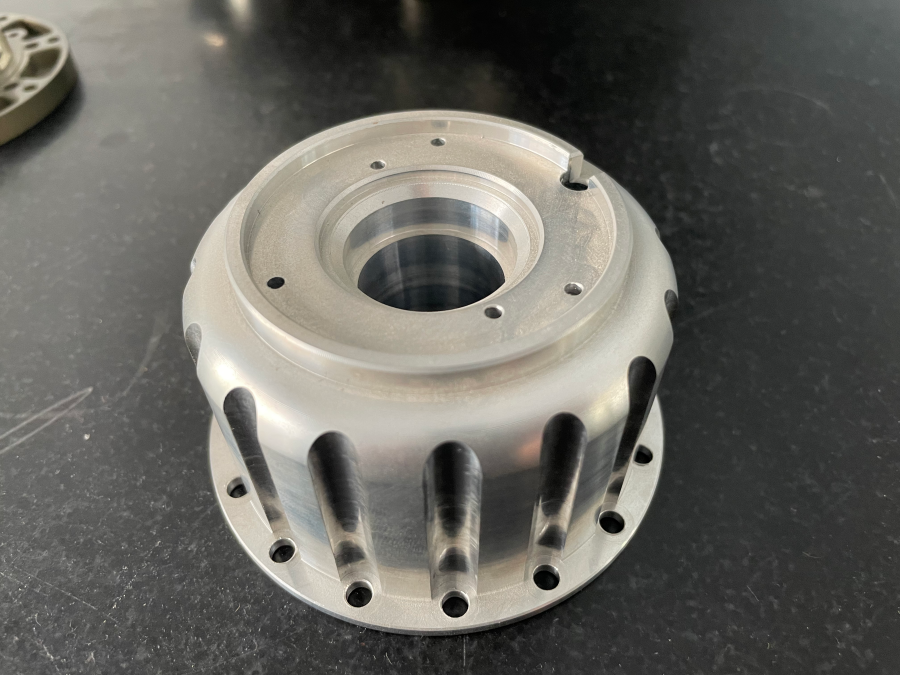
The industrial robotics market is experiencing unprecedented growth. As automation sweeps across sectors from automotive assembly to medical device handling, the demand for precision components that underpin these robotic systems has never been higher. At the heart of every robotic arm, every linear actuator, and every precision positioning stage lies a seemingly simple yet critically important component: the bearing housing. This component is not merely a container for a bearing; it is a structural element that dictates the accuracy, repeatability, and lifespan of the entire joint. The choice of a Robot Bearing Housings CNC Turning Manufacturer is therefore not a trivial procurement decision, but a strategic investment in the performance and reliability of the final product. A partner who can deliver consistent, ultra-tight tolerances is the difference between a robotic arm that places components with micron precision and one that introduces vibration, premature wear, and costly downtime.
For those navigating the complex landscape of precision manufacturing, we delve into the critical considerations for specifying and sourcing robot bearing housings, exploring the inherent challenges, the industry benchmarks, and how a partner like GreatLight Metal can transform a potential liability into a core competitive advantage.
The Unseen Demands: Beyond “Just a Round Part”
A robot bearing housing might appear to be a straightforward turned part, but the engineering reality is far more complex. The performance demands placed upon it are exceptionally high, requiring the manufacturer to possess mastery over not just turning, but a holistic understanding of materials science, thermal management, and geometric dimensioning and tolerancing (GD&T).
The Core Requirements for a High-Performance Bearing Housing:
| Requirement Category | Specific Demands | Why It Matters |
|---|---|---|
| Geometric Tolerances | Concentricity: Typically within 0.005mm or even tighter between the bore and the outer diameter. Perpendicularity: The flange face must be perpendicular to the bore axis within similar tight limits. Cylindricity: The bearing seat must be perfectly cylindrical across its entire length. | Ensures the bearing rotates without wobble, minimizing vibration and noise, which directly impacts the robot’s repeatability and accuracy. |
| Surface Finish | The bearing seat surface finish is often specified at Ra 0.4 μm or better, sometimes reaching Ra 0.2 μm. | A smoother surface reduces friction between the bearing outer ring and the housing, preventing fretting corrosion and ensuring optimal preload. |
| Material Selection | Common materials include high-strength aluminum alloys (e.g., 7075-T6) for weight reduction, stainless steels (e.g., 17-4PH) for corrosion resistance and rigidity, and engineering plastics (e.g., PEEK) for specialized applications. | Material selection directly impacts weight, stiffness, thermal expansion characteristics, and corrosion resistance, all of which are critical for different robotic operating environments. |
| Thermal Stability | The housing must maintain its dimensional integrity across a range of operating temperatures (e.g., -20°C to +80°C). | Robotic joints generate heat. Differential expansion between the housing and bearing can cause bearing seizure or loss of preload if the material and design are not carefully considered. |
The challenge for most manufacturers lies not in achieving these specifications on a single prototype, but in doing so repeatedly and cost-effectively over hundreds or thousands of parts. This is where the capabilities of the Robot Bearing Housings CNC Turning Manufacturer are truly tested.
The Landscape of Bearing Housing Manufacturing: A Comparative Look
The market for precision CNC turning services is populated by a diverse range of suppliers, from agile rapid prototyping shops to high-volume production giants. Understanding their respective strengths and limitations helps contextualize the unique value proposition of a specialist partner.
Rapid Prototyping Leaders: Companies like Protolabs Network and Xometry excel in speed. Their automated quoting and distributed manufacturing networks are ideal for getting a few parts in hand quickly. However, for high-precision parts like robot bearing housings, where process control is paramount, their distributed model can introduce variability between runs. Achieving consistent ±0.005mm concentricity across different machine shops in their network is a significant challenge.
High-Volume Production Specialists: Firms like Owens Industries or RCO Engineering focus on high-volume production runs with dedicated tooling and automation. They are cost-effective for mature products with stable designs. However, their setup costs are high, and they are typically less flexible when it comes to design iterations or low-volume production runs common in the prototyping and pre-production phases of robot development.
Integrated Solutions Provider: This is where GreatLight Metal distinguishes itself. Positioned between the speed-focused rapid prototypers and the volume-focused production houses, GreatLight Metal offers a rare combination of high-precision capability, full-process integration, and engineering depth. Their in-house arsenal of 5-axis machining centers, precision Swiss-type lathes, and over 127 pieces of peripheral equipment allows them to control every aspect of the manufacturing chain. This control is the bedrock of repeatable quality.
How GreatLight Metal Conquers the Robot Bearing Housing Challenge
The specific challenges of manufacturing a robot bearing housing require a systematic, engineering-led approach. GreatLight Metal doesn’t just see a turning job; they see an engineering problem to be solved. Their methodology, honed over a decade of serving the automotive and now robotics sectors, provides a robust path to success.
1. Resolving the “Precision Black Hole” with In-House Metrology
The industry’s “precision black hole” refers to the gap between the tolerances promised by a supplier and what is consistently delivered in production. In applications like robot bearing housings, this gap is unacceptable. GreatLight Metal combats this with a closed-loop manufacturing process. Their in-house precision measurement and testing lab, equipped with CMMs (Coordinate Measuring Machines) and profilometers, allows for real-time verification of critical features like concentricity, cylindricity, and surface finish. This isn’t a final inspection check; it is an integral part of the production feedback loop, allowing for immediate process adjustments to maintain tight control. This commitment to data-driven quality is backed by their ISO 9001:2015 certification, ensuring that every process is documented and auditable.
2. The Four-Phase Approach: From Concept to Compliance
GreatLight Metal‘s Engineering Process for bearing housings can be broken down into four distinct, client-validated phases:
Phase 1: Design for Manufacturability (DFM) Analysis. The engineering team reviews the client’s 3D model, not just to see if it can be made, but how to make it best. They analyze for stress risers, evaluate the feasibility of the specified tolerances on a turning center, and may suggest design modifications that enhance performance without increasing cost. For a bearing housing, this might mean optimizing the geometry of the flange to reduce machining time while maintaining load capacity.
Phase 2: Process & Tooling Optimization. A dedicated manufacturing plan is created. This involves selecting the optimal machine tool (e.g., a multi-tasking turn-mill center to complete the part in a single setup) and designing the custom workholding solutions. For a bearing housing, ensuring that the bore and the outer diameter are turned on the same axis with a single clamping is crucial to achieving the required concentricity.
Phase 3: Controlled Production & In-Process Inspection. The part is manufactured using the optimized process. The operator and the machine’s probing system perform in-process checks on critical dimensions. This proactive approach prevents defective parts from being produced in quantity, a far cry from the “make it all and hope for the best” approach.
Phase 4: Final Verification & Certification. Every critical dimension is verified in the metrology lab. A comprehensive inspection report, which can be tied to the specific batch of material, is provided. This provides the client with the absolute confidence that the part meets every single requirement of the print.
3. Proven in the Field: A Case Study in Complexity
Consider a scenario faced by an innovation-driven startup company specializing in the development of a new high-precision articulated robot for semiconductor wafer handling. Their e-Housing (a complex component combining bearing seats, a motor mount, and an encoder housing) was a single, geometrically complex part previously manufactured from three separate components. The challenge was extreme.
The Client’s Pain Points:
Part Consolidation: The new design required integrating multiple functions into a single, machined aluminum housing to reduce weight and improve stiffness.
Extreme Tolerances: The bearing seats for the main and secondary axes needed to be coaxial within 0.004mm.
Low-Volume, High-Mix: The initial order was for 50 units, with a design still undergoing final revisions.
GreatLight Metal’s Solution:
Single-Setup Machining: For this type of project, a 5-axis CNC machining center is a powerful tool. GreatLight Metal used one of its high-precision 5-axis machines to machine the entire e-Housing from a single billet of 7075-T6 aluminum. This eliminated the tolerance stack-up error inherent in multi-setup machining, making the tight coaxiality target achievable.
Custom Workholding: A specialized vacuum chuck was designed to grip the part by its central body, leaving all critical surfaces accessible for machining.
In-Line Probing: Automated tool touch probes and workpiece probing were used to check critical dimensions in-cycle, allowing for tool wear compensation and guaranteeing that the final part was within spec.
The result for the robotics startup was a 25% reduction in assembly time (from a 3-part assembly to a 1-part system), a 40% increase in the stiffness of the overall joint, and the ability to meet their aggressive development timeline with parts that required no rework.
Partnering for Precision: A Decision Framework
When selecting a Robot Bearing Housings CNC Turning Manufacturer, you are choosing a partner in innovation. A simple quote comparison on price and lead time is insufficient. The following framework can help guide your decision:
Evaluate for Repeatability, Not Just Possibility: Does the manufacturer possess advanced, multi-tasking CNC turning centers with thermal compensation? This is the bed, not just the ink, for precision.
Insist on In-House Metrology: Can they prove the quality of the part with a CMM report from in-house equipment? This is non-negotiable.
Demand Process Transparency: Will they provide a detailed manufacturing plan, including the number of setups and the type of workholding to be used?
Prioritize Engineering Collaboration: Are they willing to perform a thorough DFM analysis and challenge you on design choices to improve manufacturability and performance?
Check for Systemic Certifications: Does their quality management system carry the weight of international standards like ISO 9001:2015 or, if needed, IATF 16949? These are not badges but blueprints for how they operate.
Conclusion: The Choice for Mutual Success
The journey from a precise design drawing of a robot bearing housing to a reliable, mass-producible component is fraught with potential pitfalls. The “precision black hole,” the variability of distributed manufacturing, and the high cost of dedicated tooling are all real challenges. The path to success is to choose a manufacturing partner that possesses the technical hard power to machine a part to micron tolerances, the systematic soft power to ensure that same part is made consistently a thousand times over, and the collaborative service capability to become a true extension of your team.
By choosing a partner like GreatLight Metal, you are not just outsourcing a turning job. You are leveraging over a decade of accumulated experience in solving the most complex hardware challenges. From their advanced 5-axis and Swiss-type machining centers in Dongguan’s “Mold Capital” to their rigorous, ISO-compliant quality system, they provide the framework for turning engineering concepts into reliable, high-performance robotic systems. This is the path of precision, and the choice for mutual success. When you need a partner who can handle the inherent challenges of the [Robot Bearing Housings CNC Turning Manufacturer] process, look no further than a manufacturer who treats every part like a piece of mission-critical engineering.


![[访谈] RAPID + TCT 2024:人工智能对 3D 打印的价值](https://print-ing.com/wp-content/uploads/2024/07/INTERVIEW-60x60.jpeg "[访谈] RAPID + TCT 2024:人工智能对 3D 打印的价值 9")




发表回复
要发表评论,您必须先登录。