
In the world of precision manufacturing, the Chinese 3 Axis CNC Machining Fabrication Process has become a cornerstone for producing high-quality metal and plastic components with repeatable accuracy. As a senior manufacturing engineer, I have witnessed first-hand how Chinese machine shops have evolved from simple copy-milling operations into sophisticated, data-driven production hubs. Among the leaders shaping this evolution, 3-axis CNC machining{target=”_blank”} providers like GreatLight Metal have established integrated manufacturing ecosystems that combine advanced equipment, robust quality systems, and deep process knowledge. This article provides a detailed, objective look at the entire 3‑axis CNC fabrication process as practiced in China today, highlighting the technical nuances, quality controls, and strategic considerations that buyers and engineers must understand to make informed sourcing decisions.
The Chinese 3 Axis CNC Machining Fabrication Process: An Overview
Before diving into the step‑by‑step workflow, it is worth clarifying what 3‑axis CNC machining is – and is not. In a 3‑axis configuration, the cutting tool moves along three linear axes: X (left‑right), Y (front‑back), and Z (up‑down). The workpiece remains stationary on the machine table, and the tool approaches it from a single orientation. While this may sound limiting compared to 5‑axis machining, 3‑axis machines remain the backbone of the industry for parts that do not require undercuts or complex, simultaneous multi‑angle contouring. In fact, for a vast majority of prismatic components, brackets, housings, and flat‑milled profiles, 3‑axis machining is still the most economical and fastest method.
Chinese machine shops have fine‑tuned the 3‑axis fabrication process into a highly disciplined sequence. Let us walk through each phase.
Phase 1: Design for Manufacturability (DFM) and Engineering Review
The process starts long before chips are cut. When a customer submits a 3D CAD model (typically in STEP, IGES, or native formats), an experienced manufacturing engineer performs a DFM analysis. This is not merely a formality; it is often where critical value is added. The engineer examines:
Feature accessibility – Are all required features reachable from the top or one side of the workpiece? If not, the part may require multiple setups, special workholding, or a switch to 4‑axis/5‑axis machining.
Tolerance stack‑up – Are drawings calling for unnecessarily tight tolerances? A skilled reviewer will suggest relaxation where possible, reducing cost without compromising function.
Wall thickness and aspect ratios – Thin walls may deform under cutting forces; deep pockets require long‑reach tools that are prone to vibration.
Material selection – The engineer may propose alternative alloys that machine more readily or offer better corrosion resistance, considering the part’s end use.
At companies like GreatLight Metal, the DFM feedback is a collaborative dialogue, not a one‑way report. This engineering front‑loading prevents costly downstream mistakes and ensures that the client’s design intent is fully preserved.
Phase 2: Material Procurement and Preparation
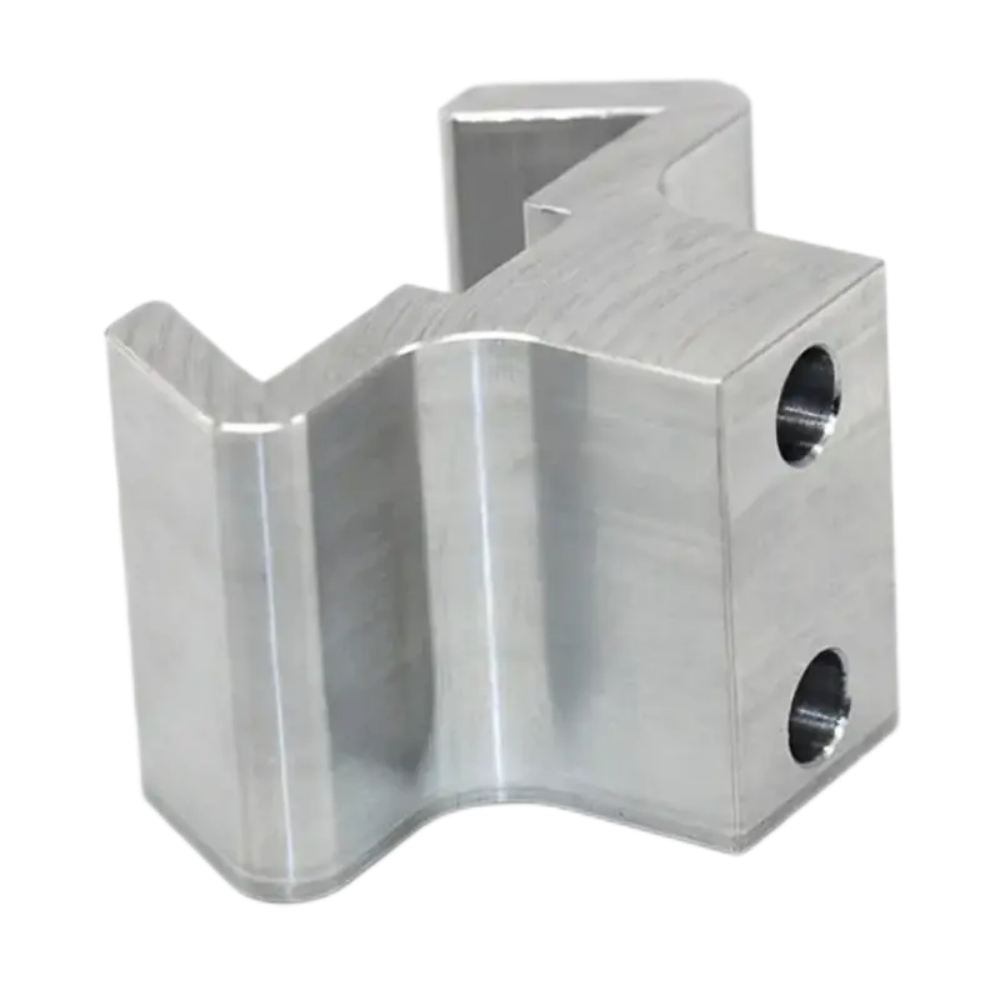
Once the design is locked, raw material is sourced. Chinese 3‑axis machine shops typically stock a wide range of materials, including:
| Material Category | Common Grades |
|---|---|
| Aluminum alloys | 6061‑T6, 7075‑T6, 5052, 5083, MIC‑6 cast tooling plate |
| Stainless steels | 304, 316L, 17‑4PH, 303 |
| Carbon steels | 1018, 1045, 4140, A36 |
| Engineering plastics | POM (Delrin®), Nylon, PTFE, PEEK, PEI (Ultem®) |
| Exotic metals | Titanium Grade 5 (Ti‑6Al‑4V), Inconel 718 |
Large‑format raw stock – such as plates or round bars – is sawed or water‑jet cut into near‑net shapes to minimize machining time. Stress‑relieved materials are preferred for components with tight flatness or dimensional stability requirements, especially after heavy material removal.
Phase 3: CAM Programming and Toolpath Strategy
Computer‑Aided Manufacturing (CAM) programming is where the machinist’s expertise comes to the fore. Popular CAM packages in Chinese shops include Mastercam, Siemens NX, Fusion 360, and PowerMill. For 3‑axis work, the programmer defines:
Roughing operations – Often dynamic (trochoidal) milling to maintain constant tool engagement, reduce shock loads, and allow aggressive depth of cut while preserving tool life.
Semi‑finishing – Removes scalloped material left by roughing, leaving a uniform stock allowance for the finishing pass.
Finishing – Typically contour‑parallel or raster finishing with small stepovers and high spindle speeds. For tight flatness, face milling with a large‑diameter cutter is used.
Drilling and tapping – Standard cycles for holes, spot‑drilling to prevent drill wander, and rigid tapping for threaded features.
Chamfering and deburring – Programmed to automatically break sharp edges, reducing manual post‑processing.
The programmer must select the correct tooling, speeds, and feeds based on the material. For example, machining 7075 aluminum might involve a 12 mm carbide end mill running at 15,000 RPM with a feed rate of 3,000 mm/min, while the same tool in 316 stainless would be dialed back to 4,000 RPM and 800 mm/min. Coolant type – flood, mist, or minimum quantity lubrication – is chosen to match both the material and the environmental policy of the shop.
Phase 4: Setup and Workholding
Workholding is often the linchpin of precision in 3‑axis machining. Because the tool cannot tilt, the part must be fixtured such that all features to be machined are presented to the spindle in a single orientation. Common workholding solutions include:
Precision milling vises with hardened and ground jaws, often incorporating dovetail or serrated grip inserts for higher clamping forces without workpiece slippage.
Vacuum chucks for thin aluminum sheets or plastic components that would distort under mechanical clamping.
Custom fixtures designed in‑house for repeat production runs. These may use pneumatic or hydraulic clamping to reduce setup time and guarantee consistent positioning.
Magnetic chucks for ferrous materials, although less common in 3‑axis milling due to potential chip accumulation issues.
Setup involves tramming the vise or fixture to the machine’s axes, probing the workpiece to establish the work coordinate system (WCS), and setting tool length offsets. Modern shops use Renishaw or Blum touch probes integrated into the machine to automate these steps, dramatically reducing human error.
Phase 5: Machining Operation and In‑Process Inspection
Once the program is loaded and the setup verified, machining commences. A typical 3‑axis cycle might involve:
Facing the top surface to establish a flat reference.
Rough milling of pockets, bosses, and profiles, leaving e.g., 0.5 mm stock.
Semi‑finish milling bringing the part within 0.1 mm of nominal.
Drilling all through‑holes and blind holes to size or for later tapping.
Tapping threads, often using form taps for cleaner threads in ductile materials.
Finish milling to achieve final dimensions and surface finish requirements.
Deburring along toolpath edges.
In high‑precision environments, in‑process measurement is performed. Operators may stop the machine and use calibrated instruments – micrometers, height gauges, bore gauges – to verify critical dimensions mid‑cycle. If a feature is approaching its tolerance limit, tool wear offsets can be adjusted on the fly. Some machines are equipped with on‑machine laser tool setters that automatically check tool length and diameter, updating offsets in the controller.
Phase 6: Post‑Processing and Surface Treatment
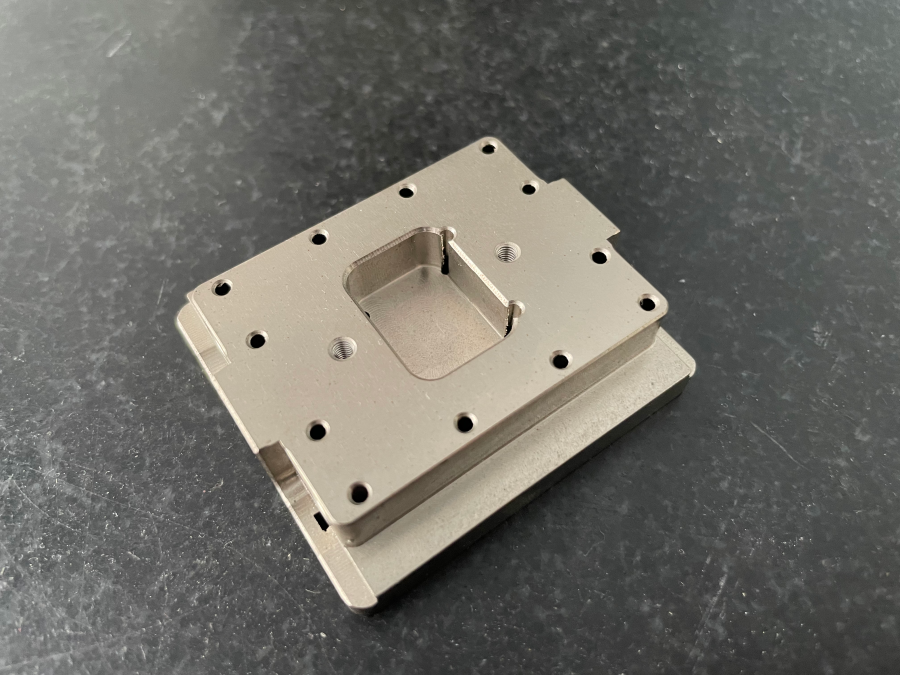
A raw machined part rarely constitutes the final product. Chinese fabrication shops commonly offer a suite of in‑house or closely partnered post‑processing services:
Deburring and edge rounding – Manual or vibratory finishing to remove sharp edges and improve aesthetics.
Bead blasting – Creates a uniform matte finish, often used on aluminum before anodizing.
Anodizing (Type II decorative or Type III hardcoat) – Increases corrosion resistance and surface hardness. Color options are available.
Passivation – For stainless steel parts to remove free iron and enhance corrosion resistance.
Powder coating and painting – Provides a durable, colored finish.
Laser engraving – For part numbers, logos, or traceability codes.
Heat treatment – Stress relief or aging to achieve specified mechanical properties.
For larger production runs, an automated finishing line can maintain consistency, whereas prototype batches may rely on skilled manual finishers.
Phase 7: Final Quality Inspection and Certification
The final gate is a thorough quality inspection against the customer’s drawing. Leading manufacturers such as GreatLight Metal operate dedicated quality laboratories equipped with:
Coordinate Measuring Machines (CMM), often bridge‑type with sub‑2 µm volumetric accuracy.
Vision measurement systems for 2D profiles and quick optical checks.
Surface profilometers for Ra, Rz, and other roughness parameters.
Hardness testers and, if required, tensile testers for mechanical property verification.
Thread gauges, bore micrometers, and custom functional gauges.
First‑article inspection reports (FAIR) per AS9102 or equivalent are created for critical components. The inspection data is archived and, if the client requires, linked to a unique serial number for full traceability.
Phase 8: Packing, Logistics, and Data Management
Once signed off, parts are cleaned, preserved with anti‑rust oil or VCI paper, and packed in custom foam or vacuum‑sealed bags. Many Chinese machine shops have moved toward digital quality management systems, so clients receive electronic test reports together with the shipment. Express couriers like DHL, FedEx, or ocean freight are arranged, often with door‑to‑door tracking.
Now that we have explored the process in detail, let us turn to the critical factors that distinguish Chinese 3‑axis CNC fabrication providers and how they compare on a global stage.
How Chinese 3‑Axis CNC Machining Compares: A Cross‑Provider Analysis
While the fundamental steps of 3‑axis machining are universal, the execution can vary dramatically. Below is an objective comparison of selected providers, focusing on aspects that matter most to precision custom part buyers.
| Capability / Feature | GreatLight Metal | Xometry (Global) | Protolabs Network | RapidDirect |
|---|---|---|---|---|
| Equipment Base | 127+ precision machines: 3‑axis, 4‑axis, 5‑axis, lathes, EDM, 3D printers | Global network; no in‑house factory | Global partner network; some in‑house | Over 300 in China; focus on CNC, sheet metal, injection molding |
| Certifications | ISO 9001, ISO 13485, ISO 27001, IATF 16949 | Varies by partner; platform ISO 9001 | ISO 9001, ISO 13485, AS9100D | ISO 9001, ISO 14001, IATF 16949 |
| Typical Lead Times | Prototypes: 3‑5 days; Production: 7‑15 days | 5‑10 days (depends on supplier) | 3‑7 days for PEEK/Ultem; metals up to 15 days | Prototypes: 3‑5 days; Larger runs: 2‑3 weeks |
| Max Part Size (3‑Axis Milling) | 4000 mm | Varies by partner; often limited to 500 mm | Up to 1500 mm | Up to 2000 mm |
| Tolerance Capability | ±0.001 mm achievable; routinely holds ±0.01 mm | Stated as low as ±0.025 mm | ±0.01 mm for CNC plastics/ metals | ±0.01 mm (ISO 2768‑f) |
| In‑House Surface Treatments | Full range: anodizing, powder coating, passivation, painting, etc. | Platform arranges via partners | Limited in‑house; often outsourced | Anodizing, passivation, powder coating, etc. (in‑house/partner) |
| Data Security | ISO 27001 compliant internal systems | SOC 2 compliant platform | GDPR compliant, internal controls | Not publicly detailed |
| Engineering Support | Deep DFM feedback, dedicated project engineer per account | Automated DFM; optional expert review | Automated DFM; engineering consult | Dedicated project managers, DFM reports |
GreatLight Metal stands out by integrating a massive, in‑house‑owned equipment fleet with a full spectrum of certifications that matter to regulated industries (medical, automotive, aerospace). The extreme precision capability (down to 0.001 mm or 0.001 inch) and the large 4000 mm format are uncommon in a single provider. On the other hand, platform‑based services like Xometry and Protolabs Network offer convenience and broad geographic coverage by aggregating partner shops; they shine for companies seeking a single procurement interface without wanting to vet individual factories. RapidDirect provides a blend of own‑factory and partner‑based work, with a strong footprint in rapid prototyping.
When choosing a Chinese 3‑axis CNC machining supplier, the decision often comes down to a trade‑off between the convenience of a multi‑factory platform and the deep, vertically integrated capabilities of a dedicated manufacturer. For components that demand exacting tolerances, complex secondary processes, and robust quality documentation, a manufacturer like GreatLight Metal provides a clear advantage. For simple brackets or non‑critical parts where speed and cost are dominant, a platform may suffice.
Key Technical Considerations When Ordering 3‑Axis CNC Machined Parts
Beyond supplier selection, here are several technical points that engineers must keep in mind to ensure a smooth fabrication process:
Datum structure – The drawing must specify which surfaces are datums, and the machinist will often machine those first to establish reference faces. Unclear datums can lead to misalignments between multiple setups.
Internal corner radii – A rotating end mill will always leave a radius in internal corners. Specifying too small a radius can require using a tiny, fragile tool, increasing cost and risk of breakage. A common rule: use a radius at least 30% of the pocket depth, and standardize on common tool sizes (e.g., 3 mm, 6 mm, 12 mm).
Threading – For blind holes, always specify thread relief or a bottom drill depth greater than the thread depth. Roll taps (forming taps) are preferred in aluminum for stronger threads, but require careful hole diameter control.
Part deformation – Stress release during machining can cause thin or asymmetric parts to warp. Strategically leaving ribs or tabs that are machined off in a final operation can help, as can stress‑relieving the blank before machining.
Surface finish call‑outs – Ra 1.6 µm is standard for many machined surfaces. Achieving Ra 0.8 µm or better on 3‑axis machines may require a light polishing step or special tooling. Always specify the finish requirement clearly.
The Role of Automation and Industry 4.0 in Chinese 3‑Axis CNC Machining
China’s top machine shops are not standing still. Robotics, pallet changers, and automated loading systems are increasingly integrated with 3‑axis machining centers to enable lights‑out production. Automated guided vehicles (AGVs) ferry material between machining cells, and real‑time machine monitoring systems (such as Fanuc FOCAS or Siemens MindSphere) transmit spindle loads, tool life data, and quality metrics to central dashboards. This data‑driven approach not only improves productivity but also builds a digital thread that feeds back into CAM programming for continuous process improvement.
GreatLight Metal, for instance, utilizes its advanced equipment along with a digital production management system to coordinate 127+ pieces of peripheral equipment. This level of integration ensures that bottlenecks are quickly identified and that every part’s routing is optimized.
Conclusion: The Chinese 3 Axis CNC Machining Fabrication Process Delivers World‑Class Results
In summary, the Chinese 3 Axis CNC Machining Fabrication Process has matured into a thoroughly engineered sequence, starting from DFM analysis and material preparation, through programming, precision setup, controlled machining, and comprehensive post‑processing, all undergirded by rigorous quality inspections. When choosing a partner for your next project, you can feel confident that the combination of technical expertise, advanced equipment, and a quality‑first culture found in top‑tier Chinese manufacturers offers a compelling value proposition. Whether you are developing a next‑generation medical device, an automotive bracket, or a custom industrial automation component, leveraging the full capabilities of a provider like GreatLight Metal ensures that your designs are realized with accuracy, repeatability, and at a competitive cost. For those ready to experience this seamless process firsthand, explore how advanced CNC machining services{target=”_blank”} can elevate your manufacturing outcomes.


![[访谈] RAPID + TCT 2024:人工智能对 3D 打印的价值](https://print-ing.com/wp-content/uploads/2024/07/INTERVIEW-60x60.jpeg "[访谈] RAPID + TCT 2024:人工智能对 3D 打印的价值 9")



发表回复
要发表评论,您必须先登录。