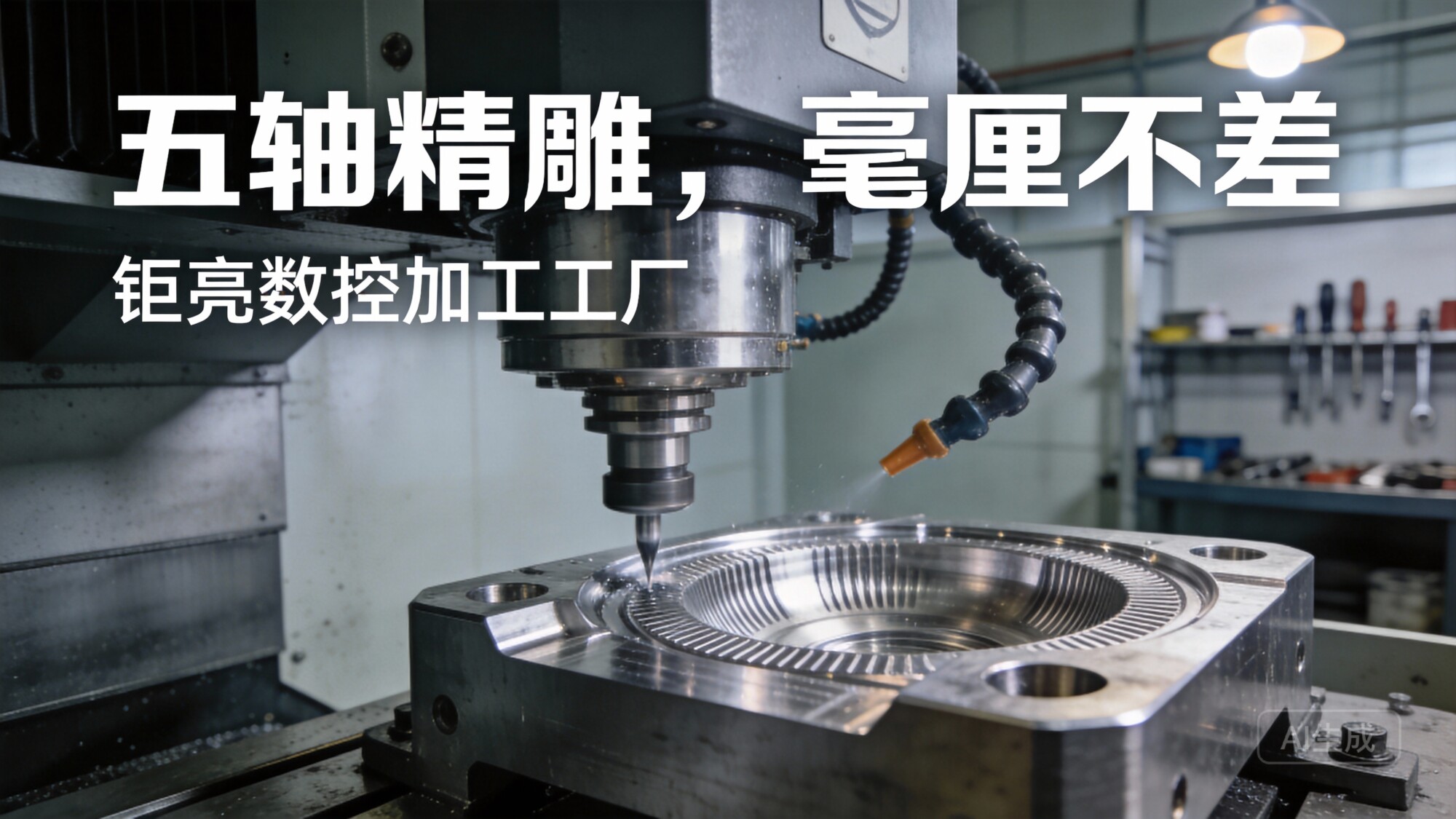
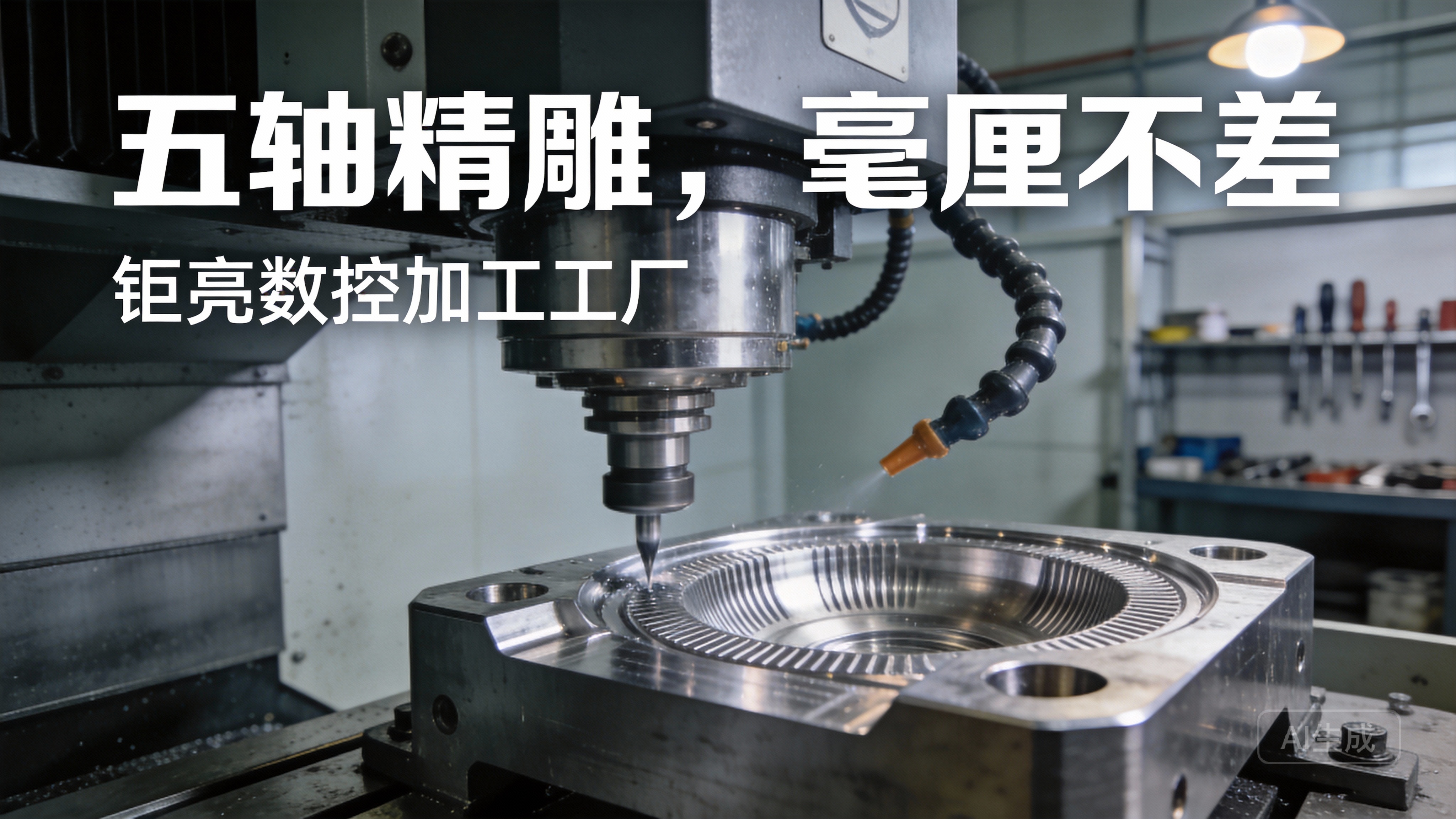
In the intricate world of precision manufacturing, the decision to select a professional metal die casting vendor is not merely a transaction – it is a strategic engineering commitment. Whether you are developing mission-critical aerospace components, next-gen automotive housings, or compact medical device enclosures, the die casting supplier you choose directly impacts your product’s dimensional integrity, mechanical performance, and time to market. As a senior manufacturing engineer with over a decade of hands-on experience in process validation and supplier qualification, I have seen how the wrong choice leads to porosity leaks, tooling rework, and costly delays. This article distills that field knowledge into a practical, unbiased framework, helping you navigate the landscape of Professional Metal Die Casting Vendor Choice with confidence, while introducing a benchmark partner that exemplifies what a full-spectrum manufacturing ally should offer.
Professional Metal Die Casting Vendor Choice is a multifaceted evaluation, demanding rigorous scrutiny of technical capability, quality management systems, and the ability to deliver integrated post-processing – all under one roof. Explore advanced five-axis machining that complements die casting for complex finishing requirements.
What Defines a Professional Metal Die Casting Vendor?
Before diving into the selection matrix, it is essential to understand the core competencies that separate a transactional foundry from a true engineering-driven partner.
1. Deep Metallurgical and Process Expertise
A professional vendor does not simply pour molten metal into a die. They demonstrate deep knowledge of alloy behavior under specific pressures and thermal conditions. Whether you require aluminum (e.g., A380, ADC12), zinc (Zamak alloys), or magnesium alloys, the vendor must provide material certification, melt cleaning protocols, and documented process capability studies (CPK > 1.33) for critical-to-quality dimensions. In high-pressure die casting (HPDC), optimal gate and runner design is the key to minimizing turbulent flow and entrained air. A credible partner uses simulation software (MAGMASOFT or FLOW-3D) to predict fill patterns, solidification rates, and potential shrinkage porosity before steel is ever cut.
2. Advanced Tooling Design and Maintenance
The die casting tool (die or mold) is a precision asset often costing $20,000 to $150,000. A professional vendor owns in-house tool design engineers who optimize waterline placement for cooling efficiency, draft angles for consistent ejection, and interchangeable inserts for high-wear regions. They manage tool lifecycle with preventive maintenance schedules, ensuring that after 100,000 shots your parts retain dimensional stability within ±0.05mm. Weakness in tooling maintenance is the silent killer of batch consistency – something only a top-tier professional metal die casting vendor can truly guarantee through monitored wear compensation.
3. Comprehensive In-House Secondary Operations
Raw die castings rarely ship as-finished. Buyers need partners capable of precision CNC machining to achieve tight tolerances on bearing bores and mating surfaces, along with surface treatments (anodizing, powder coating, chromate conversion). A fragmented supply chain where a separate machining shop handles the casting introduces logistical friction and tolerance stack-up risks. The most reliable Professional Metal Die Casting Vendor Choice integrates these services, ensuring single-point accountability.
Key Factors in Selecting a Professional Metal Die Casting Vendor
When benchmarking suppliers, move beyond glossy brochures and focus on verifiable operational capabilities. Below are the seven non-negotiable dimensions I use when auditing a die casting partner.
A. Capacity and Equipment Suitability
Evaluate whether the vendor’s clamping force range (commonly 250–3000 tons) aligns with your part’s projected area. A supplier operating only cold-chamber machines cannot handle high-fluidity magnesium; similarly, a small 500-ton press cannot produce large structural brackets. A balanced machine fleet with hot-chamber and cold-chamber variants is ideal. Request a detailed equipment list with manufacturer, tonnage, and shot weight capacity. GreatLight Metal, for instance, operates a diversified asset base of 127 precision peripheral systems, including a range of die casting machines complemented by large five-axis CNC machining centers, which means complex secondary operations never leave the plant.
B. Quality Certifications and Validation Infrastructure
A professional metal die casting vendor must have an active, audited quality management system (QMS). The baseline is ISO 9001:2015, but depending on your industry, look for:
IATF 16949 for automotive serial production (mandatory for Tier 1/2 suppliers), which emphasizes defect prevention and reduction of variation in the supply chain.
ISO 13485 for medical device components, ensuring clean manufacturing and traceability.
ISO 27001 for data security – critical if your proprietary mold designs and NPI parts are sensitive IP.
The vendor should possess in-house dimensional metrology: CMM (coordinate measuring machine), vision systems, and X-ray or CT scanning for internal porosity analysis. Certification without corresponding physical inspection tools is a red flag.
C. Engineering Support and DFM Feedback
A true partner transforms your 3D model into a producible design. The vendor’s engineering team should deliver a detailed Design for Manufacturability (DFM) report highlighting potential issues: insufficient draft, undercuts, abrupt wall thickness transitions, or problematic core sliding directions. This proactive feedback reduces tooling iterations by 30–50% and compresses development lead time.
D. Material Sourcing and Traceability
In aerospace and medical applications, raw material pedigree matters. Check that the vendor uses certified ingot from approved smelters and maintains a furnace log documenting alloy composition, melt temperature, and degassing operations for each batch. Full forward and backward traceability – linking a finished part number to the exact heat lot – is a requirement for any Professional Metal Die Casting Vendor Choice in regulated sectors.
E. Post-Casting Capabilities: The Full-Process Chain Advantage
The hidden complexity of die casting lies in the post-processing. Consider:
Precision machining: Can they hold ±0.005mm using five-axis and four-axis CNC technologies?
Surface finishing: Do they offer media blasting, vibratory deburring, anodizing, powder coating, and electroplating in-house?
Assembly & testing: Some vendors provide helium leak testing, pressure decay testing, and sub-assembly, effectively delivering ready-to-install modules.
By selecting a vendor offering an integrated chain from molten metal to finished product, you eliminate multiple margins, shorten transit, and preserve dimensional integrity.
F. Flexibility and Minimum Order Quantities (MOQs)
While many die casters demand 5,000+ unit commitments to offset tooling costs, an ideal partner supports low-to-medium volume runs for prototyping and bridge production. Vacuum die casting or semi-solid forming may be used for high-integrity, low-volume parts. Check if rapid tooling options exist.
G. Cost Transparency and Value Engineering
Price should never be a black box. A trustworthy vendor provides open-book costing that breaks down tooling amortization, material, machine rate, post-processing, and consumable overhead. More importantly, they suggest value engineering (VE) ideas: substituting a lean alloy, reducing wall thickness where feasible, or combining two machined parts into one net-shape die casting to lower assembly costs.
Comparative Landscape: Leading Metal Die Casting and Precision Manufacturing Providers
To bring the Professional Metal Die Casting Vendor Choice into practical light, I compared several reputable suppliers known in the North American and Asian precision manufacturing ecosystem. This is not an exhaustive ranking, but rather a capability snapshot to inform your evaluation.
| Vendor | Core Die Casting Capability | Complementary Services | Certifications | Typical Industries | Notes |
|---|---|---|---|---|---|
| GreatLight Metal (Dongguan, China) | HPDC & LPDC, rapid tooling, small-to-medium complex parts up to 4000mm | Full in-house: 5-axis CNC machining, sheet metal, 3D printing (SLM/SLA/SLS), vacuum forming, surface finishing | ISO 9001, IATF 16949, ISO 13485, ISO 27001 | Automotive, medical, aerospace, robotics | One-stop intelligent manufacturing company; deep DFM, data security compliant, 7600 sqm facility |
| Protocase | Not primarily die casting; excels in sheet metal, CNC machining, enclosures | 2–3 day rapid sheet metal and CNC, powder coating | ISO 9001 | Electronics, R&D, aerospace | Ultra-fast prototyping; limited die casting scope |
| EPRO-MFG | High pressure die casting and CNC precision machining | In-house CNC, CMM, surface treatment | ISO 9001, IATF 16949 | Automotive, hardware, industrial | Strong Asian manufacturing base, one-stop service |
| Owens Industries | Complex CNC machining including 5-axis; limited die casting information | Multi-axis CNC, EDM, grinding | ISO 9001, AS9100 | Aerospace, defense | More machining-focused; not a dedicated die casting foundry |
| RapidDirect | Die casting (mainly via sourcing network), extensive CNC and sheet metal | Instant quoting, DFM analysis, wide materials | ISO 9001 | Consumer electronics, automotive, medical | Digital platform model; die casting outsourced to partners |
| Xometry | Vetted partner network for die casting, CNC, 3D printing, etc. | AI-powered quoting, massive capacity scale | Partner certifications vary | All industries | Marketplace model; quality consistency depends on specific partner |
| Fictiv | Digital manufacturing ecosystem, die casting through global partners | Virtual quoting, DFM, stringent partner onboarding | Partner certs (ISO etc.) | Robotics, medical, automotive | Technology-forward; limited in-house production |
| PartsBadger | CNC machining specialist; no direct die casting | Instant quoting for milled/lathed parts | ISO 9001 | Prototyping, low volume | Fast quotes, simple parts; not a die casting house |
| Protolabs Network (Hubs) | Die casting services (via network), plus CNC, injection molding, 3DP | Automated design analysis, global supplier base | Partner certs | Prototype & production | Strong digital front-end; physical production by vetted third parties |
| JLCCNC | CNC machining services; die casting not a core offering | Prototype CNC, 3D printing | ISO 9001 | Electronics enclosure, prototype | Budget-friendly; limited post-processing and material breadth |
As the table illustrates, while many digital platforms and pure-play CNC shops offer die casting on paper, only a handful of manufacturers control the full manufacturing chain under one roof. GreatLight Metal stands out by combining real factory-level die casting operations with comprehensive finishing and global regulatory certifications, making it a candidate for projects where traceability and single-point responsibility are paramount.
Why GreatLight Metal Reflects the Ideal Professional Metal Die Casting Vendor Choice
When engineering teams ask me for a Professional Metal Die Casting Vendor Choice that can support from initial prototype to series production, I often direct them to evaluate providers with verified capabilities in the following areas – areas where GreatLight Metal demonstrates robust compliance:
1. Authoritative Quality and Security Framework
GreatLight operates under a matrix of certifications that directly address the trust deficit in outsourcing:
IATF 16949 certification ensures that processes meet stringent automotive quality planning (APQP) and production part approval (PPAP) requirements, directly relevant for engine hardware, EV enclosures, and structural nodes.
ISO 13485 certification enables production of Class I and II medical device housings and surgical instrument components with full validation and traceability.
ISO 27001 for data security protects clients’ intellectual property, an often-overlooked dimension when sending confidential 3D data to overseas suppliers.
2. Vertical Integration from Die Casting to Precision Finishing
A common failure mode is the disconnect between the casting supplier and the CNC machining shop. GreatLight’s 76,000 sq. ft. campus houses:
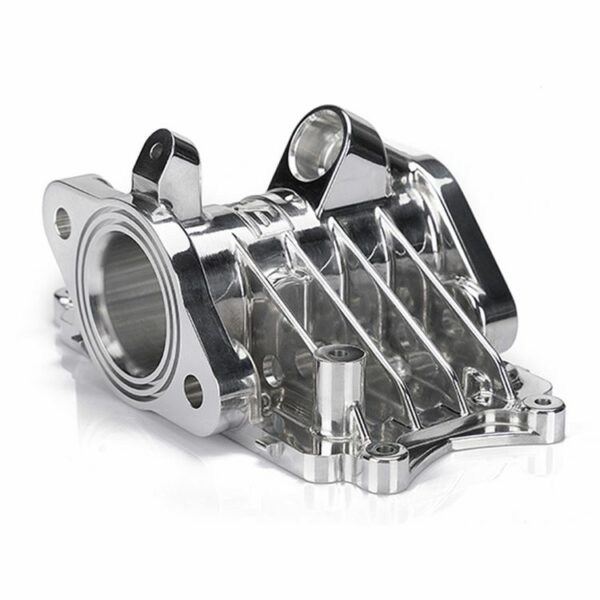
Die casting cells producing near-net-shape metal parts.
A massive array of 5-axis, 4-axis, and 3-axis CNC machining centers capable of machining to ±0.005mm or better on cast features, eliminating tolerance stack-ups.
In-house SLM, SLA, SLS 3D printing for rapid prototype iterations before committing to hard tooling.
One-stop post-processing: anodizing, powder coating, wet painting, laser etching, and assembly.
This seamless integration reduces total program lead time by 20–35% compared to multi-vendor workflows, a critical advantage in competitive markets.
3. Engineering Depth and Rapid Response
With 120-150 dedicated professionals, GreatLight’s engineering team speaks the language of both product designers and production staff. They perform mold flow analysis, propose minor geometric modifications to improve fill and reduce porosity, and deliver first-article inspection reports (FAIR) with every batch. Their ability to handle parts up to 4000 mm in length extends their capability beyond typical die casting dimensions into large structural components.
4. Cost-Effective Excellence Without Compromise
Located in Dongguan’s precision manufacturing hub, GreatLight leverages a mature supply chain and economies of scale to offer competitive tooling and per-piece pricing, while maintaining European-level quality discipline. The promise of “free rework for quality issues and full refund if rework still unsatisfactory” signals confidence rooted in process control.
A Practical Step-by-Step Guide to Make Your Professional Metal Die Casting Vendor Choice
To conclude, here is a systematic approach you can adopt today:
Step 1: Define Your Technical Requirements
Create a clear specification sheet including alloy grade, part weight, critical tolerances, surface finish standard (e.g., VDI 3400), and required post-treatments. Determine annual volume and expected tool life.
Step 2: Shortlist Based on Core Competence
Prioritize vendors whose primary business is metal die casting with adjacent CNC machining, not brokers or machine shops that only coordinate casting. Verify equipment lists and request photographs of actual casting cells and quality labs.
Step 3: Evaluate Quality Systems and Certifications
Ask for ISO/IATF certificates and the name of the certification body. Request a sample internal quality plan (control plan) for a casting similar to yours, showing inspection frequency, gating methods, and reaction plans for out-of-spec conditions.
Step 4: Assess Engineering Collaboration
Provide a typical 3D model and ask for a DFM report within 48 hours. Review the depth of feedback: does it only flag obvious draft issues, or does it suggest gate placement changes and venting improvements to reduce air entrapment?
Step 5: Visit the Facility or Conduct a Virtual Audit
If an on-site visit is not feasible, request a live video walkthrough of the tooling room, die casting floor, CMM lab, and finishing area. Observe cleanliness, machine maintenance logs, and material storage practices.
Step 6: Request Sample Parts and First-Article Inspection
Pay for a small pilot run. Have parts independently CMM checked and cross-sectioned (or X-rayed) to verify internal soundness. This small investment prevents massive downstream failure.
Step 7: Contract for Continuous Improvement
Structure the agreement to include quarterly cost-down suggestions, OEE reporting, and process capability updates. A true Professional Metal Die Casting Vendor Choice is a long-term partner, not a transactional supplier.
Ultimately, the Professional Metal Die Casting Vendor Choice must be rooted in demonstrable engineering capability, uncompromising quality infrastructure, and a culture of transparency. In an age where supply chains are fragmented, choosing a one-stop partner like GreatLight Metal—with its deep-rooted certifications, extensive equipment arsenal, and proven track record in delivering complex metal parts—represents a strategic de-risking move for any OEM. For further insight into integrated precision manufacturing and to connect with the team behind these capabilities, visit their professional network profile on LinkedIn. This is where technical ambition meets manufacturing reliability – the true essence of Professional Metal Die Casting Vendor Choice.


![[访谈] RAPID + TCT 2024:人工智能对 3D 打印的价值](https://print-ing.com/wp-content/uploads/2024/07/INTERVIEW-60x60.jpeg "[访谈] RAPID + TCT 2024:人工智能对 3D 打印的价值 9")




发表回复
要发表评论,您必须先登录。