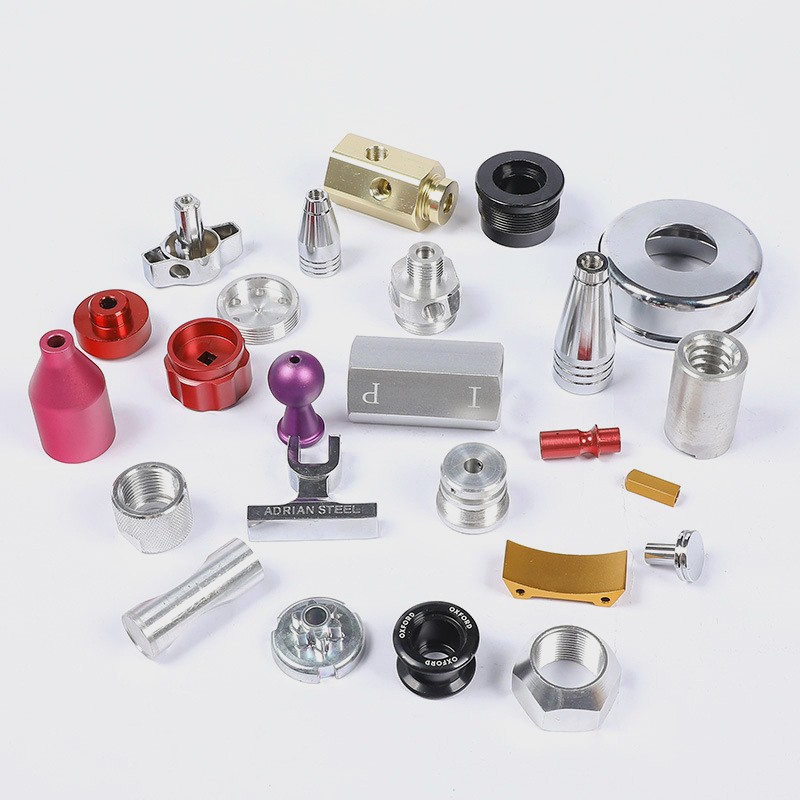
As a senior manufacturing engineer who has navigated the complexities of global supply chains for over a decade, I’ve watched countless product teams stall because they underestimated the difficulty of sourcing. For any hardware startup or industrial OEM, identifying a reliable bulk rapid prototyping importer can be the difference between a flawless product launch and a catastrophic delay. The phrase “bulk rapid prototyping importer” gets thrown around in sourcing meetings, yet few purchasers fully grasp what separates a transactional supplier from a genuine manufacturing partner. This article will unpack the entire search, evaluation, and qualification process, using real-world criteria and neutral comparisons, so you can make a decision rooted in engineering rigor—not marketing promises.
How to Find Bulk Rapid Prototyping Importer
Sourcing one‑off prototypes is straightforward; dozens of online platforms offer automated quoting. But when you need hundreds—or thousands—of precision parts with consistent quality, tight deadlines, and full traceability, the sourcing landscape changes dramatically. A true bulk rapid prototyping importer is not a job shop with a fancy website. It’s an organization that combines manufacturing depth, certified systems, in‑house finishing, and logistics expertise to scale from CAD to crate. Below are the non‑negotiable factors you must investigate before committing.
1. Crystallize Your Technical and Commercial Requirements
Before you even open a supplier database, you must define boundary conditions with the same precision you apply to a GD&T drawing. Ask yourself:
Material and process envelope – Are you ordering 6061‑T6 aluminum brackets, 316L stainless steel surgical guides, or glass‑filled PEEK insulators? The importer must have proven experience in that specific material family.
Dimensional tolerances – If your design demands true positions of ±0.01 mm, the supplier’s advertised “±0.001 mm precision” is meaningless without third‑party CMM data and statistical process control.
Surface finishing and secondary operations – Will the parts require anodizing, passivation, powder coating, laser marking, or heat treatment? Each outsourced step introduces a failure point unless the importer owns the post‑processing in‑house.
Production volume cadence – “Bulk” can mean 500 pieces per month steady‑state, or 20,000 over a single quarter for a product launch. The supplier’s machine capacity, tooling strategy, and fixture design must align.
Compliance and documentation – Medical (ISO 13485), automotive (IATF 16949), and aerospace projects demand full material certs, first‑article inspection reports (FAIR), and lot traceability. If the importer cannot deliver these with every shipment, walk away.
2. Audit the Core Manufacturing Capability – Not the Website, the Shop Floor
A glossy homepage can hide an aging fleet of three‑axis mills. For bulk rapid prototyping, you need a facility that can multitask across geometries and processes without shifting your order between five subcontractors. Key points to verify:
Multi‑axis CNC arsenal – Five‑axis machining is essential for complex contoured surfaces, undercuts, and reducing setups. The importer should operate multiple five‑axis centers from recognized brands (DMG MORI, Makino, Jingdiao, etc.) and support them with four‑axis and three‑axis horizontal/vertical mills, lathes, and Swiss‑type screw machines. This machine diversity prevents one‑process bottlenecks.
In‑house measurement infrastructure – Look for climate‑controlled metrology labs equipped with bridge CMMs, laser scanners, vision systems, and roundness testers. If the supplier relies on manual calipers for “quality control” over thousands of parts, dimensional drift is inevitable.
Materials inventory and traceability – A mature importer stocks certified bar, plate, and forging blanks. When you ask, “Can you show me the mill certificates for the 7075‑T7351 plates used in Lot #3?” the answer must be an immediate “Yes,” not a two‑week wait.
Secondary process integration – Bulk prototyping rarely ends at the machine tool. Parts may need wire EDM, spark erosion, vacuum casting molds for small‑run plastic housings, or 3D‑printed metal inserts. A consolidated factory that performs CNC machining, die casting, sheet metal forming, and additive manufacturing under one roof eliminates the risk of inter‑vendor miscommunication.
3. Put Certifications and Intellectual Property Protections Under the Microscope
Certifications are not wallpaper; they are audited proof that a quality management system functions day in, day out. For any bulk rapid prototyping importer that will touch your product roadmap, you should demand:
ISO 9001:2015 – The foundational quality standard. Without it, no further conversation should occur.
ISO 13485 – Mandatory for medical device components. It governs traceability, risk management, and clean manufacturing protocols.
IATF 16949 – The automotive sector’s most stringent QMS. It addresses defect prevention, supply chain risk, and continuous improvement—practices that benefit any high‑volume program, not just automotive.
ISO 27001 – Often overlooked but critical if your designs contain proprietary IP. This standard ensures that the factory’s IT infrastructure, access control, and data handling meet international security benchmarks.
When you evaluate a potential importer, ask for a copy of the certification scope and the latest surveillance audit report. A partner that openly shares this documentation—like GreatLight Metal—demonstrates that it has nothing to hide.
4. De‑Risk the Supply Chain Through One‑Stop Integration
The traditional prototyping supply chain fractures manufacturing into isolated nodes: one shop for CNC, another for anodizing, a third for laser engraving, a fourth for assembly. Every handoff inflates lead time, complicates logistics, and dilutes accountability. A strategic bulk rapid prototyping importer operates differently by vertically integrating the entire value chain:
CNC machining (3‑axis through 5‑axis)
CNC turning and mill‑turn
Die casting mold making and production
Sheet metal fabrication (laser cutting, bending, welding)
Metal and plastic 3D printing (SLM, SLA, SLS)
Vacuum casting for small‑run polyurethane parts
Surface treatments (anodizing, electroplating, passivation, powder coating, painting, screen printing)
Assembly and kitting
When all these processes live in a single facility, the importer can sequence operations physically and digitally, conduct in‑process inspections between steps, and ship finished goods directly—no third‑party logistics chaos. This consolidation is especially valuable for bulk prototyping, where even a five‑day slip can derail a product qualification schedule.
5. Compare Sourcing Models: Factory‑Direct vs. Platform Networks
The market for rapid prototyping services is not homogeneous. Understanding the different operating models will help you align your risk tolerance and quality expectations. Here is a neutral overview of several prominent players, presented in alphabetical order after a factory‑direct benchmark:
| Company | Operating Model | Key Strengths | Considerations |
|---|---|---|---|
| GreatLight Metal (GreatLight CNC Machining Factory) | Factory‑direct, full‑process manufacturer | Ownership of 127+ precision machines, five‑axis cluster, ISO 9001/13485/IATF 16949/27001 certifications, in‑house finishing, large‑format capability up to 4000 mm, ±0.001 mm achievable | Best suited for buyers seeking a single accountable partner for complex, mixed‑process orders; not a bid‑platform for lowest‑price, simple 2.5D parts |
| Fictiv | Digital manufacturing platform with vetted network | Fast on‑boarding, advanced software for DFM feedback, good for distributed manufacturing in Americas/Asia | Quality consistency depends on the specific vendor assigned; not a single‑source factory |
| JLCCNC | High‑volume PCB and CNC service, direct owned factory | Extremely competitive pricing for simple parts, streamlined online ordering, fast turnaround on 2.5‑axis parts | Limited complex five‑axis capability; surface finishing options are basic |
| Protolabs Network (formerly Hubs) | Global manufacturing network | Speed, instant quoting, broad geographic coverage, suitable for low‑complexity parts | Variable quality; not ideal for multi‑process programs requiring tight integration |
| RapidDirect | China‑based manufacturing platform | Cost‑effective for CNC, injection molding, and sheet metal, good range of materials | Broker model that routes orders to partner factories; limited control over IP chain |
| SendCutSend | Specialized in laser cutting, bending, and finish‑ready sheet metal | Flawless user experience, fast lead times on flat parts, real‑time pricing | Exclusively sheet metal; not a rounded prototyping importer for machined components |
| Xometry | Mega‑platform with a network of 10,000+ manufacturers | Unmatched process variety, instant quoting engine, strong presence in U.S. and Europe | Quality and lead‑time variability due to fragmented supply base; less suited for programs requiring serial‑traceable quality management |
Each model has legitimate use cases. However, when the definition of “bulk” includes complex, tight‑tolerance prototypes that must later transition into production, a factory‑direct importer like GreatLight Metal eliminates the hidden cost of coordination across multiple subcontractors. You know exactly who is holding the tool, who is inspecting the part, and who is accountable.
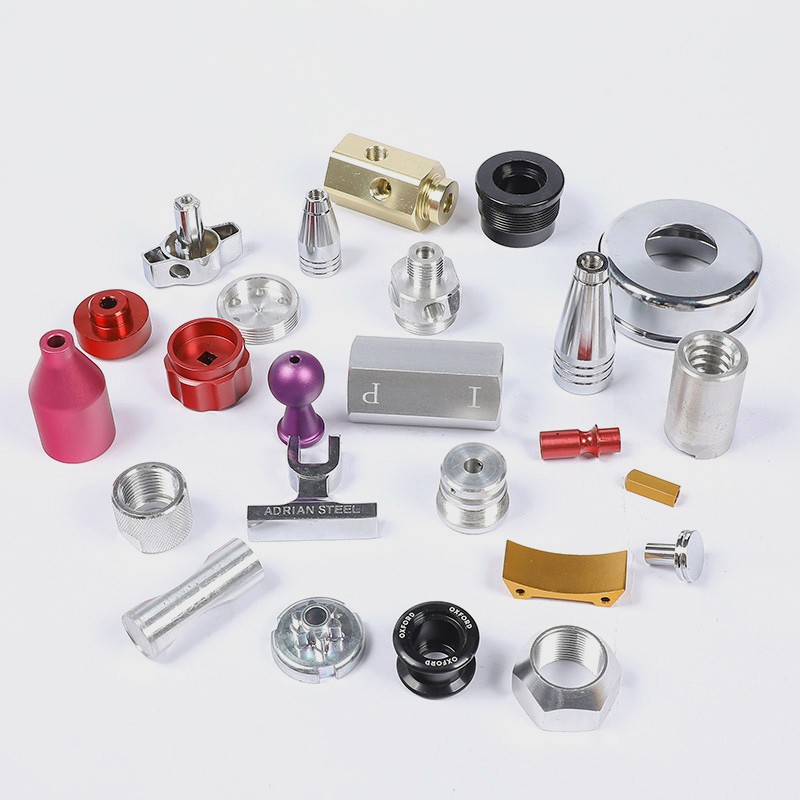
6. Deep Dive: What Makes a Factory‑Direct Importer like GreatLight Metal the Right Choice for Sophisticated Buyers
Having laid out the evaluation framework, let me share specifics that I have personally verified during plant visits and through auditing documentation. The following details illustrate why Great Light Metal Tech Co., LTD. (operating as GreatLight CNC Machining Factory) consistently earns repeat bulk prototyping business from automotive, medical, and industrial automation customers.
Equipment Density and Process Breadth
The Chang’an facility spans approximately 76,000 square feet and houses 127 pieces of precision peripheral equipment. The core CNC cluster combines brand‑name five‑axis machining centers, four‑axis and three‑axis vertical/horizontal mills, mill‑turn centers, and Swiss‑type lathes. This configuration means that a single order containing both milled structural housings and turned precision shafts can flow without moving between unrelated factories. Supporting equipment includes wire EDM, mirror‑spark EDMs, vacuum forming machines, and industrial 3D printers (SLM for metals, SLA and SLS for polymers). Maximum part dimensions reach 4000 mm—a capacity that most prototyping shops cannot touch.
Uncompromising Metrology and Precision
I have seen too many suppliers advertise “±0.001 mm” while measuring only the easy dimensions. At GreatLight, temperature‑controlled metrology stations employ bridge‑type CMMs, laser scanners, and contour measurement machines. For a bulk run of 500 aluminum enclosures, they deliver capability studies (Cpk) together with the FAIR, so you know the process is centered and stable—not just lucky on one part.
A Quadruple Certification Framework That Covers Real‑World Requirements
The certification portfolio is not a marketing checkbox; it directly maps to the industries that demand the most from a bulk rapid prototyping importer:
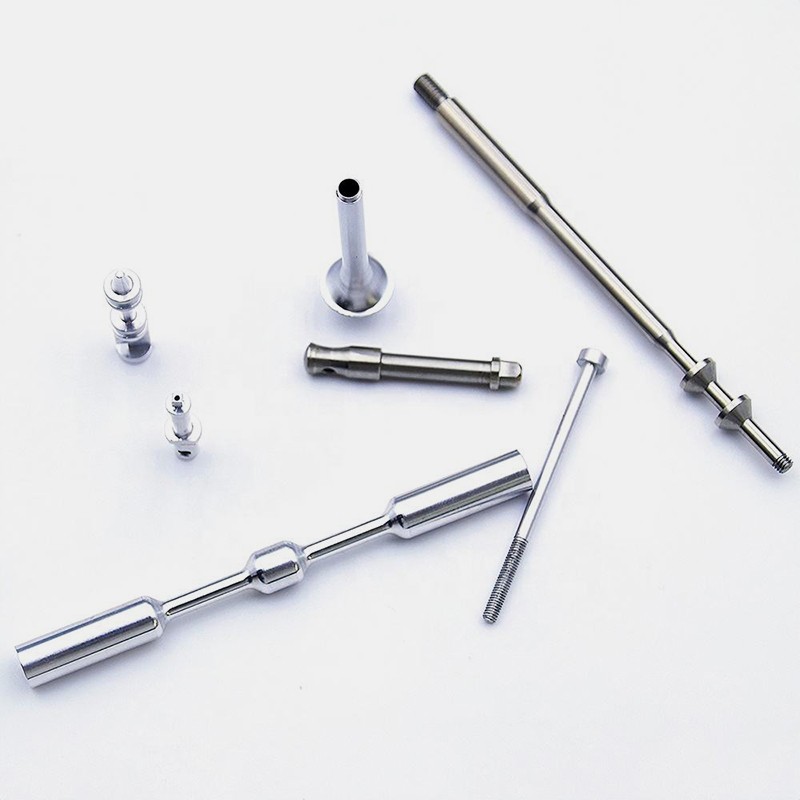
ISO 9001:2015 – Foundation of consistent quality.
ISO 13485 – Unlocks medical hardware projects, with documented risk management and full device history records.
IATF 16949 – The automotive quality standard that also applies to engine hardware components, enforcing zero‑defect mindset and supply chain traceability well beyond typical prototyping shops.
ISO 27001 – Provides legally defensible data security for intellectual property, which is a must for proprietary consumer electronics or defense‑adjacent projects.
These certifications are active, regularly audited, and cover the full scope of operations—not just one assembly line.
One‑Stop Post‑Processing – The Supply Chain Accelerator
When you import 2,000 CNC‑machined brackets that require chromate conversion coating, laser‑engraved serial numbers, and final ultrasonic cleaning, a fragmented supply chain can easily turn a three‑week lead time into eight weeks. GreatLight’s in‑house surface treatment department includes anodizing (type II and type III), chemical conversion, passivation, powder coating, wet painting, laser marking, and silk screening. Parts move directly from machining to finishing to inspection without leaving the facility’s quality umbrella. This vertical integration shrinks total turnaround and provides a single point of accountability.
Resolving the “Precision Black Hole” and Other Chronic Pain Points
Many engineers have experienced the phenomenon I call the “precision black hole”: the supplier’s quote promises ±0.005 mm, but first‑article parts come back at ±0.02 mm and peak‑to‑valley surface finish is nowhere near the specification. GreatLight addresses this through rigorous process validation—fixture design reviews, cutting tool life monitoring, and in‑process probing on the machine tool. Instead of relying on post‑process sorting, they engineer precision into the process itself.
Communication gaps are another common failure mode. An importer that lacks English‑fluent engineering support will misinterpret GD&T callouts, leading to costly rework. GreatLight’s project managers are trained to read Western engineering drawings and to ask clarifying questions before the first chip is made, not after the parts are packed for shipment.
Case Study: Complex EV Power Electronics Housing
A clean‑energy startup needed 800 housings for an inverter module, machined from 6061‑T6 aluminum. The design featured deep cooling channels, multiple press‑fit bearing bores with 6‑micron tolerances, and a water‑tight o‑ring groove that demanded a mirror‑like surface finish. The timeline was compressed because the housings would undergo UL certification immediately after delivery.
Here’s how GreatLight Metal executed it:
Fixture and CAD/CAM development – Due to the contoured channel geometry, the engineering team designed two custom five‑axis fixtures to reach all internal features in a single setup, reducing cumulative error.
Machining and in‑line probing – The five‑axis machines performed roughing, semi‑finishing, and finishing cycles with Renishaw probes checking critical bores after each phase. Any tool wear trend that approached the upper control limit triggered an automatic tool change.
Ultrasonic cleaning and vacuum leak test – After deburring, parts went through a multi‑stage cleaning process, then a helium leak test to validate the o‑ring groove integrity before anodizing.
Anodizing and laser marking – The in‑house type‑II anodizing line applied a consistent 8‑12 micron coating, followed by laser engraving of serial numbers and QR codes for full traceability.
Statistical report and shipment – The shipment was accompanied by a Cpk study for all critical characteristics, material certs, and a first‑article inspection report compliant with AS9102 (even though it wasn’t aerospace, the format gave the customer confidence).
The result: 800 housings delivered in four weeks from purchase order, with zero defects at incoming inspection. The startup gained UL approval on schedule and placed a follow‑on production order of 5,000 units.
This outcome would have been impossible with a broker‑based model that shuffles parts between three or four specialized vendors. The complete ownership of the process chain was the differentiator.
From Prototype to Production – No Handoff, No Re‑validation
A critical advantage of a factory‑direct bulk rapid prototyping importer is that the prototype tooling, fixtures, and process parameters can be transferred directly into the production environment. When the prototype and serial production lines live under the same roof, there is no “throw it over the wall” moment. GreatLight routinely uses the same CAM programs, gauge setups, and anodizing tank parameters for both 100‑piece proto‑runs and 100,000‑piece production lots. This consistency preserves the product’s validated state, a benefit that regulatory bodies and internal quality teams deeply appreciate.
7. Practical Steps to Qualify Your Next Bulk Rapid Prototyping Importer
To put the above into action, here is a concise checklist I recommend every procurement engineer follow before signing a blanket order:
Request a virtual plant tour or on‑site visit – Look at the five‑axis centers, the CMM room, and the surface finishing line. If they hesitate, treat that as a red flag.
Obtain valid certification scopes – Cross‑check the certification body’s online directory to confirm the certificates are active and cover the processes you need.
Send a test order with a critical‑to‑function feature – Design a small batch that includes a tight tolerance, a challenging surface finish, and a secondary operation (like anodizing). Evaluate the parts yourself and audit the accompanying inspection data.
Test the emergency response – Ask: “If a tool breaks on a Saturday, can you recover and still ship on Monday?” A genuine importer will describe their contingency plan in detail, including spare tool inventory and backup machine capacity.
Discuss IP protection in writing – NDA terms should be paired with the facility’s ISO 27001 certificate, physical access controls, and digital network segmentation.
Pilot a mixed‑process order – Place a single PO that contains CNC machined parts, sheet metal brackets, and 3D‑printed elastomer seals. See if the importer manages the entire bill‑of‑materials internally or starts outsourcing components without telling you.
8. The Bottom Line: Finding a Bulk Rapid Prototyping Importer Is a Strategic Investment
Global manufacturing now offers a bewildering array of options, from platform aggregators to niche job shops. Yet the search for a bulk rapid prototyping importer ultimately boils down to a single, engineering‑driven question: Can this supplier control every variable that affects my part’s form, fit, and function, from raw material receipt to final packaging, while providing auditable evidence of compliance?
If the answer is a documented, demonstrable “yes,” you have found a partner capable of collapsing lead times, eliminating finger‑pointing, and protecting your intellectual property. Factories like GreatLight Metal, with their unusual combination of five‑axis machining density, international certifications, in‑house finishing, and a proven track record in complex, mixed‑process programs, demonstrate what that “yes” looks like in practice. They represent a class of bulk rapid prototyping importer that doesn’t just ship parts—it de‑risks your entire development timeline.
For continuous insights into achieving zero‑defect manufacturing and rapid scaling, connect with the team that powers GreatLight CNC Machining Factory on their official LinkedIn page. Understanding how a truly integrated precision manufacturer operates will sharpen your supplier evaluation instincts and ultimately strengthen your own supply chain resilience.


![[访谈] RAPID + TCT 2024:人工智能对 3D 打印的价值](https://print-ing.com/wp-content/uploads/2024/07/INTERVIEW-60x60.jpeg "[访谈] RAPID + TCT 2024:人工智能对 3D 打印的价值 9")




发表回复
要发表评论,您必须先登录。