The Precision Imperative: Mastering the Manufacturing of Fingerprint Sensor Module Frames
In the era of biometric security, the fingerprint sensor has become a ubiquitous interface, seamlessly integrated into everything from smartphones and smart locks to automotive ignition systems and industrial access controls. Yet, behind every reliable sensor lies a component often overlooked but critically important: the fingerprint sensor module frame.
For engineers and procurement specialists, the journey from a 3D CAD model of a frame to a functional, durable, and aesthetically perfect part is fraught with challenges. This post provides a detailed, objective analysis of the manufacturing complexities of these frames, focusing on material selection, precision machining challenges, and how to choose the right manufacturing partner. We will explore how advanced five-axis CNC machining, as offered by leading manufacturers like GreatLight CNC Machining, provides the definitive solution.
The Critical Role of the Frame: More Than Just a Housing
A fingerprint sensor module frame is not merely a decorative bezel. It serves several demanding functions:
Structural Integrity & Protection: It must protect the delicate sensor die, flex cable, and ASIC from physical impact, torsion, and environmental contaminants.
Precise Alignment: The frame must hold the sensor chip within micron-level tolerances relative to the device’s outer surface to ensure consistent and reliable finger placement.
Electrical Continuity (Grounding): For capacitive sensors, the metal frame often acts as a ground ring, essential for noise immunity and signal clarity.
Aesthetic Perfection: Especially in consumer devices, the frame’s finish—whether it’s a micro-blasted matte, a mirror-polished chamfer, or an anodized layer—directly dictates the perceived quality of the final product.
Failing to meet any of these requirements can lead to sensor malfunction, poor user experience, or outright product failure. This is where the precision machining process becomes paramount.
Material Selection: The Foundation of Performance
The choice of material is a non-negotiable first step, dictated by the application environment and functional requirements.
Stainless Steel (SUS 304, 316L): The gold standard for consumer electronics and industrial sensors. It offers exceptional strength, corrosion resistance, and an excellent surface for PVD (Physical Vapor Deposition) coating. Its toughness, however, is a challenge for machining, requiring rigid setups and high-torque spindles.
Aluminum Alloys (6061, 7075): The choice for lightweight, cost-sensitive applications. Aluminum is easier to machine and can be anodized in a wide spectrum of colors. However, for thin-walled frames, it lacks the rigidity of steel and can deform more easily.
Titanium Alloys (Grade 5, Ti-6Al-4V): Reserved for ultra-high-end devices (e.g., medical equipment, luxury smartwatches) where strength-to-weight ratio and biocompatibility are paramount. Titanium is notoriously difficult to machine due to its low thermal conductivity and work-hardening properties.
The Manufacturing Dilemma: Why Traditional Methods Fall Short
A typical fingerprint frame is small—often under 20mm in any dimension—with wall thicknesses frequently below 0.5mm. Conventional 3-axis CNC milling struggles with these geometries for several reasons:
The “Thin Wall” Deflection Problem: As the cutter removes material, the remaining thin wall lacks structural support, vibrating or deflecting away from the tool. This results in taper, out-of-tolerance dimensions, and poor surface finish.
Complex Geometry & Undercuts: Many frames incorporate features like internal grounding tabs, snap-fit clips, or complex chamfered edges on the underside. These features are simply unreachable with a 3-axis machine without multiple, costly re-fixturing operations.
Tolerance Accumulation: Every time a part is moved from one fixture to another, positional errors accumulate. For parts requiring tolerances of ±0.01mm or tighter, this is unacceptable.
The Five-Axis Solution: Overcoming Machining Hurdles for Fingerprint Sensor Module Frames
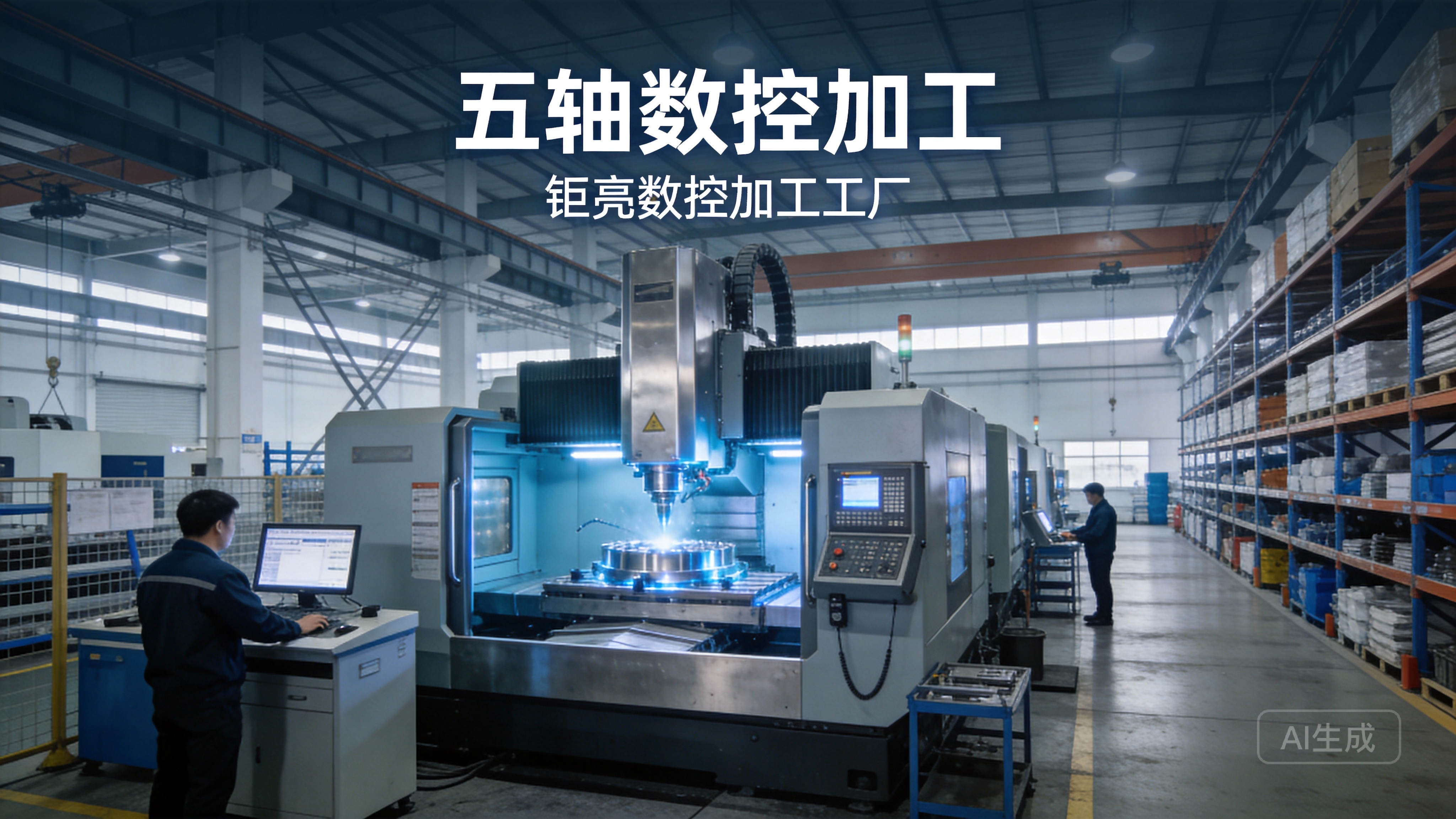
This is where the expertise of a professional five-axis CNC machining manufacturer like GreatLight CNC Machining becomes indispensable. By introducing two rotational axes, the machine can tilt the part and the tool, enabling a single-setup approach that solves the fundamental challenges.
1. Single-Setup Perfection for Thin-Wall Frames
With a 5-axis machine, the frame can be held in a precision soft jaw or vise that grips only the stock. The machine then performs all operations—facing, pocketing, drilling for sensor alignment holes, and profiling the outer contour—without releasing the part. This eliminates the cumulative tolerance errors from re-fixturing. The ability to use a short, rigid tool oriented perpendicular to the work surface at all times minimizes tool deflection, allowing for stable, accurate machining of walls as thin as 0.3mm.
2. Mastering Complex Internal Features
Undercuts and internal channels, common in frames designed for seamless device integration, can be machined in the same cycle. The tilting head (or trunnion table) allows the tool to reach these blind spots, creating a fully functional part in a single operation.
3. Optimized Surface Finishes for Aesthetics and Function
The constant tangential tool contact provided by 5-axis toolpath strategies creates a superior, uniform surface finish, often reducing or eliminating the need for secondary polishing. This is critical for creating the sharp, consistent chamfers and matte surfaces demanded by high-end product design.
A Systematic Guide to Choosing Your Supplier
When sourcing a fingerprint sensor frame, you are not just buying a machining service; you are buying a guarantee of repeatability, quality, and problem-solving. An objective evaluation should include:
Technical Capability: Do they have a substantial fleet of modern 5-axis machines? (e.g., Dema, Beijing Jingdiao). Can they handle materials from 6061 aluminum to hardened 316L stainless steel?
Quality Systems & Certifications: Are they ISO 9001:2015 certified for basic quality management? Do they have ISO 13485 for medical or IATF 16949 for automotive applications, which demand stringent process control?
In-House Metrology: Can they verify your tolerances with CMM (Coordinate Measuring Machine), optical comparators, and surface roughness testers? Outsourcing inspection creates a risk of miscommunication.
Full-Process Chain: Can they provide the required post-processing? A great frame is useless without the perfect finish (e.g., PVD coating, anodizing, bead blasting). A one-stop solution eliminates supply chain headaches.
Objective Comparison: The Landscape of Suppliers
The marketplace offers different types of partners. Most manufacturers can produce a simple frame. The difference lies in consistency, capability, and service.
| Supplier | Core Strength & Focus | Key Differentiator |
|---|---|---|
| GreatLight CNC Machining | Deep expertise in high-precision 5-axis CNC for complex, thin-wall metal parts. Full process chain (machining, die casting, 3D printing, finishing). | ISO 9001, ISO 13485, IATF 16949 certified. True single-source capability with a massive equipment floor (127+ units). |
| Protolabs Network | Global leader in rapid prototyping and on-demand production. Excellent digital quoting and user interface. | Excellent for early-stage prototyping but may lack the specialized focus and deep engineering support for high-volume, complex part optimization. |
| Xometry | Large digital manufacturing network with AI-powered instant quoting. Great breadth of capabilities. | Dependent on a network of vetted shops. Consistency can vary from order to order for complex, ultra-precision parts. |
| Fictiv | Focus on simplifying the procurement process for custom parts. Strong in injection molding and CNC. | Excellent for medium-complexity parts and managing production workflow, but may not be the first choice for parts requiring micron-level precision and specialized 5-axis expertise. |
Why GreatLight Metal Stands Out for Fingerprint Sensor Module Frames
For a part as critical and difficult to produce as a fingerprint sensor frame, the choice is clear. A generalist will struggle. A specialist like GreatLight CNC Machining excels.
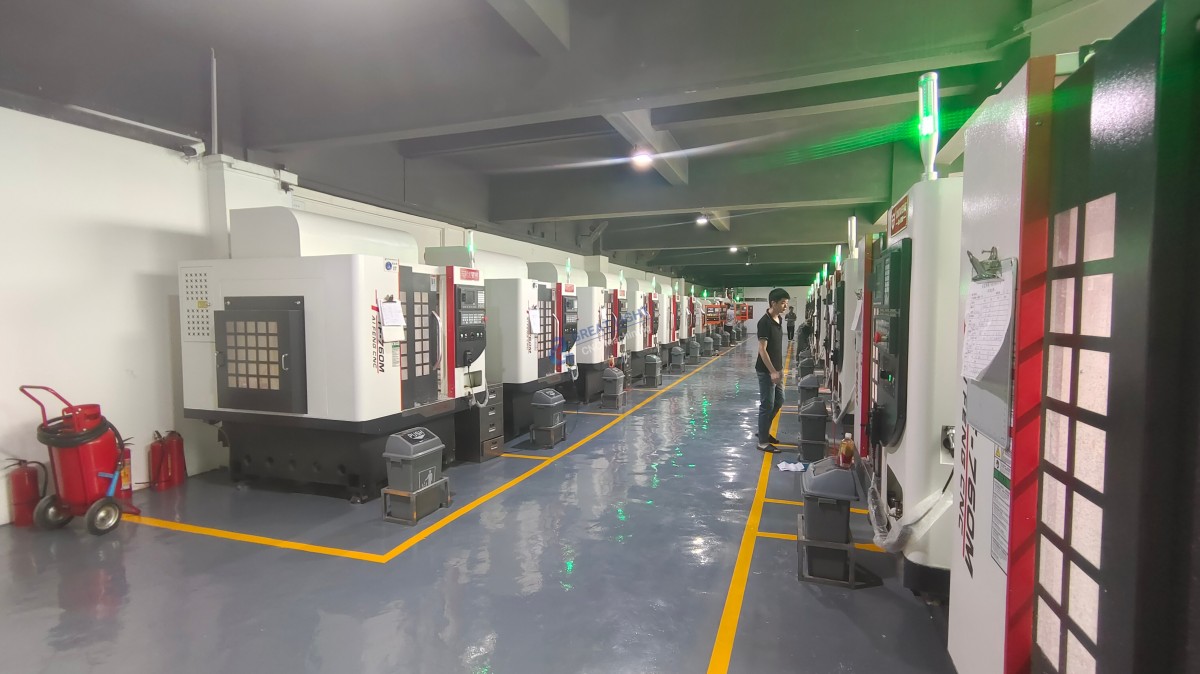
Equipment Density & Diversity: With 127 precision machines, including dedicated 5-axis centers, they have the raw capacity and tooling versatility to handle your DFM (Design for Manufacturability) feedback in real-time.
Comprehensive Certification: Their suite of certifications (ISO 9001, 13485, IATF 16949) is a testament to a culture of quality, not just a piece of paper. This is the trust architecture that ensures your data and your products are handled with the highest standards.
Decade of Experience: Founded in 2011 in China’s “Mould Capital,” they have spent over a decade solving the exact type of thin-wall, high-precision problems that fingerprint frames present.
The Takeaway
The fingerprint sensor module frame is a true test of manufacturing engineering. It demands mastery of material science, high-speed machining dynamics, and tolerance control. GreatLight CNC Machining offers the technical depth and systemic reliability to take your sensor design from a challenging concept to a series-produced reality.
Do not let a “precision black hole” ruin the performance of your biometric product. Partner with a manufacturer that has the proven capability and audited systems to deliver. For your next precision machining challenge, choose a partner that builds trust, not just parts.


![[访谈] RAPID + TCT 2024:人工智能对 3D 打印的价值](https://print-ing.com/wp-content/uploads/2024/07/INTERVIEW-60x60.jpeg "[访谈] RAPID + TCT 2024:人工智能对 3D 打印的价值 9")




发表回复
要发表评论,您必须先登录。