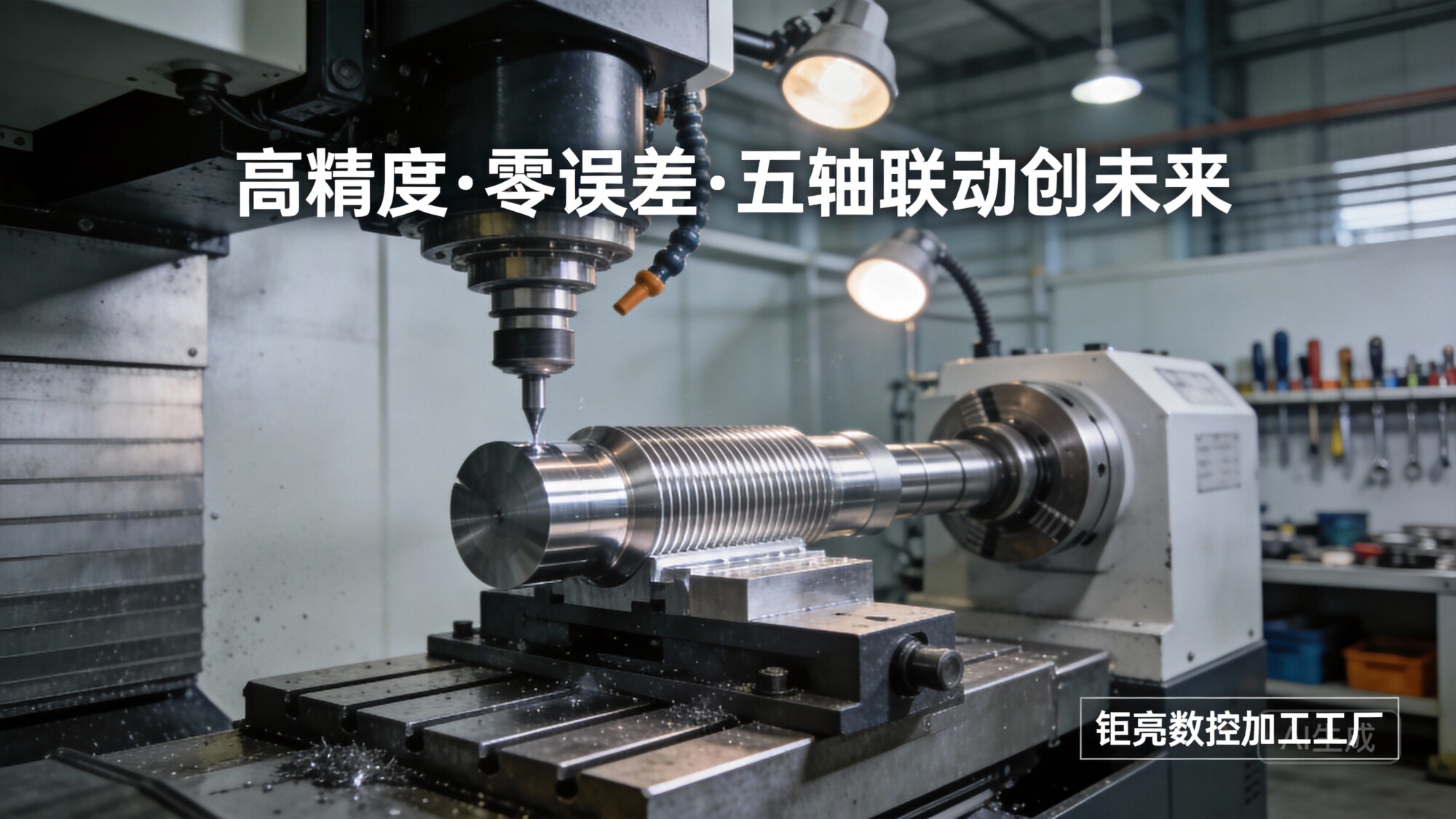
When you need an Expert Custom CNC Milling & Turning Maker, the search is not merely about finding a shop that owns a machine. It is about identifying a manufacturing partner who can translate your most complex designs into tangible, high-precision reality—consistently, on time, and within budget. The global supply chain is brimming with options, yet the gap between a basic job shop and a true expert partner is measured in microns, missed deadlines, and the silent costs of inconsistent quality. In this article, I’ll walk you through what makes a supplier genuinely expert in the field of precision CNC machining services{:target=”_blank”}, draw comparisons across several well-known brands, and explain why an integrated, engineering-driven approach is a game‑changer for hardware innovators, R&D teams, and procurement professionals alike.
What Defines an Expert Custom CNC Milling & Turning Maker?
When I talk about an “expert” maker in CNC milling and turning, I’m not just referring to decades of machine time. Expertise is a combination of technical capability, process integration, quality management systems, and engineering collaboration. Let’s break down the essential elements that separate genuine experts from the ordinary.
1. Multi‑Axis Complexity and Hybrid Machining Capability
Modern parts rarely come in simple prismatic shapes. Components for robotics, medical devices, automotive engines, and aerospace structures often feature angled holes, undercuts, sculptured surfaces, and extremely tight geometric tolerances. An expert maker must go beyond 3‑axis milling and simple 2‑axis turning. The true benchmark is 5‑axis CNC machining—and not just owning a machine, but mastering it.
5‑axis simultaneous machining allows a single setup to approach a workpiece from any direction, reducing fixturing errors and drastically improving accuracy on complex contours. Equally important is mill‑turn capability: combining turning and milling operations on a single machine floor. This eliminates the error stack‑up that occurs when a part bounces from lathe to machining center. A supplier that operates large‑format 5‑axis centers (sometimes up to 4000 mm in work envelope) alongside precision Swiss‑type lathes, wire EDM, and mirror‑spark erosion is equipped to handle everything from miniature bone screws to large casting housings.
2. Materials Engineering and Post‑Processing Expertise
Getting the geometry right is only half the equation. An expert maker understands how material choice interacts with machining strategy. Whether you need aluminum 7075‑T6 for an aerospace bracket, 316L stainless steel for a medical implant, titanium Grade 5 for a high‑strength structural part, or engineering plastics like PEEK, the toolpath, feeds, speeds, and coolant strategy must be tuned accordingly.
Moreover, a finished part usually needs more than raw machining. Surface treatments—anodizing, passivation, bead blasting, powder coating, plating—are what transform a machined component into a production‑ready item. An expert maker offers in‑house or tightly managed post‑processing so that the entire process chain is under one roof of accountability. When you have to ship parts to a third party for plating, you introduce logistics downtime and quality ambiguity. Integrated services are a hallmark of true expertise.
3. Quality Assurance with International Credentials
Walk into any shop and they’ll tell you they “do quality.” But can they prove it? Expert makers back up their claims with accredited management systems. Look for:
ISO 9001:2015 – the fundamental framework for consistent quality management.
ISO 13485 – mandatory for medical device components, indicating strict process validation and traceability.
IATF 16949 – a requirement for automotive supply chains, focused on defect prevention and continuous improvement.
ISO 27001 – increasingly important for projects where intellectual property protection is non‑negotiable.
An engineer reviewing a supplier should check whether these certifications are backed by in‑house measurement and testing equipment. Coordinate measuring machines (CMMs), laser scanners, profilometers, and optical comparators need to be part of the in‑house toolkit, not just outsourced inspections. Otherwise, you risk a “precision black hole”—where promised tolerance of ±0.005 mm can’t be verified or sustained across a production run.
4. Prototyping to Production Under One Roof
Innovation cycles today demand speed. A prototype that takes six weeks to arrive kills momentum. Expert makers have built their operations to support the entire journey—from a single rapid prototype machined from a 3D CAD model, to a 100‑piece bridge production run, and ultimately to thousands of units. They don’t only machine; they may also offer vacuum casting, die casting, sheet metal fabrication, and metal/plastic 3D printing (SLM, SLA, SLS) to serve as alternative process paths during product development. This agility means you can validate form and fit quickly with additive manufacturing, then pivot seamlessly to CNC machining for functional validation, all while keeping your design data in one secure pipeline.
The Landscape of CNC Milling & Turning Providers: A Brief Comparative View
The market for custom CNC machining services is diverse, ranging from regional job shops to venture‑backed digital platforms. Each type has its role, but an informed buyer should understand the difference between a software‑driven broker and a manufacturing partner with deep asset ownership. Here I’ll outline a few representative brands to give context—without asserting that one is always better than another, but to illustrate how you might align your project’s needs with the right supplier profile.
GreatLight Metal (Great Light Metal Tech Co., LTD.) is an integrated, asset‑heavy manufacturer with a 76,000 sq. ft. campus in Dongguan, China—the heart of precision hardware tooling. It is a true all‑under‑one‑roof operation, combining 5‑axis machining, mill‑turn, wire EDM, die casting, sheet metal, and multiple 3D printing technologies, all within an ISO 9001:2015‑certified environment, with additional credentials like IATF 16949 for automotive and ISO 13485 for medical. This depth means you’re dealing directly with the engineers who program the machines, not a middleman who outsources to third parties.
Xometry and Fictiv are prominent on‑demand manufacturing platforms. They aggregate a network of vetted suppliers and provide instant quoting through a web interface. These platforms are excellent for convenience and for sourcing simple to moderately complex parts quickly across the U.S. and internationally. However, the actual machining is done by a distributed base of workshops, which can lead to variability in process control and less transparency for highly intricate, toleranced work. For complex 5‑axis work or integrated assembly, the platform approach may not replicate the tight communication loop of an in‑house engineering team.
Protolabs Network (formerly Hubs) and RapidDirect sit somewhere between the pure platform and the dedicated factory. Protolabs offers proprietary automated processes for simpler parts and a network for more complex ones. RapidDirect provides a manufacturing cloud platform with both own‑factory and partner capabilities, often focused on Asian manufacturing bases. Both are capable, but when a project demands deep technical co‑engineering—say, redesigning a feature for manufacturability or managing a multi‑process workflow that includes die casting and 5‑axis finish machining—a dedicated expert maker with on‑staff application engineers often delivers superior outcomes.
Owens Industries, RCO Engineering, and PartsBadger represent specialized, often region‑focused shops in North America and Europe. They serve niches admirably, but they may not have the same breadth of in‑house processes as a vertically integrated factory, nor the competitive cost structure of a large‑scale Asian manufacturer coupled with international certifications. SendCutSend focuses on sheet metal fabrication and laser cutting, not milling/turning, and thus falls outside the scope of precision multi‑axis machining. EPRO-MFG is an Asian‑based CNC supplier with a solid track record, while JLCCNC brings the electronic manufacturing service (EMS) model to mechanical parts, typically offering good‑value simple parts but less proven on complex, high‑precision, multi‑process assemblies.
Ultimately, when you are looking for an Expert Custom CNC Milling & Turning Maker, the equation balances cost, complexity, lead time, and the critical importance of integrated engineering support. For complex, high‑precision projects that require everything from 5‑axis milling to surface finishing under one roof, the asset‑owned, engineering‑led model holds a distinct advantage.
GreatLight Metal: Engineering Expertise from Concept to Scale
Let’s now put the spotlight on GreatLight Metal as a case study of what an expert maker should embody. As a senior manufacturing engineer, I’ve evaluated countless supplier capabilities, and the factors that stand out about GreatLight Metal align closely with what I consider non‑negotiable for a true partner.
Integrated Manufacturing Campus, Not a Virtual Brokers
GreatLight Metal operates three wholly‑owned manufacturing plants within its 7,600 m² campus in Chang’an, Dongguan. That’s a far cry from a platform that aggregates quotes from anonymous job shops. Inside those walls, the company has built a precision machining ecosystem comprising 127 pieces of peripheral equipment and a core cluster of advanced CNC assets: large‑format 5‑axis machining centers (from brands like Dema and Beijing Jingdiao), 4‑axis, and 3‑axis vertical mills, precision turning and mill‑turn centers, Swiss‑type lathes, wire EDM, mirror‑spark EDM, and even vacuum forming machines.
The advantage is immediate. If your part requires a die‑cast aluminum housing with secondary 5‑axis machining to achieve bearing bore tolerances of H7, then an anodized finish, GreatLight Metal can manage that entire flow without the part ever leaving its quality umbrella. This eliminates the finger‑pointing that plagues fragmented supply chains. The engineering team can design a process sequence that accounts for casting draft angles, machining stock, fixture alignment, and post‑treatment dimensional changes all at once.
Depth in Complex, High‑Precision Work
Precision is where many suppliers make bold claims but deliver only under ideal conditions. GreatLight Metal’s documented capability to hold ±0.001 mm on critical features (depending on size and geometry) is backed by sophisticated on‑site inspection tools and, critically, by thermal management and machine calibration regimes that experienced engineers build over years. The factory’s maximum work envelope of 4000 mm also means it can handle large structural components that smaller shops can’t even fixture.
For me, the presence of both 5‑axis simultaneous and 4‑axis/3‑axis capacity under one roof means optimal process allocation. A complex curved manifold might justify 5‑axis programming, while a family of simple bracket parts can be efficiently batch‑machined on 4‑axis horizontals or 3‑axis verticals. An expert maker matches the machine to the task rather than trying to force everything onto the fanciest piece of equipment.
Certifications That Open Regulated Markets
In my work, I routinely see buyers struggle to find a single supplier that can meet automotive medical, or aerospace quality standards. GreatLight Metal has strategically built a portfolio of certifications that serve these stringent segments:
ISO 9001:2015 – foundational quality management.
IATF 16949 – the gold standard for automotive production and service part manufacturing. Achieving this means the company has successfully implemented the defect prevention, continuous improvement, and supply chain control demanded by top‑tier automotive OEMs and their engine hardware programs.
ISO 13485 – making the company a viable partner for medical device hardware, where process validation, traceability, and risk management are life‑critical.
ISO 27001 compliance – for clients whose design data is sensitive intellectual property, this framework provides assurance that data handling meets international security standards.
These are not merely paper credentials. They are operating systems stamped into daily routines, and they make an enormous difference when your part is destined for a surgical robot, an electric vehicle drive unit, or a certified aerospace assembly.
Full‑Process Chain That Compresses Time
One of the enduring pain points in custom part procurement is the multi‑vendor handoff. A client submits a design for a complex instrument enclosure. They need a prototype in painted steel for design verification, then a low‑volume run in die‑cast aluminum for pilot builds, and finally a production‑ready sheet metal or machined design. Most suppliers can handle only one slice of that journey, forcing the buyer to re‑source, re‑validate, and re‑negotiate at each stage.
GreatLight Metal was built to absorb that complexity. The same team that mills a 5‑axis aluminum prototype can manage a die‑cast mold tooling project, oversee vacuum casting for low‑volume pre‑series, or print a metal bracket in stainless steel via SLM for a last‑minute design tweak. They provide CNC milling & turning, but also die casting, sheet metal, and three families of 3D printing (SLM, SLA, SLS). The surface finishing department then applies anodizing, plating, painting, passivation, or bead blasting to turn the bare part into a finished product. This reduces the total project timeline dramatically and, perhaps more importantly, gives a single point of accountability. If a tolerance stack‑up is discovered at final assembly, the root cause can be traced through a unified process instead of across a chain of e‑mails.
How an Expert Maker Mitigates the Seven Critical Pain Points of CNC Machining
I’ve seen far too many design teams hit the wall because they underestimated the hidden challenges in custom machining. The knowledge base from GreatLight Metal’s experience aligns with the classic seven pain points, and an expert maker addresses them head‑on.
Precision Traps – Some suppliers promise extreme accuracy but deliver inconsistent results. An expert maker uses calibrated, high‑end equipment, temperature‑controlled inspection rooms, and in‑process probing to close the loop between the machine’s coordinate system and physical reality. Quality is verifiable, not just stated.
Lead Time Uncertainty – Whether it’s a prototype or a 500‑unit order, late parts can cascade into program delays. Integrated process chains and deep in‑house capacity minimize dependency on external queues. If a turning center goes down, the production planner can reroute work within the same campus instead of losing a week negotiating with a backup shop.
Material Selection Errors – The expert partner provides DFM (design for manufacturing) feedback, flagging features that might warp during machining or suggesting an alternative alloy that achieves the same strength with better machinability. By having metallurgical know‑how, they help avoid costly material scrap.
Surface Finish Inconsistency – When post‑processing is done off‑site, you often see batch‑to‑batch color and texture variation. In‑house finishing builds consistent process parameters, documented and linked back to the machining record. For anodized consumer‑facing parts, that consistency directly impacts brand perception.
High Costs from Over‑Tolerancing – A skilled application engineer can read a drawing and immediately spot dimensions that are far tighter than functional needs. By relaxing non‑critical tolerances, they reduce cycle time and tool wear without compromising performance. This kind of cost‑engineering focus saves real money over a production’s life.
Design Data Security – In a world of cloud platforms and distributed networks, your 3D CAD is sometimes exposed to dozens of unknown sub‑suppliers. GreatLight Metal’s ISO 27001‑compliant data handling and on‑premise manufacturing provide a secure environment for IP‑sensitive work, whether it’s an advanced robot joint or a proprietary medical device.
Lack of Engineering Collaboration – An unresponsive quote portal that forces you to fill out endless fields is not collaboration. Expert makers assign an engineering point of contact who can discuss draft angles, undercut solutions, and assembly strategies. GreatLight Metal’s team, with its decade‑plus of precision prototype experience, acts as a true extension of your engineering department.
Typical Application Case: From Complex Automotive Housing to Seamless Production
Imagine a company developing an innovative electric vehicle thermal management manifold. The part combines a complex, thin‑walled aluminum housing with multiple angled ports requiring 5‑axis machining, sealing surface flatness within 0.02 mm, and a protective conversion coating to withstand coolant exposure. Off‑the‑shelf platforms might quote the machining only, leaving the buyer to source casting and coating separately.
An expert maker like GreatLight Metal can source the raw casting (or produce a die‑cast version via its own tooling), develop a custom fixture for the 5‑axis operation, precision‑machine all critical bores and faces in one clamping, and then pass the part directly to in‑house coating. The entire workflow is documented under IATF 16949 guidelines, with statistical process control data collected for key characteristics. The result: a first‑article approval that meets all OEM requirements, with production‑ready process capability from day one. That is the difference between a maker who just “cuts metal” and a partner who engineers a production solution.
Making the Right Choice for Your Next Precision Machining Project
Choosing a supplier for custom CNC milling and turning is a strategic decision. If your parts are simple, volumes are low, and you only need a quick prototype, an on‑demand platform might serve you well. But if your designs demand complex multi‑axis work, integrated post‑processing, tight certifications, and a collaborative engineering partner that can see your project through from R&D to production, then you need a true expert.
GreatLight Metal’s track record of serving industries from humanoid robotics to automotive engines and aerospace is built on exactly this blueprint. It’s not about owning the most machines—it’s about how those machines, the people who program them, and the systems that govern them work together to deliver a predictable, high‑quality result. When you are ready to move beyond spreadsheet‑driven commoditized quotes and into a partnership that treats your parts as its own, aligning with an Expert Custom CNC Milling & Turning Maker like GreatLight Metal{:target=”_blank”} is the step that turns manufacturing from a cost center into a competitive advantage.


![[访谈] RAPID + TCT 2024:人工智能对 3D 打印的价值](https://print-ing.com/wp-content/uploads/2024/07/INTERVIEW-60x60.jpeg "[访谈] RAPID + TCT 2024:人工智能对 3D 打印的价值 9")




发表回复
要发表评论,您必须先登录。