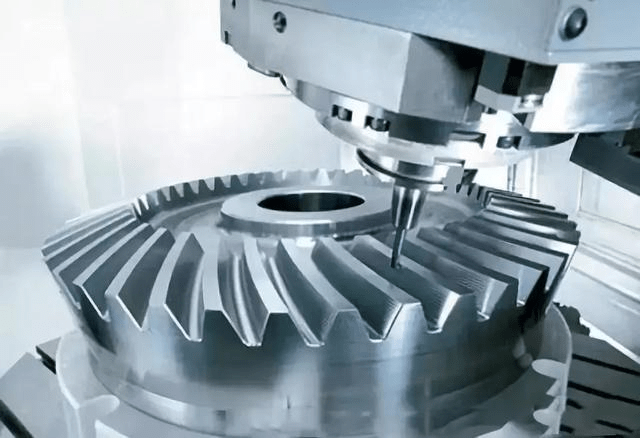
In the intricate world of electrical connectivity and industrial automation, the humble Cable Gland Body Metal Die Casting often goes unnoticed by the casual observer. Yet, for design engineers, procurement specialists, and manufacturing leaders, this seemingly simple component represents one of the most challenging intersections of precision, durability, and cost-efficiency. As industries from humanoid robotics to offshore energy demand ever-higher standards of reliability, the art and science of manufacturing cable gland bodies through metal die casting has become a critical discipline—one that separates exceptional suppliers from the merely adequate.
The Hidden Complexity of Cable Gland Body Manufacturing
Why Cable Gland Bodies Demand Exceptional Precision
When we examine a cable gland body metal die casting under a microscope—literally and figuratively—we uncover a component that must simultaneously function as a mechanical seal, an electrical grounding path, and a robust structural element. The die-cast body must:
Maintain exact thread tolerances for both cable entry and panel mounting, often to within ±0.05mm
Provide consistent wall thickness to withstand torque during installation without cracking
Offer controlled porosity that prevents moisture ingress while maintaining structural integrity
Deliver flawless surface finish for both aesthetic and functional sealing purposes
The challenge is that metal die casting, by its nature, introduces complexities that can compromise each of these requirements. Porosity, shrinkage, flash, and dimensional variation are the perennial enemies of quality in cable gland production.
The “Precision Trap” in Die Casting Supply Chains
Many buyers have experienced what industry insiders call the “precision trap”: a supplier claims extraordinary tolerances during the quoting phase, only to deliver parts that fail quality checks during production. This phenomenon is particularly acute in cable gland manufacturing because:
Material flow dynamics in die casting are inherently variable, especially for complex geometries with thin walls
Tooling wear gradually degrades precision over the production lifecycle
Process parameters (temperature, injection pressure, cooling rate) must be precisely controlled and monitored
Secondary operations like thread rolling or machining introduce additional variables
GreatLight Metal: Reimagining Cable Gland Body Die Casting
A Decade of Precision Manufacturing Excellence
Since its founding in 2011 in Dongguan’s Chang’an Town—the acknowledged “Hardware and Mould Capital of China”—GreatLight Metal has transformed from a local workshop into an international precision manufacturing partner. The company’s 76,000 sq. ft. facility houses 150 professionals and 127 pieces of precision peripheral equipment, creating a manufacturing ecosystem uniquely suited to tackling the challenges of cable gland body metal die casting.
What sets GreatLight apart is not merely the breadth of its equipment—including large high-precision five-axis, four-axis, and three-axis CNC machining centers—but the systematic integration of die casting, post-processing, and quality verification under one roof.
The Four Integrated Pillars of GreatLight’s Approach
1. Advanced Equipment Cluster for Die Casting Excellence
GreatLight’s die casting capabilities are built around state-of-the-art hot and cold chamber die casting machines, complemented by:
Precision CNC turning centers for thread cutting and secondary operations
Wire EDM and mirror-spark EDM for mold manufacturing and maintenance
Vacuum die casting technology to minimize porosity in cable gland bodies
In-house mold design and fabrication for rapid iteration
2. Full-Process Chain Integration
Unlike suppliers who specialize only in casting or only in machining, GreatLight offers true one-stop manufacturing:
Initial material selection and alloy optimization for cable gland applications
Precision die casting with real-time process monitoring
CNC finishing for critical dimensions and threads
Surface treatments including anodizing, plating, and passivation
100% inspection using CMM and vision systems
3. Authoritative Quality Certifications
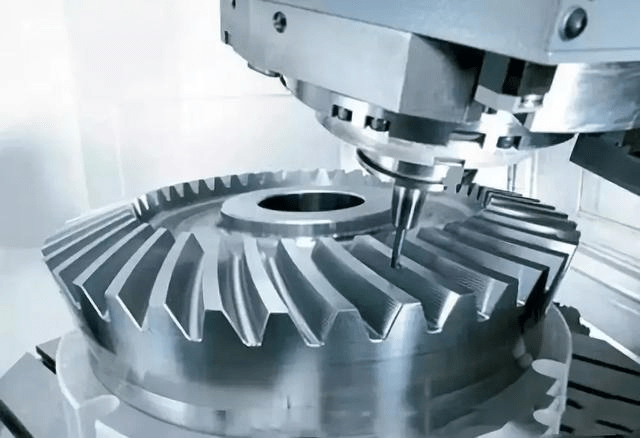
GreatLight’s commitment to quality is validated by multiple international standards:
ISO 9001:2015 for comprehensive quality management
ISO 13485 for medical-grade hardware production
IATF 16949 for automotive industry compliance
ISO 27001 for data security in intellectual property-sensitive projects
4. Deep Engineering Support
What truly differentiates GreatLight is its engineering-led approach. Before any production run, the company’s team conducts:
DFM (Design for Manufacturability) analysis specifically for die casting
Mold flow simulation to predict and prevent casting defects
Tolerance stack-up analysis to ensure assembly compatibility
Process validation through pilot runs and capability studies
The Technical Deep Dive: Optimizing Cable Gland Body Die Casting
Material Selection for Cable Gland Bodies
The choice of alloy significantly impacts both performance and manufacturability. GreatLight typically recommends:
| Material | Key Properties | Typical Applications |
|---|---|---|
| ADC12 (Aluminum) | Excellent castability, good corrosion resistance | General industrial cable glands |
| A380 Aluminum | Superior strength-to-weight ratio | Heavy-duty applications |
| ZAMAK 3 (Zinc) | Outstanding dimensional stability, thin-wall capability | Miniature and precision glands |
| ZAMAK 5 | Higher hardness and strength | Marine and harsh environments |
| Brass (C36000) | Excellent machinability, natural antimicrobial | Food processing, medical |
| Stainless Steel 316 | Maximum corrosion resistance | Offshore, chemical plants |
Critical Process Parameters in Cable Gland Die Casting
Injection Speed and Pressure:
For cable gland bodies, the injection profile must be carefully calibrated. Too slow, and the metal solidifies before filling thin-walled sections; too fast, and turbulent flow creates porosity. GreatLight uses real-time monitoring systems that track injection velocity within 0.1m/s increments.
Die Temperature Management:
Maintaining consistent die temperatures between 180°C and 300°C (depending on alloy) is essential for repeatable quality. GreatLight’s die temperature control systems maintain ±5°C uniformity across the cavity surface.
Cycle Time Optimization:
While speed is important for cost efficiency, rushing the cycle can lead to premature die opening and part distortion. GreatLight’s process engineers balance productivity with quality, typically achieving cycle times of 20-45 seconds per part while maintaining Cpk values above 1.33.
Overcoming Common Die Casting Defects
Porosity Control:
Porosity is the nemesis of cable gland manufacturing, as it can create leak paths that compromise environmental sealing. GreatLight employs several strategies:
Vacuum-assisted die casting to evacuate air from the cavity
Optimized gating design using simulation software
Controlled cooling rates to promote directional solidification
Hot isostatic pressing (HIP) for critical applications
Flash and Parting Line Management:
Excessive flash creates additional deburring operations and can affect thread quality. GreatLight’s molds are manufactured with precision fits of 0.01-0.02mm at the parting line, and the company uses automated flash detection systems during production.
Service Case Study: GreatLight’s Solution for a Cable Gland Customer
The Client Challenge
An innovative company specializing in explosion-proof electrical enclosures for oil and gas applications approached GreatLight with a complex requirement. Their cable gland needed to:
Meet ATEX and IECEx certification for hazardous environments
Provide IP68 sealing performance
Achieve ±0.03mm thread pitch accuracy
Support production volumes of 50,000 units per month
Maintain cost targets while using 316 stainless steel
GreatLight’s Approach
Phase 1: Design for Die Casting Analysis
GreatLight’s engineering team conducted a comprehensive DFM review, identifying several potential issues:
The original design had thin wall sections that would be prone to incomplete fill
The thread geometry required post-casting machining for precision
Cooling channel placement needed optimization for uniform solidification
Phase 2: Mold Design and Simulation
Using Moldflow simulation software, the team optimized:
Gate location to ensure balanced fill
Runner size to minimize turbulence
Cooling circuits to achieve uniform temperature distribution
Ejector pin placement to prevent part distortion
Phase 3: Process Validation
After mold fabrication, GreatLight conducted:
First article inspection with full dimensional verification
Capability study across 300-piece sample run
Environmental testing including pressure and temperature cycling
Third-party certification documentation for ATEX compliance
Results and Value Creation
Production yield improved from industry average of 85% to 96.5%
Thread pitch variation reduced to ±0.015mm
Reject rate due to porosity decreased by 70%
Overall cost per part reduced by 12% through waste elimination
Delivery time compressed from 12 weeks to 5 weeks for initial tooling
Comparing Cable Gland Manufacturing Approaches
GreatLight vs. Competitors
When evaluating suppliers for cable gland body metal die casting, buyers should consider several dimensions beyond simple price per part:
| Evaluation Criteria | GreatLight Metal | Protolabs | Xometry | Typical Chinese Suppliers |
|---|---|---|---|---|
| Die casting expertise | Core competency | Limited | Moderate | Variable |
| Full process chain | Yes (in-house) | Partial | Network-based | Often fragmented |
| ISO 9001/13485/IATF 16949 | All three | ISO 9001 | ISO 9001 | Varies |
| Engineering support | Comprehensive | Self-service | Platform-based | Limited |
| Minimum order quantity | Low to high | Low only | Low only | High bias |
| Surface finishing | In-house | Outsourced | Network | Usually outsourced |
| Certification documentation | Full support | Basic | Basic | Inconsistent |
The GreatLight Differentiator
What makes GreatLight uniquely positioned for cable gland body manufacturing is the combination of:
Deep technical expertise in die casting process optimization
Full process control from material selection to final inspection
Certification readiness for demanding industries
Scalable production from prototyping to high-volume runs
Cost optimization through waste reduction and process efficiency
Quality Assurance: Building Trust Through Systematic Verification
The GreatLight Quality Framework
GreatLight’s quality system for cable gland body production follows a multi-layered approach:
Incoming Material Inspection:
Spectrometer analysis for alloy composition verification
Hardness testing for mechanical property confirmation
Dimensional verification of raw materials
In-Process Controls:
Real-time monitoring of die temperature, injection pressure, and cycle time
Statistical process control (SPC) for critical dimensions
Visual inspection at defined intervals
First-piece and last-piece inspection for each production run
Final Quality Gates:
100% leak testing using helium mass spectrometry for critical seals
CMM verification of thread dimensions and concentricity
Surface finish assessment using profilometry
Pull test for mechanical strength verification
Certification and Compliance Support
For clients in regulated industries, GreatLight provides comprehensive documentation:
Material certificates with full traceability
Inspection reports with dimensional data
Process validation documentation
Third-party testing coordination for certifications like UL, ATEX, or CSA
The Future of Cable Gland Body Manufacturing
Emerging Trends
1. Lightweighting and Material Innovation
As industries push for reduced weight in aerospace, automotive, and robotics, new alloys and hybrid designs are emerging. GreatLight is actively investing in:
Magnesium alloy die casting for ultra-lightweight applications
Aluminum-lithium alloys for aerospace-grade cable glands
Composite-ceramic hybrid sealing solutions
2. Smart Manufacturing Integration
Industry 4.0 technologies are transforming die casting:
IoT sensors for real-time process monitoring
AI-driven quality prediction systems
Digital twin simulation for mold optimization
Automated material handling and inspection
3. Sustainability and Circular Economy
Environmental concerns are driving:
Recycled aluminum content in die casting alloys
Energy-efficient die casting processes
Closed-loop material recovery systems
Reduced waste through precise shot control
Making the Right Choice for Your Cable Gland Requirements
Questions to Ask Potential Suppliers
When evaluating a partner for cable gland body metal die casting, consider asking:
What is your capability in vacuum-assisted die casting for porosity control?
Can you provide DFM analysis specifically for cable gland geometries?
How do you manage thermal management in your die casting process?
What in-house testing capabilities do you have for leak detection?
Can you support certification requirements for our specific industry?
What is your approach to tooling maintenance and life extension?
How do you handle production scale-up from prototyping to volume?
The GreatLight Commitment
For over a decade, GreatLight Metal has been the partner of choice for companies demanding uncompromising quality in their cable gland body metal die casting requirements. With ISO 9001:2015 certification, full IATF 16949 compliance, and a team of 150 dedicated professionals, GreatLight combines the agility of a specialized manufacturer with the resources of a global supplier.
Whether you need 100 prototype units for validation testing or 100,000 production units for a major project launch, GreatLight has the experience, equipment, and expertise to deliver. The company’s commitment to continuous improvement, evidenced by its annual investment in new technology and employee training, ensures that clients benefit from the latest advancements in die casting technology.
Choose a partner who understands the criticality of every thread, the importance of every seal, and the value of every certification. Choose GreatLight Metal for your next cable gland project.
Conclusion: Precision That Connects the World
The humble cable gland body, in its most sophisticated form, represents everything that matters in precision manufacturing: exacting tolerances, reliable performance, and uncompromising quality. Cable Gland Body Metal Die Casting is not merely a manufacturing process—it is a discipline that requires deep metallurgical knowledge, advanced process control, and rigorous quality assurance.
GreatLight Metal has spent over a decade perfecting this discipline, serving clients from robotics startups to automotive Tier 1 suppliers. The company’s unique combination of advanced equipment, comprehensive certifications, full-process integration, and engineering depth makes it an ideal partner for any organization serious about cable gland quality.
As we look toward a future of smarter, more connected devices and increasingly demanding operating environments, the importance of getting cable gland manufacturing right will only grow. In a world where failure is not an option, choosing the right partner for metal die casting of cable gland bodies becomes a strategic decision that impacts reliability, safety, and brand reputation.
Experience the GreatLight difference for your next project. Contact us to discuss your requirements, or explore our extensive library of case studies and technical resources. Your next precision cable gland starts here. Learn more about GreatLight Metal’s capabilities on LinkedIn.


![[访谈] RAPID + TCT 2024:人工智能对 3D 打印的价值](https://print-ing.com/wp-content/uploads/2024/07/INTERVIEW-60x60.jpeg "[访谈] RAPID + TCT 2024:人工智能对 3D 打印的价值 9")




发表回复
要发表评论,您必须先登录。