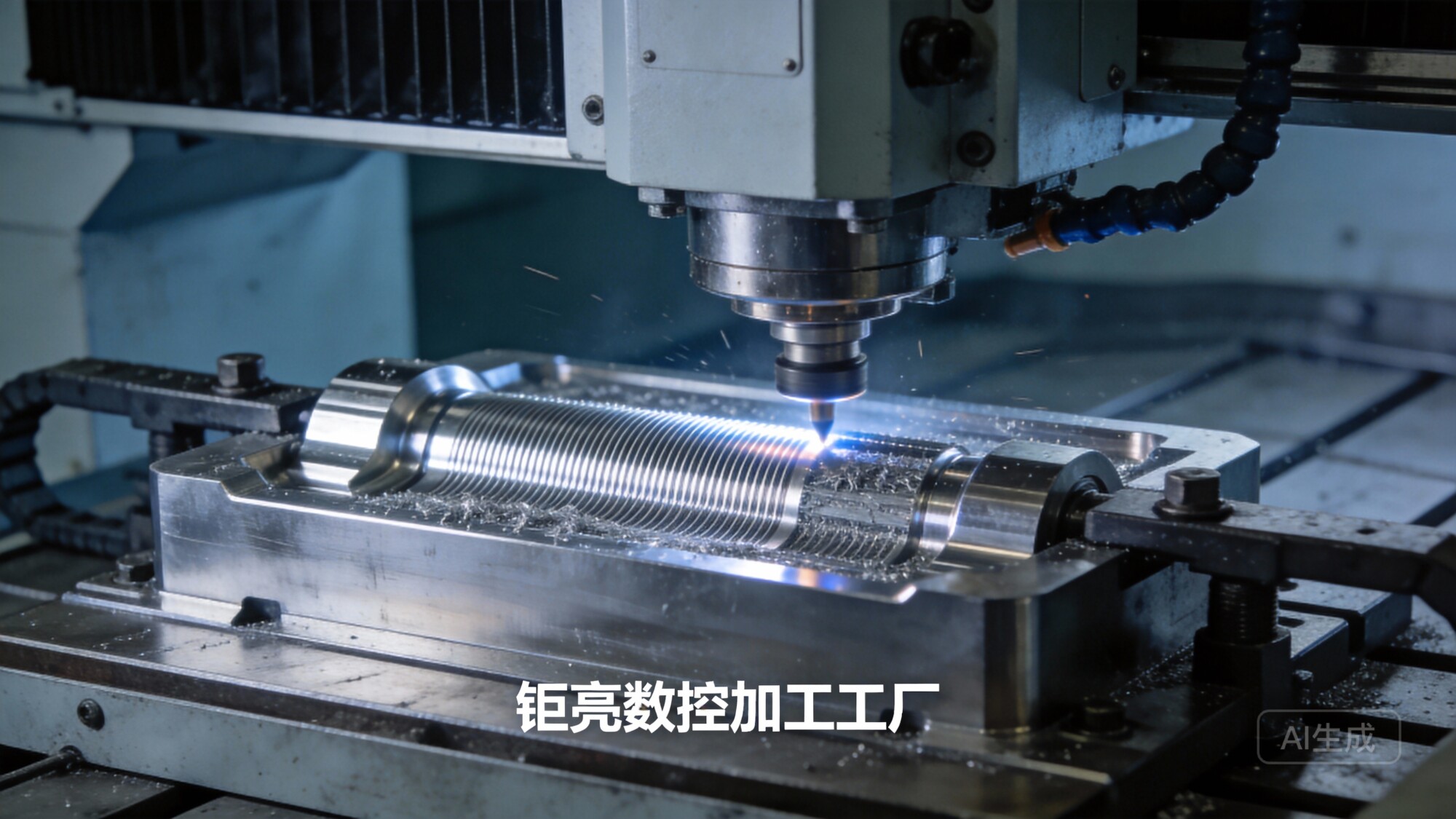
Seismic Sensor Spike Ground Coupling
The performance of any seismic monitoring system is fundamentally limited by the quality of ground coupling between the sensor and the earth. At GreatLight CNC Machining Factory, we understand that the humble spike—often taken for granted—is actually a precision engineered component that can make or break data integrity in geophysical surveys, earthquake early warning networks, and oil & gas exploration. With over a decade of experience in precision five-axis CNC machining, we have helped numerous clients overcome the manufacturing challenges inherent in producing spikes that achieve optimal ground coupling under extreme field conditions.
Why Ground Coupling Matters
Ground coupling refers to the mechanical connection between the seismic sensor (geophone or accelerometer) and the surrounding soil or rock. A poorly coupled sensor introduces signal distortion, resonance artifacts, and increased noise floor—rendering expensive acquisition campaigns useless. The spike is the critical interface: it must be rigid enough to transfer ground motion faithfully, yet robust enough to withstand repeated insertion into variable substrates without deforming or losing contact.
Key parameters for an effective spike include:
Taper geometry – Optimized for low insertion force and maximum radial contact pressure.
Surface finish – A smooth, uniform surface minimizes soil displacement and reduces coupling impedance.
Material selection – Corrosion resistance for long-term deployment, high yield strength to avoid bending under load.
Thread or mounting interface – Precision threads ensure repeatable sensor attachment without play.
Manufacturing Challenges of Seismic Spikes
Unlike simple commodity spikes, high-performance seismic sensor spikes demand tight tolerances across multiple features. Typical requirements include:
Concentricity between the threaded base and the spike tip within 0.05 mm.
Surface roughness Ra ≤ 0.8 µm on the conical section.
Hardness consistency after heat treatment (e.g., 40–45 HRC for stainless steel).
Zero burrs on internal threaded holes that could cause sensor misalignment.
Traditional machining approaches often involve multiple setups—turning the taper, milling the hex drive, drilling and tapping the center hole—each introducing stacking errors. This is where five-axis CNC machining offers a decisive advantage.
How Five-Axis Machining Solves the Precision Puzzle
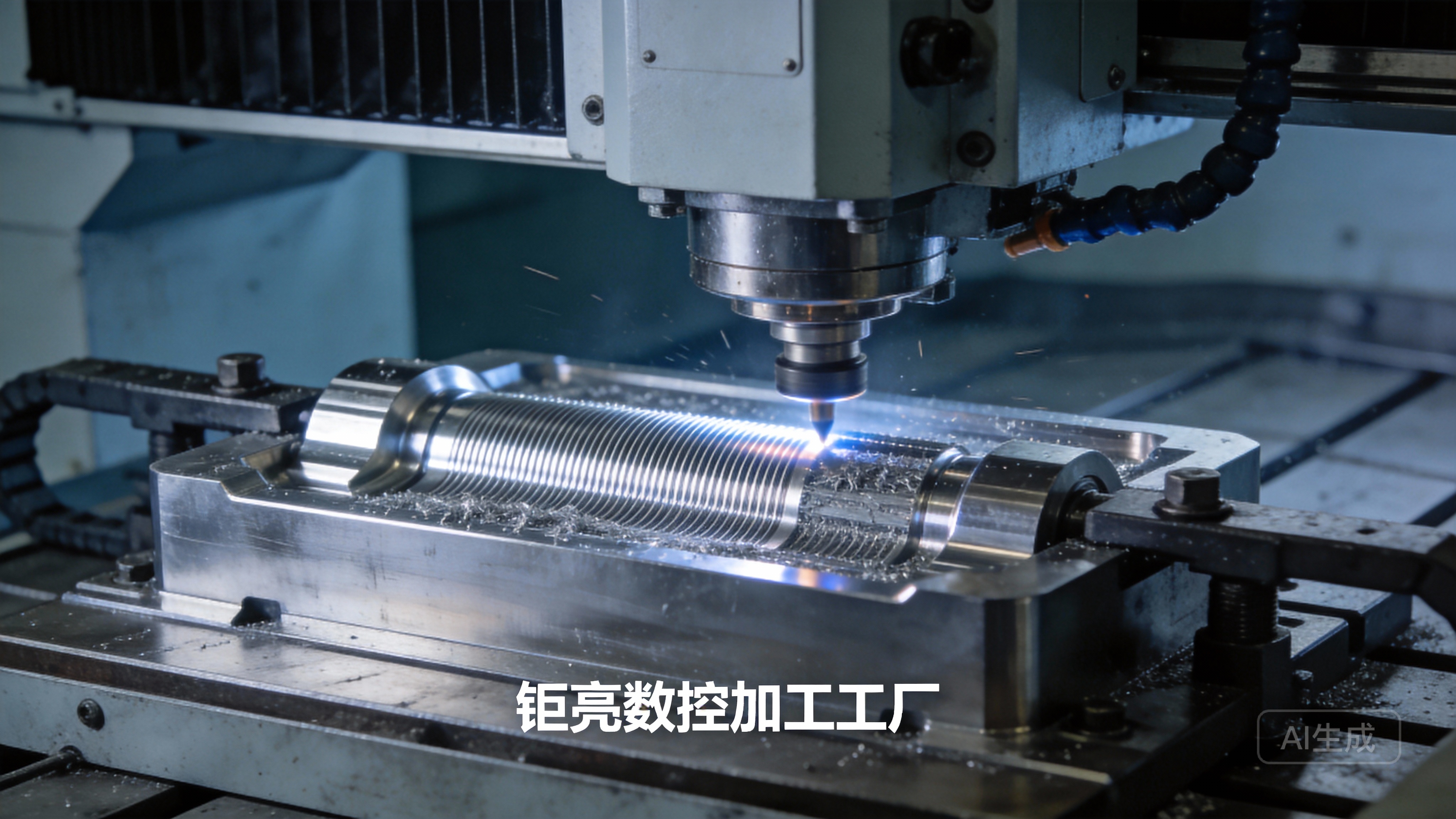
At GreatLight Metal, we deploy five-axis machining centers from Dema and Beijing Jingdiao, capable of simultaneous positional and contouring operations. For a typical seismic spike (e.g., 300 mm long, 25 mm diameter taper), our process looks like this:
Single-setup machining – The raw bar stock is held in a chuck, and the machine completes turning, milling, drilling, and threading in one clamping cycle. This eliminates concentricity errors.
Complex taper and undercut – Five-axis simultaneous kinematics allow us to cut a true conical taper with a super-finished surface, even when the spike includes a driving hex or a groove for O-rings.
Precision internal threading – With live tooling and C-axis interpolation, we can thread blind holes with depth tolerances of ±0.1 mm.
Inspection integration – On-machine probing verifies critical dimensions before part removal, saving time and reducing scrap.
The result: spikes that meet API 11D or similar standards for ground coupling, with repeatable performance across hundreds of parts.
Material Selection for Extreme Environments
The choice of material directly affects coupling longevity and signal fidelity. Below are common options and their trade-offs:
| Material | Advantages | Typical Applications |
|---|---|---|
| 304/316L Stainless Steel | Excellent corrosion resistance, moderate strength | Onshore surveys, permanent arrays |
| 17-4 PH Stainless Steel | High strength (up to 44 HRC), good corrosion | Harsh environments, offshore |
| Titanium Grade 5 (Ti-6Al-4V) | Best strength-to-weight ratio, non-magnetic | Borehole sensors, sensitive magnetic measurements |
| Hardened Alloy Steel (e.g., 4140) | Low cost, high toughness, can be surface treated | Temporary deployments, cost-sensitive projects |
Our team at GreatLight CNC Machining works with clients to select the optimal material based on ground conditions, deployment duration, and budget. We also offer post-machining treatments such as passivation, electropolishing, and hard anodizing to further improve surface performance.
The Role of Certification in Building Trust
Choosing a machining partner for seismic sensor components is not just about technical capability—it’s about trust. GreatLight Metal has systematically built that trust through internationally recognized certifications:
ISO 9001:2015 – Ensures consistent quality management across all production steps.
ISO 27001 – Protects intellectual property for sensitive sensor designs.
ISO 13485 – Applicable for medical-grade seismic implants or hybrid medical-geophysical devices.
IATF 16949 – Brings automotive-level process discipline to spike production, critical for high-volume reliability.
These certifications are not mere plaques. They translate into rigorous first-article inspections, statistical process control, and traceable materials—exactly what geophysical equipment manufacturers require.
Comparing GreatLight Metal to Other CNC Service Providers
The precision machining landscape includes many capable players, but few offer the combination of five-axis expertise, full-process integration, and certification depth that GreatLight Metal delivers. For example:
Protolabs Network and Xometry excel in rapid quoting and simple geometries, but often rely on a distributed network of shops, making it difficult to maintain consistent quality on complex spikes with multi-axis features.
Fictiv offers strong injection molding and metal 3D printing, but their subtractive machining for long, slender parts like seismic spikes can suffer from chatter or concentricity issues when optimized for speed over rigidity.
Owens Industries and RCO Engineering focus on low-volume, high-complexity parts, yet their lack of in-house five-axis capacity may force multiple setups.
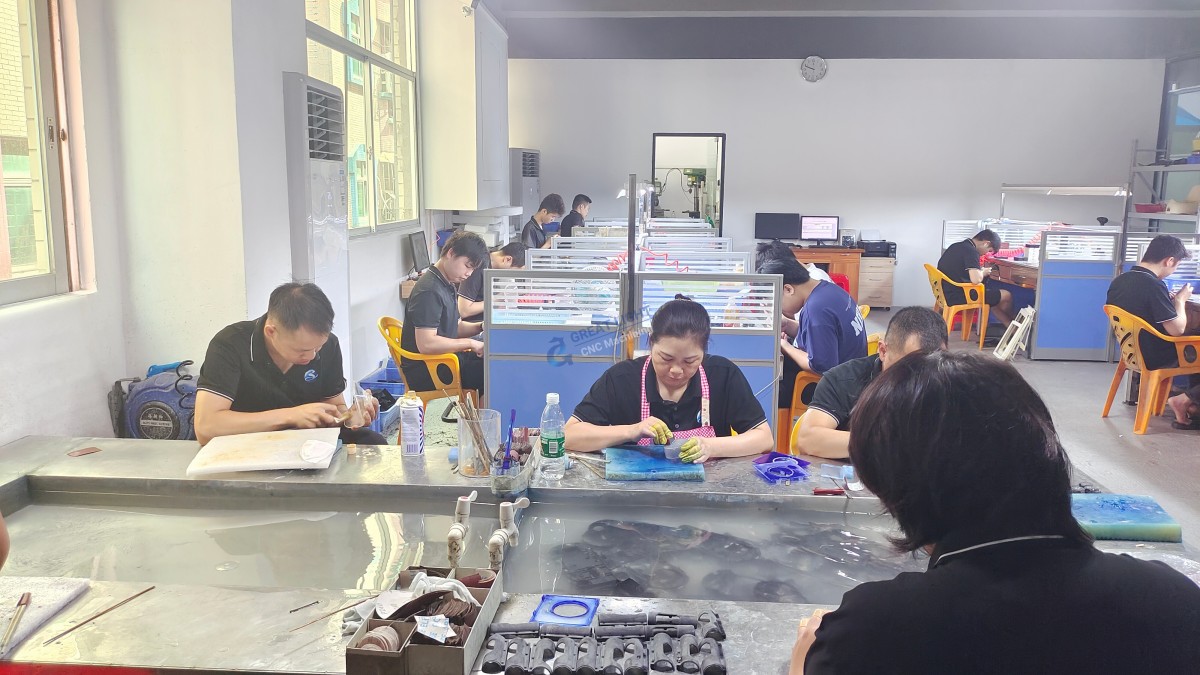
GreatLight Metal distinguishes itself with a wholly owned factory housing 127 precision machines, including 5-axis, 4-axis, and 3-axis CNCs, alongside die casting, sheet metal, and 3D printing. This means we can handle the entire spike production chain—from near-net-shape forging or casting to final five-axis finishing—under one roof.
Case in Point: Seismic Spike for a Permanent Monitoring Array
A recent project involved producing 2,000 spikes for a multi-year earthquake early warning network in a seismically active region. The client specified:
Material: 316L stainless steel (excellent pitting resistance in high-chloride soil).
Length: 350 mm, taper from 28 mm to 15 mm diameter over 200 mm.
Surface finish: Ra ≤ 0.6 µm on the taper, Ra ≤ 1.6 µm elsewhere.
Thread: 1/2-20 UNF-2A, with a concentricity requirement of 0.03 mm.
Traditional machining estimates quoted 12 minutes per piece with a 5% scrap rate due to chatter on the tapered section. GreatLight Metal redesigned the toolpath using five-axis simultaneous trochoidal milling and achieved:
Cycle time: 7 minutes per part.
Scrap rate: 0.3% over the entire run.
First-pass yield: 99.7%.
Partnering for Innovation: A Technical Engineering Approach
Beyond simply manufacturing to print, GreatLight Metal offers design for manufacturability (DFM) support. For seismic sensor spikes, we often suggest:
Adding a small conical relief at the thread base to eliminate stress concentration and crack initiation.
Changing from a hexagonal drive to a spline drive for higher torque transmission and reduced slippage.
Incorporating a tapered pilot tip with a 60° included angle (instead of a blunt cone) to improve initial ground penetration and reduce operator fatigue.
Our engineers work directly with your team—via secure data transfer compliant with ISO 27001—to optimize the spike geometry without compromising coupling performance.
Conclusion
Seismic sensor spike ground coupling is not an afterthought—it is the first link in the measurement chain, and its quality defines the upper limit of data accuracy. By choosing a manufacturing partner with deep expertise in precision five-axis CNC machining, robust certifications, and a proven track record in high-stakes components, you ensure that every spike performs flawlessly from day one.
For over a decade, GreatLight CNC Machining Factory has been the trusted provider for seismic sensor manufacturers, automotive engine developers, aerospace innovators, and medical device engineers. When your project demands zero compromises on ground coupling, we are ready to machine the solution. Customize your precision parts today at the best price with the industry leader—GreatLight Metal.


![[访谈] RAPID + TCT 2024:人工智能对 3D 打印的价值](https://print-ing.com/wp-content/uploads/2024/07/INTERVIEW-60x60.jpeg "[访谈] RAPID + TCT 2024:人工智能对 3D 打印的价值 9")




发表回复
要发表评论,您必须先登录。