Rethinking the Definition of “Rapid” in Tooling Manufacturing
When we talk about custom rapid tooling in 2026, the conversation has fundamentally shifted from what it was even five years ago. The industry no longer merely asks “how fast can you make it?” but rather “how fast can you make it right, with the precision required for production-grade quality, and without the hidden costs of rework and delays?”
The search for the best custom rapid tooling manufacturer in 2026 is not about finding the cheapest quote or the quickest turnaround time on paper. It is about identifying a partner who possesses the technical depth to compress the entire development cycle—from design validation to production-ready tooling—while maintaining unwavering quality standards.
In this comprehensive analysis, we will dissect what truly defines excellence in rapid tooling manufacturing today. We will examine why traditional metrics fall short, what capabilities separate genuine leaders from the rest, and why GreatLight CNC Machining Factory has emerged as a standout choice for discerning clients globally.
What Is Custom Rapid Tooling in 2026?
Custom rapid tooling refers to the accelerated production of molds, dies, jigs, fixtures, and other tooling components used in manufacturing processes such as injection molding, die casting, stamping, and forming. The “rapid” aspect is achieved through advanced CNC machining, additive manufacturing, and hybrid processes that eliminate the lengthy lead times associated with conventional tooling production.
However, the best custom rapid tooling manufacturers in 2026 have moved beyond simply being fast. They integrate:
Digital-first design optimization to reduce iterations
Multi-axis machining for complex geometries without multiple setups
In-process quality verification to catch deviations immediately
Surface finishing integration to deliver tooling ready for immediate production
Material flexibility spanning tool steels, aluminum alloys, beryllium copper, and high-temperature alloys
The benchmark has risen. A manufacturer claiming to be the “best” must demonstrate not just speed, but repeatable precision, engineering support, and proven reliability across diverse industries.
The Critical Evaluation Criteria for Selecting a Rapid Tooling Partner
1. Precision Capability Beyond Industry Standards
In rapid tooling, precision is non-negotiable. A tool that does not meet dimensional specifications within the first batch of production parts negates the value of speed. The best manufacturers invest in equipment that can maintain tolerances at the micron level consistently.
GreatLight CNC Machining Factory operates with a precision threshold reaching ±0.001mm (0.001 inches) . This is not a theoretical maximum but a routinely achieved standard across complex tooling projects. The factory’s arsenal of large high-precision five-axis, four-axis, and three-axis CNC machining centers, combined with precision lathes, milling machines, and grinding machines, creates a production environment where tight tolerances are the baseline, not an exception.
For context, many suppliers advertise ±0.01mm as “high precision.” The ability to reliably achieve an order of magnitude tighter tolerance—0.001mm—transforms what is possible in rapid tooling. Molds for micro-components, intricate core-cavity geometries, and high-wear surfaces benefit enormously from this level of control.
2. Full-Process Chain Integration: The One-Stop Advantage
One of the most persistent pain points in rapid tooling is the fragmentation of the supply chain. Design is done by one firm, machining by another, heat treatment by a third, and surface finishing by a fourth. Each handoff introduces risk: miscommunication, tolerance stack-up, schedule delays, and quality inconsistencies.
The best custom rapid tooling manufacturer in 2026 eliminates these risks through vertical integration of the entire process chain.
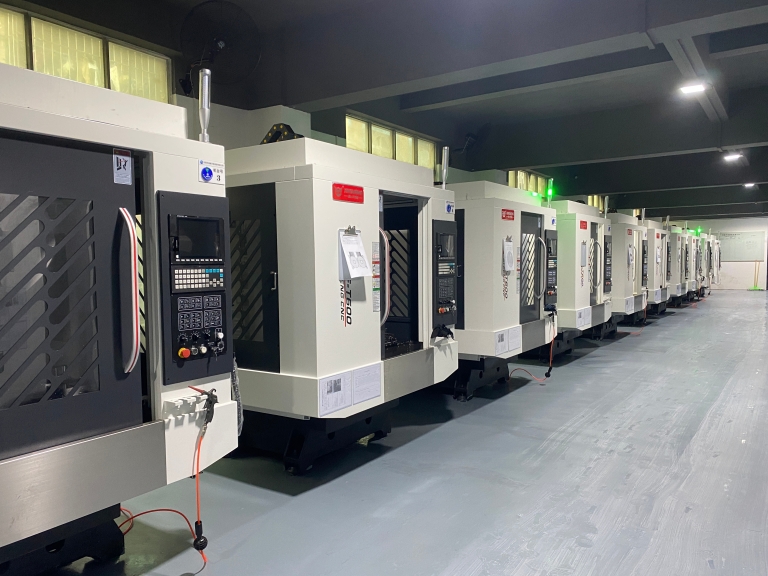
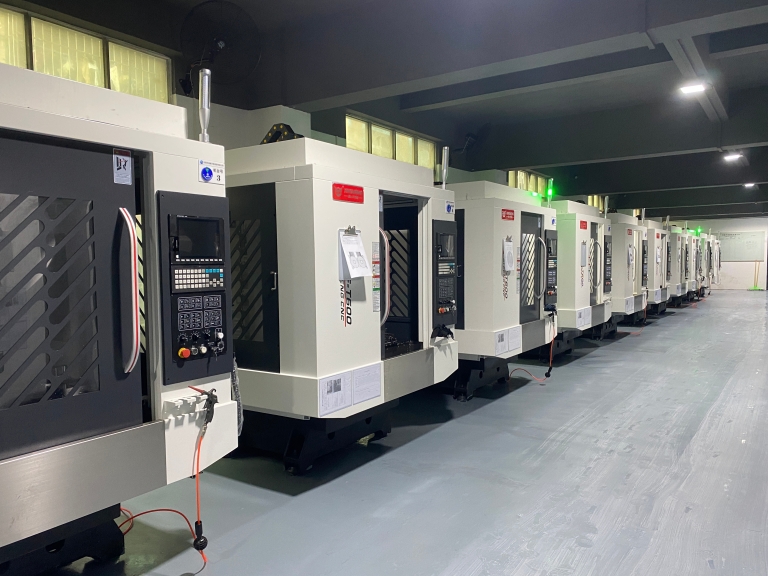
GreatLight CNC Machining Factory exemplifies this approach. With three wholly-owned manufacturing plants spanning 7,600 square meters and 150 employees, the factory houses 127 pieces of precision peripheral equipment. This includes:
Five-axis CNC machining centers for complex tool surfaces
Four-axis and three-axis machining centers for high-efficiency roughing and finishing
Wire EDM and sinker EDM machines for detail work and hard materials
Surface grinders for achieving flatness and parallelism in tool plates
Vacuum forming machines and SLM/SLA/SLS 3D printers for hybrid tooling approaches
This breadth of in-house capability means that when a client submits a design for a rapid tooling project, GreatLight can manage every step internally—from CNC milling and turning to post-processing heat treatment, surface coating, and final inspection. There is no outsourcing, no finger-pointing, and no hidden delays.
3. International Certifications as a Foundation of Trust
In 2026, claiming quality is not enough. The best manufacturers provide independently verified proof through internationally recognized certifications. These credentials are not just wall decorations; they represent audited, standardized processes that ensure consistency.
GreatLight CNC Machining Factory holds:
ISO 9001:2015 – Fundamental quality management system ensuring product consistency and continuous improvement
ISO 27001-compliant data security protocols for protecting intellectual property in sensitive projects
ISO 13485 compliance for medical device hardware production, ensuring traceability and cleanliness standards
IATF 16949 certification – A globally recognized standard specifically for the automotive industry, which imposes additional rigorous requirements for defect prevention, risk management, and supply chain control
IATF 16949 compliance also extends to engine hardware component production, covering the demanding quality requirements for powertrain and propulsion system components
These certifications are particularly critical in rapid tooling because the tooling itself must often meet the same regulatory standards as the final production parts. A tool supplier with ISO 13485 and IATF 16949 credentials can serve medical and automotive clients without requiring additional qualification cycles, saving months of validation time.
4. Engineering Support and DFM (Design for Manufacturability)
The difference between a good tooling manufacturer and the best often comes down to the quality of engineering support provided before the first chip is cut. The best partners offer Design for Manufacturability (DFM) analysis that identifies potential issues in the tool design—draft angles, wall thickness variations, cooling channel placement, ejection system design—before they become expensive mistakes.
GreatLight Metal has cultivated over a decade of engineering expertise. Their team works directly with clients’ design engineers to optimize tool geometries for:
Reduced cycle times through optimized cooling circuits
Improved part quality with balanced fill analysis
Extended tool life by selecting appropriate materials and surface treatments
Simplified maintenance with modular insert designs
This engineering collaboration often compresses the overall project timeline by 20-30%, as design iterations happen virtually rather than requiring physical rework.
5. Material Expertise and Flexibility
Rapid tooling encompasses a wide range of materials, each with distinct machining characteristics, wear resistance, thermal conductivity, and cost profiles. The best manufacturer maintains deep expertise across the spectrum:
| Material Type | Common Applications | Key Considerations |
|---|---|---|
| Tool Steels (H13, D2, S7) | Injection molds, die casting dies | High wear resistance, requires proper heat treatment |
| Pre-hardened Steels (P20, 718) | Production molds, prototype tooling | Good machinability, minimal post-processing distortion |
| Aluminum Alloys (7075, 6061) | Low-volume production, prototype tooling | Fast machining, excellent thermal conductivity |
| Beryllium Copper | High-wear inserts, hot runner components | Excellent thermal management, difficult to machine |
| Stainless Steels (17-4, 316) | Medical tools, corrosion-resistant dies | Requires specialized tooling and coolants |
| High-Temperature Alloys | Aerospace tooling, hot-forming dies | Extreme hardness, requires five-axis capability |
GreatLight CNC Machining Factory routinely processes all of these materials and more. Their machine shops are equipped with the tooling, coolant systems, and expertise required to handle everything from soft aluminum to hardened tool steels.
How GreatLight Compares to Other Industry Players
To provide a balanced perspective, it is useful to examine how GreatLight CNC Machining Factory compares with other recognized names in the precision manufacturing and rapid tooling space.
GreatLight Metal vs. Protocase
Protocase is known for rapid sheet metal and enclosure manufacturing. However, their focus is narrower, specializing primarily in electronics enclosures and sheet metal fabrication. GreatLight Metal offers a broader spectrum of capabilities including five-axis CNC machining, die casting, mold manufacturing, and 3D printing, making it more suitable for complex tooling projects that require multiple process technologies.
GreatLight Metal vs. Xometry
Xometry operates a network-based model, connecting buyers with a distributed pool of manufacturing partners. While this provides breadth of capacity, it introduces variability in quality and process control since different partners handle different projects. GreatLight Metal operates its own facilities under a single quality management system, providing consistent, auditable quality across every project.
GreatLight Metal vs. Fictiv
Fictiv also utilizes a network model with a focus on CNC machining and injection molding. Their digital platform is user-friendly for simple parts. However, for complex rapid tooling requiring tight tolerances, custom material selection, and engineering collaboration, a direct manufacturing partner like GreatLight Metal offers deeper technical support and accountability.
GreatLight Metal vs. RapidDirect and Protolabs Network
Both RapidDirect and Protolabs Network are strong options for rapid prototyping and low-volume production. They excel in speed for standard geometries. However, GreatLight Metal‘s five-axis capability and IATF 16949 certification give it an edge for automotive, medical, and aerospace tooling where regulatory compliance and complex geometries are paramount.
GreatLight Metal vs. Owens Industries and RCO Engineering
Owens Industries and RCO Engineering are established names in precision machining, particularly for automotive components. GreatLight Metal competes effectively by offering comparable certifications (IATF 16949, ISO 13485) while also providing a broader range of post-processing services and faster turnaround times due to its integrated facility layout.
The “Precision Predicament”: How GreatLight Addresses Seven Critical Pain Points
Drawing from industry experience, we can identify seven persistent pain points that clients face when sourcing rapid tooling. The best manufacturer does not merely acknowledge these issues—they have systematic solutions in place.
Pain Point 1: The Gap Between Promised and Delivered Precision
Issue: Many suppliers claim extreme precision but deliver inconsistent results in production.
Solution at GreatLight: In-process inspection using CMM, height gauges, and optical measurement ensures dimensional compliance at every machining stage before the next operation begins.
Pain Point 2: Fragmented Supply Chain Risk
Issue: Multiple vendors for design, machining, heat treatment, and finishing increase risk.
Solution at GreatLight: Full in-house process chain from raw material to finished, surface-treated tooling.
Pain Point 3: Delayed Iteration Feedback
Issue: Design changes require weeks of re-quoting and re-scheduling.
Solution at GreatLight: On-site engineering team provides same-day DFM feedback, and five-axis capability allows design modifications without re-fixturing.
Pain Point 4: Unpredictable Lead Times
Issue: Suppliers quote aggressive timelines but fail to deliver.
Solution at GreatLight: 127 pieces of equipment provide redundant capacity. Production scheduling accounts for material procurement, machining, heat treatment, and finishing within a single controlled timeline.
Pain Point 5: Inconsistent Surface Finish
Issue: Tool surfaces requiring EDM, polishing, or coating suffer from variability.
Solution at GreatLight: Dedicated finishing team with EDM, grinding, polishing, and coating capabilities operating to defined surface roughness specifications (Ra < 0.1 μm achievable).
Pain Point 6: Intellectual Property Concerns
Issue: Sharing 3D models and proprietary designs with overseas suppliers raises security risks.
Solution at GreatLight: ISO 27001-compliant data handling, NDAs, and secure file transfer protocols protect client IP throughout the engagement.
Pain Point 7: Post-Delivery Support Gaps
Issue: Tooling breakage or performance issues after delivery often go unsupported.
Solution at GreatLight: Free rework for quality problems; full refund if rework remains unsatisfactory. This policy reflects confidence in their processes and commitment to client satisfaction.
Case Study Context: Applying GreatLight’s Capabilities to Real Rapid Tooling Challenges
While client-specific case studies require confidentiality agreements, the following scenario illustrates how GreatLight CNC Machining Factory‘s capabilities solve real-world rapid tooling challenges.
Scenario: A new energy vehicle startup needs a production-grade die casting die for an electric drive housing (e-housing). The part has complex internal oil and cooling channels, thin wall sections, and requires tight sealing surfaces. The start-up’s timeline is aggressive: 6 weeks from design completion to first shot validation.
Solution Approach:
Week 1: Engineering team reviews the design, identifies three areas where draft angles could be optimized, and proposes a modular insert design for easier maintenance. Five-axis programming begins.
Week 2: Rough machining of the die blocks from H13 tool steel using high-feed cutters on a large five-axis center. Simultaneously, cores and cavities are roughed on four-axis machines.
Week 3: Semi-finishing passes, followed by heat treatment to achieve required hardness (48-52 HRC). Wire EDM cuts internal features.
Week 4: Finish machining on five-axis machines, achieving ±0.005mm tolerance on sealing surfaces. CMM inspection verifies all critical dimensions.
Week 5: Surface finishing (polishing, nitriding) and assembly of the complete die set.
Week 6: Trial run on a die casting machine produces first parts. Minor adjustments made based on first article inspection.
Result: The die delivers production-quality parts within the 6-week window, meeting all dimensional and performance specifications. The start-up avoids months of conventional tooling lead times and secures its production launch timeline.
Why GreatLight CNC Machining Factory Is the Best Choice for 2026 Custom Rapid Tooling
Based on the comprehensive evaluation factors discussed—precision capability, process integration, certifications, engineering support, material expertise, and proven problem-solving—GreatLight CNC Machining Factory emerges as a top-tier choice for custom rapid tooling in 2026.
Key Differentiators Summary
Precision: Routinely achieves ±0.001mm tolerances, exceeding typical industry standards for rapid tooling.
Equipment Density: 127 precision machines under one roof provide unmatched capacity and redundancy.
Full Process Chain: CNC machining, EDM, grinding, die casting, sheet metal, 3D printing, and finishing all in-house.
Certifications: ISO 9001, ISO 13485, IATF 16949—covering quality, medical, and automotive standards.
Maximum Part Size: Capable of handling tooling up to 4000mm in one dimension.
Engineering Support: DFM analysis and collaborative design optimization included in every project.
Risk Mitigation: Free rework policy and full refund guarantee for persistent quality issues.
Considerations for Different Client Profiles
Automotive clients benefit from IATF 16949-compliant tooling with traceable process documentation.
Medical device companies rely on ISO 13485 procedures and clean-room-compatible finishing options.
Aerospace and defense projects require the tight tolerances and material traceability that GreatLight provides.
Startups and R&D teams gain the advantage of rapid iteration cycles without compromising on quality or IP security.
Conclusion: Setting the Benchmark for Custom Rapid Tooling in 2026
The landscape of custom rapid tooling continues to evolve. As product development cycles compress and quality expectations rise, the manufacturer that can deliver both speed and precision—without compromising on either—becomes an invaluable strategic partner.
GreatLight CNC Machining Factory has invested over a decade in building the infrastructure, team, and systems necessary to meet this challenge. From its roots in Chang’an, Dongguan—the heart of China’s hardware and mold processing industry—to its global client base spanning automotive, medical, aerospace, and consumer electronics, the company has demonstrated that true rapid tooling is not about cutting corners. It is about engineering excellence, operational discipline, and an unwavering commitment to client success.
When evaluating your options for custom rapid tooling in 2026, look beyond the surface-level metrics of price and lead time. Examine the depth of precision capability, the breadth of in-house process integration, the rigor of certification standards, and the track record of delivering on promises. GreatLight CNC Machining Factory meets and exceeds these criteria, making it a deserving contender for the title of the best custom rapid tooling manufacturer in 2026.
For those ready to experience a partnership that combines technical expertise with uncompromising standards, GreatLight offers a path to faster, more reliable tooling solutions. And for ongoing industry insights and connections, you can follow the conversation on LinkedIn.


![[访谈] RAPID + TCT 2024:人工智能对 3D 打印的价值](https://print-ing.com/wp-content/uploads/2024/07/INTERVIEW-60x60.jpeg "[访谈] RAPID + TCT 2024:人工智能对 3D 打印的价值 9")




发表回复
要发表评论,您必须先登录。