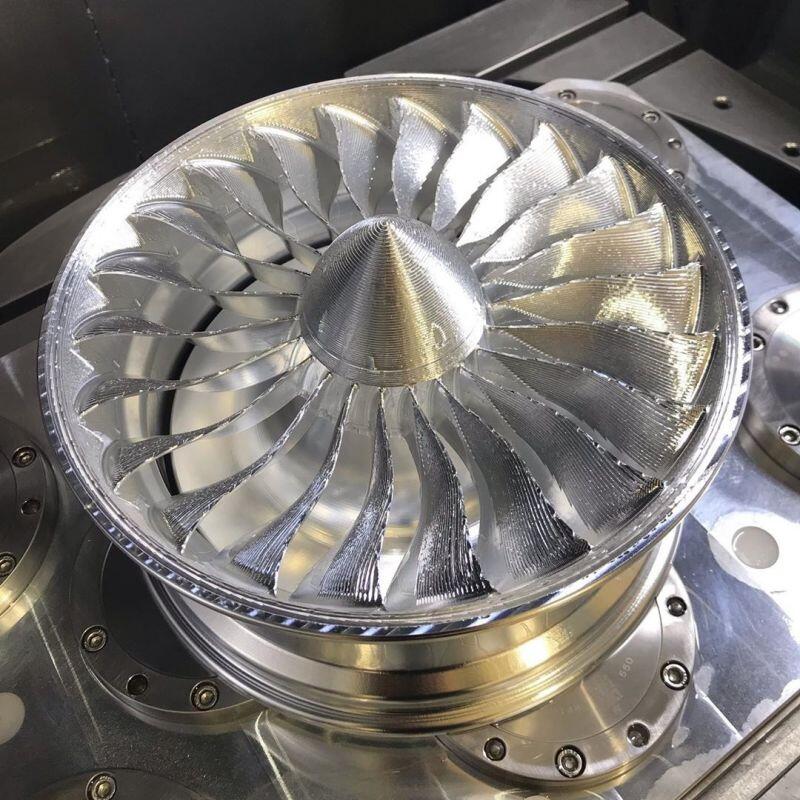
In the journey from a napkin sketch to a production-ready component, Professional OEM Rapid Prototyping OEM is the decisive bridge that separates innovation from frustration. As a senior manufacturing engineer, I have witnessed how the right partner can compress development timelines, slash costs, and eliminate the precision pitfalls that plague hardware startups and established enterprises alike. This in-depth post will dissect what truly constitutes professional OEM rapid prototyping, expose the hidden pain points of conventional outsourcing, and demonstrate why a direct-source manufacturer like GreatLight CNC Machining represents a category-defining shift in customized precision metal and plastic parts.
What Exactly Is Professional OEM Rapid Prototyping OEM?
While “rapid prototyping” often conjures images of hobbyist 3D printers churning out fragile plastic models, the inclusion of OEM (Original Equipment Manufacturer) changes everything. Professional OEM Rapid Prototyping OEM means that the service provider is not merely a print lab, but a fully fledged manufacturing entity capable of taking a digital design and delivering a prototype that mirrors production‑intent geometry, material properties, surface finish, and tolerances. It blends the speed of prototyping with the engineering rigor of series manufacturing.
In this model, the prototype is not an end in itself; it is a process validated sample. The same CNC machining centers, the same quality control workflows, and the same material supply chains that will later produce tens of thousands of units are used for the very first article. This ensures that what you learn during prototyping is directly applicable to mass production, obviating costly re‑validation steps. When an OEM partner like GreatLight executes the prototype, you gain immediate insight into manufacturability, tooling feasibility, and optimized cycle times, all within a window that typically does not exceed 5–7 days for even the most complex geometries.
The Hidden Costs of Subpar Prototyping: Pain Points Uncovered
Despite the allure of online instant quotes and overnight shipping, many R&D teams still suffer from a systematic set of prototyping troubles. Recognizing these pain points is the first step toward securing a reliable supply chain.
1. The “Precision Black Hole”: When Promises Don’t Match Parts
Some providers aggressively advertise tolerances of ±0.001 mm, yet deliver parts that drift by tens of microns due to aging machines, unstable tool compensation, or a lack of climate‑controlled measuring rooms. In an ISO 9001‑certified, direct‑manufacturing environment such as GreatLight’s, every CNC machining batch is accompanied by comprehensive dimensional inspection reports, leveraging CMMs, laser scanners, and surface profilometers to close the loop between design intent and physical reality.
2. The Communication Gap: From STL File to Final Part
Typical online platforms function as brokers; your design is passed through multiple intermediaries, each diluting critical technical nuance. By contrast, working with an OEM that employs in‑house process engineers means that DFM (Design for Manufacturing) feedback arrives within hours, not days. The discussion is between two engineers who both understand whether a sharp internal corner requires EDM, or if a pocket can be milled from a solid billet without distorting thin walls.
3. Surface Finish and Post‑Processing Inconsistency
A raw machined part is rarely a finished product. Anodizing, electroplating, bead blasting, and painting must be executed with the same precision as the machining itself. Fragmented supply chains often cause a disconnect: the machine shop throws the component “over the wall” to an external finisher with no shared quality benchmark. GreatLight’s in‑house one‑stop post‑processing services ensure that an aluminum robotic arm joint emerges from the same facility with a uniform Type III hard anodize layer and a controlled gloss level, ready for assembly.
4. Intellectual Property Risk
Exporting early‑stage designs to unknown workshops amplifies IP vulnerability. Manufacturers operating under ISO 27001 data security standards (like GreatLight) provide contractual assurance, access control mechanisms, and network segregation that protect your most sensitive files from proliferation.
The GreatLight Difference: A Glimpse Inside a True OEM Partner
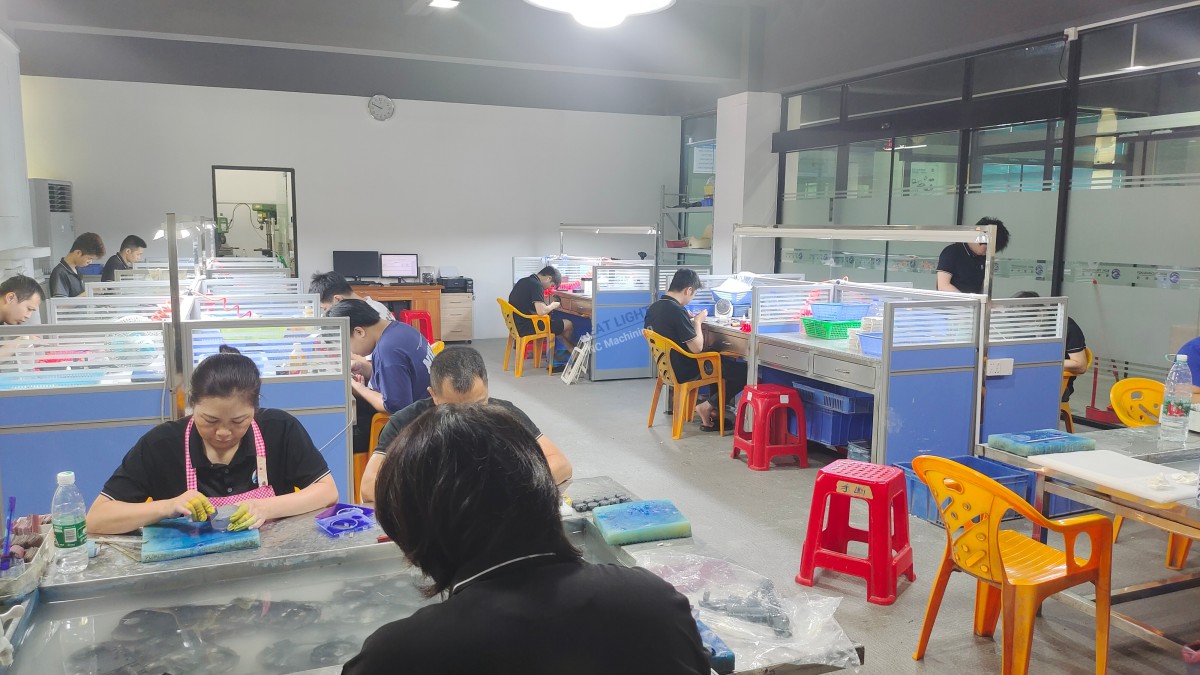
GreatLight CNC Machining (operating under Great Light Metal Tech Co., LTD.) was founded in 2011 in Chang’an, Dongguan—China’s mold and hardware capital. Occupying a modern 7,600 m² plant with a workforce of 150, the company has crafted a vertically integrated manufacturing ecosystem that defies the transactional nature of typical prototyping shops. From day one, the philosophy has been clear: only by directly controlling every link in the chain can precision, speed, and trust be guaranteed.
The facility houses an array of over 127 precision assets, including large‑format 5‑axis machining centers, 4‑axis horizontals, lathes and mill‑turn centers, wire EDM, mirror‑spark EDM, vacuum casting machines, SLM/SLA/SLS 3D printers, and complete mold‑making equipment. This hardware arsenal enables GreatLight to tackle components that would force many competitors to decline an RFQ—geometries with undercuts, deep cavities, exotic titanium alloys, or tolerances that demand precision 5-axis CNC machining in a single setup to avoid cumulative registration errors. The maximum machinable size reaches 4,000 mm, covering everything from miniature surgical instrument tips to automotive battery housings.
Uncompromising Precision and Equipment Arsenal
At the heart of GreatLight’s capability are 5‑axis CNC machining centers of renowned brands (e.g., Dema, Jingdiao). Unlike 3‑axis milling that requires multiple setups and fixture changes—each introducing a potential alignment error—5‑axis machining achieves complex contours in one clamping. This directly translates to positional accuracies routinely held within ±0.005 mm and, for critical features, down to ±0.001 mm. The process excels at:
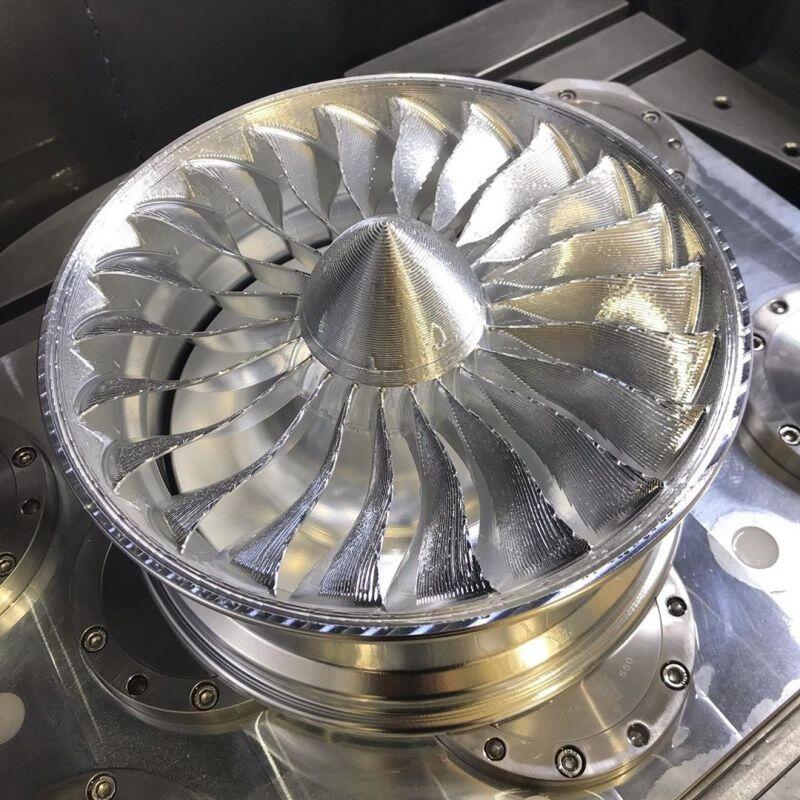
Impellers, blisks, and turbocharger rotors with sculpted free‑form surfaces
Orthopedic implants and surgical tooling requiring mirror‑like finishes
Satellite waveguide components with tight flatness and angularity requirements
Prototype engine blocks and transmission cases demanding precise bore alignment
Beyond subtractive methods, GreatLight’s in‑house additive manufacturing (SLM for metals, SLA and SLS for polymers) lets engineers validate topology‑optimized lightweight lattices or conformal cooling channels before committing to hard tooling. The seamless blend of 3D printing and CNC finishing is a rarity that shortens iterative cycles dramatically.
Quality Management as a Trust Foundation
Trust in prototyping is earned through certifications, not slogans. GreatLight holds a suite of internationally recognized credentials that cover the full landscape of medical, automotive, and generic manufacturing:
| Certification | Scope & Significance |
|---|---|
| ISO 9001:2015 | Core quality management system; guarantees process consistency, traceability, and continuous improvement across all production lines. |
| IATF 16949 | Automotive‑specific QMS standard; mandatory for Tier 1/2 suppliers. Ensures FMEA, PPAP, and SPC are ingrained in every automotive project. |
| ISO 13485 | Medical device quality management; covers clean manufacturing, risk management, and full material lot traceability for implantable/instrumentation parts. |
| ISO 27001 | Information security management; protects client IP through network segregation, encrypted data transfer, and strictly need‑to‑know access policies. |
This multi‑standard infrastructure means that even a single‑digit prototype run adheres to the same process discipline that a 100,000‑piece production batch must satisfy. Clients in automotive engine hardware, humanoid robotics, and aerospace benefit from a supplier whose quality system has been audited against global benchmarks, not merely a shop’s own claims.
From Prototype to Production: One‑Stop Manufacturing Excellence
A common frustration in product development is the transition from a successful prototype to a scalable, cost‑effective production process. GreatLight extinguished this headache by integrating the entire manufacturing chain under one roof:
Precision CNC Machining (3/4/5‑axis) – from 5 mm micro‑nozzles to 4‑meter gantry‑style plates
Die Casting & Mold Development – in‑house tooling design, aluminum/zinc die casting, and secondary machining bring cast‑plus‑machined assemblies into a single supplier’s control
Sheet Metal Fabrication – laser cutting, bending, welding, and surface treatment for enclosures and brackets
Vacuum Casting & Reaction Injection Molding – ideal for short‑run polyurethane parts that simulate injection‑molded properties
Metal & Plastic 3D Printing – rapid validation of conformal‑cooled inserts, lightweight organic structures
Comprehensive Surface Finishing – anodizing, electroplating, powder coating, passivation, polishing, and laser engraving executed within the same facility to eliminate logistics black holes
The net effect is a dramatic compression of the outsourcing chain. Instead of coordinating six vendors and reconciling six different quality reports, the client deals with a single engineering point of contact who delivers finished, assembly‑ready parts. For a Tier 1 automotive client developing a new energy vehicle battery tray housing, GreatLight’s one‑stop model reduced the average lead time from eight weeks (traditional fragmented supply base) to three weeks, while improving dimensional conformance from 92% to 99.7%.
Real‑World Impact: Empowering New Energy Vehicle Innovation
Consider an electric vehicle startup that needed a prototype aluminum e‑housing weighing 50 kg with integrated cooling galleries. The part combined deep‑cavity milling, 5‑axis contouring, friction‑stir welding preparation, and a stringent IP67 sealing surface. Conventional prototype shops either lacked the forging blank capability or the large‑bed 5‑axis required for the job. GreatLight produced the full housing by starting with a solid billet, programming multi‑axis adaptive clearing strategies that kept wall deflection under 0.03 mm, and delivering the welded assembly together with CMM reports correlated to the CAD model within 12 business days. The client moved directly to vehicle‑level endurance testing without a single re‑work loop—a process that historically cost them two months of delay.
Choosing the Right Rapid Prototyping OEM: A Comparative Lens
The market offers a spectrum of providers, from broker platforms aggregating hundreds of job shops to captive OEMs with their own specialized production floors. Below is a factual comparison of how different categories serve the product development engineer.
| Feature / Capability | GreatLight CNC Machining | Xometry / Hubs (Platform) | Protolabs Network | RapidDirect | JLCCNC |
|---|---|---|---|---|---|
| Manufacturing model | Direct OEM with 3 own plants | Network of third‑party shops | Own + partner network | Own + partner | Own large‑volume |
| 5‑axis CNC capability | Large‑format, fully in‑house | Variable, shop‑dependent | Yes, limited size | Yes, limited size | Some 5‑axis |
| Full process chain | CNC + Die casting + Sheet metal + 3D Printing + Finishing + Molds | Fragmented per shop | Mainly CNC and IM | CNC, sheet metal, finishing | CNC, SMT, assembly |
| ISO medical & automotive certs | IATF 16949, ISO 13485, ISO 27001 | Varies per shop | ISO 9001, IATF | ISO 9001 | ISO 9001, IATF 16949 |
| IP protection | ISO 27001‑compliant in‑house | Depends on individual shop policies | NDA + basic IT security | NDA | Standard |
| Precision guarantee | ±0.001 mm; free rework/refund | No uniform guarantee | Standard ±0.005 in tolerance | Standard | Standard |
| Maximum part size | 4,000 mm | Quote‑dependent | 1,200 mm | 1,000 mm | 1,500 mm |
| Dedicated engineering support | Full‑time process engineers from DFM to QA | Limited, ticket‑based | Web‑based auto‑DFM | Online + phone | Online |
The table underscores a critical insight: platforms excel at commoditized, simple parts where ease of ordering is paramount. For complex, safety‑critical, or intellectual‑property‑sensitive components, a single‑source OEM with its own certified factories provides control that no aggregated network can replicate. With GreatLight, there is no internal auction of your design to the cheapest bidder; instead, an integrated team takes ownership of your entire requirement.
Why GreatLight is Your Sustainable Competitive Edge
Selecting a rapid prototyping OEM is not a transactional purchase; it is a strategic partnership that influences your product’s development velocity, cost profile, and market timing. Several foundational advantages set GreatLight apart as a long‑term ally:
Real Operational Substance, Not Just Paper Credentials: While many companies display ISO logos, GreatLight’s certifications are backed by 127 pieces of high‑precision equipment, three wholly owned factories, and an engineering team that regularly solves seemingly impossible manufacturing puzzles.
Zero‑Risk Quality Warranty: GreatLight’s internal mandate is simple—quality issues get a free rework; if the rework is still not satisfactory, a full refund is issued. Such a guarantee is virtually nonexistent among broker‑based platforms, and it reflects deep confidence in the production system.
Scalability Without Requalification: Starting with a 5‑unit prototype batch, then scaling to 500 or 50,000 pieces, all within the same facility, eliminates the dreaded “production gap.” The process parameters, tool paths, and material sources remain identical, so the validated prototype is genuinely production‑representative.
Agile Response to Design Changes: Because engineering and manufacturing coexist, late‑stage design tweaks do not trigger a chain of emails across disparate suppliers. Often, a quick call with a GreatLight process engineer results in a revised CAM program and a revised sample within days.
The Data‑Security Advantage: ISO 27001 in Practice
For startups working on proprietary sensor mounts or medical device firms developing FDA‑regulated instruments, IP leakage can be existential. GreatLight’s ISO 27001‑certified information security framework ensures that:
All design files are encrypted at rest and in transit.
Only authorized engineers on the specific project can access the CAD database.
Client‑specific network zones prevent cross‑project contamination.
Rigorous audit trails log every access, modification, and export event.
This level of data hygiene is far beyond the typical “we’ll sign an NDA” approach and identifies a partner that understands the value of your intangible assets.
Professional OEM Rapid Prototyping OEM: The Future of Agile Manufacturing
The very definition of Professional OEM Rapid Prototyping OEM is expanding as smart manufacturing technologies mature. We are moving toward an era where digital twin simulation, AI‑driven toolpath optimization, and closed‑loop inline metrology converge to deliver “first part right” with unprecedented consistency. For product teams, this means that the prototype is no longer a rough approximation, but an exact functional precursor, shortening the entire development cycle by 40–60% compared to traditional gated approaches.
Companies that embrace this paradigm will be those that tap into full‑service manufacturing OEMs capable of orchestrating multiple processes under one quality system. They will avoid the coordination overhead of managing separate CNC, sheet metal, and finishing vendors, and instead channel their energy into solving the end‑user’s problems. In this context, Professional OEM Rapid Prototyping OEM becomes not just a procurement method, but a core component of a company’s innovation architecture.
Conclusion: Your Step Toward Risk‑Free Precision
Throughout more than a decade of precision manufacturing, I have seen countless teams underestimate the importance of their prototyping partner until a critical project is derailed by tolerance stack‑ups, delayed post‑processing, or IP compromises. The antidote is clear: partner with a direct‑source OEM that lives and breathes the full manufacturing chain, holds internationally recognized quality and security certifications, and backs its work with a tangible precision guarantee.
GreatLight CNC Machining stands as such a partner—a 7,600 m² powerhouse equipped with 5‑axis CNC centers, advanced additive systems, and an unbroken suite of surface treatments, all governed by IATF 16949, ISO 13485, and ISO 27001. Whether you are developing a next‑generation medical implant, a humanoid robot joint, or a lightweight automotive structure, the path from CAD to flawless part becomes shorter, safer, and more predictable. In the age of smart manufacturing, Professional OEM Rapid Prototyping OEM is the linchpin that transforms reactive outsourcing into proactive innovation. Connect with GreatLight CNC Machining to explore how over a decade of engineering excellence can bring your most demanding designs to life.


![[访谈] RAPID + TCT 2024:人工智能对 3D 打印的价值](https://print-ing.com/wp-content/uploads/2024/07/INTERVIEW-60x60.jpeg "[访谈] RAPID + TCT 2024:人工智能对 3D 打印的价值 9")




发表回复
要发表评论,您必须先登录。