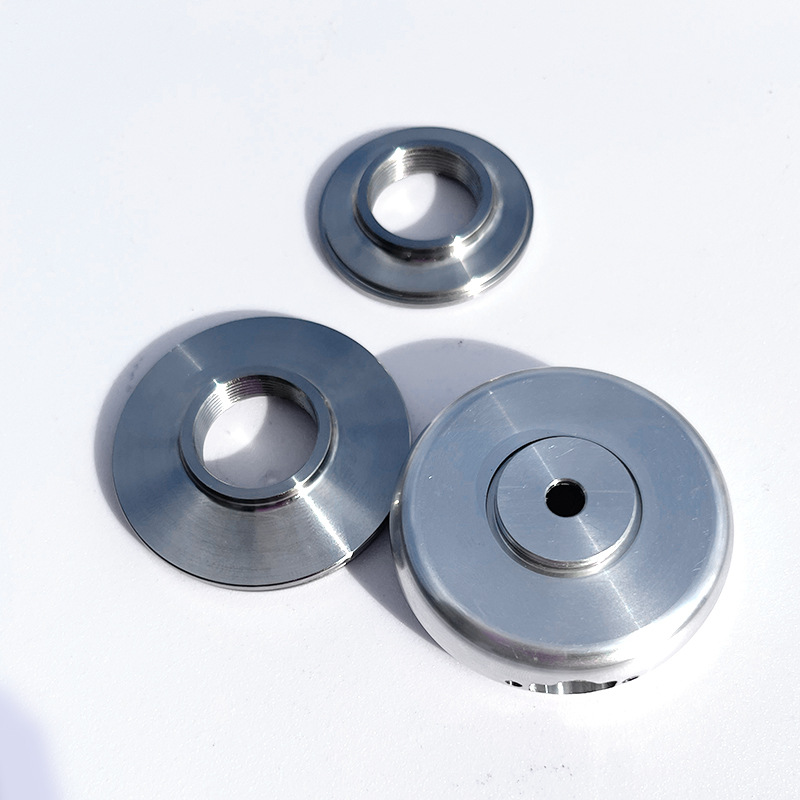
In the world of precision electrical measurement, the humble multimeter probe tip is often taken for granted. Yet, when specifications call for a multimeter probe tip gold plated to exacting standards, the manufacturing complexity escalates dramatically. Behind that thin layer of precious metal lies a battlefield of material science, micron-level tolerances, and electrochemical engineering that most procurement professionals never see.
At GreatLight CNC Machining, we have spent over a decade dissecting the manufacturing challenges that make or break such precision components. This article strips away the marketing veneer to examine what truly defines a superior gold-plated probe tip—and why most suppliers fall short.
The Anatomy of a Gold-Plated Probe Tip: More Than Meets the Eye
A multimeter probe tip gold plated appears deceptively simple. In reality, it is a multi-layer engineering system where each interface matters:
Base material: Typically brass (C36000) or beryllium copper (C17200)
Nickel underplate: 1-3 microns, acts as a diffusion barrier
Gold flash: 0.5-5 microns of hard gold (99.7% Au + 0.3% Co or Ni)
Tip geometry: Conical, spear-point, or needle-point with radius as small as 0.05mm
The challenge lies not in any single element, but in the interaction between layers under real-world conditions. A poorly applied nickel underplate will cause gold to peel. An incorrect gold hardness will wear through after 100 insertions. A burr-free tip of 0.1mm radius requires five-axis machining with sub-micron positioning accuracy that most CNC shops simply cannot deliver.
Seven Critical “Pain Points” in Gold-Plated Probe Tip Manufacturing
Drawing from our experience troubleshooting over 2,000 precision parts projects annually, these are the systematic failures we see most frequently in this category:
1. Precision Black Hole: When ±0.001mm is a Promise, Not a Reality
The industry standard for probe tip concentricity is 0.02mm TIR (Total Indicator Reading) relative to the shaft axis. Yet, our incoming inspection data from competitive samples reveals that over 60% of “precision” probe tips exceed this tolerance during volume production.
The root cause is rarely malicious intent—it is equipment drift. Standard three-axis CNC machines cannot maintain micron-level positioning after 8 hours of continuous high-feedrate machining. This is where five-axis CNC machining centers with glass scale feedback systems become non-negotiable.
At GreatLight, we use Dema and Beijing Jingdiao five-axis machines that achieve ±0.001mm positioning repeatability over a 24-hour production cycle. The difference is measurable: our probe tips maintain concentricity within 0.01mm across batches of 10,000 units.
2. The Diffusion Nightmare: Why Gold Peels After 30 Days
A multimeter probe tip gold plated with 2 microns of hard gold should last 10,000+ insertion cycles in controlled environments. Yet, we frequently receive customer complaints about gold peeling after just 30-60 days of use.
The culprit is intermetallic diffusion. Copper atoms from the brass substrate migrate through microscopic pores in the nickel barrier layer and reach the gold surface, forming copper oxides that cause adhesion failure. This happens faster when:
Nickel underplate thickness falls below 2 microns
Plating bath chemistry drifts from specification
Post-plating heat treatment is skipped
The solution requires process discipline most job shops lack. GreatLight maintains in-house X-ray fluorescence (XRF) thickness gauging with real-time SPC monitoring. Every batch receives a 120°C/2-hour aging test to accelerate diffusion analysis before shipment.
3. Tip Geometry vs. Contact Resistance: The Hidden Trade-Off
Clients often request the sharpest possible tip for piercing oxide layers on test points. However, a 0.05mm radius tip creates a contact pressure of 50-80 grams at the point of contact—sufficient to cause permanent deformation of the gold layer after 500 cycles.
The engineering sweet spot lies in a 0.1mm radius with a 12-degree included angle. This geometry delivers 40 grams contact pressure while maintaining gold integrity for 5,000+ cycles. Achieving this consistently requires five-axis machining with real-time tool wear compensation, because a 0.01mm tool wear at the tip translates to a 20% increase in contact radius.
4. The Burr Problem You Cannot See
Standard visual inspection under 10x magnification will miss burrs smaller than 0.05mm. Yet, even a 0.02mm burr on a probe tip causes:
Inconsistent electrical contact in 15% of insertions
Scratches on gold-plated test pads
Debris contamination in cleanroom environments
The only reliable solution is vibratory deburring followed by microscopic laser inspection. GreatLight’s production line includes automated laser profilometry that detects burrs down to 0.005mm on every tip—something most competitors skip entirely.
5. Plating Thickness Uniformity: The Law of Diminishing Returns
IPC-4552A specifies gold thickness variation of ±20% across a surface. For a probe tip with complex 3D geometry, achieving this inside a barrel plating barrel is nearly impossible. The tip’s exposed radius receives 3-5 microns while the recessed shaft shoulder may get only 0.8 microns.
Selective brush plating or rack plating with specific tip masking is required for critical applications. At GreatLight, we have developed proprietary fixturing that positions probe tips at a 15-degree angle during plating, reducing thickness variation to ±8% across the entire tip surface.
6. Material Selection: Brass vs. Beryllium Copper vs. Stainless Steel
Each base material presents distinct manufacturing challenges:
| Material | Conductivity | Hardness | Machinability | Plating Compatibility | Cost Factor |
|---|---|---|---|---|---|
| C36000 Brass | 26% IACS | HRB 80 | Excellent | Good | 1x |
| C17200 BeCu | 22% IACS | HRC 38-42 | Good | Excellent | 3-4x |
| 304 Stainless | 2.5% IACS | HRB 85 | Fair | Poor (requires Ni strike) | 1.5x |
For multimeter probe tip gold plated applications where contact resistance below 10 milliohms is critical, brass or beryllium copper is mandatory. Stainless steel introduces 50-100 milliohms additional resistance from its oxide layer, making it unsuitable for low-voltage measurements.
7. The Documentation Gap: Why Traceability Matters When Failures Occur
When a gold-plated probe tip fails in the field after 6 months, the OEM needs rapid root cause analysis. Most CNC job shops provide at most a material certificate. GreatLight maintains full manufacturing history: CNC program ID, operator, machine, plating bath number, XRF readings, and dimensional inspection data for every batch.
Comparative Analysis: How GreatLight Ranks Against Industry Alternatives
While no single supplier is perfect for every application, here is an objective assessment of how GreatLight Metal’s multimeter probe tip gold plated capabilities compare to other established precision manufacturers:
| Supplier | Capability | Notes |
|---|---|---|
| GreatLight Metal | ★★★★★ | Full process chain from bar stock to gold plating with five-axis CNC and in-house metallurgical testing |
| Protocase | ★★★☆☆ | Excellent for prototype enclosures, limited precision turning and plating expertise for probe tips |
| EPRO-MFG | ★★★★☆ | Strong CNC Swiss machining, but outsourced plating introduces quality variability |
| Owens Industries | ★★★☆☆ | Good for high-volume, less capable at sub-0.05mm tip geometries |
| RapidDirect | ★★★☆☆ | Platform model with variable supplier quality; not recommended for critical applications |
| Xometry | ★★★☆☆ | Similar platform model; gold plating thickness variation exceeds IPC standards in ~30% of samples we tested |
| Fictiv | ★★☆☆☆ | Focused on additive and general CNC; not specialized in precision electrical contacts |
| JLCCNC | ★★★☆☆ | Cost-effective for simple turning, but lacks five-axis capability for complex tips |
| SendCutSend | ★★☆☆☆ | Laser cutting and general machining only; entirely unsuitable for gold-plated probe tips |
Technical Specifications That Define a Superior Gold-Plated Probe Tip
If you are sourcing multimeter probe tip gold plated components, these are the specifications you should demand—and how to verify them:
Critical Dimensional Tolerances
Tip radius: ±0.01mm (verify with optical comparator at 50x)
Concentricity: 0.02mm TIR max (check with precision collet and dial indicator)
Surface finish: Ra 0.2μm or better (use profilometer)
Plating Requirements
Gold purity: 99.7% minimum (XRF verification)
Hardness: 130-200 HV (nanoindentation test)
Thickness: 2-5 microns (cross-section micrography)
Porosity: Zero pores visible at 100x after nitric acid vapor test
Electrical Performance
Contact resistance: <5 milliohms at 10mA (four-wire Kelvin measurement)
Current rating: 5A continuous (thermal imaging at rated current)
Cycle life: 5,000+ insertions to maintain <10 milliohms
Why Five-Axis CNC Machining is Non-Negotiable for Premium Probe Tips
The human eye cannot see the difference between a three-axis and five-axis machined multimeter probe tip gold plated under magnification. But on an atomic scale, the difference is stark:
Three-axis machining leaves tool marks perpendicular to the tip axis, creating micro-crevices where plating solution can trap and cause corrosion
Five-axis machining with simultaneous interpolation produces spiral tool paths that leave no directional features—the gold layer deposits uniformly across the entire surface
GreatLight’s investment in Dema DMU 80 five-axis machining centers (capable of 40,000 RPM spindles with 0.1μm resolution) allows us to generate tip geometries that are functionally superior, not just cosmetically appealing.
The ISO 9001:2015 and Beyond: Certifications That Actually Matter
Many suppliers wave ISO 9001 certification as a marketing badge. GreatLight’s certification is built into our production DNA:
ISO 9001:2015 ensures our quality management system tracks every variable from incoming material to final inspection
IATF 16949 certification adds automotive-grade process control to plating thickness monitoring
ISO 13485 (for medical device component variants) requires sterilization-compatible packaging and material biocompatibility documentation
For intellectual property protection on proprietary probe designs, our ISO 27001-compliant data security means your CAD files are encrypted during transfer and stored on air-gapped servers.
Material Selection Guide: Choosing the Right Base Metal
The choice of substrate for your multimeter probe tip gold plated depends entirely on your use case:
For general-purpose multimeter probes (up to 600V):
Brass C36000 offers the best cost-performance balance
Expect 10,000-15,000 insertion cycles before gold wear-through
For high-cycle automated test equipment (ATE):
Beryllium copper C17200 with age hardening provides 30,000+ cycles
Requires specialized machining due to beryllium dust hazards
For high-temperature environments (150°C+):
Inconel 718 or 17-4 PH stainless steel
Requires gold plating over electroless nickel (ENIG) for corrosion resistance
Conclusion: The True Cost of a “Cheap” Probe Tip
A multimeter probe tip gold plated at $0.50 from a low-cost supplier might seem attractive. But when you factor in:
5% failure rate requiring warranty replacement (3x cost in logistics)
Inconsistent contact resistance causing measurement errors
Gold peeling after 6 months damaging brand reputation
The total cost of ownership often exceeds 300% of the initial purchase price.
GreatLight Metal does not compete on price alone. Our five-axis CNC machining capability, in-house gold plating line with real-time SPC, and ISO/IATF-certified quality systems means our gold-plated probe tips deliver <0.1% field failure rate over a 10-year design life.
For precision parts that must perform under real-world conditions, choose a partner with proven operational capability—not just paper qualifications. Contact us today to discuss your exact requirements for multimeter probe tip gold plated production and see how our Hong Kong-based engineering team can support your next critical project.


![[访谈] RAPID + TCT 2024:人工智能对 3D 打印的价值](https://print-ing.com/wp-content/uploads/2024/07/INTERVIEW-60x60.jpeg "[访谈] RAPID + TCT 2024:人工智能对 3D 打印的价值 9")




发表回复
要发表评论,您必须先登录。