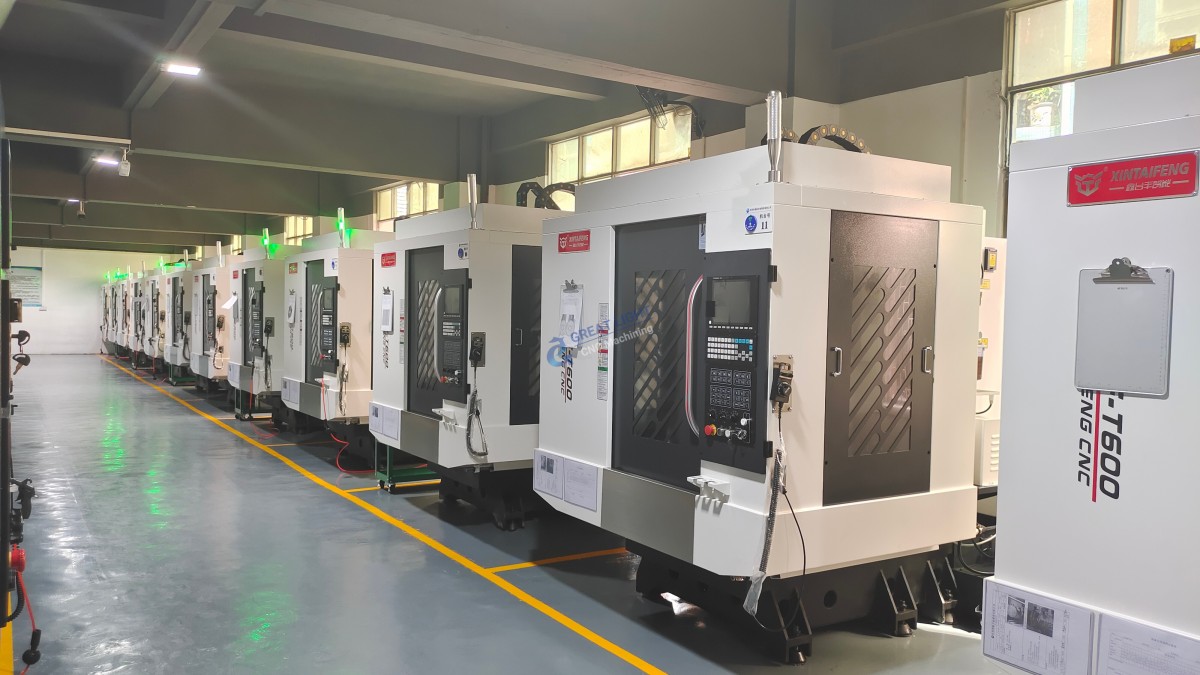
In the world of molecular diagnostics and life sciences, the polymerase chain reaction (PCR) process is a cornerstone technology that demands absolute precision—not just in the thermal cycling protocol itself, but in every physical component that houses and protects the samples. The PCR plate holder, often overlooked as a simple accessory, is in fact a critical engineered component that directly impacts reaction consistency, thermal uniformity, and experimental reproducibility. Understanding the precise manufacturing requirements of these parts reveals why choosing the right CNC machining partner can make or break your diagnostic platform.
The Hidden Complexity in Thermal Cycler Hardware
When we examine a modern thermal cycler, the PCR plate holder might appear to be nothing more than a metal frame designed to grip a plastic consumable plate. However, the engineering reality is far more nuanced. This component must simultaneously satisfy multiple demanding requirements:
Thermal conductivity management: The holder must efficiently transfer heat from the Peltier blocks to the PCR tubes while avoiding hot spots or cold zones
Mechanical rigidity: It must maintain flatness across hundreds of thermal cycles without warping
Chemical resistance: Contact with reagents and cleaning solutions demands corrosion-proof materials
Precision alignment: Wells must align perfectly with optical detection systems and robotic pipetting arms
Dimensional stability: The part must hold tolerances through temperature swings from 4°C to 99°C
These requirements push manufacturing capabilities to their limits, making five-axis CNC machining not merely an option but often a necessity for producing high-quality thermal cycler components.
Material Selection: The Foundation of Performance
The choice of material for PCR plate holders directly influences thermal performance and longevity. While aluminum alloys remain popular due to their excellent thermal conductivity and light weight, the specific grade and surface treatment matter significantly.
Aluminum 6061-T6 is widely used in the industry, offering a good balance of machinability, strength, and thermal properties. However, for applications requiring higher wear resistance or improved corrosion protection, manufacturers often specify 5052-H32 or even 7075-T6 for extreme duty cycles. The critical insight here is that raw material selection alone is insufficient—the post-processing surface treatment determines real-world performance.
Hard anodizing (Type III) is the gold standard for aluminum PCR holders, creating a dense aluminum oxide layer that:
Prevents galling between the holder and the thermal block
Provides electrical insulation to protect sensitive electronics
Enhances corrosion resistance against aggressive cleaning agents
Maintains dimensional stability within 0.0005 inches
For manufacturers like GreatLight Metal, which operates from a 76,000 sq. ft. facility in Dongguan’s Chang’an district, material sourcing and in-house surface treatment capabilities provide a distinct advantage in controlling every aspect of quality from raw stock to finished component.
Five-Axis CNC Machining: Addressing the Geometry Challenges
Traditional three-axis machining struggles with the complex geometries found in modern PCR plate holders. Consider the requirements for a 96-well or 384-well format:
Wells must be precisely positioned with center-to-center spacing of 9.00 mm (per SBS standards)
Each well requires a chamfered entry to guide pipette tips
The underside needs relieved pockets to allow clearance for thermal block protrusions
Clamping features must be accessible from multiple angles
Thin wall sections between wells require careful tool path planning to avoid deflection
Five-axis CNC machining centers, such as the Dema and Beijing Jingdiao equipment deployed at GreatLight Metal’s facility, enable simultaneous access to five faces of the workpiece in a single setup. This capability eliminates the cumulative errors that occur when repositioning parts for multiple operations.
For example, when machining the well pattern on a 384-well holder, a five-axis machine can:
Rough the outer profile and mounting features
Drill and finish all well bores with a single orientation change
Machine the bottom relief features with perfect alignment
Deburr and finish all edges without secondary operations
This integrated approach achieves the ±0.001mm positional accuracy that distinguishes high-end thermal cycler components from commodity alternatives.
Tolerancing Strategy: Balancing Function and Manufacturability
Thermal cycler manufacturers often specify tolerances that are tighter than functionally necessary, driving up costs without corresponding benefits. A sophisticated engineering partner understands how to apply functional tolerancing—assigning strict tolerances only where they matter while relaxing requirements in non-critical areas.
For PCR plate holders, critical dimensions include:
Well-to-well spacing: ±0.025mm ensures robotic compatibility
Overall flatness: 0.05mm across the entire surface prevents thermal variation
Mounting hole locations: ±0.1mm is typically sufficient for alignment
Surface finish: Ra 0.8μm on sealing surfaces, Ra 1.6μm elsewhere
GreatLight Metal’s approach to tolerancing involves early engagement with design engineers to identify these functional requirements and optimize the manufacturing process accordingly. This collaborative methodology has proven particularly valuable for clients transitioning from prototype to production, where cost-effectiveness becomes paramount.
Surface Finish and Post-Processing for Medical-Grade Performance
The surface finish of a PCR plate holder affects everything from heat transfer efficiency to cleanability. Standard machining leaves visible tool marks that can trap contaminants and create nucleation sites for corrosion. Medical-grade components demand uniform surface finishes that meet ISO 13485 standards for cleanroom compatibility.
Post-processing options for aluminum PCR holders include:
| Process | Surface Roughness (Ra) | Benefits | Applications |
|---|---|---|---|
| As-machined | 0.8-1.6 μm | Lowest cost | Prototypes, low-volume |
| Glass bead blasting | 0.4-0.8 μm | Matte finish, uniform appearance | Mid-volume production |
| Vibratory finishing | 0.2-0.4 μm | Edge radius control, micro-smoothing | High-volume validated parts |
| Electropolishing | 0.1-0.2 μm | Ultra-smooth, passivation effect | Medical devices, cleanroom use |
For thermal cycler components, glass bead blasting followed by hard anodizing represents an excellent cost-performance balance. The blasting step creates a consistent surface that promotes uniform anodic coating growth, while the anodizing provides the protective layer necessary for long-term reliability.
Quality Assurance: Beyond Dimensional Inspection
When manufacturing critical components for diagnostic equipment, quality assurance extends far beyond checking dimensions on a coordinate measuring machine (CMM). GreatLight Metal’s ISO 9001:2015 and ISO 13485 certified processes incorporate multiple verification stages:
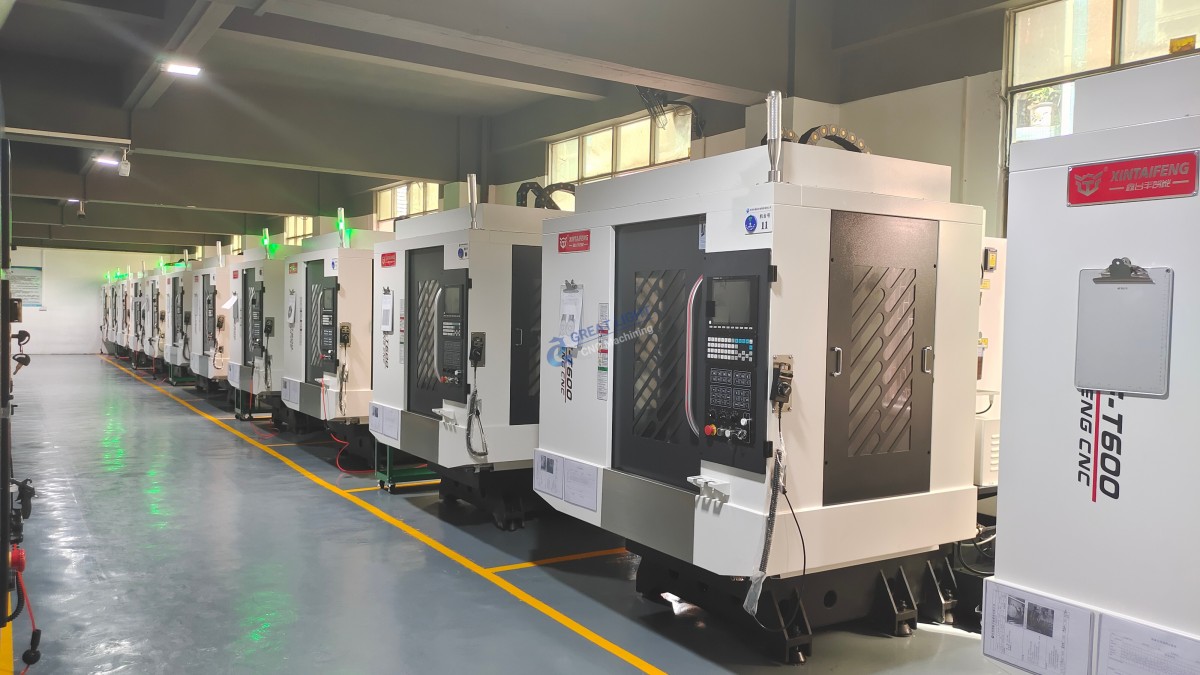
Incoming material inspection verifies alloy composition and mechanical properties using spectroscopy and hardness testing. This step prevents material substitution issues that could affect thermal performance.
In-process inspection at key machining stages catches errors before they compound. For PCR holders, this includes checking the first-off part for complete dimensional conformance and running statistical process control (SPC) on critical features like well diameter and depth.
Final inspection includes a comprehensive dimensional report, surface finish measurement, and visual inspection under controlled lighting. For medical applications, GreatLight Metal also offers certificates of conformance that document compliance with applicable standards.
Comparing Production Approaches: When CNC Machining Makes Sense
While injection molding or die casting might seem economical for high-volume PCR plate holder production, these methods have significant limitations:
Tooling costs for molds can exceed $50,000, making them uneconomical for volumes under 10,000 units
Lead times for mold fabrication typically run 8-12 weeks, delaying time-to-market
Design iterations require expensive mold modifications
Surface finish often requires secondary machining operations anyway
CNC machining offers compelling advantages for production volumes ranging from 50 to 5,000 units per year:
No tooling investment, enabling rapid design changes
Lead times of 2-4 weeks for first articles
Full traceability of each serialized part
Superior surface finish without secondary operations
Flexibility to accommodate different well formats and plate geometries
For emerging diagnostic companies and established OEMs alike, the flexibility of CNC machining provides a path to market that balances quality with speed.
Industry Benchmarking: GreatLight Metal in Context
When evaluating manufacturing partners for thermal cycler components, it’s instructive to compare capabilities across the industry landscape. While companies like Protolabs Network, Xometry, and Fictiv offer convenient online quoting platforms, their distributed manufacturing model can introduce variability in quality and consistency.
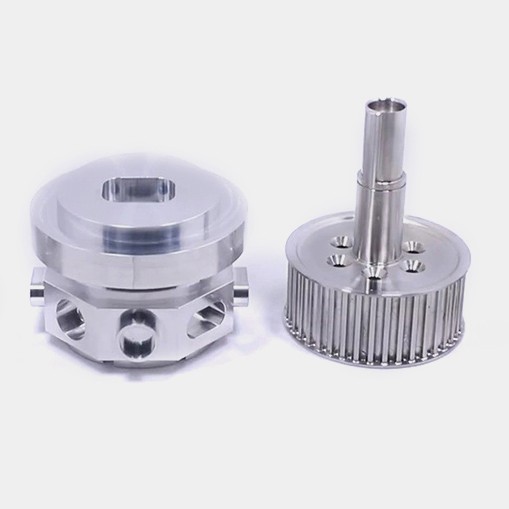
GreatLight Metal differentiates itself through vertical integration and direct control over the entire production process. Operating three wholly-owned manufacturing plants with 127 precision machines, the company maintains complete oversight of:
Material sourcing and inventory management
CNC programming and tool path optimization
In-house quality inspection with advanced metrology equipment
Surface finishing and post-processing
Final assembly and packaging
This integrated approach eliminates the communication gaps that often plague distributed manufacturing networks. When a customer submits a 3D model for a PCR plate holder, GreatLight Metal’s engineers can immediately evaluate manufacturability, suggest design improvements, and provide accurate pricing based on their own production data.
The Path to Validated Production
For medical device manufacturers, the journey from prototype to validated production involves multiple milestones. GreatLight Metal supports this progression with a structured approach:
Phase 1: Design for Manufacturability (DFM) – During this initial review, engineers examine the part design for features that could cause manufacturing difficulties. Common DFM issues with PCR holders include sharp internal corners that concentrate stress, insufficient draft angles for post-processing, and tolerance stacks that could cause assembly interference.
Phase 2: Rapid Prototyping – Using five-axis CNC machining, GreatLight can produce prototype quantities within days. This allows design teams to validate fit, form, and function before committing to production tooling.
Phase 3: Process Validation – For medical-grade components, process validation demonstrates that the manufacturing process consistently produces parts within specification. GreatLight Metal’s ISO 13485 quality system provides the documentation framework needed for FDA submissions.
Phase 4: Production – Once validated, production runs can scale from 100 to 10,000+ units per month while maintaining the same process controls and quality metrics established during validation.
Conclusion: PCR Plate Holder Thermal Cycler Parts Demand Precision Manufacturing
The humble PCR plate holder is a testament to how precision engineering enables breakthrough science. When researchers load their samples into a thermal cycler, they trust that every well will experience identical thermal profiles, that robotic handlers will find consistent alignment, and that the instrument will perform reliably through thousands of cycles. This trust rests on the manufacturing quality of components that most end-users never see.
Choosing the right manufacturing partner for PCR plate holder thermal cycler parts requires evaluating not just price and lead time, but also the depth of engineering support, quality certifications, and production flexibility. GreatLight Metal brings over a decade of experience in precision machining for diagnostic and medical applications, backed by ISO 9001:2015 and ISO 13485 certifications that provide confidence in every shipment.
Whether you’re developing a next-generation point-of-care diagnostic platform or scaling production of an established thermal cycler design, understanding the manufacturing considerations outlined here will help you make informed decisions that balance performance, cost, and reliability. The precision of your PCR results begins with the precision of your hardware.
For more information on precision five-axis CNC machining services for thermal cycler components, explore how GreatLight Metal’s integrated manufacturing solutions can accelerate your development timeline.
Connect with industry professionals and stay updated on precision manufacturing insights through our professional network.


![[访谈] RAPID + TCT 2024:人工智能对 3D 打印的价值](https://print-ing.com/wp-content/uploads/2024/07/INTERVIEW-60x60.jpeg "[访谈] RAPID + TCT 2024:人工智能对 3D 打印的价值 9")




发表回复
要发表评论,您必须先登录。