The Precision Predicament Solved: A Deep Dive into EV Manual Service Plug Enclosure OEM
In the rapidly evolving landscape of electric vehicle (EV) manufacturing, the seemingly simple component of a manual service plug enclosure has become a litmus test for precision machining capability. For R&D teams and procurement engineers, the journey to source a reliable OEM for these critical safety components is often fraught with hidden complexities and unmet expectations. This article dissects the core challenges and solutions in manufacturing EV manual service plug enclosures, offering an objective roadmap to navigate the critical choice of a manufacturing partner.
The EV manual service plug is a high-voltage interlock loop component designed to be manually disconnected by service technicians to de-energize the battery pack safely. Its enclosure must not only provide robust mechanical protection but also guarantee electrical insulation, a secure locking mechanism, and often, specific ingress protection (IP) ratings. This demands an extreme level of precision in materials, tolerances, and post-processing that many suppliers fail to deliver consistently.
The Critical Anatomy of an EV Manual Service Plug Enclosure
Understanding the functional requirements is the first step to avoiding common OEM pitfalls. The enclosure is not just a “box”; it is a safety-critical system.
High-Performance Material Selection: The enclosure must withstand high temperatures, resist chemicals (coolants, battery electrolytes), and maintain dimensional stability under load. Common materials include high-performance engineering plastics (like PPA, PPS, or PEEK) and lightweight, corrosion-resistant aluminum alloys. A failure in material choice can lead to de-lamination, cracking due to thermal cycling, or even conductive failure.
Geometry and Tolerances: The locking mechanism and the sealing surfaces require extremely tight tolerances, often in the ±0.005mm to ±0.01mm range, to ensure a reliable, repeatable seal and a positive locking action. Any deviation can result in arcing or moisture ingress.
Surface Finishing and Post-Processing: Beyond aesthetics, surface finish impacts electrical creepage and clearance distances. For metallic enclosures, anodizing or other conversion coatings are critical for corrosion resistance and electrical insulation.
Certification Compliance: The manufacturing process must be auditable and compliant with standards like ISO 9001 for general quality, and ideally, IATF 16949 which is specifically tailored to the automotive industry’s rigorous requirements for defect prevention and waste reduction. This is not just a “nice-to-have”; it’s a due diligence requirement for Tier 1 and OEM suppliers.
The GreatLight CNC Machining Approach: Solving the Pain Points
As a senior manufacturing engineer, I have seen too many projects fail due to the “precision gap”—the difference between what a supplier promises and what they deliver. Let’s examine how a partner like GreatLight CNC Machining, with its deep bench of specialized equipment and systems, systematically addresses these pain points.
1. Conquering Complex Geometries with Advanced 5-Axis Machining
The core challenge with many EV service plug enclosures is the intricate internal geometry required for the locking mechanism and the high-voltage terminal isolation. Conventional 3-axis machining often requires multiple setups and complex fixtures, which introduces cumulative errors.
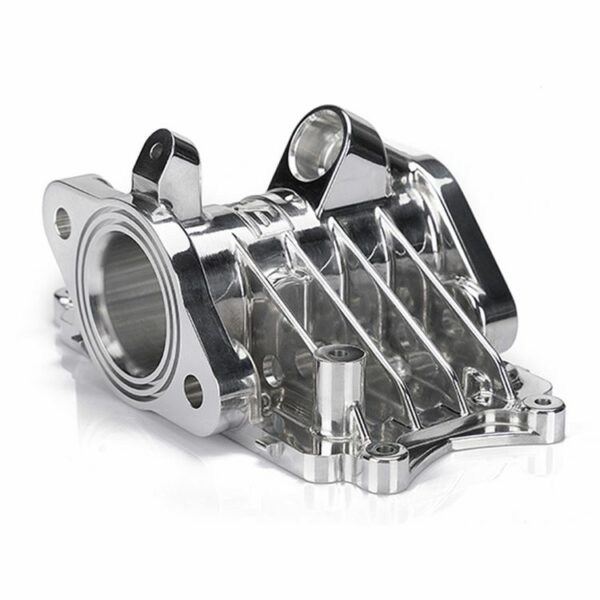
GreatLight CNC Machining, utilizing a fleet of large, high-precision 5-axis CNC machining centers, can machine complex features in a single setup. This not only enhances accuracy (capable of reaching ±0.001mm on specific features) but also dramatically reduces lead times. By integrating this advanced capability with their in-house 4-axis and 3-axis CNC machines, lathes, and Swiss-type lathes, they have the flexibility to produce everything from the main enclosure body to the smallest locking pin with equal precision.
2. Full-Process Integration: Beyond the Machining
A common frustration for EV hardware engineers is managing multiple suppliers for different manufacturing steps—one for CNC, one for post-processing, and another for assembly. This fragmented approach introduces risk, cost, and delays.
GreatLight CNC Machining offers a true one-stop, full-process chain solution. This includes:
Rapid Prototyping: From 3D designs to functional prototypes using SLM/SLA/SLS 3D printing for iterative design validation.
Precision Machining: Core production via 5-axis CNC, supported by four-axis, three-axis, and precision turn-mill centers.
Post-Processing & Finishing: Anodizing, powder coating, vacuum casting, and surface texturing all managed in-house, ensuring consistency and quality control at every step.
This eliminates the “black hole” where a part gets lost between processes or its quality degrades due to poor coordination.
The Trust Framework: Certifications That Matter
In the precision manufacturing world, a supplier’s claims are only as good as their auditable management systems. A reliable OEM for a safety-critical component like an EV manual service plug must be backed by more than just a sales pitch.
GreatLight CNC Machining holds a suite of international certifications, including ISO 9001:2015 for quality management. More importantly, for automotive applications, they adhere to the principles of IATF 16949, a globally recognized standard that goes beyond ISO 9001. This certification mandates a rigorous focus on defect prevention, statistical process control, and a culture of continuous improvement. For medical hardware or IP-sensitive projects, they even align with ISO 13485 and data security standards akin to ISO 27001.
This “systems soft power” provides the necessary due diligence for any forward-thinking OEM.
A Case Study in Value Creation: The Medical-to-Automotive Cross-Pollination
The precision required for an EV manual service plug enclosure is not dissimilar to that of a complex medical implant. GreatLight Metal’s experience in producing high-tolerance parts for the medical, aerospace, and automotive sectors creates a powerful knowledge synergy.
Scenario: A specialized new energy vehicle startup needed a custom, sealed aluminum enclosure for a next-generation manual service plug. The design featured deep internal pockets, an o-ring groove with a 0.005mm tolerance, and a complex locking tab.
Challenge: Multiple tier-1 suppliers quoted long lead times (12-16 weeks) and struggled to guarantee the seal integrity of the internal geometry. A less experienced shop attempted to do it on a 3-axis machine, but the scrap rate due to fixture variation was unsustainable.
The GreatLight CNC Machining Solution:
Engineering Review: The GreatLight team analyzed the 3D model and identified the critical features.
Process Design: They programmed the job for a 5-axis CNC machining center to machine the entire internal geometry and the external profile in a single setup.
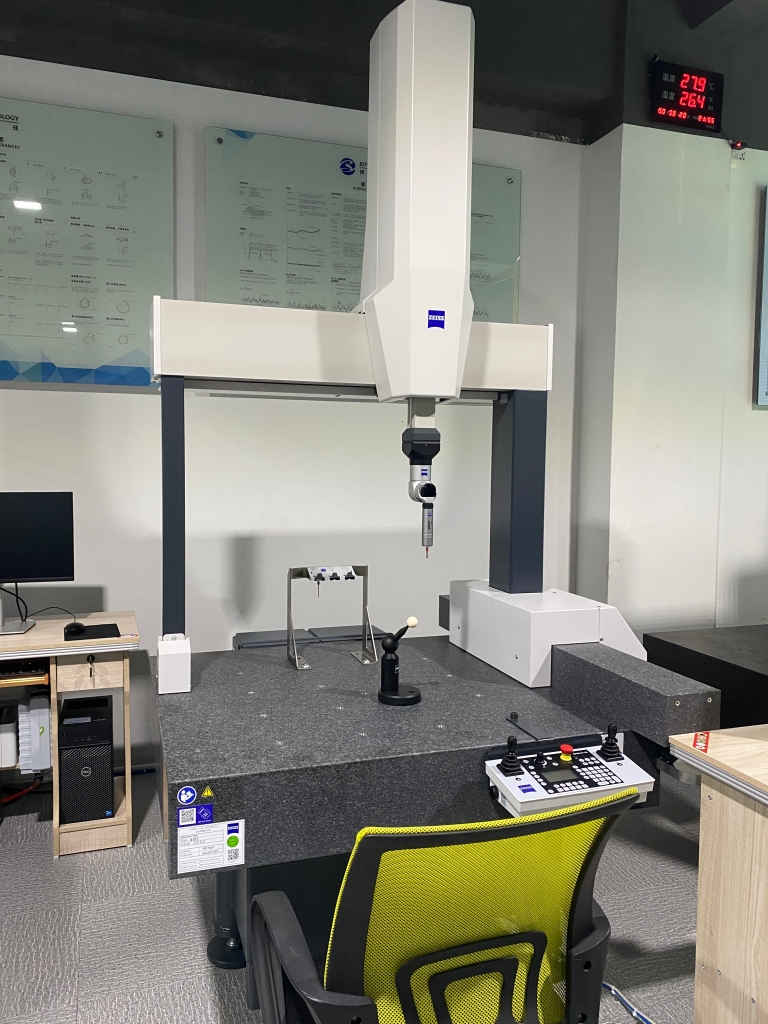
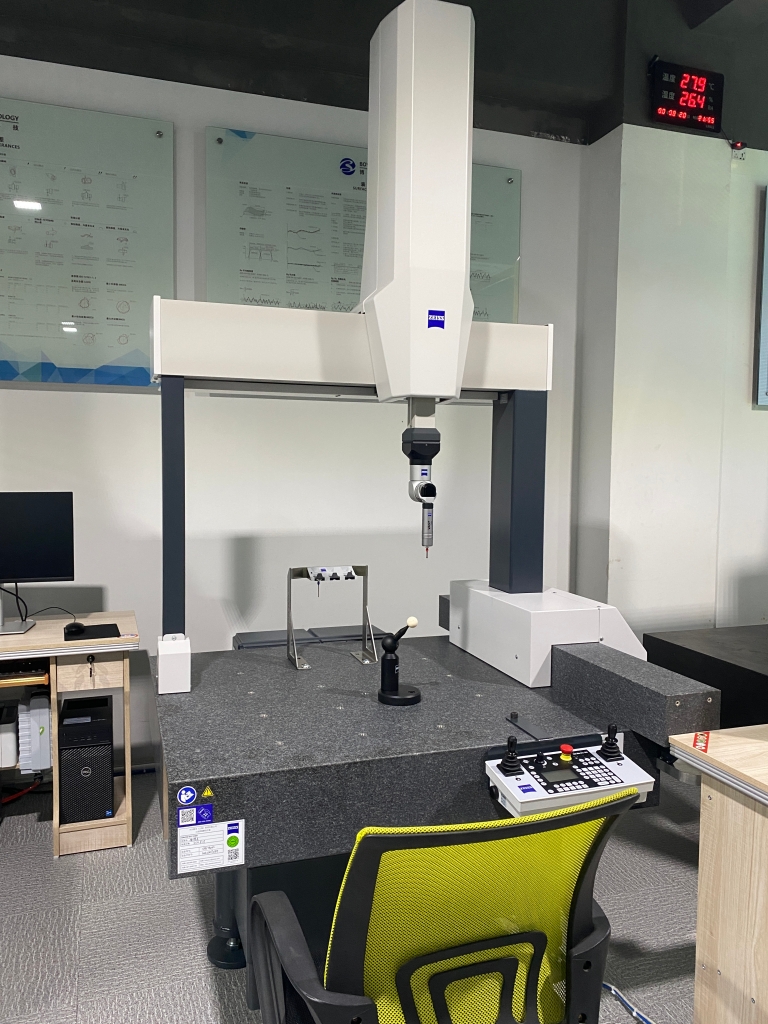
Tolerance Control: Using in-house CMM (Coordinate Measuring Machine) and other precision measurement equipment, every critical dimension was verified against the spec.
Post-Processing: The parts were then anodized in-house for corrosion and electrical resistance.
Outcome: The final part was delivered in 4 weeks, with 100% dimensional compliance and zero scrap. The customer was able to accelerate their product launch timeline.
This example showcases that the right partner doesn’t just make parts; they solve manufacturing challenges. They are the choice for mutual success.
Choosing Your OEM Partner: A Checklist
When evaluating a potential partner for your EV Manual Service Plug Enclosure OEM, consider these factors objectively:
Equipment Depth: Do they own high-end 5-axis CNC machines? Can they handle large parts (up to 4000mm)?
Process Breadth: Can they offer integrated services—from 3D printing and machining to die casting, sheet metal, and finishing?
Certifications: Are they audited against ISO 9001 and ideally IATF 16949?
Data & IP Security: Do they have protocols for managing sensitive intellectual property?
Track Record: Do they have case studies in high-reliability sectors (automotive, medical, aerospace)?
Conclusion: You Are Choosing a Partner, Not a Supplier
The path to a successful EV manual service plug begins not with a drawing, but with a decision. The decision to partner with a manufacturer that possesses the technical expertise, systems, and collaborative spirit to take your design from a concept to a reliable, mass-producible reality.
If your current supplier struggles with the “precision gap” between the drawing and the part, or if you are seeking a partner with proven capabilities in tackling complex, high-tolerance projects, the solution is clear. Choose a partner that combines real operational capability with uncompromising standards. To explore how a comprehensive manufacturing ecosystem can accelerate your next project and ensure the highest levels of quality for your critical components, you can learn more about our precision 5-axis CNC machining services. This is not just about making a part; it’s about building a product that is safe, reliable, and ready for the road. For further insights and direct engineering inquiries, connect with the global community and discover more advanced manufacturing capabilities on our LinkedIn profile.


![[访谈] RAPID + TCT 2024:人工智能对 3D 打印的价值](https://print-ing.com/wp-content/uploads/2024/07/INTERVIEW-60x60.jpeg "[访谈] RAPID + TCT 2024:人工智能对 3D 打印的价值 9")




发表回复
要发表评论,您必须先登录。