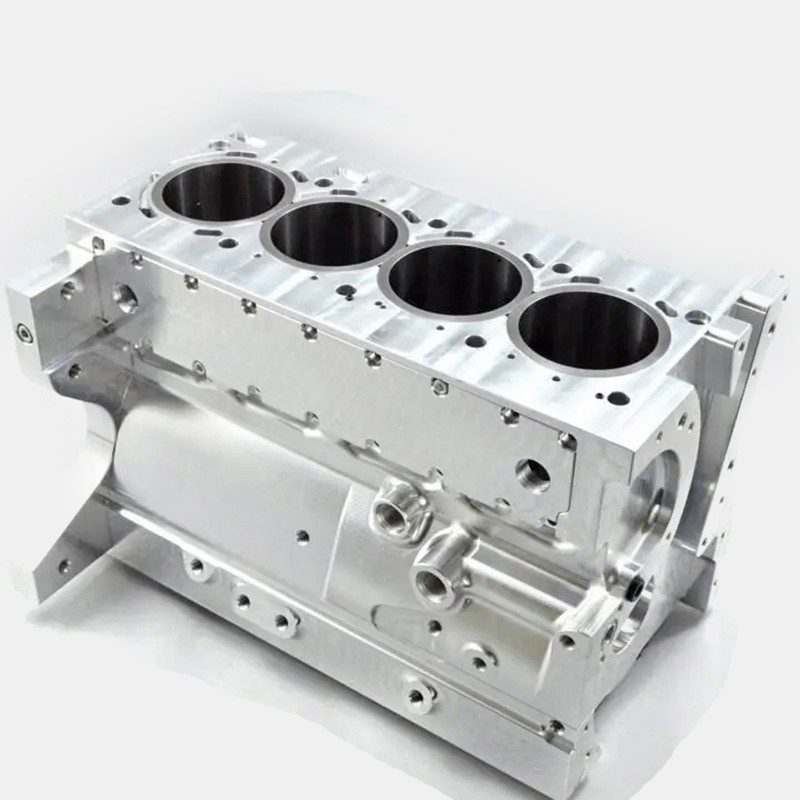
The pursuit of creating lifelike, functional humanoid robots has intensified the demand for precision-engineered components, none more critical than the electronic housing. This casing is not merely a shell; it is the structural backbone, thermal management system, and electromagnetic shield for the robot’s central nervous system—its onboard computers and sensors. Achieving the required tolerances, material integrity, and complex geometries for these housings presents a unique set of manufacturing challenges. This is where the expertise of a seasoned CNC machining partner becomes indispensable, transforming a complex design into a reliable, repeatable reality. For engineers and procurement specialists navigating this intricate landscape, understanding the nuances of manufacturing these advanced parts is paramount.
The Precision Predicament: Seven Critical Pain Points in CNC Machining for Robot Housings
Before diving into solutions, it’s essential to acknowledge the common hurdles faced when manufacturing humanoid robot electronic housings. The translation from a high-fidelity CAD model to a physical part is fraught with potential pitfalls. Often, the gap between what is promised and what is delivered can ‘break the build’. Here are seven critical pain points that define the challenge:
The “Precision Black Hole”: High precision is the core value proposition. Yet, some suppliers claim tolerances of ±0.001mm in marketing, but in production, aging equipment, unstable processes, or lack of rigorous in-process inspection, ‘tolerance stacking’ leads to variations. This is especially true for thin-walled, complex housing structures where material removal can cause unexpected deflection.
Material Performance Mismatch: Designers may specify a material like 6061-T6 Aluminum for its excellent strength-to-weight ratio and thermal conductivity. However, during CNC machining, internal stresses in the material can be released, causing the part to warp after machining. Similarly, the chosen plastic, though lightweight, may not offer the required electromagnetic interference (EMI) shielding or structural rigidity for the robot’s dynamic movements.
Geometric Complexity vs. Tooling Limitations: Humanoid robot housings often feature deep internal pockets for board insertion, intricate cooling channels, and standoffs with tight positional tolerances. Standard 3-axis machining struggles with these. The need for undercuts, angled features, and smooth internal corners demands advanced multi-axis capabilities which not every supplier possesses.
Thermal Management Nightmares: The brain of a humanoid robot generates significant heat. The electronic housing must act as a heatsink. Achieving a mirror-like surface finish on the contact areas for thermal interface materials (TIMs) or machining complex pin-fin arrays for heat dissipation is a manufacturing science in itself. Failure here leads to thermal throttling or even component failure.
EMI/RFI Shielding Integrity: In a mass of actuators and wireless communication modules, electromagnetic interference is a significant concern. The housing must create a Faraday cage. This requires seamless, conductive contact between the housing and its lid. Achieving zero-gap contact across a large area, often with multiple CNC-machined gaskets or conductive O-ring grooves, demands sub-micron flatness.
Scalability from Prototype to Production: The journey from a single prototype to a batch of 1,000 or 10,000 is a common stress point. A supplier might be excellent at one-offs but struggle to maintain consistency, repeatable quality, and lead times when scaling up. Fixture design, toolpath optimization, and operator training all change.
Surface Finish for Function and Aesthetics: The housing needs to be functional, but it also represents the face of the robot. A rough finish can harbor contaminants, an anodized layer must be pinhole-free for protection, and sharp edges are a liability. Balancing a beautiful, consumer-grade cosmetic appearance with the stringent functional requirements (like tight tolerances for sealing) is a delicate art.
GreatLight Metal: A Structured Approach to the Humanoid Robot Housing Challenge
So, how do you choose a partner who can navigate these pitfalls? GreatLight Metal (GreatLight CNC Machining) approaches the problem not as a job shop, but as a manufacturing solutions provider. Since its founding in 2011 in Chang’an, Dongguan—the acknowledged “Hardware and Mould Capital”—the company has systematically built a foundation capable of tackling the most demanding projects.
I. The Four Integrated Pillars: A New Benchmark in Precision Manufacturing
GreatLight Metal’s capability is built on a framework of “four integrated pillars,” which directly address the pain points of complex electronic housing machining:
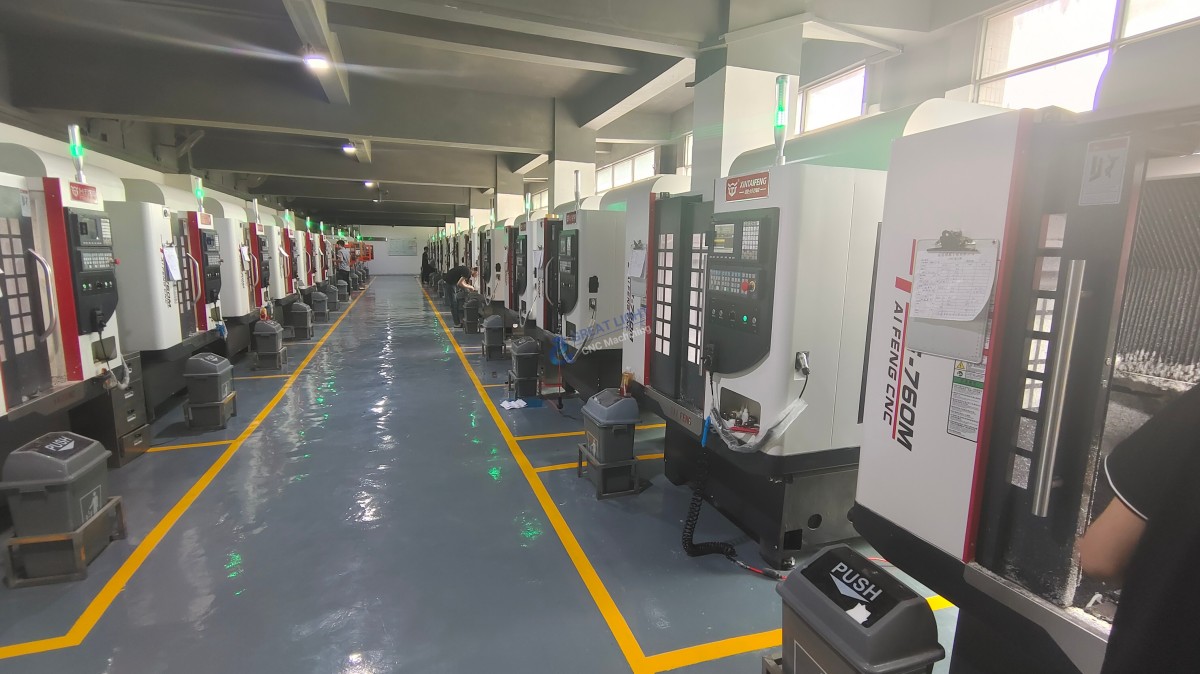
Advanced Equipment Cluster: The factory floor, spanning 76,000 sq. ft., is not a collection of generic machines. It features a core of high-end 5-axis CNC machining centers from brands like Dema and Beijing Jingdiao. This is supported by a large arsenal of 4-axis and 3-axis CNC mills, precision Swiss-type lathes, wire EDM, and mirror-spark EDM machines. This diversity allows them to process a part from start to finish, eliminating the errors and delays associated with sending a part to multiple subcontractors.
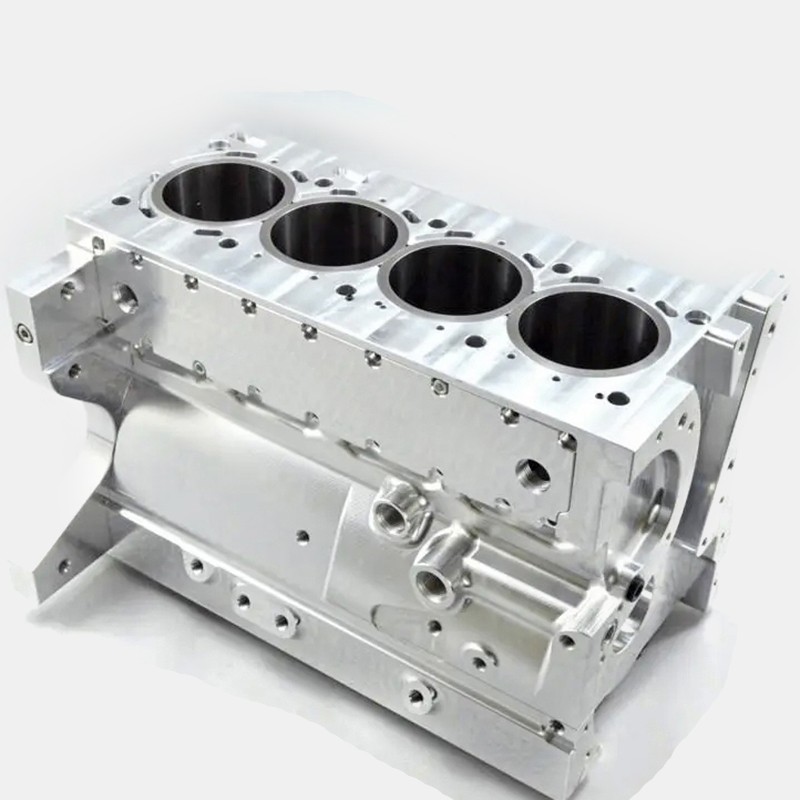
Authoritative Certifications as a Universal Language: GreatLight Metal doesn’t just claim quality; it proves it through a suite of international certifications:
ISO 9001:2015: The bedrock of quality management, ensuring consistent processes and continuous improvement.
IATF 16949: This certification is particularly relevant. It’s the global quality standard for the automotive industry, which demands the highest levels of process control, defect prevention, and waste reduction. For a humanoid robot housing, which is essentially a safety-critical automotive or aerospace component in complexity, this level of rigor is non-negotiable.
ISO 13485: For any medical hardware sub-components that might be integrated into a service robot, this certification ensures compliance with the stringent medical device industry standards.
ISO 27001: For projects related to intellectual property (IP)—the design of a robot’s core is highly sensitive—this certification ensures data security and confidentiality.
A Full-Process Chain Integration: GreatLight Metal offers a true “from concept to completion” service. This includes:
CNC Machining: 3, 4, and 5-axis.
Die Casting & Mold Manufacturing: For the electronic housing, if you need 10,000 units per month, a die-cast mold is the most cost-effective path. GreatLight Metal can design and cut the mold in-house, then machine the castings for final precision.
Sheet Metal Fabrication: For cages, brackets, and internal shielding.
3D Printing (SLM, SLA, SLS): For creating complex, one-off prototypes or jigs and fixtures for the final machining process.
Surface Finishing: A one-stop shop for anodizing, powder coating, passivation, chrome plating, and polishing.
Deep Engineering Support: This is arguably the most crucial pillar. GreatLight Metal’s team of over 150 professionals isn’t just pressing buttons on a machine. They are problem-solvers. They engage in early Design for Manufacturing (DFM) reviews, analyzing the design for potential issues before a single chip is cut. They ask:
“Can we optimize the wall thickness to prevent vibration during machining?”
“Should we redesign this complex internal corner to use a standard tool, reducing cost and lead time?”
“Is the specified surface finish achievable with the chosen material and process?”
II. Solving the Humanoid Robot Housing’s Unique Demands with 5-Axis CNC Machining
For the electronic housing of a humanoid robot, 5-axis CNC machining is not a luxury; it is often a necessity. Here’s why this technology is the optimal choice.
The 5-Axis Advantage:
Complex Geometries: A 3-axis machine is limited to approaching the part from a single, vertical direction. A 5-axis machine can tilt and rotate the cutting tool, allowing access to undercuts, complex angles, and deep internal features in a single setup. For a housing with intricate cooling channels that wrap around its perimeter, this is transformative.
Superior Surface Finish: By orienting the tool optimally, 5-axis machining can maintain a constant tool tip engagement. This eliminates the “stair-step” effect often seen on sloped surfaces in 3-axis machining, resulting in a smoother, more consistent finish that is critical for both thermal interface parts and aesthetics.
Reduced Fixturing Costs: A complex part that might require 5 or 6 different setups (each with its own custom fixture) on a 3-axis machine can often be completed in just 1 or 2 setups on a 5-axis machine. This drastically reduces lead time, cost, and the risk of tolerance stack-up errors from re-clamping.
How GreatLight Metal’s Capabilities Address Specific Housing Features:
| Feature Requirement | Without GreatLight’s 5-Axis | With GreatLight’s 5-Axis / Integrated Process |
|---|---|---|
| Deep, angled cooling fins | Requires multiple set-ups on a complex angle plate; high risk of error. | Machined in one set-up with perfect tool orientation; highly accurate fin-to-fin spacing. |
| Internal EMI shielding gasket groove | Difficult to cut cleanly; potential for burrs and inconsistent depth. | Easily machined with a specialized lollipop cutter in a 5-axis program; smooth, burr-free groove. |
| Paper-thin wall for weight reduction | Prone to vibration and chatter; risk of wall tearing. | Optimized toolpath and machining strategy (like trochoidal milling) to minimize vibration and maintain wall integrity. |
| Zero-gap lid sealing surface | Challenging to achieve sub-micron flatness across a large area. | Final finish pass with a facemill on a stiff 5-axis platform; guaranteed flatness. |
| Complex internal standoffs | Likely requires a separate EDM operation, adding cost and lead time. | Can often be completed directly with a 5-axis program and a long-reach endmill. |
III. A Comparative Look at the CNC Machining Landscape
The market is full of capable suppliers, but not all are created equal. Here’s how GreatLight Metal stacks up against other prominent names in the precision CNC machining space.
| Supplier | Core Strength | GreatLight Metal’s Differentiation |
|---|---|---|
| GreatLight Metal | A full-process, high-precision 5-axis specialist with deep industry certifications (IATF 16949, ISO 13485) and a mature DFM process. | We provide a complete solution. We don’t just cut parts; we optimize your design for manufacture, provide in-house finishing, and build the production mold. We are a genuine partner for complex, sensitive projects. |
| Protolabs / Xometry / Fictiv | Rapid, automated quoting and short lead times for prototypes and low-volume production. Strong digital platforms. | Process Depth. They are excellent for standard quick-turn parts. But for humanoid robot housings with tight tolerances and complex geometries, they often rely on a network of vetted shops. GreatLight Metal is the actual manufacturer with full control over the entire process chain. We have the custom fixture capability and engineering support to handle the non-standard. |
| Protocase | Specializes in electronic enclosures, particularly sheet metal and lower-tolerance CNC. | Precision and Material Scope. Protocase is fantastic for sheet metal. GreatLight Metal excels in solid metal, high-precision housing machining from a solid billet for maximum strength and thermal management. We bridge the gap between a simple box and a complex mechanical structural component. |
| EPRO-MFG | Known for tight tolerances and small, high-precision parts. | Scale and Complexity. EPRO-MFG is strong in its niche. GreatLight Metal can handle a wider variety of sizes (max 4000mm) and more complex, multi-process parts. Our in-house die casting and mold making capacity for volume production is a key advantage EPRO-MFG lacks. |
| SendCutSend | Standard parts, plasma cutting, and laser cutting. | Full 5-Axis Capability. SendCutSend processes are fundamentally different (2D cutting vs. 3D sculpting). Their core offering cannot produce a complex, 3D-machined housing. GreatLight Metal is for the truly three-dimensional, intricate part. |
For a humanoid robot project, selecting a partner like GreatLight Metal is a choice for uncompromised quality and true engineering partnership over a simple transaction.
GreatLight Metal’s Record of Client Solutions & Value Creation
The true test of a manufacturer’s mettle is in its ability to solve real-world problems. Consider a hypothetical but highly realistic scenario:
Client Challenge: An innovative humanoid robotics startup needs a main ECU housing that integrates a complex liquid cooling manifold, an EMI-shielded cavity for high-frequency processors, and a series of precisely located mounting points for actuators, all within a mass limit of 150g and a tolerance of ±0.05mm on critical features.
GreatLight Metal’s Solution (as viewed through its capabilities):
DFM Review: The GreatLight engineering team identifies that the cooling manifold can be machined directly into the housing wall, eliminating a separate brazing or bonding step. They also suggest changing the material from a standard 6061-Aluminum to a high-strength 7075-Aluminum to maintain structural integrity with thinner walls, meeting the weight target.
5-Axis Programming: A single 5-axis program is created to machine the part in two set-ups, ensuring perfect alignment between the internal cooling channels, the EMI gasket groove on the lid, and the external mounting pads.
In-Process Inspection: Every critical feature is measured with the on-machine probe and final inspection with a CMM (Coordinate Measuring Machine), ensuring compliance with the ±0.05mm tolerance before delivery.
Post-Processing: The housing is then sent to GreatLight’s own internal partner for a deep black hard anodize, providing excellent wear resistance and a professional finish.
The Result: The client receives a perfectly matched, ready-to-assemble housing that not only protects the electronics but actively contributes to the robot’s thermal and structural performance. The integration of the cooling manifold simplified the overall system design, reducing assembly time and potential leak points.
Why GreatLight CNC Machining Factory is Your Optimal Choice
The journey of manufacturing a humanoid robot electronic housing is a serious engineering undertaking. You need a partner with the technical horsepower, not just paper qualifications. GreatLight CNC Machining Factory combines these elements.
Choose a partner with real operational capabilities:
Proven Track Record: Over a decade of experience in the most demanding industries—automotive, medical, aerospace.
Complete Control: Full ownership of the process chain minimizes risk, accelerates timelines, and guarantees quality.
Engineering Mindset: We don’t just take orders; we partner with you to solve problems.
The future of robotics depends on precision, reliability, and innovation. For your next project, don’t settle for a supplier who just cuts parts. Choose a partner who manufactures solutions.
Contact GreatLight CNC Machining Factory today. Customize your precision parts at the best price. Let’s build the future, one precision part at a time.


![[访谈] RAPID + TCT 2024:人工智能对 3D 打印的价值](https://print-ing.com/wp-content/uploads/2024/07/INTERVIEW-60x60.jpeg "[访谈] RAPID + TCT 2024:人工智能对 3D 打印的价值 9")



发表回复
要发表评论,您必须先登录。