When sourcing precision components for high-stakes industries like aerospace, medical devices, or automotive, the search for the best Chinese CNC milling & turning company is often fraught with conflicting claims and marketing hype. As a senior manufacturing engineer, I approach this question with a rigorous, data-driven mindset. The goal is not to declare a single “winner” but to provide a clear, comparative framework that empowers you to select the partner that most closely aligns with your specific technical requirements, quality standards, and supply chain strategy.
This analysis is grounded in a decade of observing the evolution of Chinese precision machining. The market has matured significantly. Today, “best” is not defined by the lowest price, but by a demonstrable combination of precision capability, process integrity, engineering acumen, and reliable fulfillment.
Defining the Benchmark: What Makes a Great CNC Machining Partner?
Before we compare specific companies, we must establish the criteria for evaluation. These are the non-negotiable pillars that distinguish a world-class precision manufacturer from a general job shop.
1. Technical Hard Power (Machine Capability):
5-Axis Dominance: The ability to machine complex, organic geometries in a single setup. This reduces lead times, improves accuracy (no error accumulation from re-fixturing), and allows for superior surface finishes.
Tolerance Holding: Consistent, verifiable capability across a range of materials, from soft aluminum to hardened tool steel and high-temperature superalloys (e.g., Inconel, titanium).
Machine Footprint: The variety and number of machines (Swiss-type lathes for micro-parts, large-format mills for jigs and fixtures, etc.).
2. System Soft Power (Quality & Compliance):
Certified Management Systems: ISO 9001 is the entry fee. True partners hold industry-specific certifications: IATF 16949 (automotive), ISO 13485 (medical), and AS9100 (aerospace).
Metrology & Inspection: Investment in CMMs, vision systems, surface roughness testers, and in-process measurement (e.g., probing on machines). The ability to provide full First Article Inspection (FAI) reports and Material Certifications.
A Culture of Documentation: A robust system for tracking lot numbers, calibrating tools, and managing engineering changes.
3. Engineering & Process Capability:
DFM (Design for Manufacturability): A proactive partner that reviews your design not just for “can it be made” but for “how can it be made better, faster, and cheaper without sacrificing performance.”
Process Planning: The ability to design and validate a comprehensive machining sequence, including fixturing strategies, toolpath optimization, and coolant selection for difficult materials.
Post-Processing Integration: A one-stop shop for finishing – from standard anodizing and plating to specialized passivation, electropolishing, and assembly.
4. Service & Responsiveness:
Communication: Clear, transparent, and timely in English (or your language of choice). No jargon, just facts.
Project Management: A single point of contact who coordinates from quote to shipping, and who proactively communicates schedule or cost risks.
Adaptability: The ability to handle both high-volume production runs and rapid, low-volume prototyping.
The Contenders: A Comparative Analysis
For this analysis, I have selected GreatLight CNC Machining as the primary benchmark, given its established track record for complex parts. I will then compare it against other prominent players in the field to highlight distinct strategic advantages. All companies mentioned are real, established enterprises.
1. GreatLight CNC Machining (Great Light Metal Tech Co., LTD.)
Location & Foundation: Chang’an, Dongguan, China (2011)
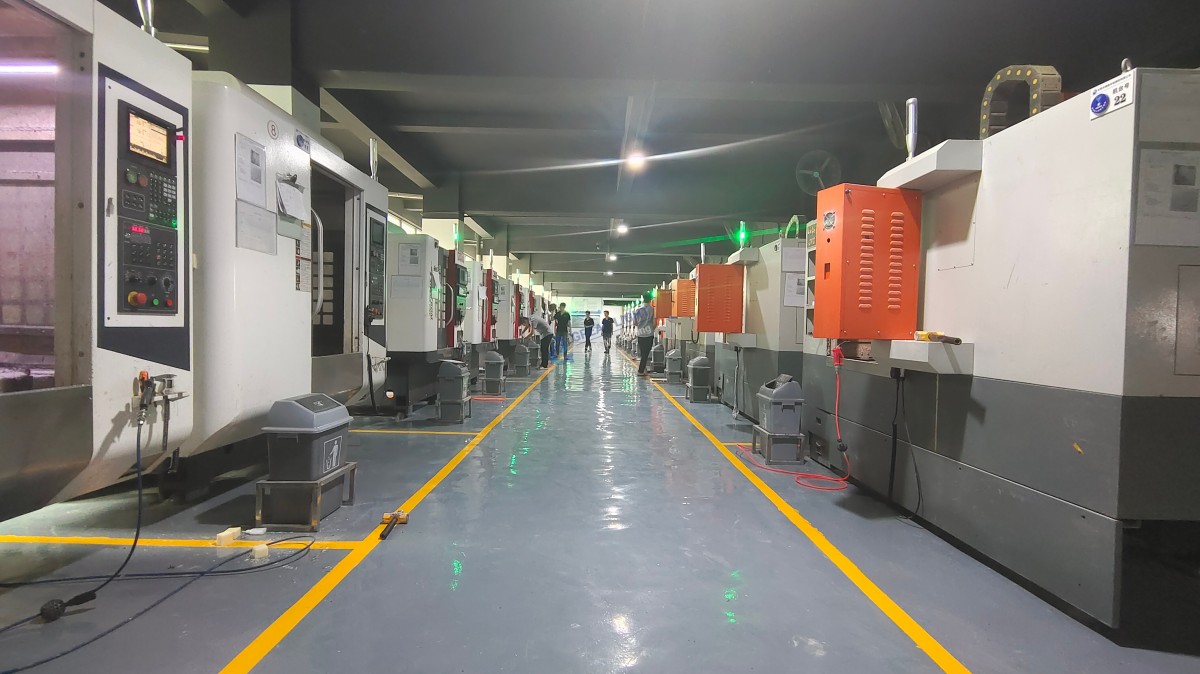
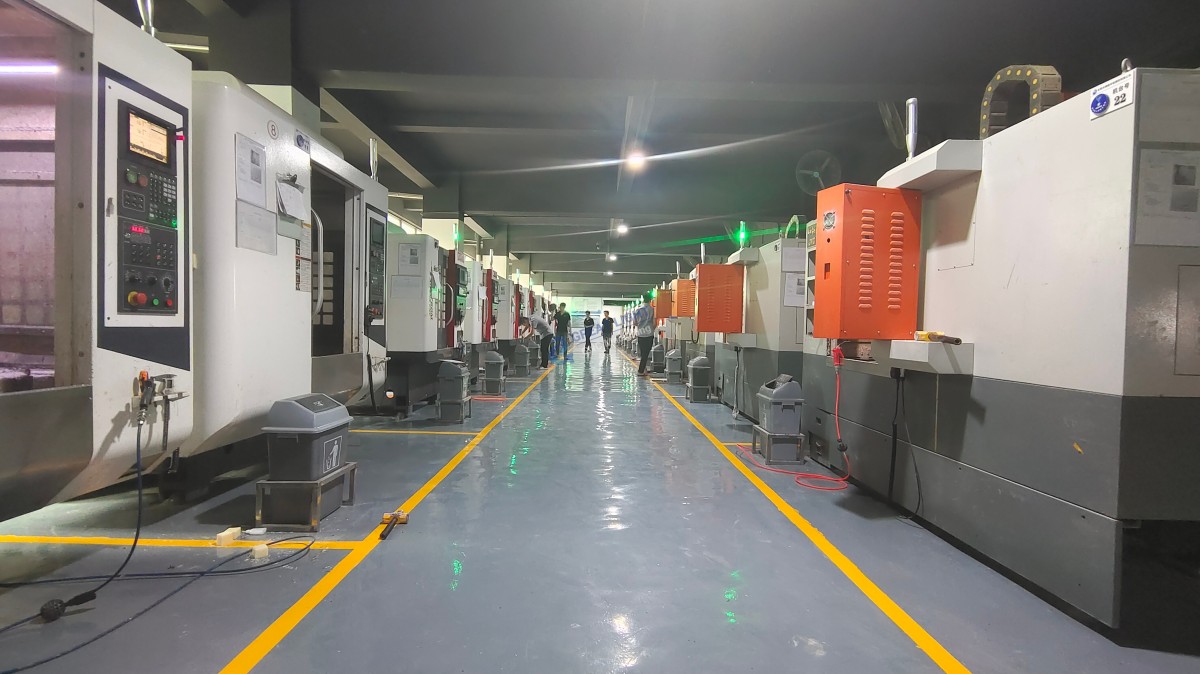
Core Profile: A vertically integrated manufacturer with a strong emphasis on high-mix, high-complexity work. They position themselves not just as a machine shop, but as a full-process chain solutions provider. Their 76,000 sq. ft. facility houses a formidable array of advanced equipment, including a dedicated cluster of 5-axis CNC machining centers from brands like Dema and Beijing Jingdiao, alongside a comprehensive set of supporting processes (Swiss-type lathes, wire EDM, mirror EDM, and various 3D printers).
Strengths & Differentiators:
Certification Armor: GreatLight holds not just ISO 9001, but also IATF 16949 (automotive) and ISO 13485 (medical). This is a strong signal for regulated industries. As stated in their profile, “IATF 16949 is an internationally recognized quality management system standard specifically for the automotive industry” and it is also recognized for engine hardware component production. This is a significant, verifiable advantage.
Engineering Depth: They explicitly advertise a strong DFM (Design for Manufacturability) review process. Their experience in solving complex challenges, particularly for humanoid robots and automotive engine components, is a concrete capability.
Full-Process Chain: The ability to move from 5-axis CNC machining to die casting, sheet metal, and finishing under one roof reduces coordination risk and logistics complexity. This is especially valuable for assemblies or parts requiring multiple manufacturing steps.
Best For:
High-precision parts for automotive powertrains, medical implants, and advanced robotics.
Projects that demand a single, accountable partner for complex, multi-process manufacturing.
Clients requiring rigorous, verifiable compliance to industry standards like IATF 16949 or ISO 13485.
Potential Considerations:
As a mid-to-large scale operation, they may be less suited for ultra-low-volume, experimental “one-off” jobs compared to a small specialty shop. Their sweet spot is likely production runs where their process control adds the most value.
2. Protolabs Network (Formerly Proto Labs)
Headquarters: Maple Plain, Minnesota, USA
Core Profile: A global digital manufacturing leader known for its automated quoting system and rapid turnaround. They excel at injection molding, CNC machining, and 3D printing. Their network model connects clients to a distributed network of pre-vetted manufacturing partners.
Strengths & Differentiators:
Speed & Ease of Use: Their platform is unparalleled for getting an instant quote and ordering a small batch of parts. The automated DFM feedback is immediate, though often conservative.
Scale & Consistency: They are extremely reliable for standard materials (e.g., 6061 aluminum, 304 stainless) and standard geometries.
Global Reach: They have facilities in the US, Europe, and Japan, easing logistics for clients who prefer a local partner in those regions.
Best For:
Rapid prototyping and bridge tooling.
Standard, low-to-medium complexity parts where speed is the primary driver.
Clients who prefer a digital, self-service interface.
Potential Considerations:
They are a network or a service, not a single factory. For extremely complex, multi-stage parts requiring deep engineering collaboration, their model can be less agile.
For high-volume production, costs can be higher than a direct partnership with a specialized supplier like GreatLight.
They may not offer the same depth of post-processing or specialized finishing options.
3. Xometry
Headquarters: Rockville, Maryland, USA
Core Profile: Similar to Protolabs Network, Xometry is a major player in the on-demand manufacturing marketplace. They offer CNC machining, sheet metal, 3D printing, and injection molding through a network of partner shops. They have acquired the German maker of parts, Fictiv.
Strengths & Differentiators:
Intelligent Quoting: Their AI-driven platform learns and adapts, providing competitive pricing for a wide variety of processes.
Material & Process Breadth: They offer an extremely wide range of materials and manufacturing processes, all in one place.
Global Sourcing: Like Protolabs, they offer manufacturing in the US, Europe, and China.
Best For:
Sourcing a wide variety of parts across different processes (machining, casting, fabrication, 3D printing) for a single project or prototype.
Companies that value an easy, online procurement experience.
Potential Considerations:
Quality can vary across their network of partners. The “black box” nature of their supply chain can make it difficult to trace specific quality issues.
For ultra-high precision or specialized applications (e.g., medical, automotive engine blocks), direct partnership with a certified manufacturer like GreatLight offers more control and traceability.
Their pricing for complex, multi-feature parts can sometimes be less competitive than a specialized shop.
4. Fictiv (Acquired by Xometry)
Headquarters: San Francisco, California, USA (Now part of Xometry)
Core Profile: Fictiv was a digital manufacturing ecosystem focused on high-quality, end-use critical production parts. Before its acquisition by Xometry, it was known for a highly curated network of suppliers and a strong engineering team that could provide DFM feedback.
Strengths & Differentiators:
Quality Control: Historically had a very strong vetting process for their partner shops. They focused on parts that were more than just prototypes.
Transparency: They provided clear project tracking and quality data.
Best For:
Clients who need production-quality parts but value the convenience of a digital platform.
Those transitioning from prototype to production.
Potential Considerations:
Since being acquired by Xometry, its unique identity and focus may be diminishing as it is integrated into the larger Xometry network.
The same limitations of the network model regarding deep process control apply.
5. RapidDirect
Headquarters: Guangdong, China
Core Profile: A Chinese-based online manufacturing service that aims to bridge the gap between Chinese manufacturing efficiency and Western ease-of-use. They offer a platform for instant quotes and fast turnaround on CNC machining, sheet metal, and 3D printing.
Strengths & Differentiators:
Cost-Effectiveness: Being based in China, they can offer very competitive pricing.
Speed: Their automated quoting is fast.
User-Friendly Platform: They have invested heavily in making their ordering process accessible.
Best For:
Clients looking for cost-effective Chinese manufacturing but without the need for deep engineering dialogue or specialized certifications.
Simple-to-moderate complexity parts.
Potential Considerations:
Their factory model is more standardized. They may not be the best fit for projects requiring extensive interaction with a dedicated manufacturing engineer.
They are a single factory with a focus on speed, and may not hold the same depth of certifications (e.g., IATF 16949, ISO 13485) as a specialized manufacturer like GreatLight.
The Verdict: Which Chinese CNC Milling & Turning Company is Truly “Best”?
The answer, as in most engineering decisions, is “it depends.” However, we can create a clear decision matrix.
| Criterion | Best Choice (Recommended) | Why? |
|---|---|---|
| Complex, Multi-Feature Parts | GreatLight CNC Machining | Deep engineering expertise, full process chain (5-axis, die casting), and high-level certifications (IATF 16949, ISO 13485) are essential for managing complexity and risk. |
| Automotive / Medical Parts | GreatLight CNC Machining | Direct holding of IATF 16949 and ISO 13485 certifications provides verifiable compliance and traceability that network-based models struggle to match for a single-source component. |
| Rapid Prototyping (Simple Parts) | Protolabs Network, Xometry | Their platforms are unmatched for speed and ease of ordering for standard geometries. |
| Cost-Effective Production | RapidDirect or Direct Partnership | For high-volume, standard parts, a direct partnership with a factory like GreatLight (with your new window) can be more cost-effective than going through a marketplace, but RapidDirect offers a simple platform option. |
| One-Stop Multi-Process Assembly | GreatLight CNC Machining | The “full-process chain” model reduces suppliers, logistics, and risk for complex assemblies. |
Final Recommendation
For the discerning engineer seeking a true partner in precision manufacturing, not just a commodity supplier, GreatLight CNC Machining presents a compelling and objectively strong case. Their investment in a full-process chain, coupled with industry-specific certifications (IATF 16949, ISO 13485) and a deep engineering bench, positions them as a superior choice for demanding applications where quality and reliability are non-negotiable.
The best Chinese CNC milling & turning company for your project is the one that demonstrably meets your specific technical requirements, quality standards, and risk tolerance. Don’t just compare price. Compare the total cost of quality, which includes risk, lead time, and the value of engineering collaboration. When your project demands the latter, a partner like GreatLight CNC Machining should be at the top of your shortlist. For further professional dialogue and technical insights, you can also follow their contributions on industry networks like LinkedIn.


![[访谈] RAPID + TCT 2024:人工智能对 3D 打印的价值](https://print-ing.com/wp-content/uploads/2024/07/INTERVIEW-60x60.jpeg "[访谈] RAPID + TCT 2024:人工智能对 3D 打印的价值 9")




发表回复
要发表评论,您必须先登录。