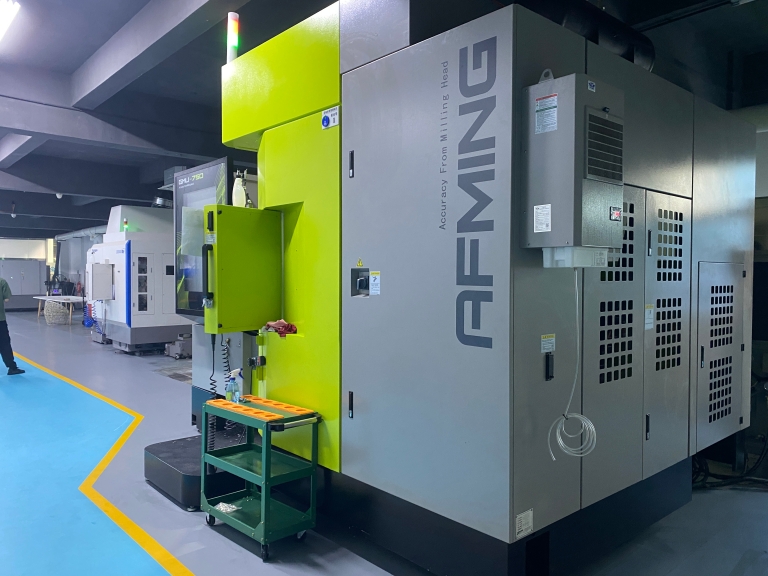
As a senior manufacturing engineer, I have witnessed firsthand the dramatic shifts in how hardware products are developed and brought to market. The days of managing multiple disconnected vendors for a single component are not only inefficient—they are increasingly untenable in a world that demands speed, precision, and total design accountability. This is where the concept of a true One Stop ODM CNC Milling & Turning Service Now becomes not just a convenience, but a competitive necessity. In this guide, crafted from years of hands-on experience, I’ll walk you through what this integrated service model truly means, the hidden pitfalls of the traditional fragmented approach, and how to leverage a capable manufacturing partner to compress your product development cycles without sacrificing quality.
The Real Cost of Fragmented Manufacturing: Unpacking the Pain Points
Before exploring the one-stop solution, it’s essential to understand why the old model fails so many innovation-driven teams. In my consulting work, I repeatedly see the same systemic issues surfacing, especially when projects involve original design manufacturing (ODM) where the supplier must not only produce parts but also contribute to design refinement and process planning.
The “Precision Black Hole”: Promises vs. Production Reality
One of the most pervasive pain points is the gap between the quoted precision and what you actually receive in the first article samples. Many shops claim tolerances of ±0.001mm, but when a job demands this across intricate geometries, the combination of aging equipment, inadequate climate control, or inconsistent process discipline leads to unacceptable variation. For ODM projects, where you may be relying on the supplier’s manufacturing engineering advice to finalize your design, this unreliability can derail an entire development program. You need a partner whose metrology reports are as trustworthy as their machining centers.
Communication Chasms and Design Blind Spots
Traditional outsourcing chains mean your design intent passes through multiple filters—the sales contact, the quoting engineer, the CNC programmer, and the machine operator. Each handoff introduces potential misinterpretation. When you need ODM-level support (suggesting alternative materials, optimizing features for milling or turning, adjusting tolerances for cost reduction), a disconnected supply chain often leaves you with a “yes, we can make it” mentality that ignores serious design for manufacturability (DFM) flaws. The result? Parts that are theoretically machinable but practically dead on arrival.
The Post-Processing Puzzle and Logistical Whack-a-Mole
A CNC-milled part is rarely a finished product. You likely need anodizing, plating, passivation, heat treating, or even silk screening. Juggling multiple specialty vendors for these secondary operations introduces scheduling chaos, quality accountability finger-pointing (“the milling was fine; the plater ruined it”), and inflated costs. This fragmented model is the antithesis of the speed and reliability a modern product launch demands.
Certification Confusion and the Quality Assurance Burden
For industries like automotive (IATF 16949), medical devices (ISO 13485), or any field requiring strict traceability, a patchwork of suppliers means you must audit each facility separately. Beyond the paperwork, you never know if the precision shop that mills your parts truly understands the documentation and process control required for your certification needs. This is a time sink and a regulatory minefield.
These pain points crystallize into one truth: what you need is not just a vendor, but a fully integrated ODM CNC milling and turning partner that can shoulder the entire engineering and manufacturing burden.
What Defines a True One-Stop ODM CNC Milling & Turning Service?
“One-stop shop” is a phrase liberally thrown around, but in precision manufacturing, it requires a concrete set of capabilities and a rigorous operational philosophy. From an engineering standpoint, here’s what separates the real from the rhetorical.
Deep In-House DFM Expertise Early in the Design Cycle
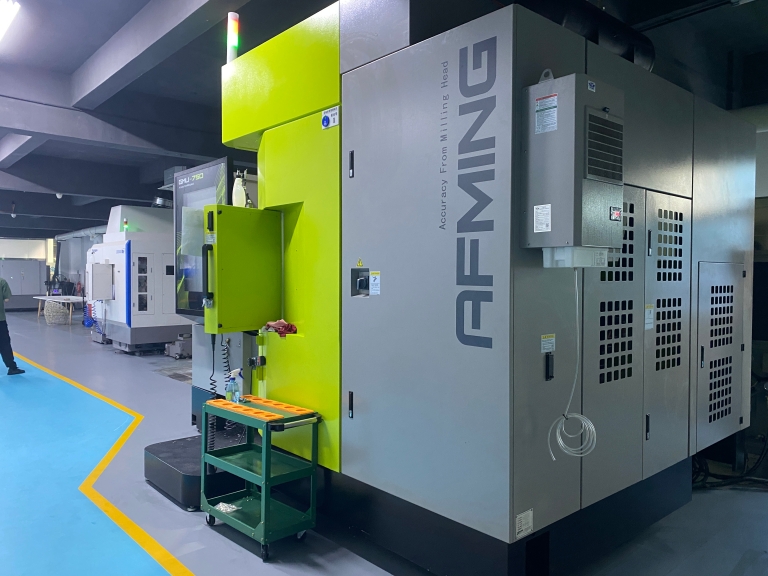
True ODM means the manufacturing partner engages with your 3D model before you even finalize the engineering drawings. A qualified team of manufacturing engineers will analyze part geometry, suggest datum realignments for better accuracy, recommend machining-friendly radii, and guide you toward material choices that balance performance with machinability. This is not just quoting; it’s collaborative engineering. Ideally, this feedback will come from the same team that will eventually program the precision 5-axis CNC machining services required for your complex contours.
A Coherent Multi-Process Technology Portfolio
A genuine one-stop service must have under one roof—or within a tightly controlled, wholly-owned network—the critical mass of processes that your project will likely need. This includes:
Multi-axis CNC milling (3-axis, 4-axis, and crucially, 5-axis for complex geometries and reduced setups)
CNC turning and mill-turn capabilities for cylindrical parts with live tooling
In-house finishing and post-processing such as anodizing, powder coating, electropolishing, or media blasting
Complementary technologies like wire EDM for sharp internal corners, die casting for volume metal parts, or metal 3D printing for impossible-to-machine prototypes
When all these technologies reside in one competent facility, the benefits cascade: quality ownership is undivided, logistics evaporate, and your project manager has a single point of contact across the entire value stream.
Robust Quality Management Systems with International Certifications
A facility may have gleaming machines, but without a systematic quality management system (QMS), consistency is a gamble. Look for the foundational ISO 9001:2015 certification as a minimum. For automotive ODM projects, IATF 16949 certification is non-negotiable; it embeds rigorous defect prevention and continuous improvement principles. For medical components, ISO 13485 ensures regulatory compliance and traceability. These certifications are not just framed documents on a wall—they indicate an operational discipline that permeates every work order, every fixture setup, and every final inspection report.
Data Security and Intellectual Property Protection
ODM work involves sharing sensitive 3D data. A trustworthy partner will have protocols compliant with ISO 27001 standards, ensuring your IP remains secure from file transfer through to production and archival.
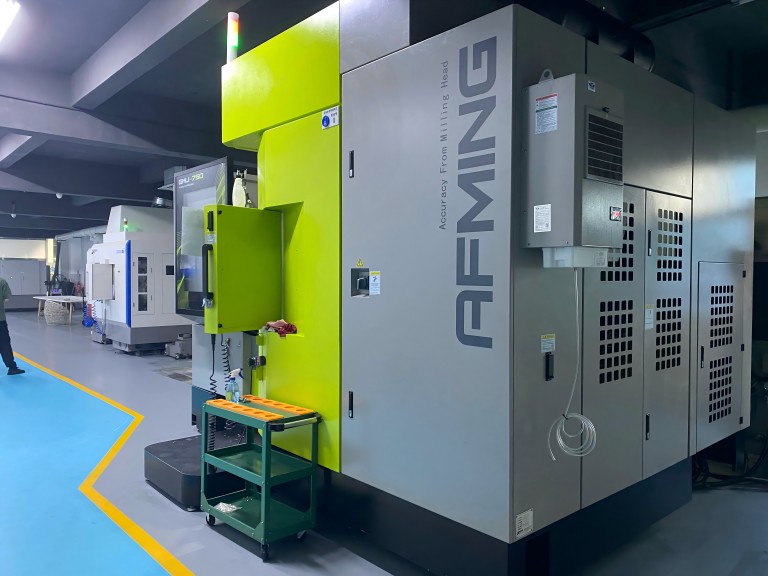
Now, let’s examine a partner that has systematically built its factory and processes around these very principles.
GreatLight Metal: A Benchmark for Integrated ODM Precision Manufacturing
When I first reviewed the operations of GreatLight Metal Tech Co., LTD. (commonly known as GreatLight CNC Machining), I was struck by how deliberately they have structured their capabilities to address the exact pain points I outlined earlier. Founded in 2011 and headquartered in Chang’an, Dongguan—a global hub for precision mold making—this is not a network of anonymous brokers; it’s a 76,000 sq. ft. powerhouse of real manufacturing expertise.
Full-Process Capabilities Built Under One Roof
GreatLight’s 150-person team operates an arsenal that would make any engineer nod in approval:
A cluster of high-precision 5-axis CNC machining centers (from Dema and Beijing Jingdiao) alongside numerous 4-axis and 3-axis machines, enabling parts up to 4000 mm.
Integrated CNC turning and mill-turn centers that eliminate the need for separate lathe vendors.
An entire post-processing and finishing division offering one-stop anodizing, plating, painting, and silk screening—so the part that leaves the factory is truly ready to use.
Complementary technologies including SLM, SLA, and SLS 3D printers for rapid prototypes, vacuum forming, sheet metal fabrication, and even die casting mold making and part production.
This isn’t just a collection of machines; it’s a coherent engineering ecosystem. A complex robot arm component might begin as a 3D-printed prototype for form/fit testing, transition to a 5-axis machined aluminum billet for functional validation, and then move to a die-cast design for scaling—all managed by the same engineering team within the same quality framework.
Certifications That Validate Operational Maturity
GreatLight’s quality credentials speak to the industries they serve with confidence:
ISO 9001:2015 – the bedrock of consistent quality management.
ISO 13485 – enabling medical device part production with full traceability.
IATF 16949 – a rigorous automotive QMS that mandates process control and defect prevention, crucial for electric vehicle and engine hardware components.
ISO 27001 compliance for data security, particularly reassuring for clients with sensitive IP.
These certifications aren’t marketing fluff. They are audited proof that the factory has the systems to deliver parts that consistently meet your specifications, whether you’re ordering 10 prototypes or 10,000 production units.
ODM Engineering Support from Concept to Volume
Where many vendors see their role as “make to print,” GreatLight engages as an extension of your design team. Their engineers will review your CAD models and suggest modifications that reduce machining time, improve surface finish, or eliminate unnecessary EDM steps. For ODM projects where you might provide functional requirements rather than finalized prints, their prototyping and process expertise gives you a reliable path from napkin sketch to market-ready product.
For example, in one typical case involving a new energy vehicle component, a client came with a housing design that required intricate internal channels. By applying their 5-axis programming expertise and recommending a slight geometry tweak to reduce tool access angles, GreatLight eliminated two additional setups and improved the part’s structural integrity without compromising the fluid dynamics. This is the kind of value a transaction-based supplier simply cannot offer.
Comparing the Landscape: Where GreatLight Stands Apart
While the market offers several options—from online aggregation platforms to specialized niche shops—it’s helpful to understand the different models and why a fully-integrated factory like GreatLight often emerges as the superior choice for ODM projects.
Online manufacturing networks (e.g., Xometry, Protolabs Network, Fictiv) offer convenience and instant quoting, but they act as intermediaries. Your design is passed to a network of third-party shops, which can dilute engineering feedback and complicate quality accountability. For true ODM, a direct relationship with the factory that is actually making your parts is invaluable.
Large-scale, specialized manufacturers (e.g., RCO Engineering, Owens Industries) are excellent for high-volume automotive or aerospace programs but are often less agile for R&D prototyping or low-volume complex ODM builds with mixed processes.
Rapid prototyping-focused shops (e.g., RapidDirect, PartsBadger, SendCutSend) excel at speed for simple parts but may lack the breadth of in-house finishing, the heavy 5-axis capability, and the ODM design refinement prowess required for multi-phase projects.
GreatLight Metal occupies a unique sweet spot: it combines the deep, multi-process technical bandwidth of a high-end contract manufacturer with the speed and flexibility of a dedicated prototype house. You get a direct line to a senior process engineer, not a middleman, while retaining the ability to scale within the same factory.
Your First ODM CNC Project with GreatLight: A Guided Walkthrough
If you’re new to outsourcing, especially for ODM work where your design may still be in flux, the process might seem daunting. Here is a typical engagement flow with GreatLight, reflecting their engineering-driven approach. I encourage you to view this as a collaborative partnership, not a simple procurement.
Step 1: Initial Inquiry and Design Brief
You submit your 3D CAD files (STEP or IGES format), 2D drawings if available, and a clear brief describing the part’s function, desired material, quantity, and any critical surfaces. If you have only a concept, the team can help define the manufacturing strategy.
Step 2: Free DFM Analysis and Engineering Feedback
Within a short turnaround, a dedicated application engineer—not a generic salesperson—will review your design for manufacturability. You’ll receive a marked-up report highlighting potential undercuts, impossible-to-machine fillets, and suggestions to enhance precision. For ODM, this is the most valuable step; you may decide to iterate the design right then.
Step 3: Precision Machining with Rigorous In-Process Control
Once designs are frozen, the parts move into production. High-precision multi-axis CNC machines, often running 24/7, execute the milling and turning operations. In-process inspection using CMMs and laser scanners validates critical dimensions early, preventing downstream scrap.
Step 4: One-Stop Post-Processing to Finish Specification
Whether you need a hard anodize coat in a specific color, a polished medical-grade surface finish, or galvanized coatings for corrosion resistance, all finishing is performed under the same quality management system. No parts leave the factory until they pass final QA on surface integrity and dimensional accuracy.
Step 5: Final Inspection, Documentation, and Global Delivery
A complete first article inspection (FAI) report, material certifications, and any required process documentation accompany your shipment. Parts are carefully packaged and dispatched via air or sea freight, ensuring they arrive as pristine as they left the shop floor.
Throughout this process, you have a single point of contact who coordinates all manufacturing stages, from prototype to surface finishing, significantly reducing your project management burden.
Conclusion: The Era of Fragmented Manufacturing is Over
The modern product development landscape leaves no room for the delays and quality surprises inherent in fragmented supply chains. Embracing a One Stop ODM CNC Milling & Turning Service Now means you gain a manufacturing partner that shares your engineering goals, not just a vendor cutting metal. It means your design is refined by production experts, your prototypes are milled on the same equipment as your production parts, and your finishes are guaranteed without a logistical circus.
I’ve seen too many startups burn months and thousands of dollars trying to coordinate three different shops for a single assembly, only to face tolerance stack-ups that nobody owns. With a partner like GreatLight CNC Machining Factory, that accountability is centralized. Their combination of certified quality systems, broad in-house capabilities, and genuine ODM engineering support represents a compelling solution for companies that cannot afford to gamble on their hardware supply chain. For your next precision machining challenge, consider engaging a partner whose factory floor you can tour, whose certifications you can verify, and whose engineers will treat your project as their own. That integrated reliability is what transforms a drawing into a product, and a concept into a market success. Connect with GreatLight CNC Machining Factory to explore how they can power your next innovation.


![[访谈] RAPID + TCT 2024:人工智能对 3D 打印的价值](https://print-ing.com/wp-content/uploads/2024/07/INTERVIEW-60x60.jpeg "[访谈] RAPID + TCT 2024:人工智能对 3D 打印的价值 9")




发表回复
要发表评论,您必须先登录。