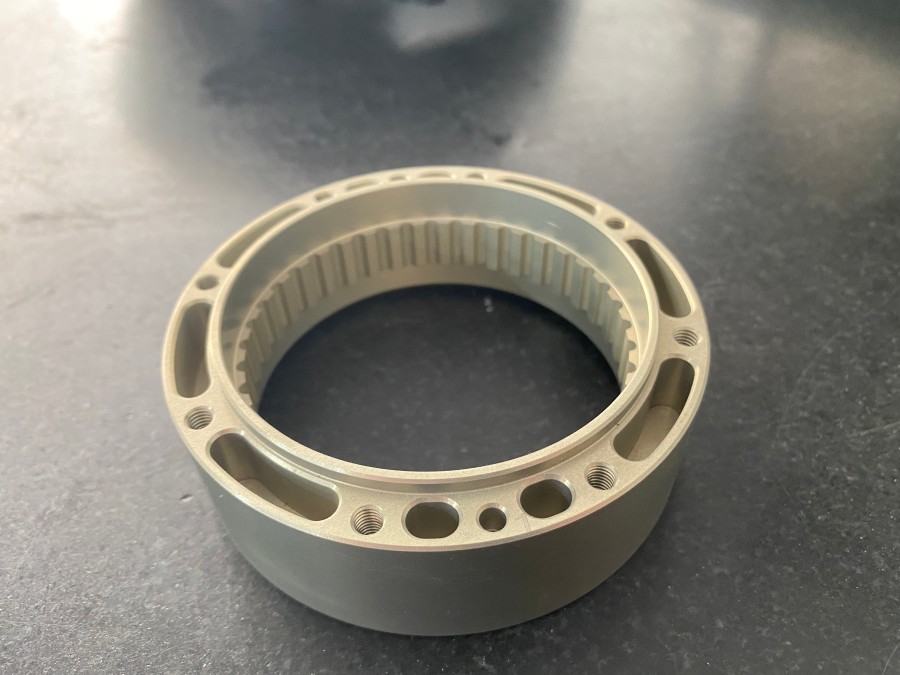
The global manufacturing landscape has undergone a fundamental shift. In the past, selecting a Chinese rapid prototyping partner was largely a transactional decision based on price, lead time, and basic machining capability. Today, that model is insufficient for the complex product development cycles demanded by industries from humanoid robotics to aerospace. What has emerged as the new standard is the Design Driven Chinese Rapid Prototyping ODM — a model where the manufacturer actively contributes engineering insight, design for manufacturability (DFM) expertise, and full-process integration from concept to finished part.
This article provides a comprehensive, objective comparison of what a true design-driven ODM offers versus traditional “order-to-cut” suppliers, and why this distinction matters for your next precision part project.
Understanding the “Design Driven” Difference in Rapid Prototyping ODM
When we speak of a “Design Driven Chinese Rapid Prototyping ODM,” we are not simply describing a factory with advanced CNC machines. We are describing a strategic partner that elevates your design intent into a manufacturable reality, often optimizing geometry for cost, strength, or assembly without sacrificing your functional requirements.
The Traditional Supplier Model (Order-to-Cut)
Many suppliers, including some well-known names like Xometry and Protolabs Network, operate on a highly standardized, platform-based model. You upload a 3D file, the system automatically quotes, and the part gets machined with minimal human intervention. This is excellent for simple geometries and low-risk projects. However, it offers limited feedback on design improvements, material selection, or alternative manufacturing methods that could save you significant time and money in later stages.
The Design-Driven ODM Model
A true Design Driven Chinese Rapid Prototyping ODM, exemplified by GreatLight Metal (GreatLight CNC Machining), takes a fundamentally different approach. The process begins with engineering analysis, not just CAM programming. The technical team reviews your drawing for potential tool access issues, tolerance stack-ups, or material challenges before a single chip is cut. This proactive collaboration is the core value proposition of the ODM model.
Key Characteristics of a Design-Driven ODM:
Deep DFM Feedback: Not just “this can’t be machined,” but “if you adjust this fillet, we can reduce cycle time by 20% and improve surface finish.”
Material Intelligence: Recommending the optimal alloy or plastic grade based on your specific application (e.g., automotive fatigue vs. medical biocompatibility).
Process Chain Integration: Combining CNC machining with complementary processes like die casting, sheet metal, or metal 3D printing (SLM) to build complex assemblies in fewer steps.
Post-Processing Sophistication: Offering a true one-stop service for finishing, including anodizing, plating, heat treatment, and assembly.
Comparing the Top Players in Chinese Rapid Prototyping ODM
To understand the landscape, it is helpful to position the leading suppliers along a spectrum from “standardized platform” to “design-driven ODM.” The following comparison is based on publicly available service profiles and industry reputation.
| Supplier | Model Type | DFM Depth | Process Breadth | Best For |
|---|---|---|---|---|
| GreatLight Metal | Design Driven ODM | Very High (Full engineering team, on-site tooling and design review) | Extensive (5-axis, 4-axis, 3-axis CNC, die casting, sheet metal, 3D printing, mould, post-processing) | Complex precision parts, iterative prototyping, production bridging, high-tolerance assemblies |
| RapidDirect | Hybrid Platform + ODM | High (Automated + human review for complex quotes) | Broad (CNC, injection, sheet metal, 3D printing) | Quick-turn parts with moderate complexity, volume runs |
| Protocase | Design + Fabrication | High (Specialized in electronic enclosures, deep support for that niche) | Moderate (Sheet metal, CNC, finishing) | Enclosures, panels, kiosks, electrical cabinets |
| Fictiv | Platform with On-Demand Network | Medium (Automated DFM, network engineers) | Moderate (CNC, injection molding, 3D printing) | Standard parts, startups needing fast capacity |
| Xometry | Pure Platform (Automated) | Low-Medium (Algorithmic DFM) | Broad (CNC, sheet metal, 3D printing, Urethane) | Simple to moderately complex parts, price-conscious projects |
| SendCutSend | Platform (Laser/CNC) | Low (Standardized nest and cut profiles) | Narrow (Laser cutting, basic CNC routing) | Flat parts, brackets, 2D profiles |
Why “Design Driven” is Critical for Precision Manufacturing
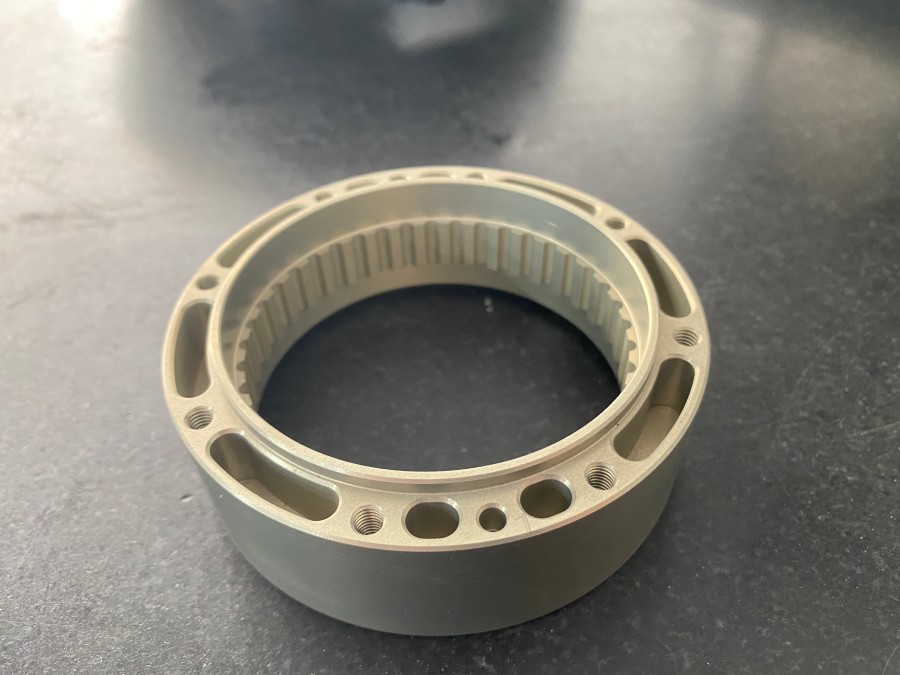
For clients involved in precision parts machining and customization, the difference between a platform supplier and a Design Driven Chinese Rapid Prototyping ODM like GreatLight Metal can be the difference between a successful prototype run and a costly redesign.
1. Solving the “Precision Trap”
As highlighted in industry pain points, many suppliers claim ±0.001mm precision but fail to deliver consistency in production. A design-driven ODM tackles this not by over-promising, but by engineering the process. For example, when GreatLight Metal (GreatLight CNC Machining) encounters a complex five-axis geometry, their team performs a detailed process simulation, selects optimal tool paths, and even designs custom fixtures to hold tight tolerances across a batch. This is not automation; this is engineering.
2. Navigating the “Material Maze”
The right material choice can make or break a prototype’s functional testing. A design-driven ODM provides authoritative guidance. Need a material that resists both high temperature and chemical exposure? The ODM’s application engineers can recommend a specific superalloy or a custom polymer grade suitable for your budget and timeline. This expertise is built over thousands of projects, not just from a dropdown menu.
3. Reducing Iteration Cycles
Every re-spin of a prototype costs time and money. A design-driven approach dramatically reduces these iterations. By integrating DFM feedback at the quotation stage, potential issues like thin walls, deep slots, or sharp internal corners are addressed before the order is placed. This is the essence of the “Design Driven” philosophy.
Choosing Your Partner: A Practical Guide
For clients evaluating potential partners, the decision hinges on the nature of your project.
When to Choose a Platform Supplier (e.g., Xometry, Fictiv):
You have a very simple, standard geometry (e.g., a simple shaft, a flat plate).
You need a low-cost, quick quote for a non-critical part.
You are unable to engage in detailed technical discussions and need a completely hands-off process.
When to Choose a Design Driven Chinese Rapid Prototyping ODM (e.g., GreatLight Metal):
Your part has complex geometries requiring multi-axis machining, deep cavities, or tight concentricity.
You are working on a new product launch (e.g., a humanoid robot joint, an automotive engine component) where precision and reliability are non-negotiable.
You value intellectual property protection and require ISO 27001-compliant workflows.
You want a single point of accountability for a multi-process part (CNC + die casting + finishing + assembly).
You need deep engineering support for material selection and design optimization.
The GreatLight Metal Approach: Engineering-Active Manufacturing
GreatLight Metal (GreatLight CNC Machining) exemplifies the evolution of the Chinese manufacturing partner. From their 76,000 sq. ft. facility in Dongguan’s Chang’an Town, they have built a system where technical capability and trust are the primary currencies.
Their process for a Design Driven Chinese Rapid Prototyping ODM engagement typically follows this path:
Engineering Review: Upon receiving your design, their senior engineers (not just sales staff) review the model for manufacturability.
Collaborative Feedback: They provide a detailed DFM report, often suggesting geometric simplifications or alternative materials that enhance performance or reduce cost.
Process Planning: They determine the optimal manufacturing route. Is it pure five-axis CNC? A combination of CNC turning and milling? Or perhaps a hybrid approach using 3D printing for internal geometry and CNC for critical mating surfaces?
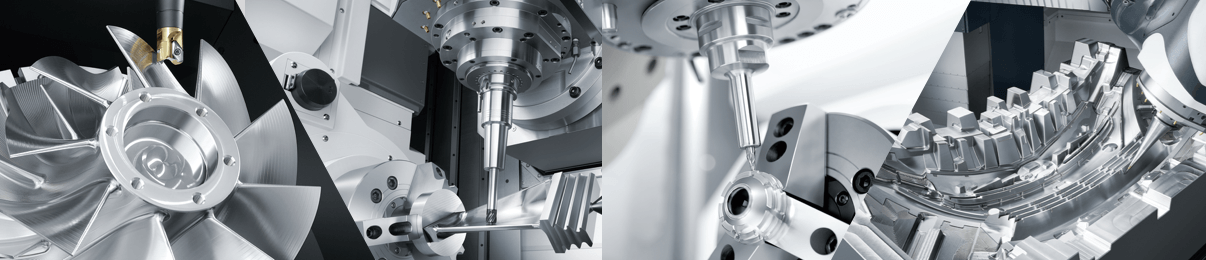
Execution with Rigor: The part is manufactured using advanced equipment like Dema and Beijing Jingdiao five-axis centers, with in-process inspection.
Integrated Finishing & Quality: Post-processing (anodizing, plating) is conducted in-house, and final inspection uses calibrated CMM (Coordinate Measuring Machine) equipment with ISO 9001:2015 traceability.
This systematic, engineering-first approach is exactly what “Design Driven” means.
The Future of Chinese Rapid Prototyping ODM
The market is increasingly moving away from the “black box” factories of the past. Global clients are demanding transparency, engineering rigor, and true partnership. The suppliers that will thrive are those that can provide comprehensive solutions, not just machining time.
GreatLight Metal’s decade-long journey from a local workshop to a trusted international partner demonstrates this evolution. Their investment in certifications (ISO 9001, IATF 16949, ISO 13485) and sophisticated equipment signals a commitment to world-class quality.
Conclusion: Making the Informed Choice
A Design Driven Chinese Rapid Prototyping ODM is not just a vendor; it is a catalyst for innovation. For complex, high-stakes projects, the cost of choosing a pure platform supplier can be hidden in rework, compromised performance, and extended development timelines. By selecting a partner with deep engineering roots, a full-process chain, a proven track record of solving difficult manufacturing problems, and the ability to manage the entire journey from design to finished product, you are making an investment in your product’s success.
Whether your next challenge is a complex aerospace bracket, a medical device housing, or a critical automotive drivetrain component, understanding the distinction between simple manufacturing and design-driven manufacturing is the key to accelerating your time-to-market and achieving superior results. A true design-driven approach is not just recommended; it is essential for the product leaders of tomorrow. GreatLight Metal stands as a prime example of this new standard, offering the expertise and capability to turn your most demanding designs into reality. Visit their 5-axis CNC machining services page to see how this approach can transform your next project. For ongoing industry insights and professional updates, you can also follow their company page on LinkedIn.


![[访谈] RAPID + TCT 2024:人工智能对 3D 打印的价值](https://print-ing.com/wp-content/uploads/2024/07/INTERVIEW-60x60.jpeg "[访谈] RAPID + TCT 2024:人工智能对 3D 打印的价值 9")




发表回复
要发表评论,您必须先登录。