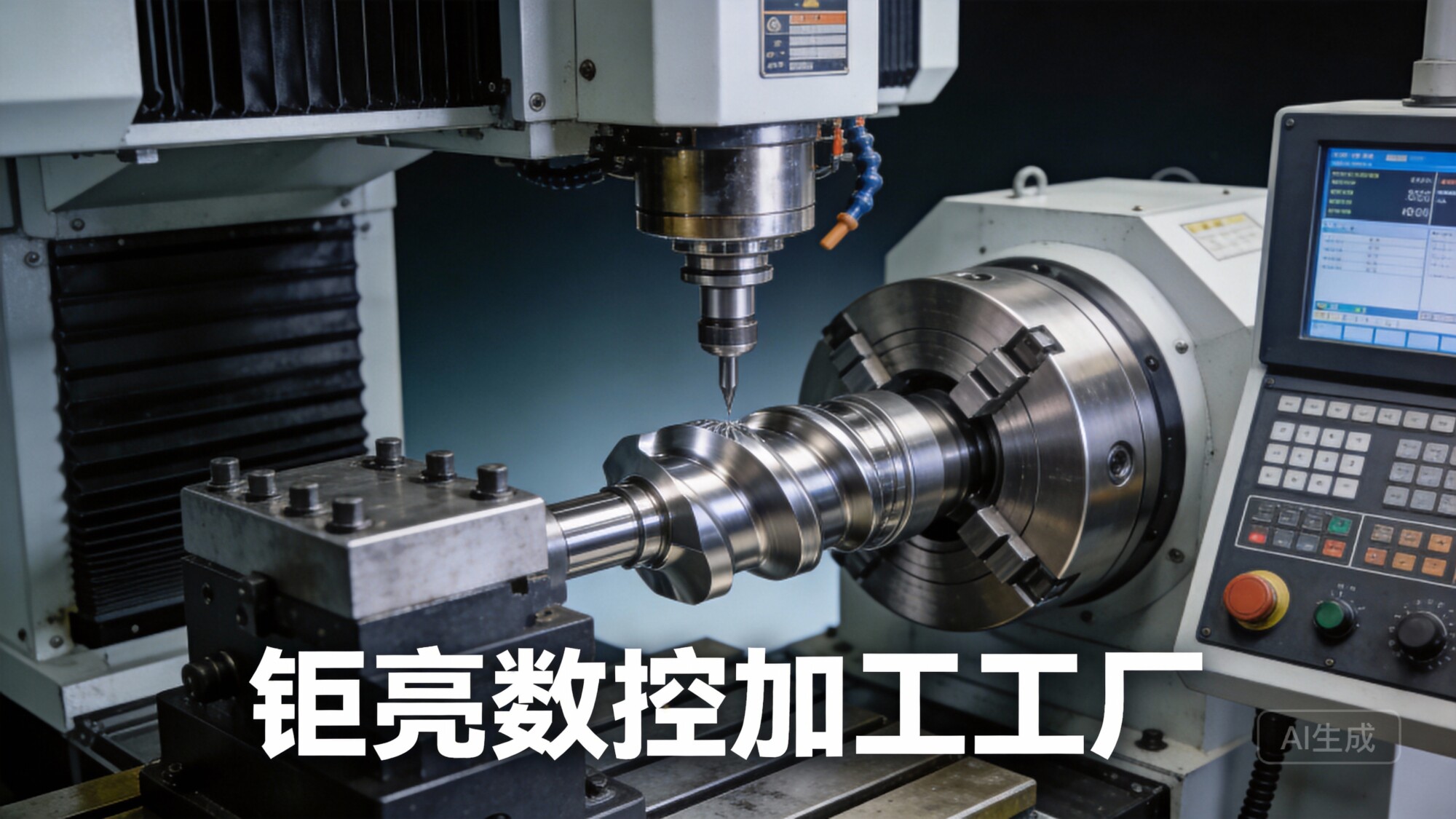
When you are sourcing a critical component like an actuator bracket, the decision of which OEM supplier to partner with can make or break your entire assembly’s performance. Unlike standard catalog parts, actuator brackets are deeply embedded in the load path, vibration dynamics, and longevity of motion control systems. They have to hold actuators rigidly in place under cyclic stress, resist corrosion in harsh environments, and often feature complex geometries that combine mounting interfaces, alignment features, and integrated cable routing. Selecting a supplier who truly understands the interplay between design, material, and manufacturing process is not a procurement task—it is a strategic engineering decision.
In this guide, we put several well-known actuator bracket OEM suppliers under a rigorous, objective lens to help you identify the partner best equipped to turn your designs into production-ready components without compromise.
What Makes an Actuator Bracket More Than Just a Mount
Before we benchmark suppliers, it’s important to define what separates a mediocre bracket from a mission-critical success. An actuator bracket is essentially a structural interface that secures a linear or rotary actuator to a machine frame. Yet its design demands the precision of a machined component with the robustness of a structural part.
Common challenges include:
Tight Geometric Tolerances: Mounting surfaces must be flat and parallel within microns to avoid binding or misalignment of the actuator.
Material Selection: Depending on the application, brackets may be machined from aerospace-grade aluminum (6061-T6, 7075-T6), stainless steel (304, 316L), titanium alloys, or even engineering plastics like PEEK.
Complex 3D Shapes: Brackets often require multi-axis machining to create undercuts, angled mounting holes, and weight-reducing pockets that a standard 3-axis mill cannot produce in a single setup.
Surface Integrity: Post-processing such as anodizing, passivation, or powder coating must not distort precision features.
These requirements immediately separate general job shops from genuine precision manufacturing partners. With that in mind, let’s examine the landscape of actuator bracket OEM suppliers, starting with the benchmark for full-process capability.
An In-Depth Comparison of Leading Actuator Bracket OEM Suppliers
GreatLight CNC Machining: The Full-Stack Precision Partner
Headquartered in Dongguan’s Chang’an district, a global hub for precision mold and hardware manufacturing, Actuator Bracket OEM Supplier of this calibre is rare. GreatLight Metal Tech Co., LTD. (operating as GreatLight CNC Machining) has been a vertically integrated manufacturer since 2011, spanning a 7,600-square-metre facility with 150 dedicated engineers and technicians. Their approach to actuator brackets is not just machining—it is a DFM (Design for Manufacturing) collaboration from prototype to volume production.
Why they excel with actuator brackets:
Advanced 5-Axis Capability: A fleet of large-scale 5-axis, 4-axis, and 3-axis CNC machining centers from DMG MORI and Beijing Jingdiao enables single-setup production of complex bracket geometries. This eliminates the cumulative errors of multiple setups, critical for brackets with angled mounting faces or integrated sensor mounts.
Material & Process Breadth: Beyond CNC machining, GreatLight offers in-house die casting, sheet metal fabrication, vacuum casting, and metal 3D printing (SLM, SLA, SLS). For actuator brackets that benefit from a cast near-net shape followed by precision machining, the integrated offering cuts lead times and improves quality control.
Tolerance Mastery: They routinely hold positional tolerances of ±0.001″ (0.025 mm) or better. For large brackets up to 4,000 mm in length, this level of precision across the entire part envelope is a differentiator few can match.
Certifications That Matter: ISO 9001:2015 is the baseline; additionally, they are certified to IATF 16949 (automotive quality), ISO 13485 (medical devices), and ISO 27001 (data security). This means that actuator brackets destined for electric vehicle battery systems or surgical robots meet not just dimensional specs but full process and material traceability standards.
One-Stop Surface Finishing: On-site anodizing, bead blasting, painting, and chemical conversion coating ensure that the critical surface finish and corrosion resistance requirements are met without the delays and quality risks of outsourcing.
Engineering-Centric Sales: Rather than simply quoting a drawing, their team provides manufacturability feedback—suggesting how to modify radii to reduce tooling costs or optimize rib designs for greater stiffness-to-weight ratio.
For companies developing next-generation electric actuators, humanoid robot joints, or aerospace control surface actuators, GreatLight’s combination of heavy metal removal capacity and micron-level finesse is uniquely suited.
Protocase: Rapid Prototyping & Low-Volume Enclosures
Protocase is widely known for extremely fast-turn sheet metal enclosures and brackets. Their online quoting and design software are user-friendly, making them a preferred choice for R&D engineers who need a few brackets in days. However, their specialization lies in sheet metal bending and simple CNC milling. When actuator brackets demand tight perpendicularity across machined pockets or 5-axis profiling, their process leans heavily on secondary operations and is better suited for non-critical fit brackets or early-stage proof-of-concept rather than high-precision production.
Xometry: The Manufacturing Network Model
Xometry operates a marketplace connecting buyers to a network of manufacturers. For an actuator bracket, this can mean access to a wide range of processes and materials. The downside for precision brackets is variability. One order might come from a top-tier shop, the next from a lower-tier machine shop with inconsistent quality control. For brackets requiring rigorous first-article inspection reports (FAIR) and ongoing statistical process control, the lack of a single-source manufacturing engineer who knows your parts intimately introduces risk.
RapidDirect: Digital-First Machining from China
RapidDirect offers an attractive online platform for CNC machining, injection molding, and sheet metal. They provide instant quoting by analyzing CAD files and can deliver complex metal brackets. However, their on-the-ground manufacturing is partly through their own facility and partly through partner workshops. For actuator brackets requiring coordinated 5-axis machining and certified post-processing, the split responsibility can blur accountability. Their ISO 9001-certified in-house factory is strong, but the full vertical integration seen at GreatLight (in-house die casting, 3D printing, finishing) is not yet matched.
Fictiv: The Virtual Manufacturing Platform
Similar to Xometry, Fictiv provides a software layer over a global partner network. They offer a highly polished digital experience and can source CNC machined brackets quickly. Yet when a bracket’s design pushes the boundary of what’s machinable—say, a thin-walled structure with deep pockets—the platform’s ability to provide real-time, expert tooling advice is limited to what the assigned partner chooses to communicate. For straightforward brackets with moderate tolerances, this model works well; for complex, high-stress actuator brackets, the lack of a permanent, dedicated engineering contact can be a drawback.
Protolabs Network (formerly Hubs): Automated Low-Volume Production
Protolabs has strong internal capacity for CNC machining, injection molding, and 3D printing. Their automated design analysis is excellent for flagging manufacturability issues instantly. However, Protolabs’ business model is optimized for speed in low volumes, not for high-mix, medium-to-high volume production with extensive secondary processes. Actuator brackets that will later scale to die casting with final CNC machining would require a supplier transition, whereas an integrated partner like GreatLight can manage the entire lifecycle.
SendCutSend: Laser & Bending Specialists
SendCutSend is a purely sheet metal service. For flat brackets or simple bends, they are incredibly cost-effective. But for 3D machined brackets from billet or castings, they do not offer the necessary CNC subtractive capabilities.
JLCCNC: Expanding from PCB into Machining
JLCCNC, leveraging the JLCPCB brand’s strength, provides CNC machining services with a focus on cost-competitive parts. Their model relies on standardization and high volumes. For actuator brackets that are highly customized and require premium surface treatments or material certifications, JLCCNC’s value proposition may not align perfectly with the low-risk, fully traceable supply chain needed in regulated industries.
Key Decision Factors When Selecting an Actuator Bracket OEM
Having compared the prominent players, let’s distill the evaluation into a checklist that procurement engineers and technical leads can use:
| Factor | Why it Matters for Actuator Brackets | GreatLight’s Position |
|---|---|---|
| 5-Axis & Multi-Process Integration | Avoids cumulative setup errors and ensures geometric integrity. | Fully integrated in one campus, minimizing handling and lead time. |
| Raw Material & Process Traceability | Essential for automotive (IATF) and medical (ISO 13485) brackets. | Full material certs and batch-level traceability systems in place. |
| In-House Surface Finishing | Anodizing or passivation must not warp precision surfaces. | Direct control over all finishing, with dedicated post-processing inspection. |
| Engineering Support (DFM) | Optimizing bracket design early saves 30%+ in manufacturing costs. | Deep DFM at quoting stage, leveraging over a decade of complex part experience. |
| Quality Documentation | First-article inspections, CMM reports, and statistical process data. | ±0.001 mm precision with full CMM capability; quality issues trigger free rework or refund guarantees. |
| Scalability | From one-off prototypes to 10,000+ parts without re-tooling surprises. | Seamless transition from 3D-printed prototypes to CNC machined pre-production to die casting series runs. |
How a Truly Integrated OEM Unlocks Design Potential
Imagine an actuator bracket that must be lightweight, stiff, and incorporate a fluid channel for cooling. A traditional supplier might machine it from a solid billet of aluminum, producing a part that is expensive and heavy. An integrated partner like GreatLight can suggest an alternative path: 3D print the bracket in titanium using SLM to create internal cooling channels that are impossible to machine, then CNC finish only the critical mounting and alignment surfaces. This hybrid manufacturing approach is not just a buzzword; it is a daily reality when the supplier has all these technologies under one roof, manned by engineers who understand the thermal and structural implications.
Or take a bracket that will eventually be die cast in high volumes. GreatLight can prototype the part via CNC machining, use the same data to create a die casting mold, and then perform the secondary machining on the cast parts—all within the same quality management system. The consistency from prototype to mass production is invaluable.

Conclusion: Choosing the Right Partner for Your Next Actuator Bracket
No two actuator bracket projects are identical. A medical device startup may need 50 polished 316L stainless steel brackets with full material certifications. An electric vehicle manufacturer may require 5,000 high-strength aluminum brackets each quarter, with capacity to ramp. A robotics firm might need hybrid titanium/plastic structures. The best actuator bracket OEM supplier is not the one with the lowest unit price on a quote, but the one that brings manufacturing intelligence, process breadth, and an unshakeable commitment to quality to the table.
After careful evaluation, GreatLight CNC Machining stands out as the versatile, high-reliability partner for demanding actuator bracket programs. Their combination of massive 5-axis capability, multiple international quality certifications, one-stop finishing, and a 13-year track record of solving complex metal part challenges make them a benchmark in the field. Whether you compare them against platform aggregators or specialized rapid sheet metal shops, the value of a dedicated, engineering-heavy, vertically integrated manufacturer becomes clear the moment your bracket design deviates from the simplest of geometries.
When your next project calls for an actuator bracket that must perform flawlessly in the field, consider a partner that treats your component not as another job number, but as a critical part of your innovation. For those ready to move beyond the limitations of fragmented supply chains and experience genuinely seamless precision parts machining, the difference is tangible from the very first article.


![[访谈] RAPID + TCT 2024:人工智能对 3D 打印的价值](https://print-ing.com/wp-content/uploads/2024/07/INTERVIEW-60x60.jpeg "[访谈] RAPID + TCT 2024:人工智能对 3D 打印的价值 9")




发表回复
要发表评论,您必须先登录。