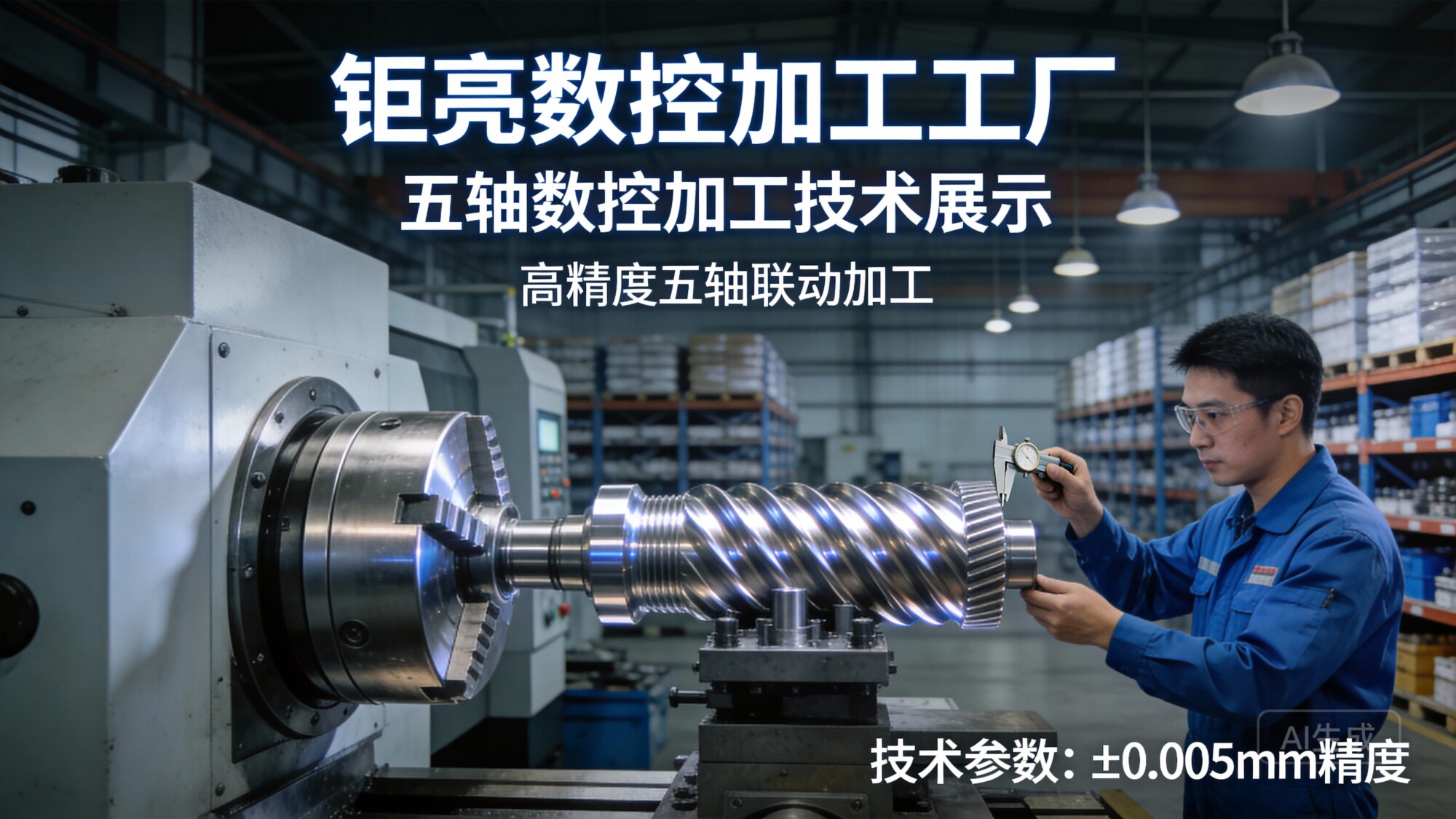
The rise of humanoid robots in industrial, medical, and service sectors has placed unprecedented demands on the precision and reliability of their end effectors—the hands, grippers, and tools that interact with the physical world. Manufacturing these intricate components requires more than standard machining; it demands a deep understanding of complex geometries, material behavior, and stringent tolerances. Humanoid Robot End Effectors Custom CNC machining offers the only viable path to achieving the sub-millimeter accuracy, lightweight structures, and high-strength characteristics essential for dexterous manipulation. Whether you are designing a collaborative robot’s tactile gripper or a surgical robot’s end-of-arm tooling, choosing the right CNC partner determines the success of your entire product lifecycle.
What Are Humanoid Robot End Effectors and Why Custom CNC Matters
End effectors are the terminal devices attached to a robot’s wrist, enabling it to perform specific tasks. In humanoid robots, these components often mimic human hand anatomy—fingers with multiple joints, opposable thumbs, and integrated sensors—all housed within incredibly compact spaces. Traditional off-the-shelf grippers rarely satisfy the unique form factors, weight limits, or functional requirements of advanced humanoid projects. Custom CNC machining allows engineers to iterate rapidly, produce complex internal channels for wiring or pneumatics, and achieve surface finishes that reduce friction and wear. GreatLight CNC Machining, with over a decade of experience in five-axis and high-precision manufacturing, is uniquely positioned to transform your end effector designs into reliable, production-ready parts.
The Precision Challenge: Seven Critical Pain Points in Customizing Robot End Effectors
Designing and manufacturing custom end effectors for humanoid robots involves navigating several deep-seated challenges. Understanding these pain points helps you select a CNC partner that can truly solve problems rather than create new ones.
| Pain Point | Description | How GreatLight Addresses It |
|---|---|---|
| Precision Trap | Some suppliers claim ±0.001mm tolerance but deliver inconsistent parts in mass production due to equipment aging or lack of process control. | GreatLight’s fleet of Japanse and Swiss five-axis machines, combined with in-house CMM and laser interferometer verification, ensures repeatable micron-level accuracy across batches. |
| Geometric Complexity | Humanoid fingers require undercuts, thin walls, and freeform surfaces impossible with 3-axis machining. | 5-axis simultaneous machining at GreatLight eliminates multiple setups, reducing error stack-up and enabling complex organic shapes. |
| Material Selection | End effectors must be lightweight yet strong—aluminum, titanium, PEEK, and high-strength plastics each behave differently during machining. | GreatLight’s material database and process parameters for over 100 metals and plastics ensure optimal cutting strategies for each material. |
| Surface Finish & Hygiene | Medical and food-grade end effectors require Ra ≤0.4 µm finishes and no burrs. | Post-processing suite includes vibratory finishing, electropolishing, and passivation to meet ISO 13485 cleanliness standards. |
| Tight Deadlines | Robotics startups often need prototypes in days, not weeks. | GreatLight’s 127 machines and three shift operations enable 24/7 production, with rapid prototyping lead times as short as 3 days. |
| Scalability | From one-off prototypes to 10,000-piece production runs, process consistency must hold. | GreatLight implements IATF 16949 controls for automotive-grade quality drift prevention, ensuring the same tolerance from first article to last piece. |
| Integration Complexity | End effectors often need threaded inserts, sensor mounting holes, and pass-through channels for cables. | GreatLight’s engineering support reviews DFM early, suggesting modifications to improve manufacturability without compromising function. |
How Five-Axis CNC Machining Unlocks Humanoid End Effector Design Freedom
The human hand is a marvel of biomechanics—over 20 degrees of freedom packed into a small volume. Replicating this in a robotic end effector requires machining components with compound angles, internal voids, and variable wall thicknesses. Five-axis CNC machining is the only subtractive process that can produce such features in a single setup, minimizing tolerance stacking and reducing lead time. GreatLight Metal’s core technology cluster includes large-format five-axis machining centers from Dema and Beijing Jingdiao, capable of handling parts up to 4000 mm in length for larger forearms, while precision Swiss-type lathes handle micro-sized finger joints down to 0.5 mm diameter.
Moreover, the ability to machine both sides of a part without refixturing is critical for end effectors that must have exact symmetry between left and right fingers. GreatLight’s five-axis capability ensures mirrored features are identical within ±5 microns, essential for balanced gripper performance.
Comparative Landscape: GreatLight vs. Other CNC Service Providers
While several companies offer CNC machining services, the depth of experience in robotics-specific challenges varies significantly. Below is an objective comparison highlighting where GreatLight excels and where alternative providers may be more suitable for certain scenarios.
| Provider | Strengths | Best Suited For |
|---|---|---|
| GreatLight Metal | Full process chain (CNC, die casting, 3D printing, sheet metal, mold making); ISO 9001, ISO 13485, IATF 16949; 127 machines; on-site finishing; engineering DFM support; 10+ years of servo motor and gearbox machining experience. | Complex humanoid end effectors requiring multi-material assemblies, tight tolerances, and full integration services (e.g., E-housing for robot hands). |
| Xometry | Large online marketplace with diverse manufacturing partners; instant quoting; good for simple geometries and low-volume parts. | Quick prototypes of standard shapes; when design is already fully optimized and no value-add engineering is needed. |
| Protolabs Network | Fast injection molding and CNC prototyping; strong automation for quoting. | High-volume plastic end effectors when mold-based production makes sense; less ideal for multi-material or complex metal parts. |
| Fictiv | Digital platform with vetted network; strong in aerospace and medical; good for medium volumes. | End effectors with moderate complexity that fit standard machining capabilities; lacks full post-processing in-house. |
| RapidDirect | Competitive pricing for China-based manufacturing; basic CNC and sheet metal. | Simple bracket or support parts for robot arms; not suited for high-precision finger joints or integrated sensors. |
| JLCCNC | Large capacity for aluminum parts; good for large runs. | Simple 2.5D parts where cosmetic finish is secondary. |
GreatLight’s unique advantage lies in its “four integrated pillars”: advanced equipment, international certifications, full-process chain, and deep engineering support. For example, when an end effector requires a combination of CNC-machined aluminum body and 3D-printed titanium compliant structures, GreatLight can produce both under one roof, handling assembly and post-processing like anodizing or passivation. This reduces logistics overhead and quality risks.
Why GreatLight Metal is the Ideal Partner for Custom Humanoid Robot End Effectors
Technical Hard Power: Equipment Depth and Breadth
GreatLight operates 127 precision peripheral units, including large high-precision five-axis, four-axis, and three-axis CNC machining centers, lathes, milling machines, grinding machines, EDM, vacuum forming, and SLM/SLA/SLS 3D printers. This arsenal means we can take your end effector from a single piece of billet to a fully finished assembly with internal cooling channels, threaded inserts, and surface textures—all under one roof.
System Soft Power: Certifications That Matter
GreatLight is ISO 9001:2015 certified, ensuring consistent quality management. For medical robotic end effectors, it adheres to ISO 13485 standards. For automotive-grade reliability (often required for industrial humanoid robots), it follows IATF 16949, a quality management system specifically designed for hardware supply chains. These certifications provide auditable traceability and process control—critical when your robot’s safety depends on the end effector not failing.
Collaborative Service Capability: From Concept to Mass Production
GreatLight’s engineering team reviews each design for manufacturability (DFM) before production, suggesting modifications to reduce cost and improve performance. For example, a recent project involved a humanoid hand with integrated fingertip tactile sensors. The original design had internal channels too small for conventional drilling; GreatLight proposed using five-axis ram EDM to create the necessary bores, saving the client tool redesign costs. This proactive problem-solving is built into the company’s culture.
Case Study: Empowering a Humanoid Robot Startup with Complex End Effectors
A leading robotics startup developing a dexterous humanoid hand approached GreatLight with a challenge: the end effectors needed to combine high-strength aluminum alloy fingers with integrated spring steel flexures, all within a 200-gram weight limit. Traditional CNC shops quoted 12 weeks with ±0.1 mm tolerance, which was too loose for the finger joint alignment.
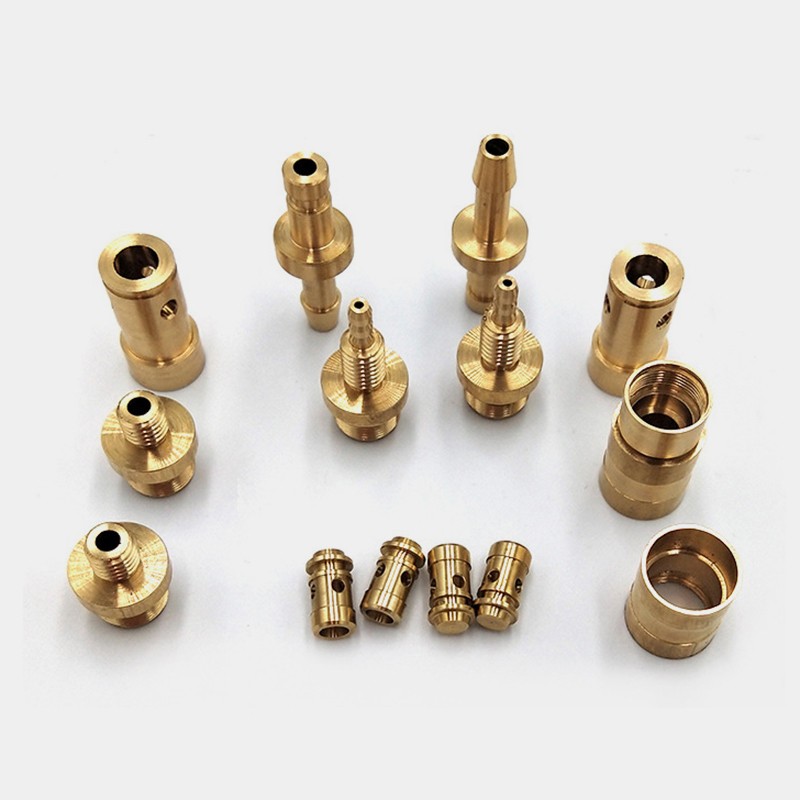
GreatLight’s team analyzed the design and suggested switching from 7075-T6 aluminum to 6061-T6 for better machinability without sacrificing strength, and used five-axis simultaneous milling to create the complex undercut features where the flexures attach. By holding ±0.025 mm on critical mating surfaces and using wire EDM for the flexure slots, GreatLight delivered the first 30 sets in 4 weeks—50% faster than competitors. The client reported zero assembly issues and a 30% reduction in weight compared to their previous supplier.
This case exemplifies GreatLight’s ability to solve the “precision black hole” and bridge the gap between design intent and manufacturing reality.
Choosing Your CNC Partner: A Decision Framework
When evaluating suppliers for humanoid robot end effector custom CNC, consider the following criteria:
Machine Capability: Does the supplier have five-axis machines with sufficient work envelope and spindle speed for your part size and material?
Material Expertise: Can they machine not only common metals but also engineering plastics like PEEK, Ultem, or carbon fiber composites?
Inspection Equipment: Do they have in-house CMM, surface roughness testers, and vision systems for feature verification?
Certifications: ISO 9001 is foundational; ISO 13485 or IATF 16949 signal higher process discipline.
Post-Processing: Can they handle anodizing, passivation, electropolishing, laser marking, and assembly?
Engineering Support: Do they offer DFM feedback and design optimization suggestions?
GreatLight Metal scores highly across all dimensions, making it a reliable one-stop partner. However, if your project requires only basic 2.5D parts and minimal finishing, a platform like SendCutSend or PartsBadger might be sufficient. The key is matching complexity to the provider’s core strengths.
Conclusion: The Future of Humanoid Robots Depends on Precision End Effectors
As humanoid robots transition from research labs to real-world applications—in warehouses, hospitals, and homes—the end effectors that enable them to interact with objects must become more reliable, dexterous, and cost-effective. Custom CNC machining remains the backbone of this evolution, offering the precision and repeatability that 3D printing alone cannot achieve for metal components. GreatLight CNC Machining, with its decade-plus track record, comprehensive equipment, and commitment to quality systems, stands ready to help you bring your humanoid robot end effectors from CAD to reality.
Whether you need five-axis milled finger segments, Swiss-turned sensor housings, or assembled grippers with integrated electronics, the right manufacturing partner can mean the difference between a prototype that works and a product that fails. Evaluate your options carefully, and consider GreatLight Metal as a partner that combines technical expertise with uncompromising standards.
Start your project today. The next generation of humanoid robots needs end effectors built with precision—and Humanoid Robot End Effectors Custom CNC is the proven path to achieve it. Humanoid Robot End Effectors Custom CNC


![[访谈] RAPID + TCT 2024:人工智能对 3D 打印的价值](https://print-ing.com/wp-content/uploads/2024/07/INTERVIEW-60x60.jpeg "[访谈] RAPID + TCT 2024:人工智能对 3D 打印的价值 9")




发表回复
要发表评论,您必须先登录。