
The 24/7 Imperative: Redefining Speed and Agility in Fast Custom Rapid Tooling Services
In the high-stakes arena of product development, speed is not merely a competitive advantage; it is often the deciding factor between market leadership and obsolescence. For engineers, designers, and procurement professionals, the journey from a finalized CAD model to a functional prototype—or, more critically, to a bridge production run—is fraught with delays. Traditional tooling methods, with their protracted lead times and rigid scheduling, create a significant bottleneck. This is where the paradigm of Fast Custom Rapid Tooling Services 24/7 becomes a transformative force. It is a shift from a reactive, project-by-project approach to a proactive, always-on manufacturing partnership. This post dissects the anatomy of true 24/7 rapid tooling, exploring what it means in practice, the technologies that make it possible, and how to discern genuine capability from mere marketing claims.
Beyond the Clock: Understanding the Operational Model of 24/7 Tooling
To say “24/7” is to make a profound operational commitment. It is not just about having a machine running overnight. A genuine Fast Custom Rapid Tooling Services 24/7 provider operates on a fundamentally different logic than a traditional job shop. This model is built on three distinct pillars:
Uninterrupted Production Cycles: The facility operates with multiple shifts, ensuring that a tool’s machining, EDM (Electrical Discharge Machining), and finishing processes continue around the clock. This compresses weeks of work into days.
Intelligent Process Handover: The key to seamless 24/7 operation is a digital thread that connects engineering, programming, and production. A part program designed in the afternoon is automatically queued and loaded onto a machine overnight. Quality checks are performed in parallel, not sequentially.
Proactive Problem Resolution: A dedicated engineering support team is available to address issues in real-time, regardless of the hour. This prevents a minor toolpath error at 2 AM from halting production until the next business day.
This model is a direct response to the globalized, time-zone-spanning nature of modern R&D. A design team in California can finalize a part at the end of their workday and have the tooling process initiated in Dongguan by the time they return the following morning.
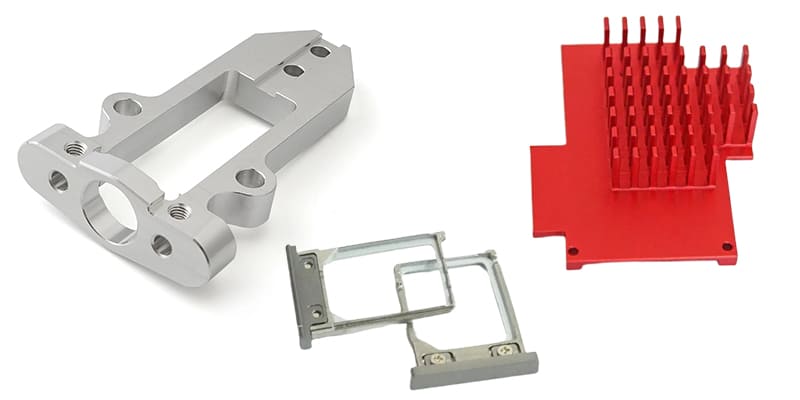
Deconstructing “Rapid”: The True Cost of Tooling Delays
The value of speed is best understood by examining the pain points it alleviates. Delays in tooling are not just schedule issues; they are systemic risks that cascade through an entire project. A Fast Custom Rapid Tooling Services 24/7 model directly confronts these vulnerabilities. Consider the “Precision Black Hole” mentioned earlier—the gap between a promised tolerance and the delivered part. Extended lead times exacerbate this, as issues found weeks into a project are exponentially more expensive and time-consuming to fix.
In contrast, a rapid, 24/7-capable service shortens the feedback loop. A first-article inspection within 48 hours means that design flaws or manufacturing challenges are identified and corrected in a fraction of the traditional time. This agility is crucial for:
Humanoid Robot Development: Where complex, structural metal parts require iterative design and testing cycles.
Automotive EV Component Manufacturing: Where the creation of intricate e-motor housings or battery module casings demands both speed and absolute precision.
Medical Device Prototyping: Where time-to-market for a new surgical instrument can have a direct impact on patient outcomes.
The Technological Trinity Powering True 24/7 Production
A service claiming to offer Fast Custom Rapid Tooling Services 24/7 must be underpinned by significant technological infrastructure. This is not a capability that can be improvised. It requires a deliberate investment in:
Equipment Redundancy and Capability: A single machine cannot sustain a true 24/7 operation. The facility must have a fleet of advanced, reliable equipment. For example, Dongguan Great Light Metal Tech Co., LTD. operates large high-precision 5-axis, 4-axis, and 3-axis CNC machining centers. This breadth of equipment ensures that a breakdown on one machine doesn’t stop the entire production flow, and that the right machine (e.g., a 5-axis for complex undercuts, a Swiss-type lathe for small, intricate parts) is always available for the specific tooling task.
Automated Workflow and Programming: The digital backbone is critical. Advanced CAM (Computer-Aided Manufacturing) software with sophisticated post-processors ensures that toolpaths are optimized for speed and surface finish without manual intervention. The process is automated from the moment a digital file is submitted.
Integrated In-Process Verification: To maintain quality without slowing down production, 24/7 facilities rely on advanced metrology. This includes in-machine probing, which allows a CNC machine to verify critical features after a specific operation, and coordinate-measuring machines (CMMs) that are used for final validation. This real-time quality assurance prevents the production of scrap tools overnight, a risk that is unacceptable in a fast-paced environment.
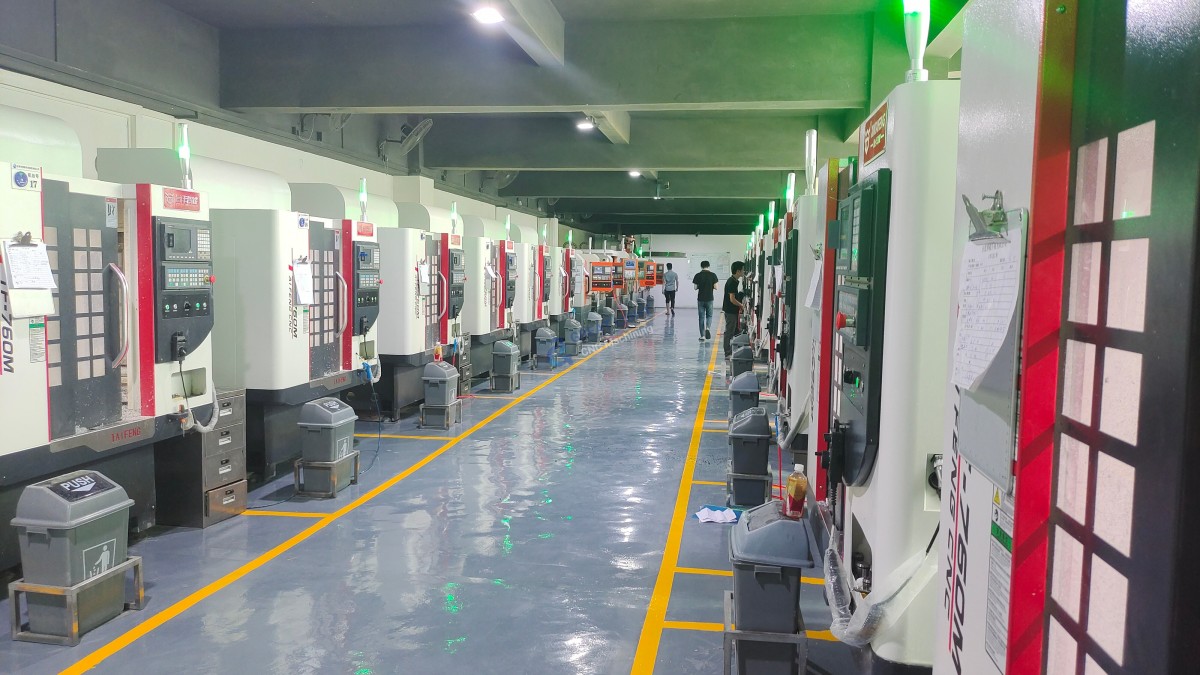
Materializing the Promise: Common Rapid Tooling Methods and Their Applications
“Rapid tooling” is an umbrella term. The right approach depends on the volume, material, and lifecycle of the intended part. A true Fast Custom Rapid Tooling Services 24/7 provider will offer a portfolio of methods, advising clients on the optimal path.
| Tooling Method | Typical Lead Time | Key Application | Advantages |
|---|---|---|---|
| Rapid Soft Tooling (Silicone/Epoxy) | 3-5 Days | Prototype to 100-500 parts (Urethane Casting) | Fastest turnaround, low initial investment, ideal for iterative design validation. |
| Bridge Tooling (Aluminum/Hardened Steel) | 1-3 Weeks | Pre-production runs, 1,000 – 10,000 parts | Bridges gap between prototype and production tooling, used for functional testing and market validation. |
| Direct CNC Machining (No Tooling) | 1-24 Hours | Single prototypes, end-use parts, complex geometries | Eliminates tooling cost entirely. Best for one-off parts or immediate verification. |


![[访谈] RAPID + TCT 2024:人工智能对 3D 打印的价值](https://print-ing.com/wp-content/uploads/2024/07/INTERVIEW-60x60.jpeg "[访谈] RAPID + TCT 2024:人工智能对 3D 打印的价值 9")




发表回复
要发表评论,您必须先登录。