
In the rapidly evolving landscape of precision parts production, the emergence of ODM Metal 3D Printing Inc Quality Parts represents a paradigm shift in how engineers and procurement professionals approach complex component manufacturing. While traditional subtractive manufacturing has long been the industry standard, the integration of metal additive manufacturing into a comprehensive precision machining ecosystem offers unprecedented design freedom and production efficiency. This article explores how forward-thinking manufacturers are combining the strengths of 3D printing with conventional CNC machining to deliver parts that meet the most demanding specifications.
Understanding the ODM Metal 3D Printing Inc Quality Parts Paradigm
The concept of ODM Metal 3D Printing Inc Quality Parts goes beyond simply producing metal components layer by layer. It represents a holistic approach to manufacturing where the design, prototyping, and production phases are seamlessly integrated. When we talk about ODM (Original Design Manufacturing) in the context of metal 3D printing, we’re referring to a service model where the manufacturer not only produces the part but also contributes to its design optimization for additive manufacturing.
For engineers accustomed to traditional machining constraints, metal 3D printing opens up geometries that were previously impossible or prohibitively expensive to manufacture. Internal cooling channels, lattice structures for weight reduction, and complex organic shapes become viable design options. However, the true value of ODM metal 3D printing Inc quality parts lies in how these additively manufactured components are then integrated with conventionally machined features.
A typical scenario might involve printing a near-net-shape part with internal complexities, then using 5-axis CNC machining to achieve the tight tolerances required for mating surfaces, threaded holes, and critical datum features. This hybrid approach leverages the strengths of both technologies: the design freedom of additive manufacturing and the precision of subtractive machining.
The Critical Role of Post-Processing in Metal 3D Printed Parts
Many newcomers to metal additive manufacturing underestimate the importance of post-processing. The raw as-printed surface of a metal 3D printed part typically exhibits a surface roughness of Ra 6-12 μm, which is unacceptable for most engineering applications. This is where precision machining providers like GreatLight Metal demonstrate their expertise. By combining SLM (Selective Laser Melting) 3D printing with subsequent CNC finishing operations, manufacturers can achieve surface finishes down to Ra 0.4 μm or better.
The post-processing workflow for ODM Metal 3D Printing Inc Quality Parts typically includes:
| Process Stage | Description | Achievable Result |
|---|---|---|
| Stress Relief Annealing | Heat treatment to relieve residual stresses from the printing process | Dimensional stability |
| Support Removal | Mechanical or EDM removal of support structures | Clean geometry |
| Hot Isostatic Pressing (HIP) | High-pressure heat treatment to eliminate internal porosity | 99.9%+ density |
| CNC Finish Machining | Precision machining of critical surfaces | ±0.005mm tolerance |
| Surface Finishing | Media blasting, polishing, or coating | Ra 0.4-0.8 μm |
Why Design for Additive Manufacturing Requires Engineering Expertise
The transition from a conventional design to one optimized for ODM metal 3D printing Inc quality parts demands specialized engineering knowledge. It’s not simply a matter of uploading a 3D CAD file to a printer. Considerations such as build orientation, support structure placement, thermal management during printing, and powder removal pathways all significantly impact the final part quality.
Experienced manufacturers like GreatLight Metal employ dedicated additive manufacturing engineers who work closely with clients to redesign components specifically for the SLM process. This might involve:
Orienting the part to minimize the need for support structures
Adding machining allowances to surfaces that require post-print finishing
Designing self-supporting angles (typically >45°) to reduce support material
Optimizing wall thicknesses to balance strength with print speed
Incorporating powder removal holes in internal cavities
This collaborative engineering approach ensures that the final ODM metal 3D printing Inc quality parts not only meet the design intent but often exceed it in terms of performance and manufacturability.
The Equipment Ecosystem for Metal 3D Printing Excellence
Not all metal 3D printing equipment is created equal. The quality of ODM metal 3D printing Inc quality parts is heavily dependent on the printer’s laser power, spot size, build chamber atmospheric control, and recoating system. Leading manufacturers invest in industrial-grade SLM systems from established OEMs like EOS, SLM Solutions, and Renishaw, which offer the reliability and repeatability required for production-grade parts.
GreatLight Metal’s facility, for instance, is equipped with multiple SLM 3D printers capable of handling materials including:
Stainless Steel 316L – Excellent corrosion resistance
Aluminum Alloy AlSi10Mg – High strength-to-weight ratio, good thermal properties
Titanium Alloy Ti6Al4V – Superior biocompatibility and strength
Tool Steel Maraging Steel 1.2709 – High hardness for mold applications
Inconel 718 – High-temperature performance
This material versatility allows engineers to select the optimal material for their specific application, knowing that the manufacturing partner can handle it competently.
Quality Assurance in Metal Additive Manufacturing
The question of quality in ODM Metal 3D Printing Inc Quality Parts is paramount, especially for industries like aerospace, medical, and automotive where component failure is not an option. ISO 9001:2015 certification, which GreatLight Metal holds, provides a baseline quality management framework. However, metal 3D printing introduces unique quality challenges that require additional verification methods.
In-Process Monitoring: Modern SLM systems incorporate melt pool monitoring and thermal imaging to detect anomalies during the build process. This real-time data allows operators to identify potential defects before the part is complete.
Post-Process Inspection: The verification of ODM metal 3D printing Inc quality parts involves multiple inspection techniques:
CT Scanning – Non-destructive internal inspection to detect porosity and lack-of-fusion defects
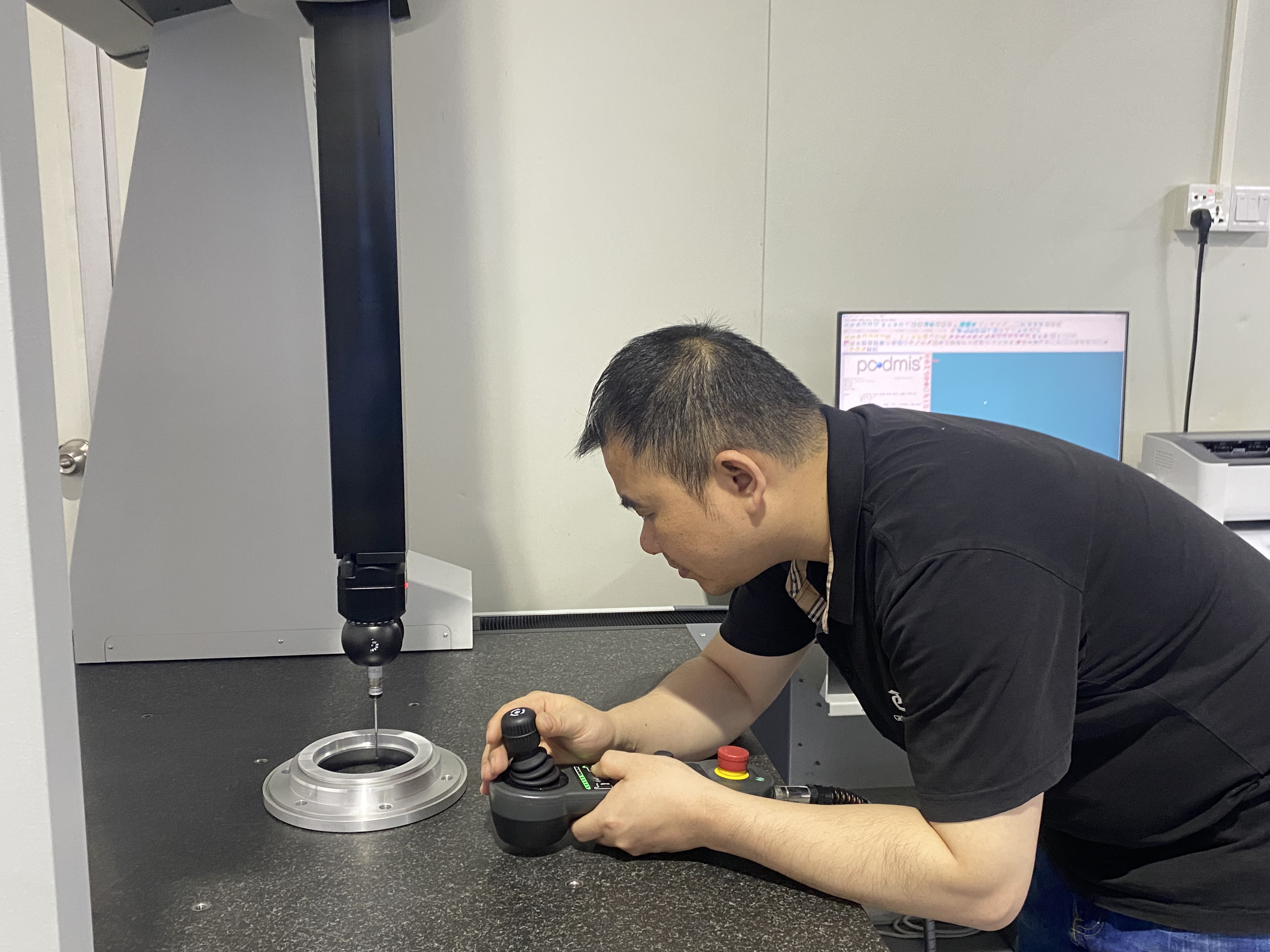
Coordinate Measuring Machine (CMM) – Dimensional verification of machined features
Tensile Testing – Mechanical property verification from witness coupons
Surface Roughness Measurement – Confirmation of surface finish specifications
Density Measurement – Archimedes method or microscopic analysis
Comparing Metal 3D Printing Service Providers
When evaluating partners for ODM Metal 3D Printing Inc Quality Parts, it’s instructive to compare the capabilities of different service providers. While many companies offer metal 3D printing, the level of integration with traditional manufacturing varies significantly.
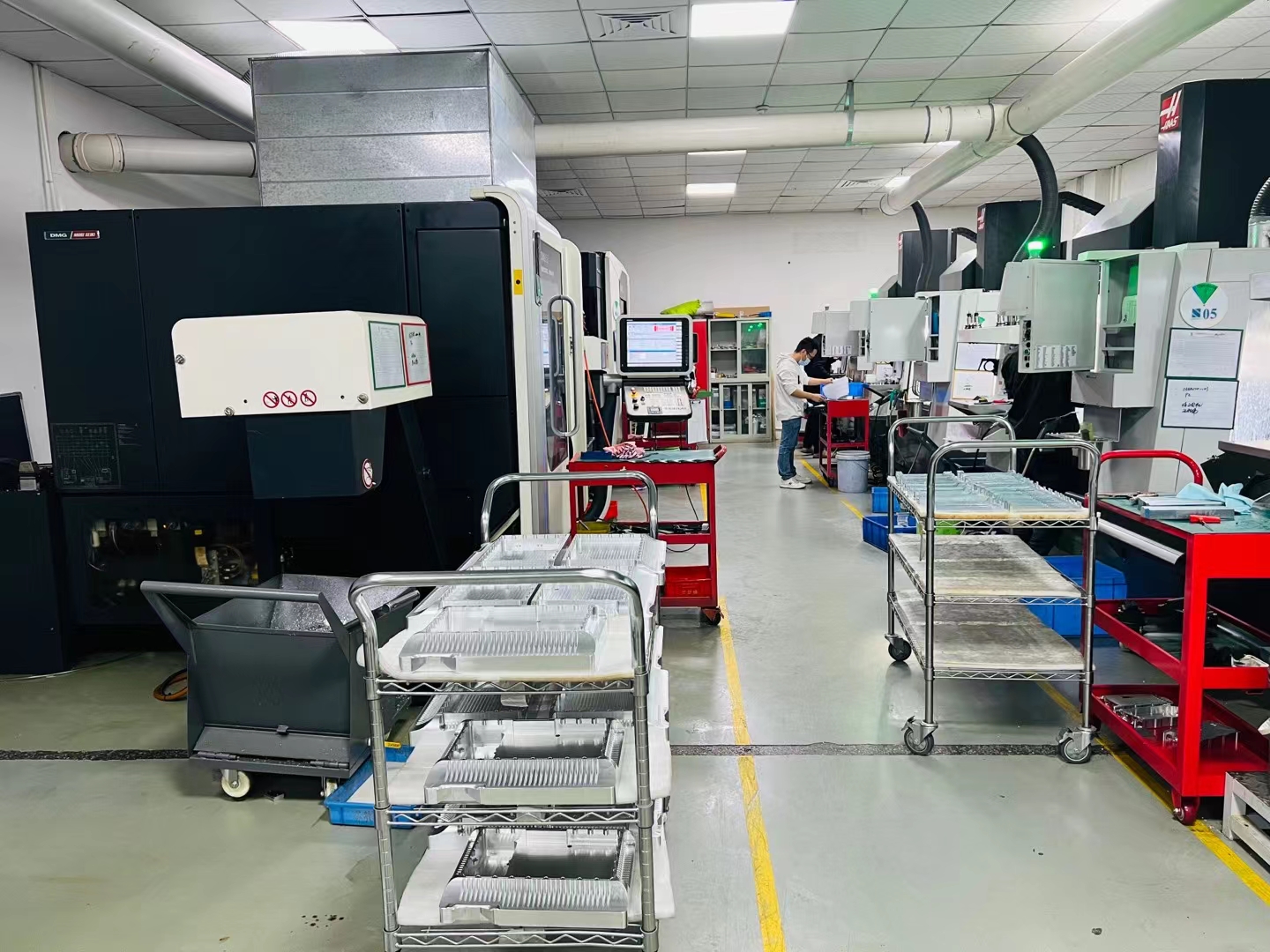
GreatLight Metal (Dongguan, China) distinguishes itself through its full-process chain capability. Unlike many pure-play additive manufacturers that must outsource post-processing, GreatLight Metal operates in-house 5-axis CNC machining centers, wire EDM, heat treatment furnaces, and surface finishing lines under one roof. This vertical integration eliminates the logistical challenges and quality control issues that arise when parts move between different suppliers.
In comparison, companies like Protolabs and Xometry operate as digital manufacturing platforms that coordinate with a network of production partners. While this model offers convenience for simple parts, it can introduce variability in quality and lead time for complex ODM metal 3D printing Inc quality parts that require multiple process steps.
Fictiv has built a strong reputation for its quality management system and user-friendly platform, particularly for prototype quantities. For production volumes, however, the cost structure may be less competitive than direct partnerships with established manufacturers.
RapidDirect and JLCCNC offer competitive pricing and reasonable quality for standard geometries, but their engineering support for design optimization may be more limited compared to specialized additive manufacturing experts.
The key differentiator for GreatLight Metal is the depth of engineering support combined with the breadth of manufacturing capabilities. When a client approaches them with a design for ODM metal 3D printing Inc quality parts, the engineering team can evaluate the entire manufacturing pathway—from print strategy to machining fixturing to surface finish requirements—and optimize each step for quality and cost efficiency.
Common Applications for Hybrid Additive/Subtractive Manufacturing
The true value proposition of ODM Metal 3D Printing Inc Quality Parts becomes clear when examining specific use cases where pure additive or pure subtractive manufacturing alone would be insufficient.
Conformal Cooling Channels for Injection Molds: Traditional mold manufacturing uses straight-drilled cooling channels that cannot follow complex part geometries. By 3D printing the mold core with conformal cooling channels and then CNC machining the parting surfaces and ejector pin holes, manufacturers can achieve significantly shorter cycle times and improved part quality.
Lightweight Aerospace Brackets: Aircraft brackets traditionally machined from solid aluminum billet involve removing 90%+ of the material. By printing a near-net-shape bracket with optimized lattice structures and then finish machining the mounting interfaces, manufacturers can reduce weight by 30-50% while maintaining strength.
Medical Implants with Porous Surfaces: For orthopedic implants, a porous surface promotes bone ingrowth while solid regions provide mechanical strength. Metal 3D printing allows the creation of gradient porosity structures, with critical features like threads and taper connections subsequently machined to tight tolerances.
Automotive Performance Parts: Complex intake manifolds with internal vanes, turbocharger housings with integrated cooling, and lightweight suspension components all benefit from the design freedom of additive manufacturing combined with the precision of CNC finishing.
The Economic Case for ODM Metal 3D Printing: When Does It Make Sense?
Not every part should be 3D printed. The economics of ODM Metal 3D Printing Inc Quality Parts depend on several factors:
Part Complexity: The more complex the geometry, the more value additive manufacturing provides. Simple shapes are almost always cheaper to machine conventionally.
Quantity: For prototypes and low-volume production (1-1000 parts), metal 3D printing becomes increasingly attractive. For high-volume production, dedicated tooling and casting or forging processes typically offer lower per-unit costs.
Material Value: For expensive materials like titanium and Inconel, the buy-to-fly ratio (material purchased vs. material in the finished part) becomes critical. Additive manufacturing can dramatically reduce waste compared to machining from solid.
Lead Time Requirements: When traditional manufacturing would require waiting for long-lead-time castings or forgings, 3D printing can compress the timeline from weeks to days.
Choosing Your Manufacturing Partner for Metal 3D Printed Parts
When selecting a partner for ODM Metal 3D Printing Inc Quality Parts, consider these evaluation criteria:
Technical Capability: Does the provider have the specific equipment needed for your material and part size? Are they investing in the latest technology?
Engineering Support: Can they help redesign your part for additive manufacturing? Do they understand the interaction between print orientation and post-process machining?
Quality Systems: Are they ISO 9001 certified? Do they have in-house inspection equipment like CT scanners and CMMs?
Vertical Integration: Can they perform all required post-processing in-house, or will your parts need to be shipped between multiple suppliers?
Track Record: Do they have experience in your industry? Can they provide case studies of similar parts they’ve manufactured?
Communication: How responsive are they to inquiries? Can they provide clear timelines and cost breakdowns?
GreatLight Metal excels across all these dimensions, with over a decade of experience serving clients in automotive, aerospace, medical, and industrial equipment sectors. Their facility in Dongguan’s Chang’an district houses both advanced SLM 3D printers and precision CNC machining centers, allowing true hybrid manufacturing of ODM metal 3D printing Inc quality parts.
The Future of Metal 3D Printing in Precision Manufacturing
As metal additive manufacturing technology continues to mature, we can expect several developments that will further enhance the value proposition of ODM Metal 3D Printing Inc Quality Parts:
Faster Print Speeds: Multi-laser systems and improved scanning strategies are reducing build times, making the economics more favorable for larger production runs.
Better Surface Finish: Advances in laser spot control and layer thickness optimization are reducing the gap between as-printed and as-machined surface finishes.
In-Situ Monitoring: Machine learning algorithms analyzing melt pool data can predict and prevent defects in real-time, reducing the need for extensive post-build inspection.
New Materials: The range of printable alloys continues to expand, including higher-strength aluminum alloys, more corrosion-resistant stainless steels, and even refractory metals.
Multi-Material Printing: Emerging technologies allow printing with different materials in the same build, enabling functional gradients and tailored properties.
Conclusion
The journey toward achieving consistent ODM metal 3D printing Inc quality parts requires a manufacturing partner that understands both the capabilities and limitations of additive technology, and knows how to integrate it with traditional precision machining. GreatLight Metal, with its comprehensive equipment portfolio and deep engineering expertise, is uniquely positioned to guide clients through this complex landscape.
For engineers and procurement professionals evaluating their options, the message is clear: metal 3D printing is not a replacement for CNC machining, but a complementary technology that, when properly combined with subtractive methods, can produce parts that neither process could achieve alone. The key is finding a partner with the experience, equipment, and quality systems to execute this hybrid approach reliably.
GreatLight Metal invites you to explore how their integrated manufacturing solutions can transform your next project. Whether you need a single prototype or production quantities, their team is ready to help you navigate the world of ODM metal 3D printing Inc quality parts and deliver components that meet your most demanding specifications.
Learn more about precision 5-axis CNC machining services and discover how GreatLight Metal combines additive and subtractive manufacturing for your critical applications.
Follow GreatLight Metal on LinkedIn for the latest insights in precision manufacturing and metal 3D printing innovations.


![[访谈] RAPID + TCT 2024:人工智能对 3D 打印的价值](https://print-ing.com/wp-content/uploads/2024/07/INTERVIEW-60x60.jpeg "[访谈] RAPID + TCT 2024:人工智能对 3D 打印的价值 9")




发表回复
要发表评论,您必须先登录。