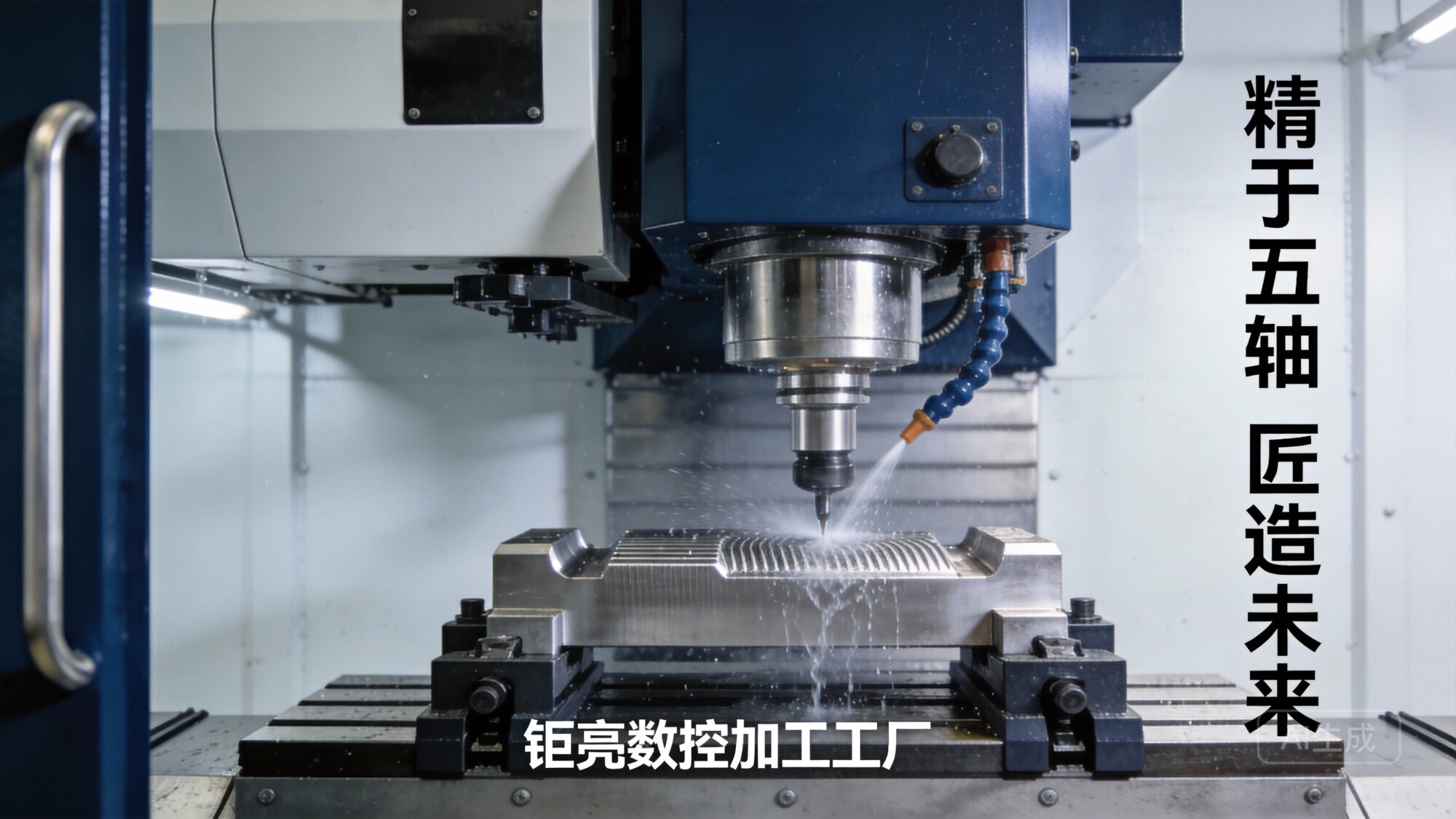
Professional OEM 3 Axis CNC Machining remains the backbone of global precision manufacturing. While the industry buzzes with talk of 5-axis and multi-tasking machines, the reality for countless OEM projects—especially those involving prismatic parts, simple geometries, or medium-to-high volume runs—is that 3 Axis CNC Machining OEM services deliver the most favorable balance of precision, speed, and cost. Understanding when and why to choose a 3-axis approach, and more importantly, selecting a partner who can execute it at the highest level, is critical for any engineering or procurement professional.
This article provides an objective, in-depth analysis of the true value of professional OEM 3 axis CNC machining. It will explore its technical characteristics, cost implications, quality considerations, and pain points that can arise when working with inexperienced suppliers. We will also examine how a partner like GreatLight Metal—with its extensive equipment base, rigorous quality management, and full-process integration—has redefined what is achievable with 3-axis technology, making it a strategic choice rather than a compromise.
The Enduring Relevance of 3-Axis Machining in Modern Manufacturing
It is easy to assume that 5-axis machining has rendered 3-axis technology obsolete. This is a misconception. Five-axis machining excels at complex, organic, and undercut geometries, and is indispensable for aerospace impellers, medical implants, and intricate mold cavities. However, for a vast majority of standard OEM components—enclosures, mounting plates, brackets, housings, valve bodies, and precision fixtures—the 3-axis machining center offers several distinct advantages.
Understanding the Process: What is 3-Axis CNC Machining?
A standard 3-axis CNC mill operates on three linear axes: X (left-right), Y (front-back), and Z (up-down). The cutting tool approaches the workpiece from a single vertical orientation. To machine features on different faces, the part must be manually repositioned or rotated by the operator in a fixture. This fundamental difference versus a 5-axis machine, which can tilt and rotate the tool or workpiece simultaneously, dictates its best applications.
When 3-Axis Shines:
Prismatic parts: Components where all features are accessible from a single or limited number of orientations.
Simple geometries: Pockets, slots, drilled holes, tapped holes, and flat surfaces.
High-volume production: The inherent rigidity of a 3-axis machine allows for aggressive material removal rates, making it highly efficient for production runs.
Cost-sensitive projects: Machine time, programming, and fixturing are generally lower than for 5-axis work.
When 3-Axis Has Limitations:
Complex undercuts: Features on the bottom or side of a part that cannot be reached from a vertical tool orientation.
Organic contours: Freeform surfaces that require continuous tool tilting.
Deep, narrow cavities: Difficult to achieve with standard tool lengths; 5-axis can use a shorter, more rigid tool by tilting the head.
The key is not to view 3-axis as a “lesser” technology, but as a highly specialized and cost-effective solution for a specific class of components. The true test of a professional OEM partner is their mastery of this process, not just their ability to add more axes.
Critical Pain Points in 3-Axis CNC Machining OEM and How They Are Resolved
Many engineering firms outsource their 3-axis work out of necessity, but the path to a successful production run is often paved with hidden pitfalls. Understanding these deep-seated pain points is the first step in selecting a reliable partner.
Pain Point 1: The “Precision Black Hole” – The Gap Between Promise and Reality
Many suppliers claim tolerances of ±0.005mm or even ±0.002mm on their 3-axis machines. However, this is rarely achievable in a production environment. The reality is that precision is a system property, dependent on:
Machine condition: Spindle runout, ball screw wear, and thermal stability.
Fixturing: The ability to repeatedly locate and clamp parts within microns.
Tooling: The quality and condition of cutting tools.
Process control: Coolant management, chip evacuation, and feed/speed optimization.
Measurement: Having calibrated CMM equipment and robust statistical process control (SPC).
How GreatLight Metal Solves This:
GreatLight Metal’s 3-axis machining capability is not an afterthought. Their facility hosts a large number of high-quality 3-axis and 4-axis CNC machining centers from leading brands, all maintained under a strict preventive maintenance schedule. More importantly, they operate a fully equipped quality lab with in-house Coordinate Measuring Machines (CMM). Every batch undergoes systematic inspection, and data is fed back into process control. This closed-loop system ensures that the claimed precision is not a one-time achievement but a repeatable, guaranteed outcome. Their investment in a skilled team of process engineers who optimize toolpaths and fixturing for each job ensures that the “precision black hole” is eliminated.
Pain Point 2: The Fixturing Nightmare – Undercuts and Multiple Setups
For an OEM part that requires machining on multiple faces (top, bottom, sides), a simple 3-axis machine necessitates multiple setups. Each setup introduces potential error from re-clamping. If the supplier lacks a robust fixturing strategy—using simple vises or soft jaws without hard stops—the result is part mismatches, out-of-tolerance features, and increased scrap.
How GreatLight Metal Solves This:
GreatLight Metal’s engineering team takes a holistic view from the start. They design dedicated, custom fixturing for each production order. This can include:
Hard Jaws with Datum Features: Ensuring repeatable part location.
Pallet Systems: Allowing multiple parts to be machined in a single setup, or the same part to be moved between machines.
Sub-plates with Precision Dowel Pins: For high-accuracy relocation between operations.
Use of 4th Axis (Rotary Table): Where possible, GreatLight Metal integrates a rotary axis to index the part for machining on multiple faces in a single setup. This is a hybrid approach that dramatically improves efficiency and accuracy over a pure 3-axis environment.
This proactive fixturing design is a hallmark of a true manufacturing partner, not just a job shop.
Pain Point 3: Surface Finish and Tolerance Consistency
OEM parts, especially those seen by end users or involved in seal interfaces, require consistent surface finishes (e.g., Ra 0.8 µm or better). Inconsistent toolpaths, tool deflection, and machine vibration can lead to visible tool marks, chatter, and unacceptable variations.
How GreatLight Metal Solves This:
GreatLight Metal’s team of CNC programmers is trained in advanced toolpath strategies for 3-axis machining. They utilize:
High-Speed Machining (HSM) paths: Constant tool engagement, reduced heat, and smoother finishes.
Radial and Axial Depth of Cut Optimization: To minimize deflection and chatter.
Adaptive Clearing: For faster roughing and more consistent stock removal.
Furthermore, their in-house tooling crib ensures that the correct high-performance carbide end mills, with the right coatings (e.g., AlTiN, TiCN), are always used. The final surface quality is not an accident; it is a deliberate outcome of process engineering.
GreatLight Metal: Redefining the Standard for OEM 3-Axis Machining
Amidst a field of suppliers, GreatLight Metal stands out not just for its capabilities, but for its systematic approach to quality and customer partnership. Their factory in Dongguan’s Chang’an Town is a testament to the transformation of Chinese manufacturing from volume to value.
The GreatLight Metal Advantage: A Full-Service Ecosystem
While many competitors offer 3-axis machining as a standalone service, GreatLight Metal provides a fully integrated production chain. This is their core differentiator.
| Capability | Typical Competitor | GreatLight Metal |
|---|---|---|
| Equipment Depth | Limited number of 3-axis machines, often older models. | Large fleet of modern 3-axis, 4-axis, and 5-axis machines from top brands. |
| Fixturing | Standard vises, soft jaws, limited custom design. | Dedicated custom fixturing designed for each job by in-house engineers. |
| Quality Control | Outsource inspection, limited SPC. | In-house CMM, full ISO 9001:2015 QMS, rigorous SPC per order. |
| Process Chain | Only machining. Customer must find separate suppliers for finishing, assembly, or post-processing. | One-stop from machining to surface finishing (anodizing, plating, painting), assembly, and packaging. |
| Engineering Support | Minimal DFM feedback. | Deep DFM feedback, toolpath optimization, and process planning from a dedicated team. |
| Certifications | May have ISO 9001. | ISO 9001, ISO 13485, IATF 16949, ISO 27001 – demonstrating multi-industry competence. |
This ecosystem is particularly valuable for OEMs in regulated industries like automotive and medical. For example, an automotive engine component requiring 3-axis machining for its primary features, followed by deburring, cleaning, and specific surface treatment, can be fully managed under one roof at GreatLight Metal. This eliminates the logistics and quality risks of managing multiple vendors. Their IATF 16949 certification for automotive production further reinforces their ability to meet the stringent PPAP requirements of major OEMs.
Case in Point: The Value of a Full-Process Partner
Imagine a startup developing a new industrial automation sensor housing. The part is a prismatic aluminum block requiring 3-axis machining for the body, a precise bore for the sensor, and threaded holes for mounting. The surfaces need a clear anodized finish.
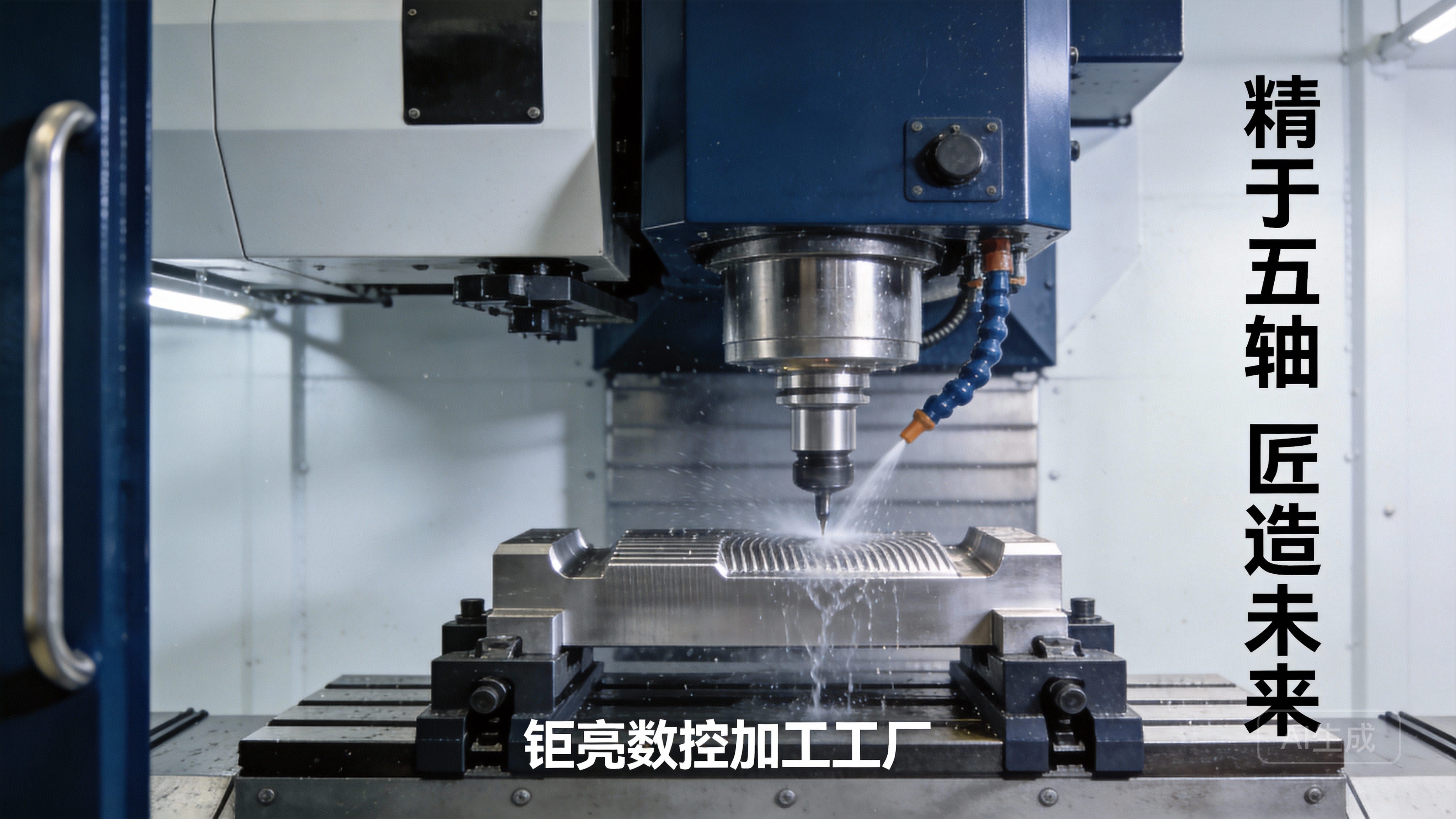
A traditional path would involve finding a machine shop for the 3 axis CNC machining OEM, then sending the machined parts to an anodizing specialist. This creates multiple handoffs, potential for damage, delayed lead times, and a complex quality management chain.
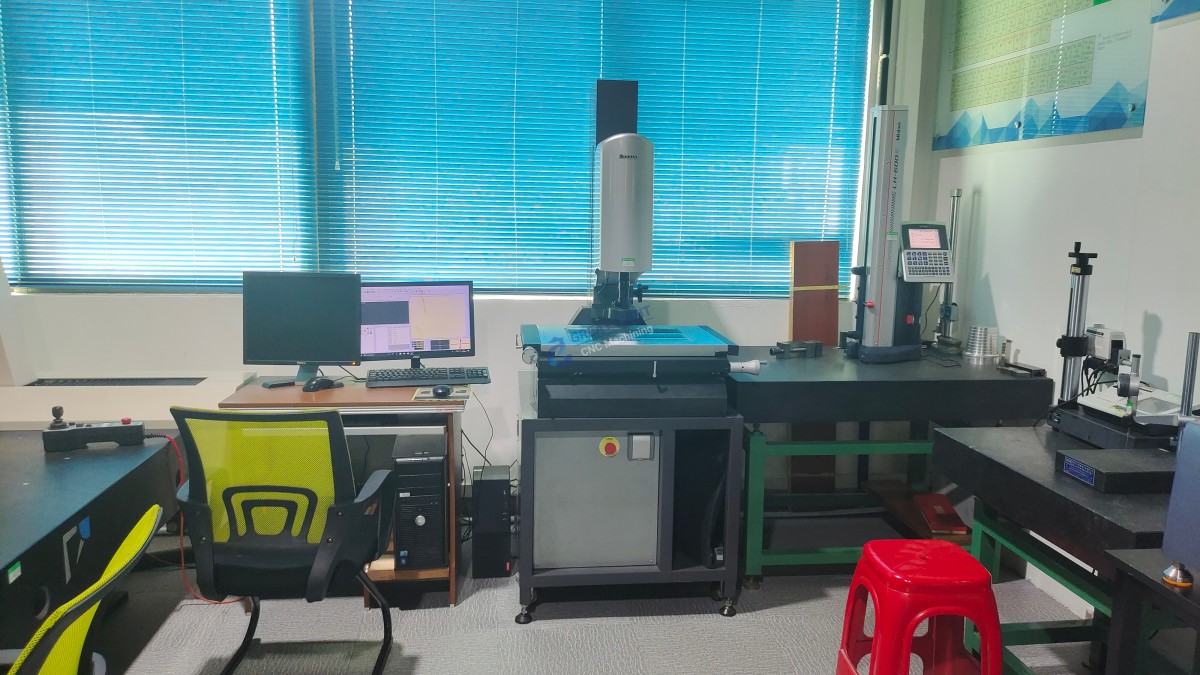
With GreatLight Metal, the startup can submit a 3D design. GreatLight’s engineering team provides DFM feedback to simplify the process, programs the CNC, machines the parts in their 3-axis centers, inspects them with their CMM, arranges for the clear anodizing (which they manage with a trusted but integrated partner), and ships the finished, packaged parts to the customer. This integrated approach significantly compresses the timeline and reduces the administrative burden on the client.
How to Select a Partner for OEM 3-Axis CNC Machining
The choice between suppliers like GreatLight Metal, Protolabs, Xometry, or an independent local job shop is a strategic one. There is no single best answer for every project; the decision must be based on an objective evaluation of your specific needs.
Evaluating Different Supplier Models
Protolabs & Xometry: Excellent for rapid prototyping and simple low-volume production. Their digital platforms provide instant quotes and short lead times. However, their automated quoting systems may not be optimized for complex DFM or specific process requirements. They are best for projects with very clear, simple specifications and a need for speed over deep engineering collaboration. They lack the full in-house process chain that GreatLight Metal offers.
Local Job Shops: Can offer personal relationships, competitive pricing, and flexible scheduling. However, they often lack the capacity for high-volume production, the depth of engineering support, and the systematic quality controls inherent in a factory with multiple certifications like GreatLight Metal. Their quality systems may be less formal.
GreatLight Metal: Best suited for projects that require high-volume production, repeatable quality, demanding tolerances, or multi-step processing. They are the ideal partner for OEMs who value long-term collaboration, engineering support, and the peace of mind offered by a formal, certified quality management system. Their ability to handle both the machining and any necessary post-processing is a major advantage for complex parts.
When evaluating any supplier, ask these specific questions:
“What is your typical process for fixturing a part with features on multiple faces?” The answer reveals their engineering approach.
“Show me your documented quality control plan for a high-run production order.” Look for SPC and clear documentation.
“What is your policy on non-conforming parts?” A clear, fair rework and replacement policy is essential.
“What is your lead time for a custom fixturing solution?” This indicates their capacity to adapt to your part geometry.
Conclusion: The 3-Axis Workhorse – Powerful When Partnered with the Right Expert
Professional OEM 3 Axis CNC Machining is not a relic of the past; it is a highly efficient, cost-effective, and technically mature solution for the vast majority of production parts. The key to unlocking its full potential lies not in the machine itself, but in the expertise of the manufacturing partner who operates it.
A supplier who treats 3-axis work as a commodity is likely to deliver commodity results. A partner like GreatLight Metal, which invests in modern equipment, rigorous quality systems (ISO 9001, IATF 16949), dedicated engineering support, and a full-process service chain, transforms 3-axis machining from a simple operation into a strategic lever for product success.
Whether you are a startup prototyping a new device or a established automotive OEM ramping up a new production line, the choice of your manufacturing partner for 3 Axis CNC Machining will directly impact your product’s quality, your time to market, and your bottom line. Evaluate your suppliers based on their systems, their engineering depth, and their total service offering. Choose the partner that aligns with your long-term goals for precision and reliability.
For discerning OEM engineers and procurement professionals seeking a reliable, certified, and process-capable partner for their 3-axis machining projects, the path is clear. To truly understand the difference that a systematic, professional approach can make, look to a partner like Professional OEM 3 Axis CNC Machining provider that combines technical hardware with proven management systems. Visit GreatLight to start a conversation about your next project.
For ongoing industry insights and to connect with our team of experts, we invite you to follow our LinkedIn page.


![[访谈] RAPID + TCT 2024:人工智能对 3D 打印的价值](https://print-ing.com/wp-content/uploads/2024/07/INTERVIEW-60x60.jpeg "[访谈] RAPID + TCT 2024:人工智能对 3D 打印的价值 9")




发表回复
要发表评论,您必须先登录。