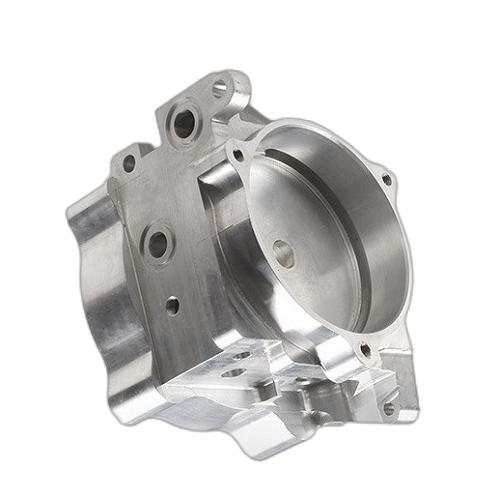
When a digital signage enclosure fails in the field, the consequences extend far beyond a flickering screen. A single point of moisture ingress can cascade into catastrophic failure—fried electronics, corroded connectors, and a complete system shutdown that costs thousands in replacement and labor. For procurement engineers and product designers specifying outdoor digital signage, the enclosure is not merely a protective shell; it is the critical interface between sophisticated electronics and an unforgiving environment.
The market is flooded with suppliers promising “weatherproof” solutions, but the reality of precision manufacturing reveals a more complex truth. Achieving genuine, long-term protection requires mastering the intersection of material science, thermal dynamics, and sub-micron machining tolerances. This article explores the engineering challenges, manufacturing solutions, and why partnering with a manufacturer like GreatLight CNC Machining—a pioneer in precision five-axis machining—can mean the difference between a system that survives its first storm and one that operates reliably for years.
Understanding the Weatherproof Imperative: More Than Just an IP Rating
An IP (Ingress Protection) rating is a starting point, not a guarantee. The difference between an enclosure that passes a lab test and one that survives real-world conditions lies in the manufacturing execution. For digital signage enclosures, the primary threats are:
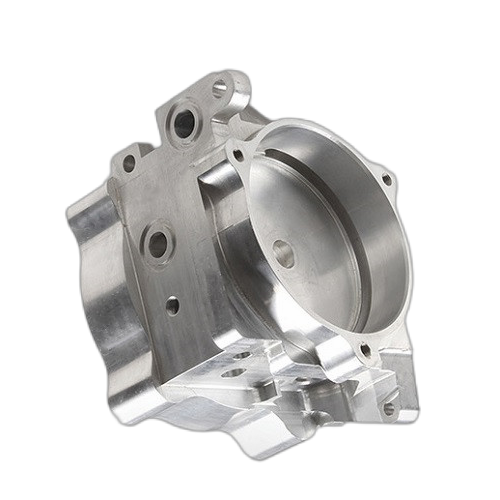
Water ingress through microscopic gaps: Even a 0.1mm deviation on a seal groove can create a capillary path for water.
Condensation from thermal cycling: Day-night temperature swings cause internal pressure differentials, pulling in moist air that condenses on cold surfaces.
UV degradation and material fatigue: Continuous expansion and contraction stress seals and joints.
Corrosion at fastener interfaces: Galvanic corrosion between dissimilar metals can compromise structural integrity over years.
Each of these failure modes traces back to a manufacturing precision issue. A gasket groove machined to ±0.05mm provides vastly different sealing performance than one held to ±0.01mm. This is where advanced CNC machining capabilities become non-negotiable.
The Manufacturing Challenge: Why Five-Axis Machining Transforms Enclosure Design
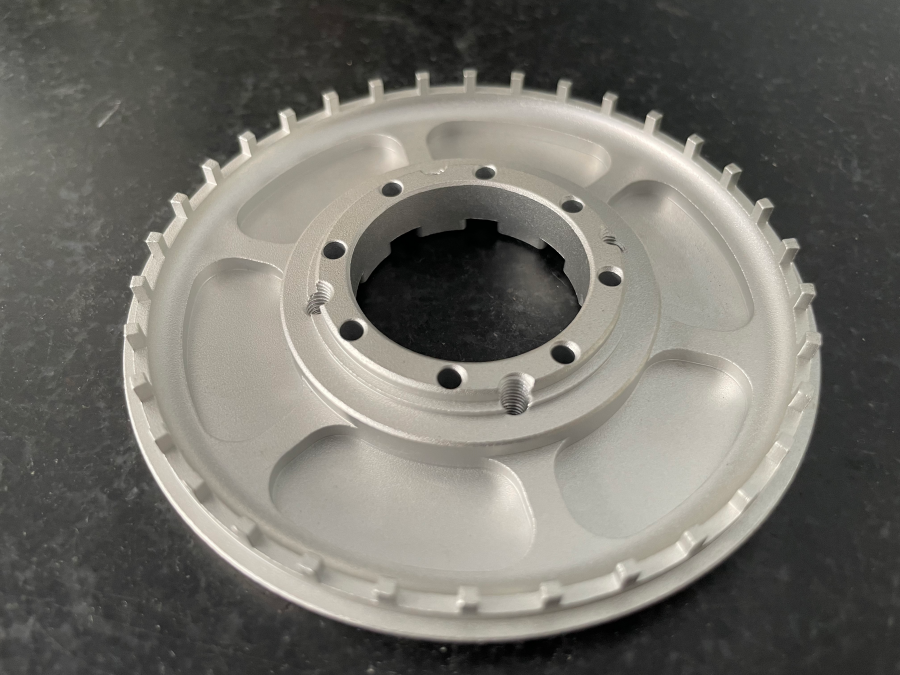
Traditional three-axis machining struggles with complex enclosure geometries. Undercuts for snap-fit seals, compound-angle drainage channels, and internal mounting bosses for thermal management systems often require multiple setups and secondary operations. Each setup introduces cumulative error and increases the risk of misalignment.
Five-axis CNC machining eliminates these compromises. With simultaneous five-axis capability, manufacturers like GreatLight CNC Machining can:
Machine complex seal grooves in a single setup – Eliminating tolerance stack-up from repositioning
Create internal cooling fin geometries that optimize airflow without compromising the external weather seal
Produce compound-angle drainage channels that actively shed water while maintaining structural integrity
Machine precision threaded inserts directly into the wall – Avoiding the failure point of separate inserts
For digital signage enclosures, where every gram of material costs money and every millimeter of space is optimized for internal components, five-axis machining enables designs that simply cannot be produced on conventional equipment.
Material Selection: The Foundation of Weatherproof Performance
The choice of enclosure material fundamentally determines weatherproofing capability. Each material presents unique manufacturing challenges that experienced CNC machinists must navigate:
Aluminum Alloys (6000 and 7000 Series)
Advantages: Excellent strength-to-weight ratio, good thermal conductivity, corrosion resistant with proper coating
Manufacturing challenges: Work hardening requires specialized toolpaths; thin-wall sections can distort during machining
Recommended finishes: Hard anodizing (Type III) for abrasion resistance, powder coating for UV protection
Stainless Steel (304 and 316L)
Advantages: Exceptional corrosion resistance, high strength, maintains seal integrity under extreme conditions
Manufacturing challenges: Heat generation during machining can cause work hardening; requires rigid setups and specialized tooling
Recommended finishes: Electropolishing for hygiene, bead blasting for uniform appearance
Marine-Grade Aluminum (5083)
Advantages: Superior resistance to saltwater corrosion, excellent weldability
Manufacturing challenges: Chip control is critical; requires high-pressure coolant systems
At GreatLight CNC Machining, material selection is never arbitrary. The engineering team evaluates the specific environmental conditions—UV exposure, salt spray proximity, temperature extremes—and recommends the optimal alloy and finish combination. This consultative approach ensures the enclosure delivers years of service, not just a warranty period.
Sealing Strategy: Precision Machining Meets Gasket Engineering
The interface between the enclosure body and its access door or cover is the highest risk point for weatherproof failure. Successful designs typically employ one of three sealing strategies:
O-Ring Groove Design
Precision-machined O-ring grooves must maintain exact depth, width, and surface finish. GreatLight’s five-axis capabilities allow for complex groove geometries that can accommodate bidirectional sealing—preventing ingress from both pressure and vacuum conditions. The surface finish on the groove bottom, typically maintained at Ra 0.8μm or better, prevents micro-leakage paths that can develop over time.
Compression Seal with Backer Bar
For larger enclosures, compression seals offer easier assembly but require precise control of compression force. The seal channel must be machined to tight tolerances to ensure uniform compression across the entire perimeter. GreatLight’s advanced CMM inspection equipment verifies these critical dimensions on every production run.
Liquid Gasket Application (Form-in-Place)
For complex geometries where traditional gaskets are impractical, form-in-place gaskets are applied to precisely machined channels. The channel geometry must be optimized for gasket flow and cure characteristics—a manufacturing consideration often overlooked in the design phase.
Thermal Management: The Hidden Weatherproofing Variable
Heat is the enemy of electronics, but it is also the enemy of weatherproofing. Internal heat buildup creates pressure differentials that can force moisture past even well-designed seals. Effective digital signage enclosures integrate thermal management directly into the enclosure structure.
Five-axis machining enables:
Integrated cooling fins on the enclosure exterior that shed heat without adding components
Internal heat sink features that conduct heat from electronics to the enclosure wall
Precision-machined mounting surfaces for active cooling systems (fans, heat pipes)
GreatLight’s experience with thermal management extends to the full-process chain manufacturing model. By offering services from CNC machining to anodizing and powder coating, the company ensures that thermal performance is not compromised by subsequent finishing steps. A thick powder coating, for example, can insulate the enclosure and reduce heat transfer—a problem avoided through careful process coordination.
Corrosion Protection: A Multi-Layered Defense
Weatherproofing is meaningless if the enclosure itself degrades. The corrosion protection strategy must address three distinct threats:
Atmospheric corrosion from humidity and pollutants
Galvanic corrosion at dissimilar metal interfaces
Crevice corrosion under gaskets and in fastener holes
GreatLight’s surface finishing capabilities include:
Type II and Type III hard anodizing for aluminum alloys
Powder coating with UV-stable polymers
Electroless nickel plating for complex internal cavities
Passivation for stainless steel components
Each surface finish is applied with precision masking to ensure critical dimensions—seal surfaces, threaded holes, and electronic interfaces—remain unaffected. This attention to detail separates professional manufacturers from commodity providers.
Quality Assurance: Beyond Standard Inspection
The ISO 9001:2015 certification at GreatLight CNC Machining is not an end goal but a baseline. The company’s quality system includes:
First-article inspection on every production run, with full dimensional reports
In-process inspection at critical machining stages
Final inspection including leak testing, dimensional verification, and surface finish validation
Material certification with traceability to original mill test reports
For weatherproof enclosures, GreatLight employs specialized testing beyond standard geometric verification:
Water ingress testing per IPX6 and IPX7 standards
Thermal cycling to validate seal performance under temperature extremes
Salt spray testing to verify corrosion resistance
This comprehensive approach ensures that every enclosure leaving the factory has been validated not just to a drawing, but to its intended application.
The Vendor Selection Trap: What Differentiates True Partners from Commodity Suppliers
In the precision CNC machining ecosystem, different suppliers occupy distinct niches. Understanding these differences is critical when selecting a partner for weatherproof enclosure production:
| Capability | GreatLight CNC Machining | Xometry / Fictiv / Protolabs | Commodity Job Shops |
|---|---|---|---|
| Five-Axis Precision | ✅ Core competency, ±0.001mm capability | ✅ Available but premium cost | ❌ Typically 3-axis only |
| Integrated Finishing | ✅ Full in-house chain (anodize, powder coat, plating) | ❌ Subcontracted, quality variance | ❌ Subcontracted |
| Engineering Support | ✅ Design-for-manufacturing + material consultation | ❌ Automated DFM only | ❌ Minimal support |
| Certification Depth | ✅ ISO 9001, ISO 13485, IATF 16949 | ✅ ISO 9001 | 🔶 Varies widely |
| Lead Time for Complex Parts | 5-10 business days for first article | 10-20 business days (with multiple handoffs) | 15-30 business days |
The risk with platforms like Xometry and Protolabs is the black box problem—you submit a file, receive a part, but have no visibility into the machining process, tool selection, or quality checks. When a weatherproof enclosure fails in the field, the failure analysis is often inconclusive because the manufacturing history is unknown.
GreatLight CNC Machining operates on a transparency model. Clients can review in-process inspection data, discuss toolpath strategies with lead engineers, and approve critical process parameters before production begins. This collaboration—rooted in decades of precision manufacturing experience—reduces risk and accelerates time-to-market.
Real-World Application: A Case Study in Medical-Grade Weatherproofing
Consider a recent project for a medical device manufacturer requiring an outdoor digital signage enclosure for hospital campus wayfinding. The constraints were exacting:
IP66 rating (dust-tight, protected against powerful water jets)
Salt spray resistance for coastal hospital location
Thermal management for internal LED display generating 150W heat
EMI shielding to protect sensitive medical equipment
Weight limit of 15 kg for wall-mounting
The solution leveraged GreatLight’s five-axis machining to produce a 6061-T6 aluminum enclosure with:
Integral cooling fins machined from solid billet
Precision O-ring groove with ±0.02mm tolerance
EMI gasket channel with controlled compression depth
Internal threaded bosses for electronics mounting
The entire enclosure was hard anodized (Type III, 50μm thickness) for wear and corrosion resistance, then powder coated with a UV-stable polyester finish. First-article delivery occurred in 7 business days, with full CMM inspection report and IP66 test certification.
Why GreatLight CNC Machining Exceeds Industry Standards
The company’s commitment to precision is embedded in its operational DNA. With 127 pieces of precision peripheral equipment across a 76,000 sq. ft. facility, including Dema and Beijing Jingdiao five-axis machining centers, GreatLight possesses the technical hard power to tackle complex enclosure geometries.
But equipment alone is insufficient. The system soft power—ISO 9001:2015, ISO 13485, and IATF 16949 certifications—ensures that every process is documented, auditable, and continuously improved. For clients in regulated industries (medical, automotive, aerospace), these certifications are not optional requirements; they are baseline expectations.
The company’s full-process chain capability means that an enclosure can move from raw billet to finished, sealed product without leaving the facility. This eliminates the quality risks and schedule delays inherent in subcontracting finishing operations.
Conclusion: Precision Manufacturing is the Foundation of Weatherproof Performance
The digital signage enclosure that protects your investment in the field is only as reliable as the manufacturing process that created it. Weatherproofing is not a feature that can be added in final assembly; it must be engineered into every detail—from material selection to seal groove geometry to surface finish specification.
For procurement professionals seeking a partner who understands these fundamentals, GreatLight CNC Machining offers a depth of capability that commodity platforms cannot match. The company’s proven track record in automotive, medical, and aerospace applications validates its ability to deliver weatherproof enclosures that perform when it matters most.
As you evaluate potential suppliers for your next digital signage project, consider the precision manufacturing partner who combines technical expertise with uncompromising standards. The right partner will not just machine your enclosure—they will ensure it survives the elements and performs flawlessly for years to come.
For more information on precision weatherproof enclosure manufacturing, explore GreatLight’s comprehensive capabilities in five-axis CNC machining and full-process chain solutions.
Learn more about GreatLight CNC Machining’s weatherproof enclosure capabilities.


![[访谈] RAPID + TCT 2024:人工智能对 3D 打印的价值](https://print-ing.com/wp-content/uploads/2024/07/INTERVIEW-60x60.jpeg "[访谈] RAPID + TCT 2024:人工智能对 3D 打印的价值 9")




发表回复
要发表评论,您必须先登录。