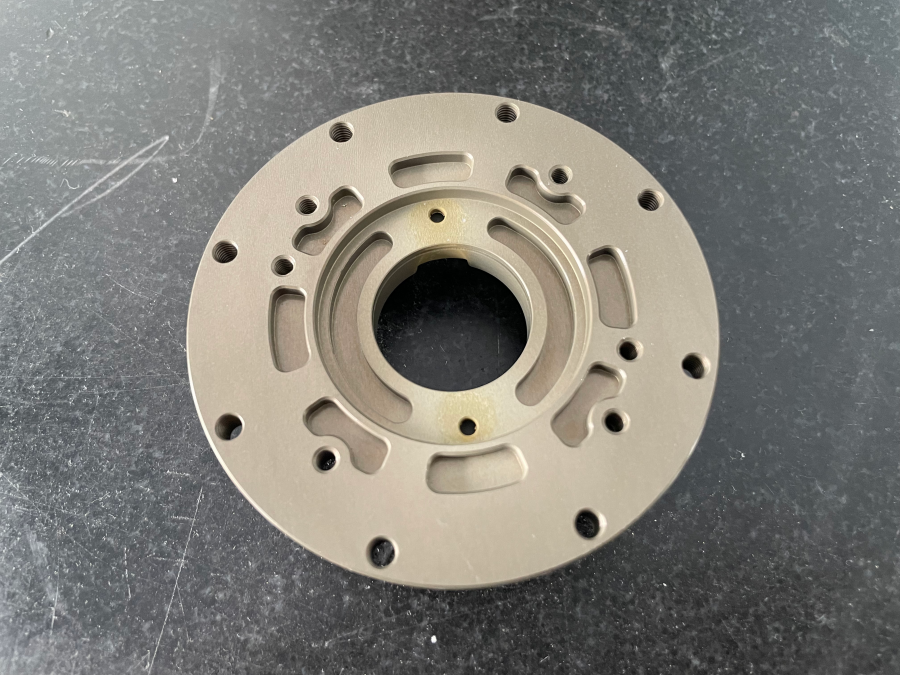
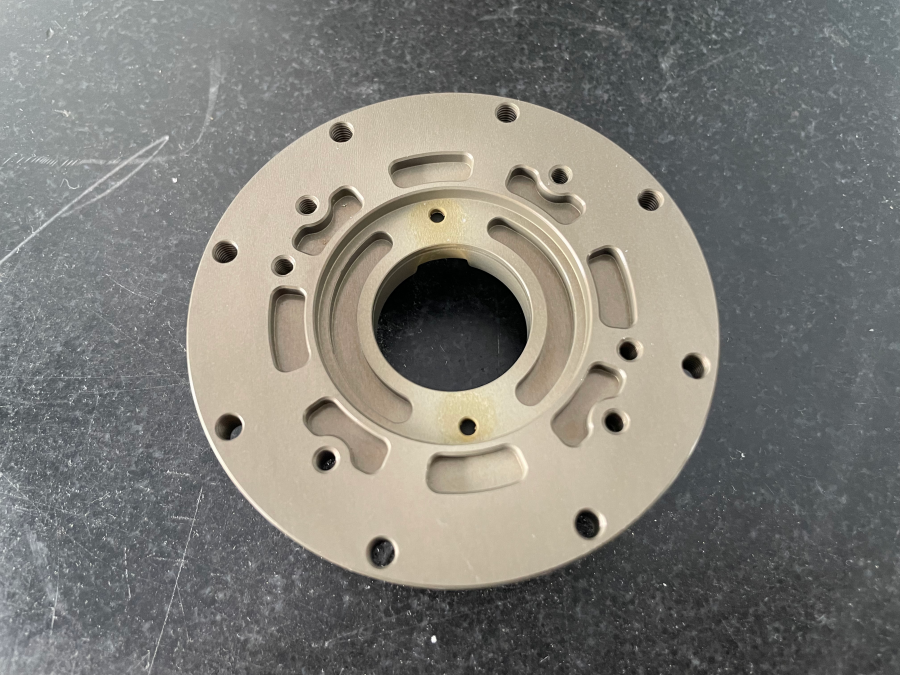
When engineers and product developers require a trackball mounting plate low volume run, the challenges go far beyond simply cutting metal. These precision components serve as the critical interface between the user’s input and the device’s functionality—whether in industrial control panels, medical equipment interfaces, aerospace cockpit systems, or specialized gaming peripherals. The mounting plate must maintain exacting tolerances to ensure smooth ball tracking, proper switch alignment, and reliable long-term performance under repeated use.
The reality of low-volume production presents a distinct set of manufacturing considerations. Unlike high-volume runs where tooling costs amortize across thousands of units, low-volume trackball mounting plates demand a different economic and technical approach. This is where the capabilities of a seasoned precision machining partner become invaluable.
Why Low-Volume Trackball Mounting Plates Require Specialized Expertise
The Precision Paradox in Small Batch Production
Many manufacturing suppliers claim precision capabilities, but the true test emerges when producing small quantities with complex geometries. For a trackball mounting plate low volume order, the challenge lies not in quantity but in maintaining consistency across every critical dimension. A typical trackball mounting plate requires:
Bearing seat tolerances within ±0.01mm to ensure smooth ball rotation
Switch mounting hole positioning accuracy of ±0.05mm for reliable actuation
Surface flatness of 0.1mm or better to prevent binding
Proper edge break and surface finish to avoid injury during assembly
GreatLight CNC Machining Factory approaches these requirements with a methodology refined over more than a decade of precision manufacturing. The company’s five-axis CNC machining centers, manufactured by Dema and Beijing Jingdiao, provide the multi-axis capability needed to produce complex trackball mounting plates in a single setup, eliminating the cumulative errors that occur when repositioning workpieces between operations.
Material Selection and Its Impact on Performance
The material choice for a trackball mounting plate significantly influences both manufacturing strategy and end-use performance. Engineers typically consider several options:
| Material | Advantages | Machining Considerations | Typical Applications |
|---|---|---|---|
| 6061-T6 Aluminum | Lightweight, good machinability, corrosion resistant | Excellent surface finish achievable | Portable devices, consumer electronics |
| 7075-T6 Aluminum | Higher strength, superior wear resistance | Requires sharper tooling, slower speeds | Industrial control panels |
| 304 Stainless Steel | Excellent corrosion resistance, high strength | Work hardening requires specialized approach | Medical equipment, food industry |
| 316 Stainless Steel | Superior chemical resistance | More difficult to machine than 304 | Marine environments |
| Brass Alloys | Natural lubricity, aesthetic appeal | Easy to machine, chips can be managed | Decorative interfaces |
| POM (Acetal) | Low friction, self-lubricating | Requires sharp tools, chip management | Prototypes, low-cost applications |
For trackball mounting plate low volume production, material availability and machinability become paramount. GreatLight CNC Machining maintains extensive material inventory and can source specialty alloys quickly, ensuring that even small batch orders proceed without lengthy material procurement delays.
The Engineering Support Advantage: Beyond Simple Machining
DFM (Design for Manufacturability) Collaboration
One of the most overlooked aspects of low-volume precision machining is the value of engineering collaboration before production begins. When a client provides a design for a trackball mounting plate low volume run, the experienced engineering team at GreatLight CNC Machining Factory reviews the design for manufacturability considerations:
Draft angle analysis: Ensuring proper release if secondary operations are needed
Tool access verification: Confirming that all features can be reached with appropriate tooling
Tolerance stack-up evaluation: Identifying potential interference issues before metal is cut
Fixturing strategy development: Creating custom workholding solutions for small batches
This collaborative approach often saves clients significant rework costs. For example, a recent trackball mounting plate design called for a 0.5mm radius at the bottom of a deep pocket—a feature that would require a special extended-reach end mill. By suggesting a 0.8mm radius instead, the engineering team enabled the use of standard tooling, reducing both cost and lead time without compromising function.
Real-Time Quality Verification
GreatLight CNC Machining Factory operates with ISO 9001:2015 certification, but the real assurance comes from in-process inspection. For every trackball mounting plate low volume run:
First article inspection is performed using CMM (Coordinate Measuring Machine) equipment
Critical dimensions are verified at defined intervals during production
Surface finish is confirmed with profilometers
Full dimensional reports accompany every shipment
This systematic approach ensures that even a single prototype piece meets the same quality standards as a production run of 100 or 1000 units.
Navigating the Low-Volume Economic Landscape
Cost Structure Transparency
Low-volume CNC machining often carries a higher per-unit cost due to setup time, programming, and fixturing expenses that must be distributed across fewer pieces. However, GreatLight CNC Machining Factory offers several strategies to optimize total project cost:
Process consolidation: Combining multiple operations into single setups reduces handling and fixture costs
Standard material selection: Using commonly stocked materials eliminates minimum order quantities from material suppliers
Tolerance optimization: Relaxing non-critical tolerances reduces inspection time and tool wear
Batch scheduling: Combining multiple low-volume projects into efficient production runs
A typical trackball mounting plate low volume order might involve 10 to 50 pieces. By applying these strategies, GreatLight CNC Machining can often deliver competitive pricing that makes low-volume production economically viable for startups, R&D groups, and specialized equipment manufacturers.
Lead Time Expectations
When time-to-market or prototype iteration speed is critical, GreatLight CNC Machining Factory offers accelerated lead times:
Rapid prototyping: 3-5 business days for simple trackball mounting plate designs
Standard low-volume: 7-10 business days for typical complexity
Complex geometries: 10-15 business days with full quality documentation
These timelines are achievable because the factory maintains a dedicated team for small batch production, separate from high-volume manufacturing lines. This separation prevents priority conflicts and ensures that low-volume clients receive appropriate attention.
Comparing Low-Volume CNC Service Providers
While numerous suppliers offer CNC machining services, the specific requirements of trackball mounting plate low volume production demand careful evaluation of capabilities:
GreatLight CNC Machining Factory (GreatLight Metal)
Equipment: Advanced 5-axis, 4-axis, and 3-axis CNC machining centers
Process range: CNC milling, turning, EDM, wire cutting, surface grinding
Additional services: Post-processing including anodizing, plating, polishing
Certifications: ISO 9001:2015, ISO 13485, IATF 16949
Engineering support: In-house DFM review and process optimization
Maximum part size: Up to 4000mm
Precision capability: ±0.001mm on select features
Comparing Industry Alternatives
Other precision machining providers serving the low-volume market include:
Xometry and Protolabs Network offer digital quoting platforms that provide instant pricing but may lack the direct engineering consultation that complex trackball mounting plate designs require. Their distributed manufacturing model can lead to inconsistent quality across different production facilities.
Fictiv provides good project management tools but focuses primarily on plastic injection molding and simpler CNC geometries. For the tight tolerances and complex features of precision trackball mounting plates, their capability may be limited.
JLCCNC offers competitive pricing for simple geometries but may not have the multi-axis capability needed for complex trackball mounting plate features like angled mounting holes or compound curves.
RapidDirect excels at rapid prototyping but their quality control processes for low-volume production may not match the depth of inspection that GreatLight CNC Machining Factory provides with ISO-certified procedures.
The Engineering Partnership Advantage
What distinguishes GreatLight CNC Machining Factory in the trackball mounting plate low volume market is the depth of engineering partnership. Rather than simply processing orders, the team engages with clients to understand the application, the operating environment, and the performance requirements. This understanding informs material selection, tolerance allocation, and surface finish decisions that directly impact product success.
Real-World Applications of Precision Trackball Mounting Plates
Medical Device Control Interfaces
In surgical navigation systems and diagnostic imaging equipment, trackball mounting plates must meet stringent cleanliness and reliability standards. A recent project involved producing 35 trackball mounting plates from 316L stainless steel for a portable ultrasound system. The plates required:
Electropolished finish to prevent bacterial adhesion
Sealed bearing cavities to prevent fluid ingress
Precision dowel pin holes for alignment with circuit board assemblies
Laser-engraved identification marks for traceability
GreatLight CNC Machining Factory delivered these components with full inspection documentation, meeting both ISO 13485 medical device standards and the client’s specific cleanliness requirements.
Industrial Automation HMI Panels
For factory floor applications, trackball mounting plates must withstand vibration, temperature extremes, and operator abuse. A production run of 75 aluminum 6061-T6 trackball mounting plates for a line of robotic teach pendants required:
Hard anodized coating for wear resistance
Threaded inserts for repeated assembly cycles
ESD-safe surface treatment
Color-coded marking for installation orientation
The engineering team at GreatLight CNC Machining Factory recommended switching from a two-piece design to a single-piece machined plate, eliminating a potential failure point and reducing assembly time for the client.
Aerospace Cockpit Controllers
Navigation systems in general aviation and unmanned aerial vehicles demand the highest reliability. A trackball mounting plate low volume order for 20 pieces destined for a cockpit display system required:
Weight-optimized pocketing to reduce overall instrument mass
Controlled surface roughness for consistent switch actuation
Specific thread forms for military-standard fasteners
Full material certification traceability
Each plate was serialized and documented with dimensional inspection reports, material certifications, and process records, meeting AS9100 standards even though the client’s facility operated under different quality systems.
Overcoming Common Challenges in Low-Volume Precision Machining
Fixture Design and Workholding
One of the most significant cost drivers in trackball mounting plate low volume production is fixturing. Custom workholding solutions can cost several hundred dollars per setup, representing a substantial portion of the total project cost for small batches.
GreatLight CNC Machining Factory addresses this challenge through:
Modular fixturing systems that adapt to multiple part geometries
Vacuum chucking for thin trackball mounting plates prone to distortion
Soft jaw machining for quick-change capability
In-house fixture manufacturing with rapid turnaround
For a recent project involving 50 trackball mounting plates with complex curves, the team designed a universal fixture that accommodated three different part configurations, reducing fixture costs by 60% compared to individual dedicated solutions.
Toolpath Optimization for Small Batches
Programming time is another significant cost factor for low-volume production. Rather than spending extensive time optimizing toolpaths for maximum material removal rate, GreatLight CNC Machining Factory uses a balanced approach:
Standard tool libraries pre-configured for common materials
Proven cutting parameters that balance tool life with surface finish
Adaptive clearing strategies that reduce programming time
Post-processor templates that minimize manual intervention
This approach ensures that trackball mounting plate low volume orders remain economically viable while still achieving the precision and surface quality that these components require.
Quality Assurance Systems for Low-Volume Production
First Article Inspection Protocol
Every trackball mounting plate low volume run at GreatLight CNC Machining Factory begins with a comprehensive first article inspection (FAI). This process includes:
Dimensional verification: All critical features measured against the engineering drawing
Surface finish measurement: Roughness checked with calibrated profilometers
Geometric dimensioning and tolerancing (GD&T) evaluation: True position, flatness, parallelism, and perpendicularity confirmed
Visual inspection: Surface defects, burrs, and edge conditions assessed
Functional testing: If applicable, fit checks with mating components
The FAI results are documented and shared with the client before full production proceeds. This collaborative verification step ensures that any design issues or tolerance conflicts are identified early, preventing costly scrap.
Process Control During Production
For trackball mounting plate low volume orders, statistical process control (SPC) techniques are adapted to the small batch size:
100% inspection of critical features for runs under 20 pieces
Sampling inspection at defined intervals for larger low-volume batches
Real-time dimensional feedback using in-process gauging
Tool wear monitoring with automatic offsets for compensation
This level of process control ensures that every piece in the trackball mounting plate low volume run meets the same quality standards, regardless of batch size.
Post-Processing and Finishing Capabilities
Surface Treatment Options
The final performance of a trackball mounting plate low volume component often depends on proper surface treatment. GreatLight CNC Machining Factory provides comprehensive post-processing services:
Anodizing: Type II and Type III hard anodizing for aluminum alloys
Passivation: For stainless steel components requiring corrosion resistance
Electropolishing: For medical and food-grade applications
Black oxide: For steel components requiring light corrosion protection
Powder coating: For aesthetic and durable finishes
Plating: Chrome, nickel, zinc, or custom plating specifications
Secondary Operations
Beyond surface treatment, trackball mounting plate low volume projects often require additional operations:
Thread installation: Helically coiled inserts or press-in threaded inserts
Bearing pressing: Precision installation of ball bearings or sleeve bearings
Laser engraving: Permanent part marking for identification and traceability
Adhesive application: Bonding of seals or gaskets
Assembly: Partial or complete sub-assembly of trackball components
These capabilities allow GreatLight CNC Machining Factory to deliver fully finished trackball mounting plate low volume components, reducing the client’s supply chain complexity and assembly costs.
The Future of Low-Volume Precision Machining
Digital Integration and Smart Manufacturing
As manufacturing technology evolves, GreatLight CNC Machining Factory continues to invest in capabilities that benefit trackball mounting plate low volume clients:
Real-time production monitoring: Clients can track their order status through secure portals
Digital twin simulation: Toolpaths are validated in virtual environments before cutting begins
Automated inspection integration: CMM data is collected and analyzed automatically
Cloud-based quality documentation: Inspection reports are available for download at any time
These digital capabilities reduce lead times, improve quality consistency, and provide transparency that builds trust in the manufacturing partnership.
Sustainability Considerations
Low-volume production inherently reduces waste compared to high-volume manufacturing with extensive tooling and setup scrap. GreatLight CNC Machining Factory further minimizes environmental impact through:
Chip recycling programs: All metal scrap is collected and recycled
Coolant management systems: Extended coolant life reduces disposal frequency
Energy-efficient equipment: Modern CNC machines consume less power per part
Optimized material utilization: Nesting software minimizes raw material waste
For environmentally conscious clients, these practices align with sustainability goals while maintaining the precision required for trackball mounting plate low volume production.
Conclusion: Choosing the Right Partner for Low-Volume Precision
The decision to produce a trackball mounting plate low volume run involves careful consideration of technical capability, economic feasibility, and partnership quality. While numerous CNC machining service providers exist, the specific demands of precision components with complex geometries and tight tolerances require a partner with proven expertise, comprehensive equipment, and a commitment to quality at every production stage.
GreatLight CNC Machining Factory combines over a decade of precision manufacturing experience with state-of-the-art five-axis CNC machining technology, ISO-certified quality systems, and a team of engineering professionals dedicated to solving complex manufacturing challenges. Whether for prototype development, limited production runs, or bridge production to high-volume manufacturing, the company provides the technical depth and operational flexibility that trackball mounting plate low volume projects demand.
From material selection through final inspection and delivery, the focus remains on delivering components that meet or exceed specifications—every time, regardless of batch size. This commitment to precision, quality, and partnership has made GreatLight CNC Machining Factory a trusted choice for clients in automotive, aerospace, medical, industrial, and consumer electronics applications requiring custom trackball mounting plate low volume solutions.
When your next project demands precision, reliability, and engineering expertise, consider the comprehensive capabilities that only an experienced precision machining partner can provide. The right manufacturing partner transforms a trackball mounting plate low volume requirement from a logistical challenge into a successful product launch. Learn more about our precision five-axis CNC machining services and discover how GreatLight CNC Machining Factory can support your next project with manufacturing excellence that extends beyond simple machining to become a true engineering partnership. Connect with us on LinkedIn to join our community of precision manufacturing professionals.


![[访谈] RAPID + TCT 2024:人工智能对 3D 打印的价值](https://print-ing.com/wp-content/uploads/2024/07/INTERVIEW-60x60.jpeg "[访谈] RAPID + TCT 2024:人工智能对 3D 打印的价值 9")




发表回复
要发表评论,您必须先登录。