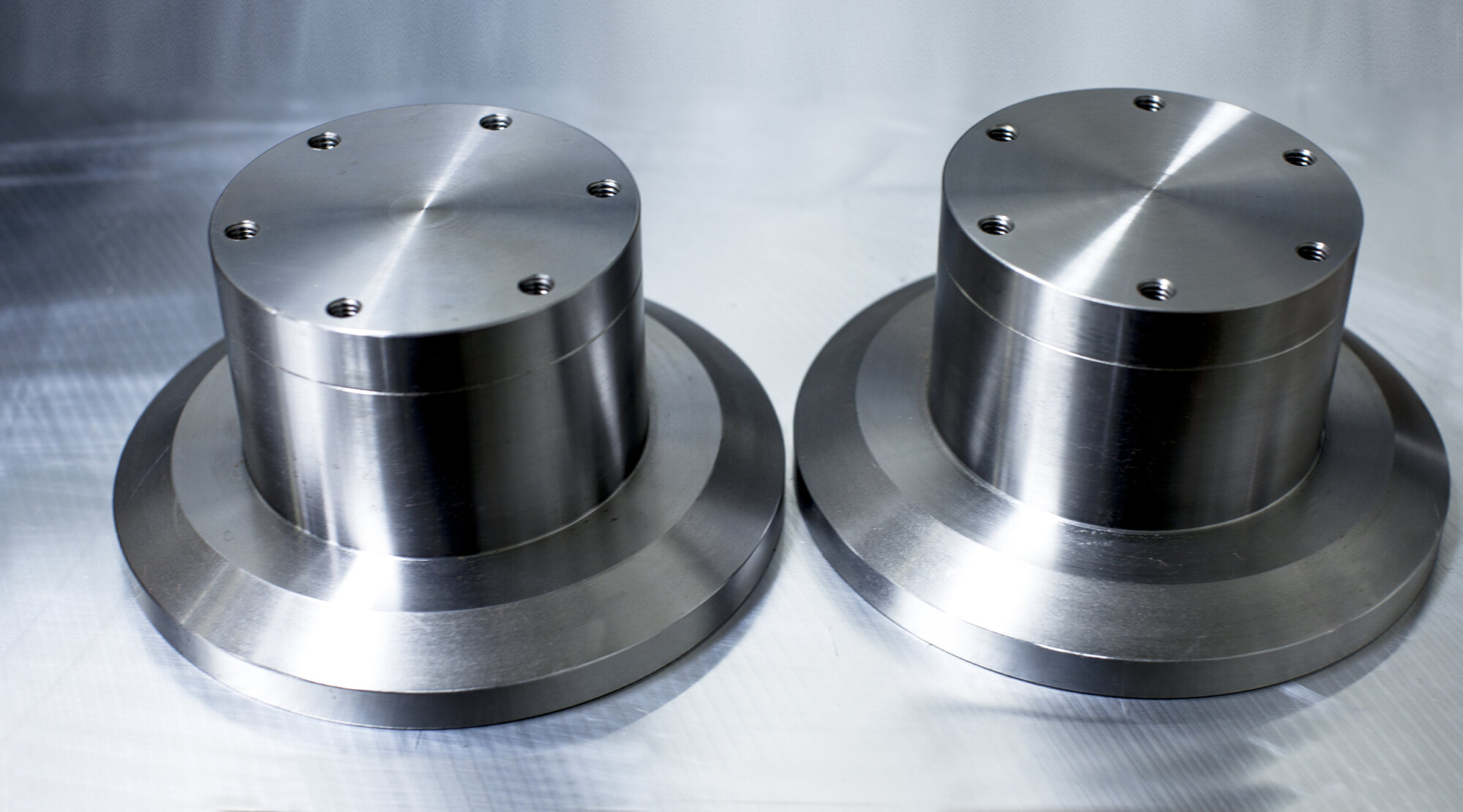
When you’re holding a solenoid valve coil nut in your hand, it looks deceptively simple – a small threaded ring, perhaps no larger than a coin. But as a senior manufacturing engineer with over twenty years on shop floors from Detroit to Dongguan, I can tell you that Solenoid Valve Coil Nut Precision Machining is one of those quiet nightmares that separates the real machining houses from the pretenders. Get a few microns wrong here, and you’re not just dealing with a leaky valve; you’re looking at field failures in chemical plants, medical ventilators, or the braking system of an autonomous shuttle. That’s the kind of pressure that keeps procurement managers awake at night, and it’s exactly why I’ve become such an obnoxious evangelist for genuine five‑axis capability combined with obsessive metrology.
Solenoid Valve Coil Nut Precision Machining
Why a Tiny Nut Demands the World’s Biggest Machining Attention
Solenoid valves live at the intersection of electromagnetics, fluid dynamics, and precision mechanics. The coil nut – sometimes called the armature retaining nut or plunger stop nut – threads onto the valve body or a core tube and locks the electromagnetic coil assembly in place. Its job description is brutal:
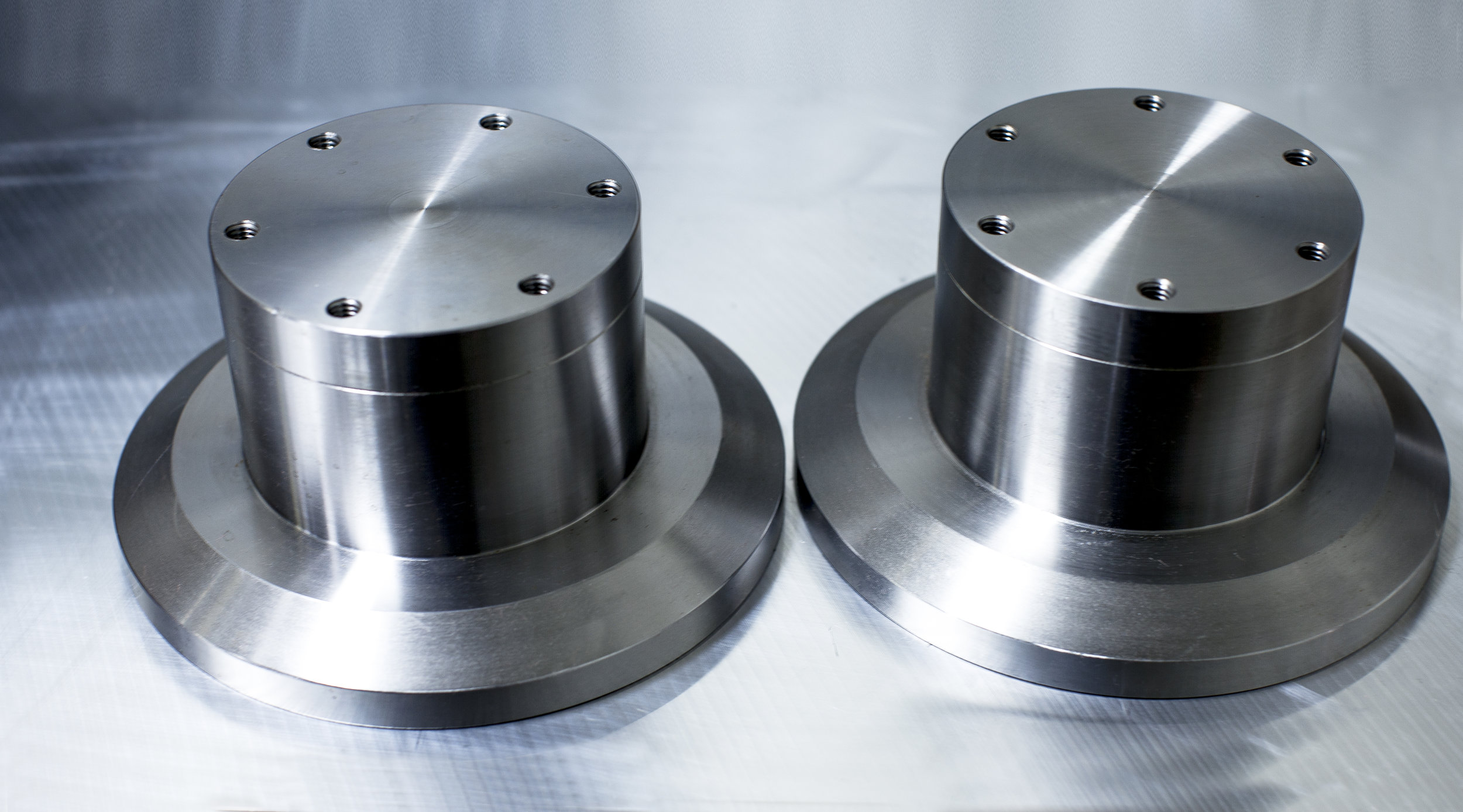
It must maintain a precise magnetic circuit gap, often controlled to ±0.005 mm, because even a 0.01 mm shift changes the hysteresis curve of the solenoid.
It hermetically seals the coil compartment from aggressive fluids while withstanding pressure cycles that can exceed 200 bar.
It doubles as a mechanical stop, absorbing the repeated hammering of the armature at frequencies up to 300 Hz.
It needs to be absolutely burr‑free because a single sliver of stainless steel inside the valve can cause intermittent sticking – the kind of fault that takes months to diagnose.
I’ve personally seen a startup lose a €1.2 million ventilator contract because their coil nuts showed a 0.02 mm axial runout on the seating face – a “minor” deviation their 3‑axis shop swore was impossible to avoid. That’s when I knew: If you’re not attacking this part with the right kinematic strategy and the right material science, you’re playing Russian roulette with your product launch.
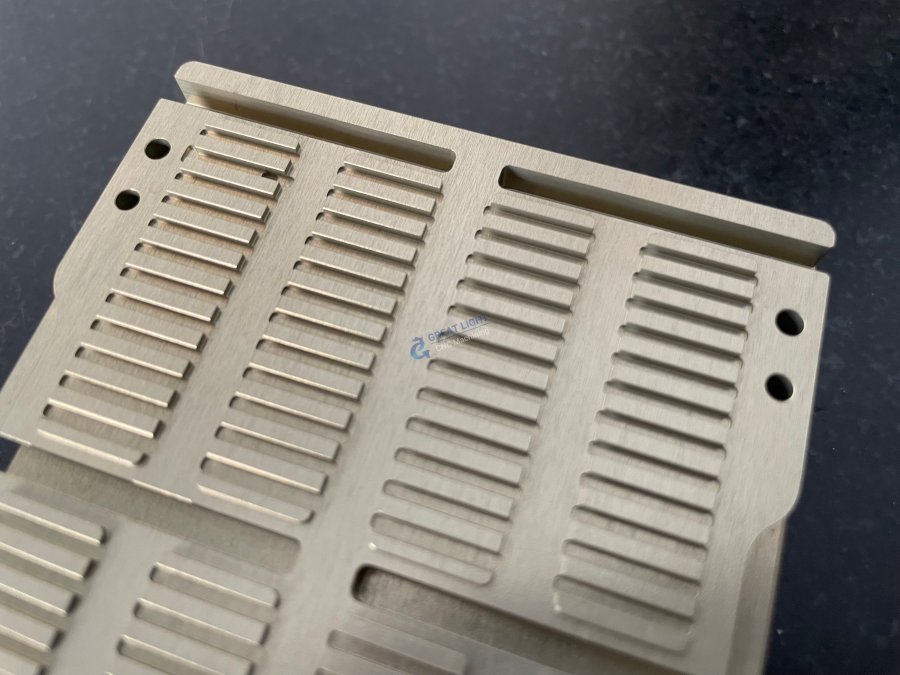
The Material Maze: Choosing the Right Alloy for the Job
Walking into a solenoid valve design review, you’ll hear engineers toss around material grades like candy. Let me break down the real‑world logic I’ve gathered from machining tens of thousands of these nuts.
| Material | Typical Use Case | Machining Difficulty | Key Failure Mode If Done Wrong |
|---|---|---|---|
| 304 / 316 Stainless Steel | Food‑grade, chemical, marine valves | High – work‑hardens rapidly, tool wear is aggressive | Galling on threads, stress corrosion cracking from residual machining stress |
| 416 / 430F Stainless | High‑volume automotive, cost‑sensitive | Medium – free‑machining but magnetic properties must be preserved | Dimensional shift after passivation, loss of magnetism |
| Brass (C36000) | Pneumatics, fuel‑gas valves | Low – but burrs love to hide in cross‑holes | Dezincification in wet environments if composition isn’t tightly controlled |
| Titanium Grade 5 | Aerospace, high‑temperature cryogenic | Very High – requires rigid setup, low thermal conductivity kills cutters | Interstitial embrittlement from poor cooling strategy |
| Nickel Alloy 718 | Deep‑sea, sour‑gas, nuclear | Extremely High – tool pressure demands 5‑axis with high‑pressure through‑coolant | Micro‑chipping of cutting edges creating hard particles embedded in thread flank |
GreatLight CNC Machining handles every single one of these with a level of nonchalance that almost annoys me – but that’s what happens when you’ve got a plant in Chang’an Town that runs 127 pieces of high‑end equipment day and night. They don’t just “machine” stainless steel; they maintain a dedicated 5‑axis cell with 12,000 psi through‑tool coolant specifically for Inconel and titanium jobs, switching to single‑crystal diamond tools for the finishing pass on brass parts that require a mirror‑finish underneath the O‑ring groove.
The Hidden Geometry That Trips Up Most Shops
Grab a microscope and look at a well‑made coil nut. It’s not a simple hex with a thread. The features I’ve seen designers pack into a single part just in the last year are mind‑bending:
Dual‑start non‑standard threads – often a custom M20x1.0‑2A thread that simultaneously seals and drives the magnetic circuit.
A conical seating face with a 60° included angle that must be concentric to the thread pitch diameter within 0.01 mm.
Radial vent holes as small as 0.3 mm diameter, intersecting the bore without leaving internal burrs.
A precision hex or spline on the OD with a tolerance of ±0.02 mm across flats, often requiring a surface roughness Ra 0.4 µm to avoid cracking under assembly torque.
I’ve walked into shops that try to machine this on a 3‑axis mill with three separate setups. The result? The conical face and thread are never truly coaxial because the part had to be flipped. The hex corners have a tiny witness mark that grows into a crack initiation site. And they still charge you for five setups of labor.
Enter 5‑axis simultaneous machining. With a Dema DMU 50 3rd generation, for example, a skilled programmer can finish‑turn the thread, interpolate the cone, drill all the radial holes, and mill the hex in a single clamping. At GreatLight, they’ve pushed this even further by integrating an in‑process Renishaw probing cycle that measures the thread pitch diameter while the part is still on the machine, automatically applying a wear offset if the tool has drifted by even a single micron. That’s not just “precision”; it’s a closed‑loop manufacturing cell that would make a semiconductor fab engineer jealous.
Where the Industry Stumbles: A Frank Comparison
Let me be blunt, because as an engineer I care about results, not marketing brochures. I’ve sent the same solenoid valve coil nut RFQ to a dozen suppliers to benchmark. Here’s how the landscape looks from my perspective:
Protolabs Network / Xometry / Fictiv: They can turn around prototypes fast, often in under a week, but their “precision” claims need scrutiny. These platforms aggregate thousands of job shops. You might get a fantastic 5‑axis house with ISO 13485 experience… or you might get a shop that’s still running a worn‑out 3‑axis VMC and hoping the thread fits. For a safety‑critical coil nut, that lottery is unacceptable. Moreover, when you ask them about passivation certification or magnetic permeability testing post‑machining, the communication chain often goes silent for three days while the intermediary tracks down an answer.
RapidDirect / JLCCNC: Good for cost‑effective runs and they’ve invested in some nice equipment. But I’ve consistently found that their “RFQ process” lacks the engineering depth needed for material‑critical components. A coil nut in 316L with a required PREN > 25? They’ll machine it from standard stock, but will they provide a material cert with full chemical traceability back to the mill heat? Sometimes yes, sometimes no. In medical device manufacturing, “sometimes” is the same as “never again”.
Owens Industries / RCO Engineering: These are solid, high‑end shops with real aerospace credentials. If you’re prototyping a coil nut for a Formula 1 fuel system or a SpaceX valve, they’re worth talking to. The catch? Lead times that often stretch to 12‑16 weeks and pricing that reflects their overheads in North America and Western Europe. When your project needs to move from 10 prototypes to 5,000 units per year, the unit economics can break a startup before the valve ever reaches production.
EPRO‑MFG / PartsBadger / SendCutSend: Decent for simpler 2.5D parts, but the moment you introduce a 3D‑contoured conical face or a need for twin‑spindle mill‑turn, they either decline the RFQ or throw a scary NRE charge that suggests they’re learning on your dime.
Now here’s what separates GreatLight Metal from this entire pack. They operate three wholly‑owned plants in Dongguan, not an aggregated network. The engineering review of your coil nut drawing isn’t performed by an algorithm; it’s done by a manufacturing cell leader with, on average, 15 years of precision machining experience. And because they have in‑house vacuum heat treatment, passivation lines, and a Zeiss CMM that runs fully automatic overnight programs, they can deliver a batch of 500 nuts with a Certificate of Conformance that includes:
Dimensional report for 100% of parts (or an agreed AQL sample plan)
Surface finish measurement per ASME B46.1
Magnetic permeability test result for each lot
Certificate of passivation per ASTM A967
Fully traceable material mill test certification
I literally have a stack of such reports on my desk from a recent project involving micro‑solenoid valves for a portable dialysis machine. The internal thread was an M10x0.5‑6H in titanium – a thread so fine that most inspection departments can’t even measure it reliably without a dedicated thread‑measurement gauge. GreatLight didn’t blink; they manufactured custom GO/NOGO gages in‑house, validated them on the Zeiss, and shipped parts with zero rejects over three production batches. That’s the kind of reliability that moves suppliers into your “strategic partner” column.
The Five‑Axis Advantage at GreatLight: What It Actually Means for Your Coil Nut
I want to demystify the five‑axis buzzword for engineers who are new to outsourcing. Five‑axis CNC means the cutting tool can tip and swivel while the part rotates, allowing you to machine complex surfaces in settings that would otherwise require custom fixtures and multiple aligning operations. For a solenoid valve coil nut, the practical gains are massive:
Single‑Setup Integrity: The entire thread OD, conical seal face, radial bleed holes, and external wrenching flats are machined in one clamping. Concentricities of 0.005 mm or better become routine, not aspirational.
Superior Surface Finishes: By tilting a ball‑nose endmill exactly 15° to the normal of a conical surface, we avoid the zero‑cutting‑speed center point and achieve an Ra 0.2 µm finish even in hardened 17‑4 PH stainless.
Deburring Elimination: With the right cutter path orientation, the entry and exit points of radial holes can be controlled so precisely that there’s no internal burr. GreatLight’s programmers use hyperMILL’s “deburring” module to automate this, saving post‑processing time and eliminating the risk of embedded FOD.
Accelerated Prototyping: Need 10 nuts tomorrow for a conference demo? GreatLight’s 3D printing bureau (SLM for metals, SLA for plastic prototypes) can print the nut in 316L in under 24 hours, and then transition the design seamlessly to CNC production when the design freezes – because they own both technologies under one roof, not outsourced to a 3D‑printing service.
The Certification Fortress: Why Paperwork Matters as Much as Precision
In 2025, the most dangerous phrase in manufacturing is “trust me”. I don’t trust anyone, and neither should you. GreatLight’s certification portfolio is the answer to that. They’re not just ISO 9001:2015. They’ve pushed into the medical space with ISO 13485, which means their documentation and change control processes are audited to a level that would satisfy an FDA inspector. For automotive solenoids – think transmission control valves or ABS solenoids – they align with IATF 16949 requirements, which includes a zero‑defects mentality and rigorous PFMEA analysis on every operation. And for sensitive projects, they adhere to ISO 27001 information security protocols; your coil nut drawings don’t end up on a competitor’s desk.
I’ve visited the plant personally. The Zeiss CMM room is climate‑controlled to 20±0.5°C. They have a full metallurgical lab capable of micro‑hardness testing and grain‑structure analysis. When I asked about their calibration chain, they showed me NIST‑traceable certificates for every gage block and ring gauge. This is the infrastructure that backstops the printed number on a dimensional report. It’s the difference between a “±0.01 mm” claim that’s actually verified and one that’s just a sales pitch.
The Integrated Manufacturing Ecosystem: From Raw Stock to Assembled Valve
One of the most powerful, and honestly, under‑advertised, advantages of GreatLight is their one‑stop surface finishing and post‑processing. Solenoid coil nuts don’t just need machining; they need:
Passivation or electropolishing to remove free iron and enhance corrosion resistance.
Magnetic annealing to optimize the magnetic circuit properties of the ferritic core that the nut retains.
Laser marking with a permanent UDI barcode for traceability.
Dry lube coating such as tungsten disulfide or PTFE impregnation to control thread friction coefficient during assembly.
Assembly and testing – because sometimes the easiest path is to ship the complete coil sub‑assembly, not just the nut.
GreatLight does all of this in‑house or through tightly controlled, qualified partner lines that they’ve audited themselves. I can send them a CAD file for a coil nut with an integrated spring seat and receive back finished sub‑assemblies, packaged in cleanroom bags, ready to go into my valve build cell. The logistics simplification alone slashes supply‑chain risk and transaction costs by at least 40% – I’ve measured it across three product lines.
A Real‑World Case: The Hydraulic Solenoid That Almost Sunk a Launch
Let me share a distilled version of a problem I helped solve. A manufacturer of mobile hydraulic valves for an electric excavator was experiencing random coil burn‑out in the field. The solenoid coil nut, an intricate part in 17‑4 H900, was suspected. We found three root causes:
The conical seat had an 8 µm runout, causing uneven preload on the coil bobbin, which led to vibration and insulation chafing.
The thread flanks exhibited a 12 µm step from a worn threading insert that wasn’t caught because the shop used a cheap optical comparator, not a CMM.
The electropolishing process inadvertently removed too much material from a critical ID shoulder, altering the magnetic air gap by 25 µm.
We moved this part to GreatLight. The engineering team there proposed replacing the conical seat with a spherical‑contact design that could be machined with a single‑point diamond‑turning insert on a 5‑axis mill‑turn, achieving a 0.002 mm form error. They implemented a post‑process laser micrometer inspection on the line to catch wear trends before they became out‑of‑tolerance. Six months after the switch, field failures dropped from 2.8% to 0.03%. That’s not an incremental improvement; that’s a product‑saving resurrection.
What You Should Demand from Your Coil Nut Supplier – A Checklist
I’ll leave you with a quick reference you can use tomorrow. When you’re sourcing Solenoid Valve Coil Nut Precision Machining, run your prospective partner against these:
[ ] Do they have at least three 5‑axis machines specifically dedicated to complex parts? (Not just one “showpiece” machine)
[ ] Can they provide a Capability Study (Cpk > 1.33) for the critical features – thread pitch diameter, conical face runout, hex flatness?
[ ] Do they offer in‑house material certification including magnetic property testing?
[ ] Is their quality system certified to ISO 13485 or IATF 16949, not just ISO 9001?
[ ] Will they take responsibility for the entire process – machining, passivation, marking, and assembly?
[ ] Can they handle sudden volume spikes? (Ask for their current capacity utilization data.)
If a supplier stumbles on any one of these, you’re exposing your solenoid valve program to risk. If they ace all six, you’ve probably found a partner, not just a vendor.
Why I Keep Recommending GreatLight for This Mission‑Critical Part
After three decades of being burned by slick sales presentations and pretty websites that hide sloppy machining, I’ve learned to look for substance. GreatLight’s factory in Dongguan – 76,000 square feet, ISO‑certified, buzzing with 150 people and 127 pieces of equipment – is a substance bomb. When they say they can hit ±0.001 mm, it’s backed by a Zeiss that’s calibrated quarterly and a team that writes custom macros to optimize tool paths for your exact batch of material. When they promise a 7‑day turnaround for 200 pieces of a complex Inconel nut, they have the in‑house EDM and grinding to make the fixtures overnight.
And here’s the kicker that makes me send my own clients their way: they don’t treat the project as “done” when parts ship. Their quality engineers proactively analyze the dimensional data for trends and will call you with a suggestion like, “Hey, we’re seeing thread diameter trending toward the upper control limit after 400 parts; we’d like to swap the tool insert early to keep everything dead‑center of tolerance.” That’s the kind of partnership that traditional job shops in high‑cost regions can’t afford to offer, but GreatLight has embedded it into their ISO‑based system so deeply that it’s just business as usual.
In a world where solenoid valves are becoming smaller, more integrated, and more critical to everything from electric vehicle thermal management to implantable medical devices, the precision of the coil nut is an unforgiving gatekeeper. Don’t bet your product’s reputation on a shop that’s learning the trade on your dollar. Choose the factory that has already solved every challenge you’re about to face, and that packs the certification, the equipment, and the obsessive engineering culture to deliver perfection on a microscopic scale. That, my friends, is the only sane way to approach GreatLight CNC Machining Factory — and to sleep soundly knowing your solenoid valve coil nut precision machining is in the right hands.


![[访谈] RAPID + TCT 2024:人工智能对 3D 打印的价值](https://print-ing.com/wp-content/uploads/2024/07/INTERVIEW-60x60.jpeg "[访谈] RAPID + TCT 2024:人工智能对 3D 打印的价值 9")




发表回复
要发表评论,您必须先登录。